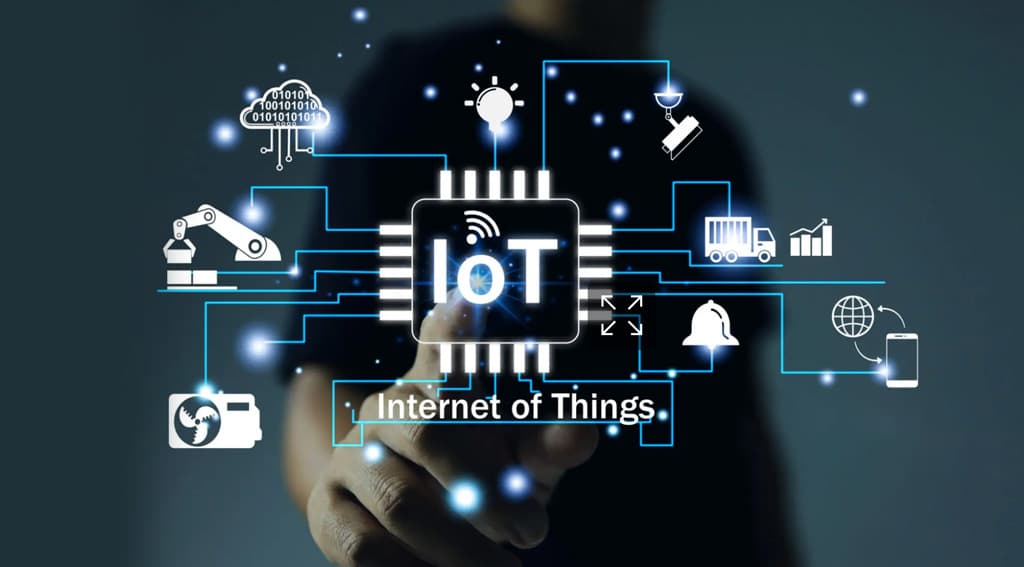
The Internet of Things (IoT) landscape is evolving at an unprecedented pace. What was once the domain of futuristic concepts is now a tangible reality, transforming industries from manufacturing to healthcare, smart cities, and beyond. As we approach 2026, the demand for skilled professionals capable of navigating this complex and dynamic environment is skyrocketing. Building robust, scalable, and secure IoT solutions requires a specialized skillset that blends traditional engineering disciplines with cutting-edge advancements in artificial intelligence and machine learning.
This article outlines the 12 most critical skills that IoT teams, and individual professionals, must master to thrive in the coming years. We’ll delve into the practical applications of each skill, the tools that empower them, and why they are indispensable for engineering dependable edge intelligence.
1. IoT Architecture Design: The Foundation of Future-Proof Systems
At the heart of every successful IoT deployment lies a well-conceived architecture. This isn’t merely about connecting devices; it’s about crafting an end-to-end ecosystem that intelligently distributes computing power and data processing across the edge, fog, and cloud. The goal is to balance latency, bandwidth, data sovereignty, and processing requirements to achieve optimal performance and cost-efficiency.
The Edge-Fog-Cloud Continuum
Understanding the nuances of the edge, fog, and cloud is paramount.
- Edge computing refers to processing data directly on or near the IoT devices themselves. This is crucial for real-time responsiveness, minimizing data transmission costs, and operating autonomously during network outages.
- Fog computing acts as an intermediary layer, often consisting of gateways or local servers, aggregating data from multiple edge devices and performing localized processing before sending aggregated/filtered data to the cloud.
- Cloud computing provides vast storage, computational power, and advanced analytics capabilities, ideal for historical data analysis, machine learning model training, and long-term data archival.
Effective IoT architecture design means making informed decisions about where each piece of data is processed and stored. For instance, critical safety alerts might be processed at the edge for immediate action, while long-term trend analysis occurs in the cloud.
Practical Considerations for IoT Architecture Design
When designing an IoT architecture, consider:
- Scalability: Can the architecture accommodate millions of devices and exponentially growing data volumes? Designs should allow for flexible scaling of cloud resources based on utilization.
- Reliability: How will the system behave during intermittent connectivity or service failures? Decoupling ingestion from processing through queues and buffers enhances resilience.
- Security: How are devices onboarded, authenticated, and authorized? A robust architecture integrates security from the ground up, assigning unique identities and least-privilege access to each device.
- Cost Optimization: How can data transfer, storage, and processing costs be minimized? Aggregating data at the edge and employing tiered storage strategies can significantly reduce expenses.
- Sustainability: Designing for energy efficiency, choosing the right hardware, and optimizing software can reduce the carbon footprint of IoT deployments.
Essential Tools
Familiarity with cloud-based IoT platforms is crucial:
- AWS IoT: Offers a comprehensive suite of services for connecting and managing IoT devices, including AWS IoT Core, AWS IoT Greengrass for edge deployment, and AWS IoT Device Management.
- Azure IoT Hub: Provides secure, bi-directional communication between millions of IoT devices and a cloud-hosted solution backend.
- Google Cloud IoT Core: A fully managed service that allows you to easily and securely connect, manage, and ingest data from globally dispersed devices.
- Bosch IoT Suite: A platform that focuses on enabling complex IoT ecosystems, particularly in industrial contexts.
2. Sensor & Hardware Integration: Ensuring Trustworthy Data
The quality of any IoT solution is directly tied to the trustworthiness of its data. This trustworthiness begins at the source: the sensors and hardware. Mastering sensor and hardware integration means possessing a deep understanding of their operational characteristics, limitations, and how to maintain their accuracy over time.
Understanding Sensor Characteristics
- Failure Modes: Sensors, like all hardware, can fail. Knowing common failure modes (e.g., drift, saturation, complete malfunction) allows for the design of systems that can detect and compensate for these issues, ensuring data integrity.
- Calibration Needs: Many sensors require periodic calibration to maintain accuracy. This involves understanding the frequency of calibration, the methods to perform it (remote vs. manual), and the impact of environmental factors on sensor performance.
- Power Envelopes: IoT devices are often battery-powered or rely on energy harvesting, making power consumption a critical design constraint. Understanding a sensor’s power envelope (idle, active, transmission) is vital for maximizing battery life and developing sustainable solutions.
Practical Integration
Integrating sensors goes beyond simply wiring them up. It involves:
- Data Reliability: Implementing mechanisms to filter noise, correct errors, and handle missing data to ensure the data stream is clean and reliable before transmission.
- Edge Pre-processing: Performing basic data validation and aggregation at the sensor level to reduce the volume of data transmitted, thereby saving bandwidth and power.
- Secure Hardware: Utilizing secure elements (SEs) or Trusted Platform Modules (TPMs) to store cryptographic keys and sensitive data, protecting against tampering and unauthorized access.
Essential Tools
Hands-on experience with popular embedded platforms:
- Arduino: An open-source electronics platform based on easy-to-use hardware and software, great for rapid prototyping.
- ESP32: A low-cost, low-power system on a chip (SoC) series with integrated Wi-Fi and dual-mode Bluetooth, ideal for many IoT applications.
- Raspberry Pi: A series of small single-board computers, excellent for more complex edge-computing tasks and prototyping IoT gateways.
3. Connectivity & IoT Protocols: The Right Choice for the Right Job
The myriad of IoT connectivity options and protocols can be overwhelming. A crucial skill is the ability to select the appropriate protocol based on the specific requirements of the use case, rather than defaulting to trending technologies. This involves a deep understanding of trade-offs between range, power consumption, data rates, and reliability.
Protocol Selection Criteria
- Range: (e.g., short-range for Bluetooth, medium-range for Wi-Fi, long-range for LoRaWAN).
- Power Consumption: (e.g., ultra-low for NB-IoT, higher for Wi-Fi).
- Reliability: The ability to ensure message delivery (e.g., MQTT QoS levels).
- Data Rate: The amount of data that can be transmitted per unit of time.
- Security Capabilities: Built-in encryption, authentication, and authorization features.
Common IoT Protocols and Their Applications
- MQTT (Message Queuing Telemetry Transport): A lightweight publish-subscribe protocol ideal for connecting resource-constrained devices over unreliable networks. It’s often the backbone of IoT communication due to its efficiency and support for different Quality of Service (QoS) levels, offering reliable message delivery even with intermittent connectivity.
- CoAP (Constrained Application Protocol): A specialized web transfer protocol for use with constrained nodes and constrained networks in the Internet of Things. It’s similar to HTTP but is optimized for low-power and low-bandwidth environments.
- LoRaWAN (Long Range Wide Area Network): A low-power, wide-area networking protocol designed for battery-operated “things” in regional, national, or global networks. It is excellent for applications requiring long-range communication and low data rates, such as smart agriculture or asset tracking.
- NB-IoT (Narrowband Internet of Things): A cellular standard for LPWA (Low Power Wide Area) devices, offering deep indoor coverage, low power consumption, and massive connectivity, suitable for stationary-use cases that do not require continuous mobility.
Choosing the right protocol is a critical architectural decision that impacts nearly every aspect of an IoT solution, from hardware selection to battery life and network infrastructure.
4. Edge Computing & Edge AI: Intelligence Where It Matters
As IoT deployments scale, constantly sending all raw data to the cloud becomes cost-prohibitive and introduces unacceptable latency for many real-time applications. Edge computing, coupled with Edge AI, addresses these challenges by bringing computational power closer to the data source.
The Power of Edge Intelligence
- Reduced Latency: Processing data at the edge enables immediate decision-making, crucial for applications like autonomous vehicles, industrial automation, and predictive maintenance.
- Bandwidth Optimization: Instead of sending raw, high-volume data (e.g., video streams, high-frequency sensor readings) to the cloud, edge devices can process, filter, and aggregate data, sending only relevant insights or anomalies upstream. This significantly reduces data transmission costs.
- Offline Operation: Edge computing allows IoT systems to function autonomously even when cloud connectivity is intermittent or lost, ensuring continuity of critical operations.
- Data Privacy and Security: Sensitive data can be processed and anonymized locally, reducing the risk of exposure during transit to the cloud and helping meet data sovereignty requirements.
Edge AI: Bringing Machine Learning to the Device
Edge AI involves deploying machine learning models directly onto edge devices or gateways to perform inference locally. This enables:
- Real-time Anomaly Detection: Identifying unusual patterns in sensor data that may indicate equipment malfunction.
- Local Decision-Making: For example, a smart camera can detect a security breach and trigger an alarm without needing cloud intervention.
- Optimized Models: ML models are often developed and trained in the cloud using extensive datasets and then optimized (e.g., quantized, pruned) to run efficiently on resource-constrained edge hardware.
Practical Note: Testing on the Target MCU
A critical aspect of Edge AI is ensuring that models perform as expected on the actual hardware. This necessitates rigorous testing on the target Microcontroller Unit (MCU) or other edge devices to validate inference speed, accuracy, and power consumption. Factors like memory constraints, processing power, and specific instruction sets (e.g., vector operations, NPUs) must be considered for optimal deployment.
Essential Tools
- Azure IoT Edge: Extends cloud intelligence and analytics to edge devices with modules for AI/ML, stream analytics, and custom code.
- Edge Impulse: A development platform for machine learning on edge devices, enabling embedded engineers to create, train, and deploy models.
- OpenVINO (Open Visual Inference and Neural Network Optimization): An open-source toolkit for optimizing and deploying AI inference, especially for computer vision applications.
- AWS IoT Greengrass: An IoT edge runtime and cloud service that helps customers build, deploy, and manage intelligent IoT device software, including local ML inference and data aggregation.
5. Data Ingestion & Streaming: The Artery of IoT Data Pipelines
The sheer volume and velocity of data generated by IoT devices demand robust and resilient data ingestion and streaming pipelines. This skill focuses on building systems that can reliably collect, transport, and hand off data to downstream processing and storage systems, even under unpredictable loads.
Challenges in IoT Data Ingestion
- Bursty Telemetry: IoT devices often send data in unpredictable bursts, especially during event-driven scenarios (e.g., sudden sensor value changes, device reboots). Pipelines must be designed to absorb these spikes without dropping data.
- Guaranteed Ordering: For many applications, the sequence of events is crucial. Pipelines need to ensure that data is processed in the correct order, especially when dealing with time-series data or command-and-control flows.
- Intermittent Connectivity: Devices frequently operate in environments with unreliable network connections. Ingestion pipelines must account for this, often involving local buffering and store-and-forward mechanisms.
- Scalability: The pipeline must effortlessly scale to accommodate a growing number of devices and increasing data volumes without compromising performance or reliability.
Building Resilient Pipelines
Key techniques for designing reliable ingestion and streaming pipelines:
- Message Queues and Brokers: Using message brokers like MQTT and queuing services allows for decoupling of data producers (devices) from consumers (cloud applications), providing a buffer against sudden data spikes.
- Data Serialization: Employing efficient data formats (e.g., Protobuf, CBOR) and compression techniques can significantly reduce message sizes, optimizing bandwidth and storage costs.
- Error Handling and Retries: Implementing robust retry mechanisms with exponential backoff and jitter on devices helps manage intermittent connectivity and prevents network storms. Cloud-side error actions for rules engines can direct problematic messages to dead-letter queues for further analysis.
- Persistent Sessions: MQTT’s persistent sessions feature ensures that unacknowledged messages and subscriptions are retained for a device, allowing it to pick up where it left off upon reconnection .
- Store-and-Forward at the Edge: Intelligent edge devices (e.g., using AWS IoT Greengrass Stream Manager) can store data locally during network outages and forward it once connectivity is restored, preventing data loss.
Essential Tools
- Apache Kafka: A distributed streaming platform capable of handling trillions of events per day, providing high-throughput, fault-tolerant, and low-latency data feeds.
- AWS Kinesis: A managed service for processing large streams of data in real time, offering various capabilities like Kinesis Data Streams for real-time analytics and Kinesis Firehose for loading data into storage.
- Azure Event Hubs: A highly scalable data streaming platform and event ingestion service capable of receiving and processing millions of events per second.
6. Data Analytics & Visualization: From Data to Decisive Action
Raw IoT data, no matter how meticulously collected, is only useful if it can be transformed into actionable insights. This skill involves designing analytics and visualization solutions that not only present data clearly but, more importantly, drastically reduce time-to-decision for business users.
Beyond Pretty Charts: Surfacing Actions
The focus should shift from merely displaying data to guiding users toward specific actions. This means:
- Contextual Insight: Dashboards should not just show sensor readings but interpret them in the context of business objectives (e.g., “Machine X is operating at 70% efficiency, below the target of 85%”).
- Alerting and Anomaly Detection: Integrating real-time alerts for deviations from normal behavior, unexpected events, or threshold breaches, ensuring that users are notified when immediate action is required.
- Predictive Indicators: Visualizing future trends or potential issues (e.g., “Machine Y is predicted to fail in the next 3 days”) to enable proactive maintenance rather than reactive repairs.
- Role-Based Dashboards: Tailoring dashboards to the needs of different user roles (e.g., operations managers, maintenance technicians, executives) to provide relevant information at a glance.
Data Processing for Visualization
Before visualization, data often needs significant processing:
- Aggregation and Transformation: Raw, high-frequency data is typically aggregated, filtered, or transformed into meaningful metrics suitable for dashboard display. AWS IoT SiteWise, for example, simplifies collecting, organizing, and analyzing industrial equipment data at scale, computing common performance metrics like Overall Equipment Effectiveness (OEE).
- Time-Series Databases: Utilizing specialized time-series databases (e.g., Amazon Timestream) is essential for efficient storage and querying of time-stamped IoT data, allowing for rapid analysis of historical and real-time trends.
- Data Lakes and Warehouses: For long-term storage and complex analytical queries involving diverse data sources, data lakes (e.g., Amazon S3 with Athena) and data warehouses (e.g., Amazon Redshift) provide robust solutions.
Essential Tools
- Grafana: A popular open-source analytics and visualization platform that allows users to query, visualize, alert on, and understand metrics from various data sources, including IoT platforms.
- Power BI: Microsoft’s business intelligence tool for interactive visualizations and business intelligence capabilities with an easy-to-use interface.
- Tableau: A powerful data visualization tool known for its intuitive drag-and-drop interface and ability to create highly interactive dashboards.
- Amazon QuickSight: A cloud-scale business intelligence (BI) service that can deliver insights to users from various IoT data sources, with generative BI capabilities to ask questions using natural language.
- AWS IoT SiteWise Monitor: Enables no-code web applications for visualizing and interacting with operational data from industrial equipment.
7. Predictive Maintenance & ML for IoT: Minimizing Downtime, Maximizing Value
Predictive maintenance is one of the most compelling applications of IoT, transforming reactive repair strategies into proactive, data-driven interventions. The skill here is not just about building machine learning models but creating effective solutions that demonstrably reduce downtime without generating excessive false alarms.
The Goal: Reduce Downtime, Not False Alarms
False alarms can lead to resource waste, technician fatigue, and distrust in the system. Effective predictive maintenance solutions focus on:
- Accurate Anomaly Detection: Identifying subtle deviations in equipment behavior that genuinely indicate impending failure, rather than minor fluctuations.
- Prognostics: Predicting the remaining useful life (RUL) of components, allowing for timely scheduling of maintenance during planned downtimes.
- Root Cause Analysis: Providing insights into why a failure is likely to occur, enabling targeted and efficient repairs.
- Minimizing False Positives: Continuously refining models and thresholds to reduce the rate of false alarms, thereby increasing operational efficiency and user trust.
Building Effective ML Models for IoT
- Data Collection and Labeling: This is often the most challenging part. Collecting high-quality, labeled data (e.g., sensor readings correlated with actual equipment failures) is crucial for training effective models. This is where the output of trustworthy sensors (Skill 2) and reliable data pipelines (Skill 5) becomes critical.
- Feature Engineering: Extracting meaningful features from raw sensor data that are predictive of machine health. This often involves domain expertise to identify relevant signals (e.g., vibration patterns, temperature fluctuations, current draws).
- Model Selection and Training: Choosing appropriate ML algorithms (e.g., supervised, unsupervised, deep learning) and training them on historical data. Cloud platforms with scalable compute resources (e.g., Amazon SageMaker) are ideal for this.
- Model Deployment: Deploying trained models for inference, either in the cloud or at the edge (Edge AI, Skill 4), depending on latency and connectivity requirements.
- Continuous Improvement: Models can drift over time as equipment ages or operating conditions change. Implementing mechanisms for continuous retraining and re-deployment of models ensures their long-term effectiveness.
Essential Tools
- Amazon SageMaker: A fully managed service that provides everything needed to build, train, and deploy machine learning models at scale, including capabilities for edge deployment.
- TensorFlow: An open-source machine learning framework widely used for developing and training deep learning models, with extensions for embedded devices (TensorFlow Lite).
- Azure ML (Machine Learning): A cloud-based service for building, training, and deploying machine learning models, offering enterprise-grade MLOps capabilities.
8. Security & Device Management: Non-Negotiable from Day One
In the interconnected world of IoT, security is not an afterthought but a fundamental requirement, especially given that IoT devices often operate in physically insecure environments or handle sensitive data. This skill encompasses a holistic approach to securing devices throughout their entire lifecycle, from manufacturing to decommissioning.
Core Pillars of IoT Security
- Secure Identity: Every IoT device must have a unique, cryptographically secure identity. This typically involves X.509 certificates and private keys. The ability to manage these identities, including provisioning, validation, and revocation, is paramount.
- Best Practice: Assign unique identities to each IoT device and securely store credentials using dedicated hardware (e.g., secure elements, TPMs).
- Over-the-Air (OTA) Updates: The ability to securely deliver firmware and software updates remotely is critical for patching vulnerabilities, rolling out new features, and extending the device’s lifespan. OTA updates must be robust, with rollback capabilities in case of failure.
- Best Practice: Use code-signing to verify the authenticity and integrity of firmware images before deployment.
- Key Rotation: Cryptographic keys and certificates have a limited lifespan. Securely rotating keys and renewing certificates before expiration is essential to maintain the security posture of devices. This often leverages OTA update mechanisms.
- Least Privilege: Devices should only have the minimum necessary permissions to perform their intended functions. This limits the blast radius if a device is compromised.
- Data Protection: Ensuring data is encrypted both in transit (e.g., TLS/MQTTS) and at rest (e.g., on-device storage, cloud databases) is fundamental.
- Logging and Monitoring: Comprehensive logging of device activity, connectivity, and security events, combined with real-time monitoring and alerting, enables rapid detection and response to security incidents.
Device Management at Scale
Managing thousands or millions of devices requires automated processes for:
- Provisioning: Securely onboarding new devices and assigning initial configurations.
- Inventory Management: Maintaining an accurate record of all devices, their configurations, firmware versions, and security status.
- Remote Operations: Executing commands or configuration changes on individual devices or groups of devices.
- Incident Response: Having mechanisms to quarantine compromised devices and deploy emergency patches.
Essential Tools
- PKI (Public Key Infrastructure): The foundation for issuing, managing, and revoking X.509 certificates to establish device identities. Cloud-based PKI services can automate much of this process.
- Mender: An open-source over-the-air (OTA) software updater for connected Linux devices, enabling robust and secure remote updates.
- AWS IoT Device Management: A comprehensive service for organizing, monitoring, and managing IoT devices at scale, including features like fleet indexing, jobs for remote operations (e.g., OTA updates), and secure tunneling for remote troubleshooting.
9. Digital Twins & Simulation: Testing Reality Virtually
Digital twin technology is revolutionizing how we interact with and manage physical assets in the IoT. This skill involves creating virtual replicas of physical objects, processes, or systems to monitor, analyze, and simulate their behavior in real-time, enabling proactive decision-making and rigorous testing.
The Power of Digital Twins
- Real-time Monitoring & Analysis: Digital twins provide a unified, contextualized view of an asset’s live data, operational status, and historical performance, enabling deeper analytical insights.
- Predictive Insights: By integrating with ML models (Skill 7), digital twins can predict future behavior, identify potential maintenance needs, or simulate the impact of operational changes.
- Remote Control & Optimization: Digital twins allow for remote control and optimization of physical assets through a virtual interface, translating changes in the digital model to actions in the real world.
Simulation at Scale: Validating Edge Logic and Testing Failure Modes
One of the most powerful applications of digital twins and simulation is the ability to rigorously test IoT solutions before real-world deployment.
- Validating Edge Logic: Simulating the behavior of millions of devices and their interactions with edge gateways can validate the logic implemented at the edge, ensuring it functions correctly under various conditions.
- Testing Failure Modes: Creating simulated scenarios for network outages, device malfunctions, or sensor failures allows teams to test how the entire IoT system responds, from edge device recovery to cloud-side incident response. This is critical for building reliable and resilient systems.
- Hardware-in-the-Loop (HIL) Testing: Combining physical hardware components with simulated environments to test real-time interactions and validate complex control systems.
- Accelerated Testing: Running simulations significantly faster than real-time allows for the rapid identification of potential issues or optimization opportunities that would take too long to observe in physical deployments.
- Synthesizing Training Data: Simulations can generate vast amounts of synthetic data, particularly useful for training ML models where real-world labeled data is scarce or expensive to collect.
Essential Tools
- Azure Digital Twins: A platform-as-a-service (PaaS) offering that enables the creation of knowledge graphs based on digital models of entire environments, connecting physical assets with their digital representations.
- AWS IoT TwinMaker: An AWS IoT service for building operational digital twins of physical and digital systems, integrating data from various real-world sensors, cameras, and enterprise applications for monitoring, diagnosis, and optimization.
- Siemens MindSphere: An industrial IoT as a Service solution that offers capabilities for connecting physical assets, analyzing industrial data, and creating digital twins for various industrial applications.
- IoT Device Simulator: An AWS solution that allows users to simulate diverse scenarios by launching fleets of virtually connected devices from user-defined templates, publishing data at regular intervals to AWS IoT.
10. Industrial IoT & OT Integration: Bridging the IT/OT Divide Safely
The Industrial Internet of Things (IIoT) presents unique challenges and opportunities, particularly at the intersection of Information Technology (IT) and Operational Technology (OT). Mastering this skill means safely bridging these historically separate domains, understanding the critical constraints of industrial environments.
The IT/OT Convergence
- Operational Technology (OT): Refers to hardware and software that detects or causes a change through the direct monitoring and/or control of physical devices, processes, and events in industrial settings (ee.g., SCADA systems, PLCs, DCS). OT systems historically prioritized safety, reliability, and real-time control, often operating in isolated networks.
- Information Technology (IT): Deals with the technology and systems used for information processing, storage, and communication (e.g., enterprise resource planning, cloud computing). IT systems prioritize data availability, scalability, and flexibility.
The convergence of IT and OT in IIoT unlocks immense value (e.g., predictive maintenance, optimized production, remote monitoring) but also introduces significant cybersecurity and operational risks. Bridging this gap safely is paramount.
Understanding Core OT Components and Constraints
- PLCs (Programmable Logic Controllers): Digital computers used for automation of electromechanical processes, such as control of machinery on factory assembly lines. Understanding how to communicate with, extract data from, and potentially control PLCs is fundamental.
- MES (Manufacturing Execution Systems): Computerized systems used in manufacturing to track and document the transformation of raw materials into finished goods. Integrating IIoT data with MES enhances overall manufacturing intelligence.
- Real-time Constraints: Many industrial processes, especially those involving safety, have absolute real-time requirements where even millisecond delays can have catastrophic consequences. IIoT solutions must respect these constraints, often performing critical control loops entirely within the OT network.
- Legacy Systems: Industrial environments often feature decades-old machinery and proprietary protocols. The skill involves finding ways to securely integrate these legacy systems without disrupting ongoing operations.
Safe Integration Strategies
- Edge Gateways: These devices play a crucial role as intermediaries, converting proprietary industrial protocols (e.g., Modbus TCP, Profinet) into more IT-friendly formats (e.g., OPC UA, MQTT) and providing secure proxies between the OT network and the cloud.
- Network Segmentation: Implementing robust network segmentation, often following models like Purdue Enterprise Reference Architecture (PERA) or ISA-95, to isolate OT networks from IT networks and control traffic flow to minimize risk.
- Protocol Conversion: The ability to translate between diverse industrial protocols and standard IoT/IT protocols, often performed by edge gateways or specialized OT/IT gateways.
- Cybersecurity Risk Assessment: Conducting thorough cybersecurity risk assessments tailored to OT environments, using frameworks like ISA/IEC 62443, to identify and mitigate vulnerabilities.
- Zero Trust Principles: Extending zero-trust principles to OT environments, ensuring strict authentication and authorization for every actor and device interacting with industrial systems.
Essential Tools
- PTC ThingWorx: An industrial IoT platform designed for building and deploying IIoT applications, offering connectivity to industrial assets, analytics, and digital twin capabilities.
- Rockwell FactoryTalk: A software suite for industrial automation and information, providing tools for manufacturing operations management, visualization, and data collection.
- AWS IoT SiteWise: A managed service for collecting, organizing, and analyzing industrial equipment data at scale, providing strong integration with OPC UA and other industrial data sources.
11. Automation & Systems Integration: Turning Insights into Action
The true value of IoT is realized when insights derived from data automatically trigger actions across various systems. This skill focuses on designing reliable workflows and integrating disparate systems to ensure that detected events lead to immediate and orchestrated business responses.
Designing Reliable Workflows
- Event-Driven Architecture: IoT is inherently event-driven. Building architectures that react to events (e.g., a sensor reading exceeding a threshold, a machine anomaly detected) enables dynamic and responsive systems.
- Workflow Orchestration: Designing and managing complex sequences of actions that span multiple systems, both within the IoT ecosystem and across enterprise applications. This often involves state machines to manage the flow and ensure reliability.
- Idempotency: Designing actions such that they can be performed multiple times without changing the result beyond the initial application, crucial for ensuring reliability in distributed and potentially unreliable environments (e.g., handling duplicate messages from retries).
- Error Handling and Rollback: Workflows must be resilient to failures. Implementing automatic retries, fallbacks, and the ability to roll back changes in case of unexpected errors is vital to maintain system stability.
- Integration with Enterprise Systems: Connecting IoT workflows to existing business applications (e.g., ERP, CRM, CMMS) to update records, trigger work orders, or notify relevant personnel.
Triggering Business Actions Across Systems
The ultimate goal is to move from data to automated, intelligent action. Examples include:
- Automated Maintenance Scheduling: A predictive maintenance model (Skill 7) detects an impending machine failure, which automatically triggers a work order in the maintenance management system, schedules a technician, and orders necessary parts.
- Dynamic Resource Allocation: Real-time occupancy data from smart building sensors automatically adjusts HVAC settings, optimizing energy consumption.
- Supply Chain Optimization: IoT data from connected logistics assets automatically updates inventory levels and triggers reorder processes.
- Security Incident Response: An anomaly detected in device behavior (Skill 8) automatically isolates the device from the network and alerts the security operations team.
Essential Tools
- Node-RED: A flow-based programming tool for wiring together hardware devices, APIs, and online services, widely used for rapid prototyping and integration in IoT.
- n8n: A workflow automation tool that helps connect APIs, services, and apps with easy-to-use visual workflows.
- Make (formerly Integromat): A powerful platform for connecting apps and automating workflows without coding, enabling complex integrations across various services.
- AWS Step Functions: A serverless workflow service that makes it easy to coordinate the components of distributed applications and microservices using visual workflows.
- Cloud-side Rule Engines: Services like AWS IoT Core rules engine allow for actions to be triggered based on incoming IoT messages, routing data to various AWS services for processing and integration.
12. Autonomous, AI-Driven Systems: The Pinnacle of Edge Intelligence
The final and most sophisticated skill involves engineering IoT systems that exhibit true autonomy, leveraging advanced AI to learn, adapt, and make intelligent decisions directly on the device. This pushes the boundaries of edge intelligence, requiring meticulous design for feedback loops, drift detection, and safe rollback mechanisms.
Characteristics of Autonomous, AI-Driven Systems
- On-Device Learning: Rather than exclusively relying on cloud-trained models, these systems perform continuous learning and model updates directly on the edge device, allowing for rapid adaptation to local changes and specific operational contexts.
- Adaptive Behavior: Systems can dynamically adjust their operational parameters, control strategies, or data processing based on real-time observations and learned patterns, optimizing for performance, energy efficiency, or specific outcomes.
- Complex Decision-Making: Moving beyond simple rule-based responses, autonomous AI systems can make nuanced decisions in complex environments, such as optimizing a robotic arm’s movements in a dynamic factory floor.
Engineering Dependable Autonomy
Achieving dependable autonomy requires careful consideration of advanced AI and robust engineering principles:
- Feedback Loops: Designing closed-loop systems where the output of AI-driven actions feeds back into the model for continuous improvement. This is crucial for reinforcement learning scenarios.
- Drift Detection: Machine learning models can degrade over time due to changes in data distribution (data drift) or concept (concept drift). Autonomous systems need mechanisms to detect this drift on-device or at the edge and trigger model retraining or updates.
- Safe Rollback for On-Device Learning: A critical safety measure. If a newly learned or updated model performs poorly or creates undesirable outcomes, the system must be able to safely revert to a previous, known-good operational state. This requires robust versioning of models and firmware, and atomic update mechanisms (Skill 8).
- Explainable AI (XAI) at the Edge: For highly autonomous systems, the ability to understand why an AI made a particular decision is crucial for debugging, auditing, and building trust, especially in safety-critical applications.
- Human-in-the-Loop: While autonomous, most systems still require human oversight or intervention for high-stakes decisions, extreme anomalies, or ethical considerations. Designing interfaces for human intervention and override is essential.
Essential Tools
- AutoML (Automated Machine Learning): Platforms that automate parts of the ML pipeline, including feature engineering, algorithm selection, and hyperparameter tuning, making it easier to develop and optimize models for on-device deployment.
- Reinforcement Learning (RL) Frameworks: Tools and libraries (e.g., Ray RLlib, OpenAI Gym, Coach) for developing algorithms where AI agents learn to make decisions by performing actions in an environment and receiving rewards or penalties.
- Specialized Edge AI Accelerators: Hardware components (e.g., NPUs, DSPs, FPGAs) designed to efficiently execute ML inference at the edge with low power consumption (Skill 4).
- AWS Panorama: An appliance and SDK that brings computer vision to existing IP cameras at the edge, allowing for complex visual analysis and on-device actions.
Priority Tip: Focus on Fundamentals First
If your team is just beginning its IoT journey or looking to solidify its capabilities, a strategic approach is to prioritize foundational skills. As the AWS Well-Architected Framework for IoT emphasizes, a solid base reduces risk and allows for more confident innovation.
Focus first on:
- IoT Architecture Design: Get this right, and everything else builds upon a stable structure. It dictates scalability, reliability, and security from the outset.
- Data Ingestion & Streaming: Reliable data pipelines are the lifeblood of any IoT system. Without trustworthy and consistently flowing data, advanced analytics or AI are impossible.
- Security & Device Management: Security is non-negotiable. Establishing secure device identities, robust update mechanisms, and vigilant monitoring from day one is critical to prevent catastrophic breaches and maintain operational integrity.
Mastering these three areas will significantly reduce risk and provide a strong foundation before delving into more complex areas like advanced AI model optimization or fully autonomous systems.
The IoT Worlds Advantage
The future of IoT is bright, complex, and filled with opportunities for those who possess the right skills. From crafting robust architectures to ensuring data integrity, managing device security, and deploying intelligent autonomous systems, the demands on IoT professionals are ever-increasing. By focusing on these 12 critical skills, teams can build resilient, scalable, and impactful IoT solutions that drive real business value.
Navigating this intricate landscape doesn’t have to be a journey taken alone. IoT Worlds specializes in empowering organizations to build and optimize their IoT capabilities, guiding them through architectural design, implementation, and advanced analytics. Our expertise ensures that your IoT initiatives are not only cutting-edge but also secure, scalable, and aligned with your core business objectives.
Unlock the full potential of your IoT strategy and prepare your team for the challenges and opportunities of 2026 and beyond.
Contact us today to explore how our consultancy services can transform your IoT vision into reality.
Email us at: info@iotworlds.com