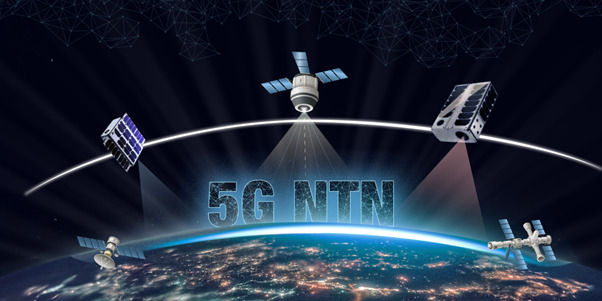
For too long, the promise of universal connectivity remained elusive, confined by the physical limitations of terrestrial infrastructure. We accepted that mobile phone signals would disappear in remote valleys, across vast oceans, or in the aftermath of natural disasters. But a paradigm shift is underway, one that is literally elevating our expectations of what 5G can achieve. Forget the familiar sight of cellular towers as the sole bastions of connectivity; 5G is reaching new heights, quite literally, with the advent of Non-Terrestrial Networks (NTN). This revolutionary technology is set to connect every corner of our planet, transforming how we live, work, and interact with the world around us.
The Sky’s No Longer the Limit: What are Non-Terrestrial Networks?
Non-Terrestrial Networks, or NTNs, represent a groundbreaking evolution in mobile communication. Unlike traditional cellular networks that rely solely on ground-based infrastructure like cell towers, NTNs integrate platforms in the atmosphere and space to deliver 5G services. This means that connectivity is no longer bound by the economic or logistical constraints of building physical infrastructure on challenging terrain. The core concept is to provide seamless, ubiquitous coverage by leveraging a diverse array of non-terrestrial assets. This approach is precisely what will allow 5G to go beyond Earth, fulfilling the long-held dream of global connectivity.
The Three Pillars of NTN: Satellite Layers
At the heart of 5G NTN lies a sophisticated, multi-layered satellite architecture, each layer designed to fulfill specific connectivity needs. These orbiting platforms are not new in themselves, but their integration into the 5G ecosystem under 3GPP standards marks a significant leap forward in bringing satellite communication directly to your everyday devices.
Low Earth Orbit (LEO) Satellites: The Speed Demons of Space
LEO satellites operate at altitudes typically ranging from 160 km to 2000 km above the Earth’s surface. What makes them particularly exciting for 5G NTN is their proximity to Earth, which translates directly into exceptionally low latency.
Agility and Real-time Communication
With latencies often under 20 milliseconds, LEO satellites are perfect for applications demanding real-time communication. This includes interactive services, online gaming, and mission-critical communications where even slight delays can have significant consequences. Their rapid movement across the sky necessitates constellations (large groups of satellites working together) and sophisticated handover mechanisms, but the benefit of near-instantaneous communication is unparalleled. This low latency is a game-changer for extending 5G’s promise of responsiveness to truly global scales.
Medium Earth Orbit (MEO) Satellites: Bridging the Gap
MEO satellites reside in orbits between LEO and GEO, typically from 2000 km to 35,786 km. They offer a compelling balance between the low latency of LEO and the wider coverage area of GEO satellites.
Global Navigation and Balanced Performance
Traditionally, MEO satellites have been crucial for global navigation satellite systems (GNSS) like GPS. In the context of 5G NTN, they serve as a vital bridge, offering broader coverage than individual LEO satellites while maintaining lower latency than GEO. This makes them suitable for a range of applications that require a good mix of coverage and performance, potentially supporting a broad spectrum of services from enterprise connectivity to advanced IoT deployments. As the NTN ecosystem evolves, MEO constellations are expected to play an increasingly important role in providing robust and reliable global coverage.
Geostationary Earth Orbit (GEO) Satellites: The Constant Watchmen
GEO satellites are positioned at a much higher altitude of 35,786 km above the equator, orbiting at the same speed as the Earth’s rotation. This unique characteristic means they appear stationary from the ground.
Wide Area Coverage and Uninterrupted Connection
The primary advantage of GEO satellites is their massive coverage footprint—a single GEO satellite can cover approximately one-third of the Earth’s surface. This makes them ideal for providing wide-area coverage, particularly for broadcasting and maintaining a consistent connection over vast regions. While their higher altitude inherently leads to greater latency compared to LEO or MEO (600 ms compared to 20−40 ms), their “always overhead, always connected” nature offers invaluable stability and reach, making them crucial for applications that prioritize continuous, broad-area coverage over ultra-low latency. These satellites are pivotal for reaching remote islands, maritime operations, and sparsely populated landmasses.
High-Altitude Platform Stations (HAPS): The Stratospheric Gap-Fillers
Beyond the orbital reaches of satellites, another critical component of the 5G NTN ecosystem operates much closer to home: High-Altitude Platform Stations (HAPS). These are essentially stratospheric drones or balloons that operate at an altitude of approximately 20 km, primarily within the stratosphere.
Localized Coverage and Flexibility
HAPS are designed to fill coverage gaps where satellites might not be optimal or where terrestrial infrastructure is impractical. They can remain stationary over a specific region for extended periods, acting like a floating cell tower.
Drones and Balloons for Dynamic Deployment
Imagine solar-powered drones or advanced balloons silently cruising miles above the Earth, providing direct 5G connectivity. These platforms offer localized, high-capacity coverage with significantly lower latency than even LEO satellites (around 1−2 milliseconds). Their flexibility allows for rapid deployment in emergency situations or to provide temporary coverage for large events. HAPS complement satellite layers by enhancing capacity in specific high-demand areas and providing a responsive solution for dynamic coverage needs, showcasing the diverse nature of NTN solutions.
The Mechanics of Global Connection: How NTN Works
The integration of these non-terrestrial elements into the existing 5G framework is a complex yet elegantly designed system, standardized to ensure seamless operation. The beauty of 5G NTN lies in its ability to connect diverse platforms to a unified core network, ultimately reaching your everyday devices.
Bridging Space and Ground: The Communication Flow
The fundamental communication flow in an NTN involves several key stages:
- Satellites (or HAPS): These act as the initial point of connection in space or the stratosphere. They relay signals to and from devices on the ground.
- Ground Stations: Located on Earth, these stations (often equipped with large dish antennas) serve as the vital link between the space/stratosphere segment and the terrestrial network. They receive signals from satellites, process them, and forward them to the core network. They also transmit signals up to the satellites.
- Core Network: This is the intelligent brain of the mobile network, managing subscriber authentication, service delivery, and data routing. Once signals reach the core network via ground stations, they are handled like any other 5G traffic.
- Your Device (UE / IoT): Whether it’s your smartphone (User Equipment or UE) or an Internet of Things (IoT) device, it connects directly to the satellite or HAPS, receiving and transmitting data without the need for specialized satellite phones.
Standardization: The 3GPP Framework
The seamless operation of this intricate network is made possible through rigorous standardization by the 3rd Generation Partnership Project (3GPP). The 3GPP is a collaboration of telecommunications associations responsible for developing protocols for mobile telephony.
Release 17 and Beyond: Defining NR NTN
The standardization of NTN effectively began with 3GPP Release 17, which was finalized in March 2022. This release introduced the first specifications for 5G New Radio (NR) satellite access, addressing crucial technical challenges such as:
- Timing Delay Compensation: Due to the vast distances involved, signals travel longer, requiring intricate synchronization mechanisms.
- Doppler Effect Management: The relative motion between satellites and ground devices causes frequency shifts (the Doppler effect), which must be precisely accounted for.
Release 18 (5G-Advanced), completed in 2024, built upon Release 17 by introducing significant enhancements, including:
- Support for NTN on IoT bands (e.g., Narrowband-IoT and eMTC via satellite), further expanding the reach of IoT.
- Optimized inter-satellite handovers for improved connectivity.
- Expanded frequency band coverage.
These releases lay the groundwork for 5G NTN as a native and integrated part of future network deployments, ensuring that the technology is robust, reliable, and interoperable. Future releases, such as Release 19, will continue to refine and expand NTN capabilities, demonstrating that this is not future tech, but a rapidly evolving reality.
Seamless Transition: Terrestrial Integration and Handover
One of the most remarkable aspects of 5G NTN is its ability to integrate smoothly with existing terrestrial 5G networks. The user experience is designed to be invisible, meaning your device can switch between satellite and ground-based connections without you even noticing.
Terrestrial 5G gNodeB: The Ground Anchor
Terrestrial 5G networks rely on gNodeBs (the equivalent of cell towers in 5G) to provide coverage. These standard base stations offer extremely low latency, typically less than 10 milliseconds, and high capacity in densely populated areas. They remain the backbone of connectivity in urban and suburban environments.
The Art of Handover: NTN ↔ Terrestrial
The magic happens when your device moves between areas covered by terrestrial gNodeBs and areas where only NTN coverage is available. This is managed through sophisticated handover mechanisms.
Handover Fallback
When a terrestrial 5G signal weakens or becomes unavailable, your device can seamlessly transition to an NTN connection (via a satellite or HAPS). This is a handover fallback, ensuring continuous service even when traditional terrestrial coverage is lost. It’s like your phone intelligently finding the best available network, whether it’s from a tower or from space. This mechanism is vital for maintaining communication in challenging environments like remote rural areas, oceans, or during emergencies.
Coverage Fallback
Similarly, if your device is initially connected via NTN and enters an area with strong terrestrial 5G coverage, it can perform a coverage fallback to the gNodeB. This is beneficial because terrestrial networks generally offer higher bandwidth and lower latency when available. The goal is always to provide the best possible user experience by switching to the most optimal network without interruption.
Seamless Roaming
The ultimate outcome of these integrated handover and fallback capabilities is seamless roaming. This means your device (UE or IoT) effectively roams between terrestrial 5G and NTN coverage areas as if they were part of one unified network. From the user’s perspective, connectivity simply exists, regardless of the underlying infrastructure—a truly transformative experience. This integration is standardized under 3GPP Rel-17+, ensuring compatibility and smooth operation across diverse network components.
Why This Matters: The Game-Changing Impact of 5G NTN
The implications of 5G Non-Terrestrial Networks are profound and far-reaching, addressing some of the most persistent challenges in global connectivity and opening up entirely new possibilities across various sectors.
Bridging the Digital Divide: Connecting the Unconnected
One of the most critical impacts of NTN is its potential to bring connectivity to the approximately 3.5 billion people who still remain unconnected globally. Terrestrial networks have proven economically unfeasible or physically impossible to deploy in many remote and rural areas. NTN bypasses these limitations.
Rural & Remote Areas Finally Covered
From isolated villages in mountainous regions to sprawling deserts and remote islands, NTN can deliver reliable 5G service where traditional infrastructure simply cannot reach. This opens up opportunities for education, healthcare, economic development, and social inclusion for populations historically left behind by the digital revolution. Mining sites, energy projects, and offshore operations in extreme or isolated locations can now benefit from robust mobile coverage.
Resilience and Recovery: Connectivity in Crisis
Natural disasters, conflicts, or critical infrastructure failures can cripple terrestrial communication networks, isolating affected communities and hampering emergency response efforts. NTN offers a vital layer of resilience.
Disaster Recovery Without Infrastructure
In scenarios where ground-based infrastructure is damaged or unavailable, HAPS and LEO satellite constellations can quickly provide temporary or sustained 5G coverage. This ensures that emergency services, recovery teams, and affected populations can communicate, coordinate efforts, and access critical information when it matters most. This capability transforms disaster response, providing a crucial lifeline in times of crisis. Aircraft in flight, which traditionally rely on specialized systems, will also see better integration into global mobile networks through NTN.
The Dawn of Ubiquitous IoT: Devices Anywhere on Earth
The Internet of Things (IoT) promises to revolutionize industries by connecting countless devices, but its full potential has been limited by coverage constraints. NTN removes this barrier.
Global Asset Tracking and Remote Monitoring
With NTN, IoT devices can be deployed in virtually any location on Earth, enabling global asset tracking of goods, vehicles, and machinery across oceans, deserts, or air corridors, even without cellular coverage. From smart agriculture sensors in vast fields to environmental monitors in remote wildernesses, asset tracking at sea, or connected infrastructure in distant pipelines, NTN ensures that data can be collected and transmitted from anywhere. This expands the scope of IoT dramatically, fueling innovation in logistics, environmental monitoring, resource management, and more.
Mobility Without Bounds: Connected Transport
The vision of connected vehicles, whether on land, sea, or air, relies on uninterrupted connectivity. NTN makes this a tangible reality for even the most remote journeys.
Connected Vehicles in Oceans, Deserts, and Airspace
Maritime vessels, offshore oil rigs, and aircraft can maintain high-throughput, low-latency links for crew, passengers, and operational telemetry. This not only enhances safety and efficiency in oceans and deserts but also allows for seamless integration of aviation connectivity into global mobile networks. Imagine self-driving cars navigating remote stretches of highway, continuously connected to cloud services, or cargo ships transmitting real-time diagnostics from the middle of the Pacific, all powered by NTN.
Beyond the Hype: Practical Applications of NTN
The theoretical benefits of 5G NTN are compelling, but its practical applications are already beginning to reshape industries and daily life. This isn’t just about future possibilities; much of this technology is already being deployed or is in advanced stages of implementation.
From Maritime to Mining: Expanding Industry Horizons
Industries that operate in traditionally unconnected or sparsely connected environments are among the first to reap the benefits of NTN.
Maritime and Offshore Operations
Ships and oil rigs, for instance, have long relied on expensive and often limited satellite communication systems when out of terrestrial range. 5G NTN brings lower latency, higher bandwidth, and seamless integration with ground systems, transforming day-to-day operations, crew welfare, and emergency response capabilities. This means real-time data from sensors on cargo, remote diagnostics for machinery, and even video conferencing for personnel are now feasible anywhere at sea.
Remote Industrial Sites
For industries like mining, energy extraction, and large-scale infrastructure projects located in extremely remote or harsh environments, NTN provides a lifeline. It extends mobile coverage where traditional networks would be impossible or cost-prohibitive, enabling direct-to-device (D2D) capabilities for workers and equipment. This enhances safety, streamlines operations through automated machinery, and facilitates better communication for isolated teams.
Emergency Services and Public Safety
The ability to maintain communication during emergencies is paramount. NTN offers a robust solution for public safety and disaster response.
Disaster Communications and First Responder Support
In the event of natural disasters like earthquakes, hurricanes, or wildfires, terrestrial networks can be severely compromised or completely destroyed. HAPS and LEO satellites can rapidly deploy temporary 5G coverage, providing essential communication channels for first responders, enabling critical coordination, rapid assessment, and effective deployment of aid. This functionality is invaluable for saving lives and minimizing the impact of catastrophic events.
Aviation Connectivity: Uninterrupted Journeys
Aviation has a constant need for reliable, high-speed connectivity for both operational and passenger services. NTN addresses this demand effectively.
In-Flight Internet and Aircraft Telemetry
Aircraft in flight can leverage NTN for high-throughput, low-latency links, providing passengers with robust internet access and enabling real-time transmission of aircraft telemetry data. This allows for constant monitoring of aircraft health, predictive maintenance, and improved air traffic management, leading to safer and more efficient air travel.
The Future is Now: Standardized and Evolving
It’s crucial to understand that 5G Non-Terrestrial Networks are not a distant dream. The foundational standards are already in place, and the technology is rapidly advancing.
3GPP Release 17: The Foundation Laid
The finalization of 3GPP Release 17 in 2022 marked a pivotal moment, embedding NTN capabilities directly into the 5G standard. This means the framework for integrating satellites into the 5G ecosystem is robust and established. It represents the first significant step towards a truly global, unified mobile network.
Release 18 and 19: Continuous Enhancement
The ongoing work within 3GPP, with Release 18 already completed and Release 19 in progress, highlights the continuous commitment to enhancing and expanding NTN capabilities. These enhancements focus on increasing efficiency, improving device compatibility, and optimizing performance across various use cases. This iterative development ensures that 5G NTN remains at the forefront of connectivity innovation.
The Synergy: Starlink x 5G x IoT = NTN
To truly grasp the transformative power of 5G NTN, consider it as a powerful synergy:
- Starlink’s ambition of a vast LEO constellation combined with…
- The advanced capabilities of 5G New Radio and…
- The ever-growing demand for ubiquitous connectivity for IoT devices.
This potent combination defines the essence of NTN. It’s about taking the benefits of satellite constellations, integrating them natively into the world’s most advanced mobile communication standard, and extending that power to every single connected device, regardless of its location. This is how we achieve truly global, borderless mobile coverage.
Conclusion: A World Truly Connected
The era of limited connectivity is drawing to a close. 5G Non-Terrestrial Networks are ushering in a future where every corner of our planet, every remote community, every lone vessel at sea, and every device in motion can be seamlessly connected. By integrating diverse non-terrestrial platforms—from low-latency LEO satellites and wide-area GEO satellites to gap-filling HAPS—into a unified 5G core under 3GPP standards, we are building a robust, resilient, and truly global network.
This technology directly addresses the digital divide, provides critical lifelines in emergencies, unlocks the full potential of the Internet of Things, and ensures uninterrupted connectivity for our increasingly mobile world. The journey of 5G “beyond Earth” has only just begun, but its impact is already revolutionary.
Are you ready to explore how 5G NTN can transform your operations, expand your reach, and connect your world? At IoT Worlds, we specialize in navigating the complexities of advanced connectivity solutions like 5G NTN and integrating them into bespoke IoT strategies. From enterprise solutions to large-scale deployments, we provide the expertise to turn global connectivity into a tangible advantage.
To learn more about harnessing the power of 5G NTN and for a comprehensive consultation tailored to your specific needs, reach out to us today.
Email us at: info@iotworlds.com