

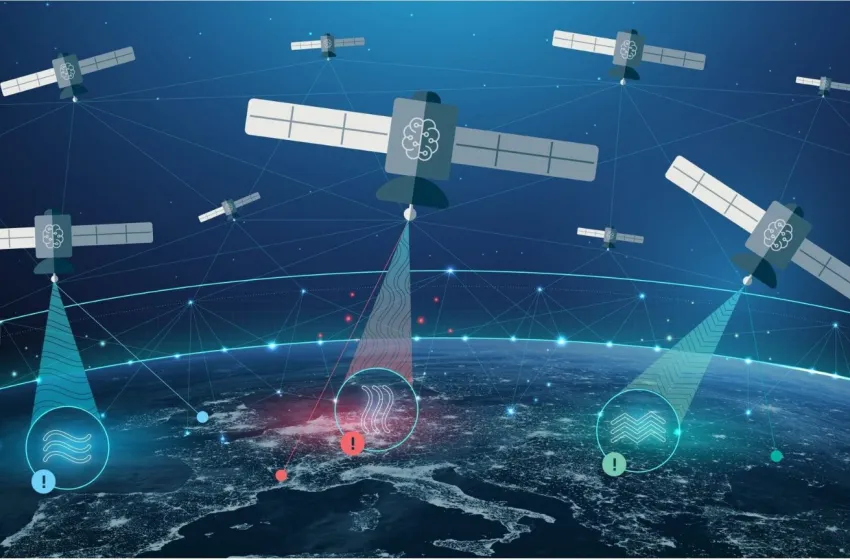
Why Satellite and Ground System Security Is Entering a New Era
Satellite infrastructures and ground systems have become foundational to modern society. They enable navigation, timing, communication, defense, remote sensing, IoT backbones, Earth observation, governmental operations, and critical infrastructure coordination.
As the world becomes more interconnected and geopolitically unstable, the security of space systems is no longer optional—it is mission-critical.
In 2026, threats are increasing in sophistication:
- Cyberattacks targeting satellite control centers
- Advanced jamming and spoofing operations
- State-level espionage and payload data exfiltration
- Supply-chain compromise of components and software
- Disruption of ground stations and communication gateways
- Misuse or manipulation of satellite constellations
Managing security for satellite and ground systems is a multi-disciplinary challenge involving cybersecurity, system engineering, telecommunications, regulatory compliance, export control, risk management, and defence-grade governance.
This article provides a comprehensive, expert-grade guide for Project Managers, System Engineers, CISOs, and Security Leads operating in aerospace, satellite communications, IoT networks, public institutions, and defense programs.
1. Understanding the Threat Landscape
Securing satellite and ground systems begins with a deep understanding of the threat landscape across three layers: space segment, ground segment, and end-user segment.
1.1. Space Segment Threats
Satellites are high-value, long-lived assets placed in orbits where direct security intervention is impossible. Key threats include:
- Cyber intrusion into onboard software
- Tampering during manufacturing or integration
- Jamming of uplink/downlink signals
- Spoofing of GNSS signals
- Laser dazzling or blinding of optical sensors
- Physical attacks and anti-satellite weaponry (ASAT)
- Side-channel attacks via telemetry anomalies
1.2. Ground Segment Threats
Ground stations are often the single point of failure in many space missions. Common risks include:
- Network intrusions
- Compromised operator accounts
- Distributed denial-of-service (DDoS) attacks
- Weak physical security at remote ground facilities
- Compromised software update channels
- Insider threats and supply chain breaches
1.3. End-User and Downstream Threats
Downlink data, command sequences, and user terminals can also serve as attack vectors:
- Compromised IoT terminals connected via satellite
- Signal interception
- Data integrity manipulation
- Compromise of integrated terrestrial networks
Understanding these threats allows security leaders to design a holistic protection strategy.
2. Security by Design: The Cornerstone of Modern Space Programs
Modern aerospace security demands a Security-by-Design (SbD) approach embedded from the earliest phases of the project lifecycle.
2.1. Requirements Engineering
Security requirements should be collected and traced from:
- Mission objectives
- Threat modelling outputs
- Cybersecurity standards (ECSS-Q-ST-80, ISO/IEC 27001, NIST 800-53)
- Regulatory constraints
- Export control regulations
- Accreditation authority guidance
A strong requirements baseline avoids costly redesigns and ensures consistency across teams.
2.2. Threat Modelling for Satellite Systems
Effective threat modeling covers:
- Data flows between space, ground, and user segments
- Attack surfaces (uplinks, downlinks, control channels, firmware)
- Interface risks (SATCOM to terrestrial networks)
- Misuse cases and abuse cases
- Potential mission impacts
Tools such as attack trees, STRIDE, MITRE ATT&CK for ICS/OT, and space-specific frameworks support structured analysis.
3. Securing the Space Segment
3.1. Hardening Satellite Software & Firmware
Satellite subsystems include:
- Onboard computers
- TM/TC (Telemetry/Telecommand) modules
- Navigation payloads
- RF receivers and transmitters
- Encryption modules
- Attitude and orbit control systems (AOCS)
Key hardening steps include:
- Secure boot and firmware signing
- Encrypted telecommand links
- Intrusion detection in onboard systems
- Zero-trust communication between subsystems
- Telemetry anomaly monitoring powered by AI
3.2. Cryptography and Key Management
Satellite cryptography has unique constraints:
- Limited CPU and memory
- Long mission duration
- Difficult or impossible key rotation once in orbit
Therefore, missions must adopt:
- Zeroized keys before launch
- Secure in-orbit key provisioning protocols
- Quantum-resistant cryptography (emerging best practice)
- Split knowledge and dual-control processes
3.3. Anti-Jamming & Anti-Spoofing
The rise of state-level jamming requires robust technologies:
- Frequency hopping
- Adaptive beamforming
- Spread-spectrum modulation
- Anti-spoofing GNSS signals
- Directional nulling
Space segment security is a mix of electronic resilience and system-level risk management.
4. Securing the Ground Segment
Ground systems include mission control centers, TT&C stations, network operations centers, cloud infrastructure, satellite gateways, teleport facilities, and cross-border communication hubs.
4.1. Network Security Architecture
A secure ground segment uses:
- Segregated networks (mission-critical vs corporate IT)
- Air-gapped or highly isolated TM/TC systems
- Industrial firewalls for TT&C interfaces
- Zero-trust authentication policies
- Encrypted VPN tunnels for remote operators
- Secure transport-layer encryption (TLS, IPsec)
4.2. Physical Security
Often overlooked, physical access is a high-value target.
Mitigations include:
- Multi-factor access controls
- Redundant perimeter barriers
- 24/7 surveillance and logging
- Secure racks and cabinets
- EMP / TEMPEST shielding for sensitive areas
4.3. Cloud and Virtualized Ground Systems
Modern constellations increasingly rely on cloud-based mission control.
Security must include:
- Cloud-native IAM
- Hardening of containerized workloads
- Kubernetes security policies
- AI-assisted incident detection
- Backup/restore resilience
- Geographically dispersed failover systems
4.4. Operational Security (OPSEC)
Ground teams must follow strict:
- auditing
- logging
- privileged access control
- secure software development lifecycle (SSDLC)
- insider threat detection
5. End-to-End Encryption and Authentication
The core principle of secure space communications is E2E protection across:
- uplink
- downlink
- crosslinks (satellite-to-satellite)
- terrestrial connections
- IoT edge devices
- user terminals
A comprehensive strategy includes:
- Hardware Security Modules (HSMs)
- Key lifecycle management
- Certificate authorities
- Secure provisioning for terminals
- Authentication of every device, user, and node
Authentication must be resistant to:
- replay attacks
- downgrade attacks
- physical tampering
- quantum computing advances
6. Risk Management Frameworks for Satellite Systems
Effective risk management requires:
- A risk register
- Classification of risks by likelihood and impact
- Mitigation strategies and fallback procedures
- Clear ownership and accountability
6.1. ECSS Compliance
The European Cooperation for Space Standardization (ECSS) defines:
- security assurance
- quality assurance
- software engineering
- risk management
- documentation and traceability
For European missions, ECSS adherence is mandatory for accreditation.
6.2. Export Control Constraints
Many satellite technologies fall under:
- EU Dual-Use Regulation
- US EAR/ITAR
- National export control laws
Security leaders must ensure:
- classification checks
- export licensing
- supply chain verification
- technology transfer compliance
7. Monitoring, Detection, and Response
Security for satellite systems requires continuous monitoring across all segments.
7.1. Telemetry-Based Security Monitoring
Telemetry analysis can reveal:
- unusual data patterns
- command injection attempts
- anomalous power consumption
- unexpected maneuvers
AI-based anomaly detection is becoming the new standard for 2026.
7.2. Ground Network Security Monitoring
This includes:
- SIEM systems
- IDS/IPS
- OT/ICS anomaly detection
- Log correlation
- Alarm automation
- Forensic readiness
7.3. Incident Response and Recovery
A mission must have:
- predefined escalation paths
- emergency procedure manuals
- isolated fallback systems
- alternative command paths
- rapid satellite rekeying mechanisms
8. Governance, Compliance & Accreditation
Achieving operational authorization requires working with:
- national cybersecurity authorities
- accreditation bodies
- EU institutions
- ESA security boards
- defence partners
8.1. Security Documentation Suite
Key deliverables include:
- Security Risk Assessments
- Security Architecture Documents
- System Protection Profiles
- Threat models
- Compliance matrices
- Export control records
- Classification registers
- SOPs and CONOPS
8.2. Reviews, Audits & Validation
Teams must prepare for:
- Security Design Reviews
- Preliminary Design Review (PDR)
- Critical Design Review (CDR)
- Ground and space segment validation
- Cybersecurity penetration testing
- Red-team exercises
Security governance ensures traceability, accountability, and full mission integrity.
9. Supplier Selection, RFPs, and Subcontractor Management
Modern space programs rely on distributed ecosystems of suppliers, subcontractors, and third-party partners.
9.1. Supplier Evaluation
Suppliers must be evaluated for:
- security maturity
- compliance with ECSS and cybersecurity frameworks
- export control restrictions
- quality and reliability
- documentation discipline
9.2. RFP Creation and Contracting
Security requirements must be embedded into:
- specifications
- SOWs (Statements of Work)
- acceptance criteria
- subcontractor deliverables
- data access permissions
9.3. Supply Chain Protection
Protection strategies include:
- component testing
- software bill of materials (SBOM)
- hardware integrity verification
- continuous supplier audits
10. Program Management Strategies for Security Success
A security program is successful only if managed with discipline and clarity.
A Security Project Manager must coordinate:
- engineering teams
- security specialists
- finance
- procurement
- regulatory authorities
- accreditation teams
- executive leadership
10.1. KPIs and Progress Tracking
The PM should monitor:
- documentation completeness
- risk closure rates
- audit findings
- integration milestones
- cost consumption
- export control status
- supplier performance
10.2. Communication and Reporting
Security leaders must ensure:
- frequent stakeholder communication
- transparent issue escalation
- traceable decision logs
- readiness for external reviews
The PM becomes the central orchestrator of the entire security domain.
Conclusion: Security Is the Backbone of Space Mission Success
Satellite and ground system security is a rapidly evolving field shaped by:
- geopolitical tensions
- cyber warfare
- regulatory pressure
- digital transformation
- IoT and 5G/6G integration
- cloud migration of mission control
- multi-orbit constellations
Organizations that invest in holistic space system security early in the lifecycle drastically reduce risk, cost, and mission failure probability.
From threat modelling to export control compliance, from encrypted TM/TC links to AI-driven telemetry analysis, security is no longer a supporting activity—it is the backbone of trustworthy space operations.
Professionals capable of bridging engineering, cybersecurity, programme management, and ESA/EU regulatory frameworks will lead the next generation of secure space missions.
