

LoRaWAN (Long Range Wide Area Network) has emerged as a transformative technology in the Internet of Things (IoT) landscape. Its promise of long-range, low-power communication is a cornerstone for applications spanning smart cities, agriculture, asset tracking, and environmental monitoring. The “Lo” in LoRaWAN explicitly refers to its “Long Range” capability, which can theoretically extend for many kilometers in ideal conditions. However, the real world is rarely ideal. Deployment after deployment, engineers and businesses grapple with the frustrating reality that the practical range often falls short of the theoretical maximum, leading to weak signals, unreliable data transmission, and underperforming IoT solutions.
This article delves into the fundamental reasons Why is LoRaWAN signal weak?. We’ll explore the often-overlooked factors that reduce LoRaWAN range, moving beyond the simple concept of distance to examine the complex interplay of environmental interference and physical obstructions. Understanding these range reducers is crucial for anyone involved in planning, deploying, or optimizing LoRaWAN networks, allowing for more robust designs and efficient troubleshooting.
The LoRaWAN Promise: Long Range, Low Power
At its core, LoRaWAN is designed for efficiency. It leverages Chirp Spread Spectrum (CSS) modulation, a robust technique that encodes data into radio waves, enabling communication over significant distances while consuming minimal power. This makes it ideal for battery-powered devices that need to operate for years without maintenance. The ability to span several kilometers, sometimes even tens of kilometers in rural areas, without relying on extensive infrastructure or cellular networks, is LoRaWAN’s primary appeal.
However, that long range is a function of specific conditions. LoRaWAN operates in unlicensed sub-gigahertz radio frequency (RF) bands, such as 868 MHz in Europe and 915 MHz in North America. These frequencies offer a good balance between signal penetration and antenna size, but they are still susceptible to the laws of physics and the characteristics of the environment. The theoretical maximum range, often cited as 10+ miles (15 km) or even 700+ km under controlled conditions, serves as a benchmark for what’s possible, not necessarily what’s typical in a real-world deployment. The disparity between theoretical and practical range is precisely where the complexities arise, pushing us to ask, “Why is my LoRaWAN signal weak?”
Understanding Signal Attenuation: The Universal Principle
Before diving into specific LoRaWAN challenges, it’s essential to grasp the concept of signal attenuation. In wireless communication, attenuation refers to the reduction in signal strength as it travels through a medium or space. This is a natural phenomenon governed by the inverse square law, where signal strength decreases proportionally to the square of the distance from the source. In simpler terms, the further the signal travels, the weaker it becomes.
Beyond distance, various factors contribute to attenuation, including absorption, reflection, scattering, and diffraction. When a radio wave encounters an object, it can be:
- Absorbed: The object converts the radio wave’s energy into another form, typically heat.
- Reflected: The radio wave bounces off the object, changing its direction.
- Scattered: The radio wave hits an uneven surface and disperses in multiple directions.
- Diffracted: The radio wave bends around the edges of an obstruction.
Each of these interactions reduces the signal’s energy, thus weakening it. LoRaWAN signals are no exception, and their relatively low power output makes them particularly vulnerable to these effects.
Free Space Path Loss: The Baseline Attenuation
Even in a perfect vacuum, a radio signal loses strength as it propagates due to the spreading of its energy over an increasingly larger area. This is known as Free Space Path Loss (FSPL) and is calculated by the formula:
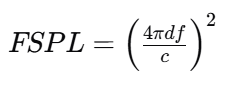
Where:
- d is the distance between the transmitter and receiver.
- f is the signal frequency.
- c is the speed of light.
In a logarithmic scale (decibels), this becomes:

This formula highlights two critical points: signal loss increases with distance (d) and frequency (f). While LoRaWAN operates at lower frequencies compared to Wi-Fi or cellular networks, offering better propagation characteristics, the inverse square law still dictates a fundamental limit to its range. All subsequent factors discussed will add to this baseline attenuation, further contributing to a weak LoRaWAN signal.
Environmental Interference: The Unseen Saboteurs
Beyond physical barriers, many unseen forces can severely impact LoRaWAN signal quality and range. These environmental interferences are often dynamic and can be challenging to diagnose without proper tools. They introduce noise, corrupt data, and effectively drown out the legitimate LoRaWAN signal, making it appear weak or nonexistent.
RF Noise: The Constant Battle for Clarity
Radio Frequency (RF) noise is essentially unwanted radio energy that competes with and disrupts the intended LoRaWAN signal. It’s a pervasive issue in many environments, and its presence is a common reason Why is LoRaWAN signal weak?.
Sources of RF Noise
RF noise can originate from a multitude of sources, both natural and man-made:
- Electrical Equipment: Industrial machinery, motors, power generators, welding equipment, and high-voltage power lines are significant sources of electromagnetic interference (EMI) that manifest as RF noise. These devices often emit broadband noise across various frequencies, including those used by LoRaWAN.
- Power Lines: Overhead power lines, especially those with faulty insulators or arcing, can generate considerable RF noise.
- Other Wireless Devices: Wi-Fi routers, Bluetooth devices, cordless phones, microwave ovens, and other IoT devices operating in nearby or harmonic frequencies can all contribute to the background noise floor. Even fluorescent lights and LED drivers can generate enough RF noise to impact sensitive LoRaWAN communications.
- Natural Phenomena: While less common in typical IoT deployments, natural occurrences like lightning, solar flares, and atmospheric disturbances can also introduce RF noise.
Impact of RF Noise
The presence of RF noise effectively raises the “noise floor” – the baseline level of unwanted electromagnetic signals in an environment. For a LoRaWAN receiver to successfully decode a signal, its strength must be sufficiently above this noise floor. This crucial metric is known as the Signal-to-Noise Ratio (SNR).
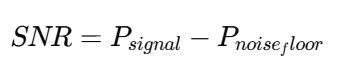
Where Psignal is the signal power and Pnoisefloor is the noise floor power, both typically expressed in dBm.
A higher SNR indicates a clearer signal that is easier to decode. When RF noise increases, the noise floor rises, making it more difficult for the LoRaWAN receiver to distinguish the legitimate data from the interference. This can lead to:
- Reduced Range: To compensate for a lower SNR, the receiver effectively needs a stronger incoming signal. This translates directly to a reduced effective range, as distant signals, already attenuated, may fall below the discernible threshold.
- Increased Packet Error Rate (PER): Even if the signal is eventually received, high noise levels increase the probability of errors in the data packets. This necessitates retransmissions, consuming more power and reducing overall network efficiency.
- Lower Data Rates: LoRaWAN utilizes different spreading factors (SF) to trade off data rate for range and robustness. In noisy environments, higher spreading factors (which are slower but more resilient to noise) might be required, reducing the network’s throughput.
Mitigating RF noise often involves careful site surveys, identifying and shielding noise sources, and judicious placement of LoRaWAN gateways and sensors away from known interference generators.
Network Congestion: The Overwhelmed Airwaves
While LoRaWAN is designed for efficiency, even dedicated airwaves can become congested. Network congestion occurs when too many devices attempt to transmit data simultaneously on the same channel, leading to collisions and lost data packets. This is another significant factor contributing to a weak LoRaWAN signal experience.
LoRaWAN’s ALOHA Protocol and Collisions
LoRaWAN primarily uses a variant of the ALOHA protocol for uplink transmissions (from end-devices to gateways). In a pure ALOHA scheme, devices transmitwhenever they have data, without checking if the channel is free. If two or more devices transmit at the same time on the same frequency with overlapping spreading factors and bandwidths, their signals “collide,” rendering them undecipherable by the gateway.
LoRaWAN’s robustness against collisions is enhanced by its use of different spreading factors. Signals with different spreading factors are largely orthogonal and can be decoded simultaneously by a single gateway. However, if multiple devices using the same spreading factor and same frequency transmit concurrently, a collision is highly probable.
Impact of Congestion
- Packet Loss: The most direct consequence of congestion is packet loss. Lost packets mean lost data and an unreliable network.
- Retransmissions: If data is critical, the end-device might be programmed to retransmit lost packets. While retransmissions can improve reliability, they consume more battery power and further contribute to network traffic, exacerbating the congestion problem.
- Reduced Throughput: Even if devices eventually succeed in transmitting, the increased collision rate and retransmissions reduce the overall effective data throughput of the network.
- Perceived Weak Signal: From the perspective of an application, frequent packet loss due to congestion can manifest as a “weak signal” because data isn’t reliably reaching its destination, even if the radio signal strength itself is adequate.
Addressing Network Congestion
Addressing network congestion involves several strategies:
- Optimized Device Behavior: Implementing smart transmission schedules, sending data only when necessary, and using adaptive data rates can minimize unnecessary transmissions.
- Increased Gateway Density: Deploying more gateways in a densely populated area can distribute the load and provide alternative reception paths, effectively reducing the number of devices contending for any single gateway’s attention.
- Frequency Planning: For multi-channel gateways, ensuring devices utilize a range of available frequencies can reduce collisions.
- Adaptive Spreading Factor (ADR): LoRaWAN’s Adaptive Data Rate (ADR) mechanism allows the network server to optimize the spreading factor and transmit power for each device. By moving devices to lower spreading factors (and thus higher data rates, using less airtime) when signal conditions are good, ADR can significantly reduce airtime usage and congestion.
Signal Overpowering (Capture Effect): The Bully on the Airwaves
The Capture Effect is a fascinating and often frustrating phenomenon in wireless communications. It’s a specific type of interference where a strong, nearby signal on the same frequency can completely drown out a weaker, more distant signal that arrives at the receiver simultaneously. This is a crucial, though sometimes subtle, reason Why is LoRaWAN signal weak? in certain scenarios.
How the Capture Effect Works
A LoRaWAN gateway, like any radio receiver, has a single radio front-end for each channel. If two signals arrive at the same time on the same frequency and with the same spreading factor, and one signal is significantly stronger than the other (typically by 6 dB or more), the receiver will “capture” and decode the stronger signal, completely ignoring the weaker one. The weaker signal is effectively treated as noise.
This isn’t a flaw in LoRaWAN; it’s a characteristic of how radio receivers operate. The stronger signal saturates the receiver’s front end, making it impossible to resolve the much fainter signal.
Impact of Capture Effect
- Range Asymmetry: The most significant impact is on network coverage. A device far from a gateway might have its signal overpowered by a device much closer to that same gateway, even if the distant device’s signal would otherwise be perfectly decodable. This creates “dead zones” at the edge of the network where devices cannot communicate reliably.
- Unpredictable Connectivity: The Capture Effect can lead to intermittent connectivity. A distant device might communicate successfully until a nearby device transmits, at which point its signal is captured, and its communication fails.
- Hidden Node Problem: In densely deployed networks, this can exacerbate the “hidden node” problem, where devices are out of range of each other but within range of the same gateway, leading to collisions that neither device can detect.
Mitigating the Capture Effect
Mitigating the Capture Effect requires careful network planning:
- Gateway Placement and Density: Strategic placement of gateways to minimize overlaps in “strong signal” zones can help. Increasing gateway density can also reduce the average distance between devices and gateways, making signal strength disparities less extreme.
- Antenna Selection and Tuning: Using antennas with specific radiation patterns can help. For example, a gateway antenna with a slightly downward tilt can reduce the very strong signals from extremely close devices, balancing the reception across its coverage area.
- Frequency and Spreading Factor Diversity: LoRaWAN already employs multiple channels and spreading factors. Ensuring devices use different channels and/or spreading factors where possible can reduce the likelihood of simultaneous, overpowering transmissions on the exact same parameters.
- Adaptive Transmit Power: While ADR helps optimize spreading factors, dynamically adjusting transmit power based on signal quality can also help prevent nearby devices from transmitting with unnecessarily high power, which could overpower others.
Physical Obstructions: The Visible Barriers
While environmental interference is often invisible, physical obstructions are tangible barriers that block, absorb, or reflect radio signals. These are frequently the “biggest headache” in real-world LoRaWAN deployments and are key reasons Why is LoRaWAN signal weak?. Understanding how different materials interact with radio waves is critical for successful network planning.
Signal-Blocking Materials: When Walls and Windows Become Shields
Many common building materials, and even specialized ones, act as formidable barriers to LoRaWAN signals.
Metal: The Ultimate Reflector
Metal is highly conductive and acts as an excellent reflector for radio waves. When a LoRaWAN signal encounters a metallic surface, it doesn’t pass through but instead bounces off, changing its direction.
- Impact: If a metal wall, beam, or even a large metal cabinet is directly between a sensor and a gateway, the signal will be reflected away, preventing it from reaching its destination. This creates “shadow zones” where communication is impossible. In some cases, reflections can lead to multipath propagation, where the signal arrives at the receiver via multiple paths, potentially causing interference if the delayed reflected signals are out of phase.
- Examples: Metal industrial shelving, large machinery, elevator shafts, reinforced concrete with dense rebar, metal siding on buildings, and even metal signage.
Concrete Walls: The Signal Absorbers
Concrete, particularly thick or reinforced concrete, is a significant absorber of radio frequency energy. Unlike metal, which reflects, concrete tends to absorb the signal and dissipate its energy.
- Impact: Each concrete wall a LoRaWAN signal passes through will significantly attenuate its strength. The thicker the wall and the more reinforcement (rebar) it contains, the greater the attenuation. Multiple concrete walls in series can quickly render a signal undetectable. Typical attenuation for a single interior concrete wall can range from 10-20 dB, which is a substantial loss for a low-power signal.
- Examples: Building foundations, basement walls, interior load-bearing walls in commercial buildings, parking garages, and industrial facilities.
Low-E Glass: The Modern Signal Blocker
Low-Emissivity (Low-E) glass is increasingly common in modern energy-efficient buildings. While excellent for thermal insulation, it poses a significant challenge for wireless signals. Low-E glass contains a thin, transparent metallic coating that reflects infrared radiation, thereby reducing heat transfer.
- Impact: This metallic coating also reflects or absorbs radio frequency signals, essentially acting like a metal shield. A gateway placed inside a building with Low-E glass windows might struggle to communicate with outdoor sensors, even if there’s a clear line of sight through the window. Conversely, sensors inside might have difficulty reaching an outdoor gateway.
- Examples: Most modern office buildings, energy-efficient homes, and any structure designed with advanced thermal performance in mind. This is often an overlooked factor that leads to a weak LoRaWAN signal in seemingly open environments.
Water: The Unsuspecting Absorber
Water is a highly effective absorber of radio frequency energy, particularly at higher frequencies. Even though LoRaWAN operates at sub-gigahertz frequencies, significant bodies of water or high humidity environments can still impact signal strength.
- Impact: Large bodies of water (lakes, rivers, oceans) can absorb signals that attempt to travel across them, especially if antennas are close to the water surface. Dense foliage, especially lush, wet trees, contains a significant amount of water. This “wet foliage” acts as an absorbent barrier, weakening signals passing through it.
- Examples: Deployments across rivers or lakes, sensors located within dense, wet forests, highly humid industrial environments, or even very heavy rainfall. Rain, fog, and humidity can slightly degrade signal quality by absorbing some of the RF energy.
The practical implication of these materials is that they can severely limit the effective Line-of-Sight (LoS), even when optically clear. A signal path might appear unobstructed to the naked eye, but a Low-E window or a reinforced concrete wall can still render the LoRaWAN signal weak.
Dense Urban Environments: The Concrete Jungle Effect
Dense urban environments are arguably the most challenging for LoRaWAN deployments. They combine many of the previously mentioned physical obstructions and also introduce complexities related to signal propagation. The concrete jungle is a prime example of Why is LoRaWAN signal weak? in sprawling cities.
Building and Urban Density
Cities are characterized by high concentrations of buildings, often constructed from concrete, steel, and glass.
- Impact: Each building acts as a barrier, causing significant signal attenuation through absorption (concrete, steel) and reflection (metal, glass). Signals are forced to navigate a complex labyrinth of structures, leading to a phenomenon known as multipath propagation. Signals can reflect off multiple surfaces, arriving at the receiver at different times and potentially out of phase, leading to destructive interference and signal fade.
- Non-Line-of-Sight (NLoS): Achieving true Line-of-Sight (LoS) in an urban environment is rare. Most communication occurs in Non-Line-of-Sight (NLoS) conditions, where the signal must bend, reflect, or diffract around obstacles. Each of these interactions weakens the signal considerably.
- Urban Canyons: Streets lined with tall buildings create “urban canyons.” Signals transmitted within these canyons can be trapped, bouncing off walls, leading to increased multipath and rapid signal degradation.
- Limited Range: Due to these factors, the practical LoRaWAN range in dense urban areas is significantly reduced, typically to 2-5 km, compared to 15-20 km in suburban or rural zones.
Reflection and Scattering
The multitude of surfaces in an urban setting – buildings, vehicles, street furniture – cause widespread reflection and scattering of radio signals.
- Multipath Fading: While reflections can sometimes enable NLoS communication by finding alternative paths, excessive multipath can lead to destructive interference, where reflected signals cancel out the direct signal or each other, resulting in deep signal fades.
- Signal Clutter: The abundance of reflected signals creates a complex RF environment, making it harder for the gateway to isolate and decode the intended signal accurately.
Electrical Noise Amplification
Urban environments are also hubs of electrical activity. The sheer volume of electronics, industrial processes, and transportation infrastructure exacerbates the RF noise problem discussed earlier. Building materials can also sometimes trap and amplify this noise, further impacting LoRaWAN signal clarity.
Effectively deploying LoRaWAN in dense urban environments requires a much higher density of gateways, strategic placement at higher elevations, and often the use of specialized antennas to combat the pervasive physical obstructions and interference.
Natural Barriers: Topography and Flora
Beyond the man-made landscape, natural features also play a significant role in determining LoRaWAN range. Terrain and vegetation can absorb, block, and scatter signals, explaining Why is LoRaWAN signal weak? in many outdoor or rural deployments.
Terrain: Hills, Valleys, and the Earth’s Curve
The topography of the land directly impacts Line-of-Sight (LoS).
- Hills and Mountains: Hills and mountains act as impenetrable obstacles, completely blocking LoS propagation. Signals cannot pass through solid earth. This creates “shadow zones” behind elevated terrain, where communication is impossible. Even if a signal can diffract over a hilltop, it experiences significant attenuation.
- Valleys: Devices located in valleys or depressions may struggle to establish contact with gateways placed on higher ground, as the surrounding terrain blocks their direct signal path.
- Curvature of the Earth: Over very long distances (many tens of kilometers), the curvature of the Earth itself becomes a factor, gradually pulling the line-of-sight below the horizon, effectively limiting range even in perfectly flat environments.
Dense Forests and Foliage
As discussed under “Water,” dense vegetation, especially forests, presents a significant challenge.
- Absorption: Trees and plants contain a high percentage of water, which absorbs RF energy. The thicker and denser the foliage, the greater the absorption. This attenuation is particularly pronounced when trees are wet.
- Scattering: Dense foliage also causes significant scattering of radio signals. Leaves and branches act as small, irregular surfaces that disperse the signal in multiple directions, reducing the energy directed towards the receiver.
- Seasonal Variation: The impact of foliage can vary seasonally. Trees in full leaf will cause more attenuation than bare trees in winter.
Heavy Rain and Atmospheric Conditions
While often considered minor, severe weather can contribute to a weak LoRaWAN signal.
- Rain and Fog: Heavy rainfall, dense fog, and even significant humidity contain tiny water droplets that can absorb and scatter RF signals. The density of the water particles determines the level of attenuation. While typically less impactful than physical obstructions, extreme weather conditions can marginally degrade signal quality.
- Atmospheric Interference: Atmospheric conditions can also introduce temporary interference or affect signal refraction, though this is usually more relevant for very long-distance or satellite communications than typical LoRaWAN.
Deploying LoRaWAN in rural or natural environments necessitates careful consideration of terrain maps, forest density, and local weather patterns to strategically place gateways for optimal coverage.
Beyond Obstacles: Other Factors Influencing LoRaWAN Range
While environmental interference and physical obstructions are the primary culprits behind a weak LoRaWAN signal, several other technical and deployment-related factors also play a critical role in determining effective range.
Antenna Height, Type, and Quality
The antenna is the primary interface between the LoRaWAN device/gateway and the radio waves. Its characteristics are paramount to range.
- Height: “The taller, the better view!”. Increasing the height of both the gateway and device antennas is one of the most effective ways to improve LoRaWAN range. A higher antenna is more likely to achieve Line-of-Sight (LoS) over obstacles like buildings, hills, and trees, drastically reducing the impact of physical obstructions.
- Antenna Type:
- Omnidirectional Antennas: These radiate signals equally in all horizontal directions, making them suitable for covering a wide area from a central point. Most LoRaWAN gateways use omnidirectional antennas.
- Directional Antennas: These focus the signal energy in a specific direction, leading to a much stronger signal (higher gain) in that direction but providing little to no coverage elsewhere. They are ideal for point-to-point links or covering a specific distant area.
- Antenna Gain: Measured in dBi (decibels isotropic), antenna gain indicates how effectively an antenna converts electrical power into radio waves in a particular direction. Higher gain antennas concentrate more power into a narrower beam, extending range in that direction. However, regulatory limits on Effective Isotropic Radiated Power (EIRP) must be adhered to.
- Quality: A high-quality antenna with low-loss cables is essential. Poorly matched or low-quality antennas and excessively long or cheap cables can introduce significant signal loss, effectively diminishing the transmitter’s power and making the LoRaWAN signal weak before it even leaves the antenna. Mounting antennas at least 3 feet above rooftops helps avoid ground reflection losses.
Transmit Power
Transmit power refers to the strength of the radio signal emitted by the LoRaWAN device or gateway.
- Impact: Higher transmit power generally leads to a longer range, as the signal can overcome more attenuation before becoming too weak to decode. However, there are trade-offs:
- Battery Life: Higher transmit power consumes significantly more energy, drastically reducing the battery life of end-devices – a critical consideration for LoRaWAN’s low-power promise.
- Regulatory Limits: All radio devices must adhere to strict regional regulatory limits (e.g., EIRP limits) to prevent interference with other systems.
- Capture Effect: As discussed, overly powerful nearby transmissions can overpower weaker, distant ones due to the Capture Effect.
- Adaptive Data Rate (ADR): LoRaWAN’s ADR mechanism is designed to optimize transmit power and spreading factor. When a device has good signal quality, ADR can reduce its transmit power and use a lower spreading factor, saving battery and airtime. Conversely, if the signal is weak, it can increase transmit power (up to legal limits) and use a higher spreading factor.
Spreading Factor (SF) and Data Rate
LoRa modulation utilizes a unique parameter called the Spreading Factor (SF), which directly impacts data rate, range, and immunity to interference.
- SF and Range: A higher spreading factor (e.g., SF12) spreads the data across a wider frequency band, making the signal more robust, easier to distinguish from noise, and therefore able to travel longer distances. However, this comes at the cost of a lower data rate and longer airtime, consuming more battery power.
- SF and Data Rate: A lower spreading factor (e.g., SF7) uses less airtime, resulting in higher data rates and lower power consumption, but offers less range and is less resilient to noise.
- Trade-off: The choice of spreading factor is a direct trade-off between range/robustness and data rate/power consumption. A weak LoRaWAN signal might necessitate the use of a higher spreading factor, reducing the effective data throughput.
Receiver Sensitivity
The receiver sensitivity of the LoRaWAN gateway is a crucial characteristic. It indicates the minimum signal strength (in dBm) the receiver can reliably detect and decode.
- Impact: A gateway with higher (more negative) receiver sensitivity can detect and decode weaker signals, effectively extending the overall range of the network. This is why high-quality, professional-grade gateways are crucial for maximizing LoRaWAN coverage.
- Noise Figure: Receiver sensitivity is closely related to the receiver’s noise figure, which quantifies the amount of noise added by the receiver itself. A lower noise figure means better sensitivity.
Coaxial Cables and Connectors
Often overlooked, the quality and length of the coaxial cable connecting the gateway to its antenna, along with the connectors, can significantly impact signal strength.
- Cable Loss: Coaxial cables introduce signal loss, especially over longer distances and at higher frequencies. Lower quality or thinner cables have higher loss per meter. Using long, cheap cables between the gateway and antenna is a common mistake that contributes to a weak LoRaWAN signal.
- Connectors: Poorly installed or low-quality connectors can also introduce significant signal loss and impedance mismatches, leading to reflections and further signal degradation.
- Recommendation: Always use high-quality, low-loss coaxial cables (e.g., LMR-400 equivalent or better for longer runs) and properly installed, weather-sealed connectors. Keep cable runs as short as possible.
Maximizing Your LoRaWAN Range: Practical Strategies
Understanding Why is LoRaWAN signal weak? is the first step; the next is implementing strategies to mitigate these issues and maximize network performance. Successful LoRaWAN deployment hinges on careful planning and optimization.
1. Strategic Gateway and Sensor Placement
The bedrock of a robust LoRaWAN network is intelligent placement.
- Elevation is Key: Always prioritize placing gateways and, where possible, sensors at the highest possible elevations. Rooftops, utility poles, and tall masts offer a clear Line-of-Sight, reducing the impact of ground-level obstructions and the Earth’s curvature. Think of it as gaining an advantageous viewpoint over the landscape.
- Line-of-Sight (LoS) Analysis: Before deployment, conduct thorough LoS analysis using topographical maps and 3D building models (for urban areas). Specialized RF planning tools can simulate signal propagation and identify optimal gateway locations, minimizing reliance on Non-Line-of-Sight (NLoS) paths.
- Avoid Obstructions:
- Near Windows/Exterior Walls: For indoor sensors needing to communicate with outdoor gateways, place them near windows (unless it’s Low-E glass) or exterior walls to minimize internal obstructions.
- RF Noise Sources: Keep gateways and sensors away from known sources of RF noise (e.g., heavy machinery, power lines, Wi-Fi routers, large electrical panels). Conduct an RF spectrum analysis during site surveys to identify problematic frequency bands.
- Physical Barriers: Ensure direct paths between sensors and gateways are free from metal, concrete, large bodies of water, or dense foliage. If unavoidable, adjust placement or consider additional gateways.
2. High-Quality Antennas and Cabling
The antenna is not just an accessory; it’s a critical component dictating signal quality.
- Outdoor, Omnidirectional Antennas: For broad coverage, an outdoor-mounted, high-gain omnidirectional antenna is typically recommended for gateways. These antennas radiate signals evenly in a 360-degree pattern, covering a wide area. Ensure they are designed for the specific LoRaWAN frequency band.
- Low-Loss Cables: Invest in high-quality, low-loss coaxial cables (e.g., LMR-400 or higher) for connecting the gateway to its antenna. The longer the cable, the greater the signal loss. Keep cable runs as short as practically possible.
- Proper Mounting: Mount antennas correctly and securely. For rooftop installations, ensure the antenna is at least 3 feet (1 meter) above the roofline to minimize reflections and ground loss. Properly weatherproof all outdoor connections.
- Directional Antennas for Specific Use Cases: In situations requiring coverage in a very specific direction (e.g., bridging a long gap, covering a single distant building), a directional antenna can provide significantly more gain and range in that direction.
3. Leveraging LoRaWAN’s Intelligent Features
LoRaWAN isn’t just about the physical layer; its network protocol offers intelligent features to optimize performance.
- Adaptive Data Rate (ADR): Implement and properly configure ADR. ADR allows the network server to automatically adjust the spreading factor and transmit power of end-devices based on signal quality. This optimizes battery life, minimizes airtime, and ensures devices transmit with the lowest necessary power, reducing the risk of overpowering distant signals.
- Gateway Density: In urban areas or environments with many obstructions, deploy a higher density of gateways. This provides redundant coverage, reduces the average distance between devices and gateways, and helps mitigate the Capture Effect by offering alternative reception points.
- Utilize Multiple Channels and Spreading Factors: LoRaWAN gateways are designed to listen on multiple channels and spreading factors simultaneously. Ensure end-devices are configured to utilize this diversity, reducing the likelihood of collisions and improving network capacity.
4. Site Surveys and Continuous Monitoring
Proactive assessment and ongoing vigilance are crucial.
- Pre-Deployment Site Surveys: Before full deployment, conduct thorough site surveys using LoRaWAN signal strength meters and mapping tools. This allows you to measure actual signal strength (RSSI) and Signal-to-Noise Ratio (SNR) in target areas, identify weak spots, and validate gateway placement.
- Iterative Optimization: LoRaWAN deployment is often an iterative process. Start with an initial setup, assess performance, and then make adjustments to gateway locations, antenna types, or device configurations.
- Network Monitoring: Continuously monitor your LoRaWAN network’s performance, looking for trends in RSSI, SNR, packet loss, and device battery life. Early detection of degraded performance allows for timely intervention, ensuring your network remains robust.
By systematically addressing the factors that weaken LoRaWAN signals and implementing these practical strategies, you can significantly improve the reliability, range, and overall performance of your IoT deployments. The “Long Range” in LoRaWAN is achievable, but it requires respecting the physics of radio propagation and carefully planning your network to work with the environment, not against it.
Conclusion: Mastering the Physics of “Long Range”
The journey to understanding Why is LoRaWAN signal weak? reveals a complex interplay of physics, environmental conditions, and strategic deployment choices. While LoRaWAN inherently promises long-range, low-power communication, real-world performance is fundamentally constrained by factors that interfere with or obstruct radio signals.
We’ve explored how unseen forces like RF noise, network congestion, and the insidious Capture Effect can degrade signal quality and reduce effective range. Concurrently, tangible barriers such as metal, concrete walls, Low-E glass, water, dense urban environments, and natural terrains physically block or absorb critical signal energy.
The “Long Range” in LoRaWAN is not an absolute, but a potential that must be meticulously nurtured through informed decisions. By acknowledging the challenges posed by attenuation, interference, and physical obstacles, and by proactively implementing strategies such as optimal gateway and antenna placement, utilization of high-quality components, and intelligent network management features like ADR, we can bridge the gap between theoretical capabilities and reliable, real-world performance.
A robust LoRaWAN network is a testament to careful planning and a deep appreciation for the science behind wireless communication. It’s about empowering your IoT devices to connect reliably, ensuring the integrity of your data, and ultimately, realizing the full potential of your IoT vision.
Is your LoRaWAN deployment struggling with weak signals or unreliable connectivity?
Don’t let the invisible forces of interference and obstruction hinder your IoT success. At IoT Worlds, we specialize in optimizing LoRaWAN networks for maximum range and reliability. Our experts can help you conduct comprehensive site surveys, troubleshoot existing issues, and design robust solutions tailored to your unique environment.
Reach out today to discuss how we can transform your weak signals into strong connections.
Email us at info@iotworlds.com to inquire about our consultancy services and ensure your “Long Range” vision becomes a tangible reality.
