

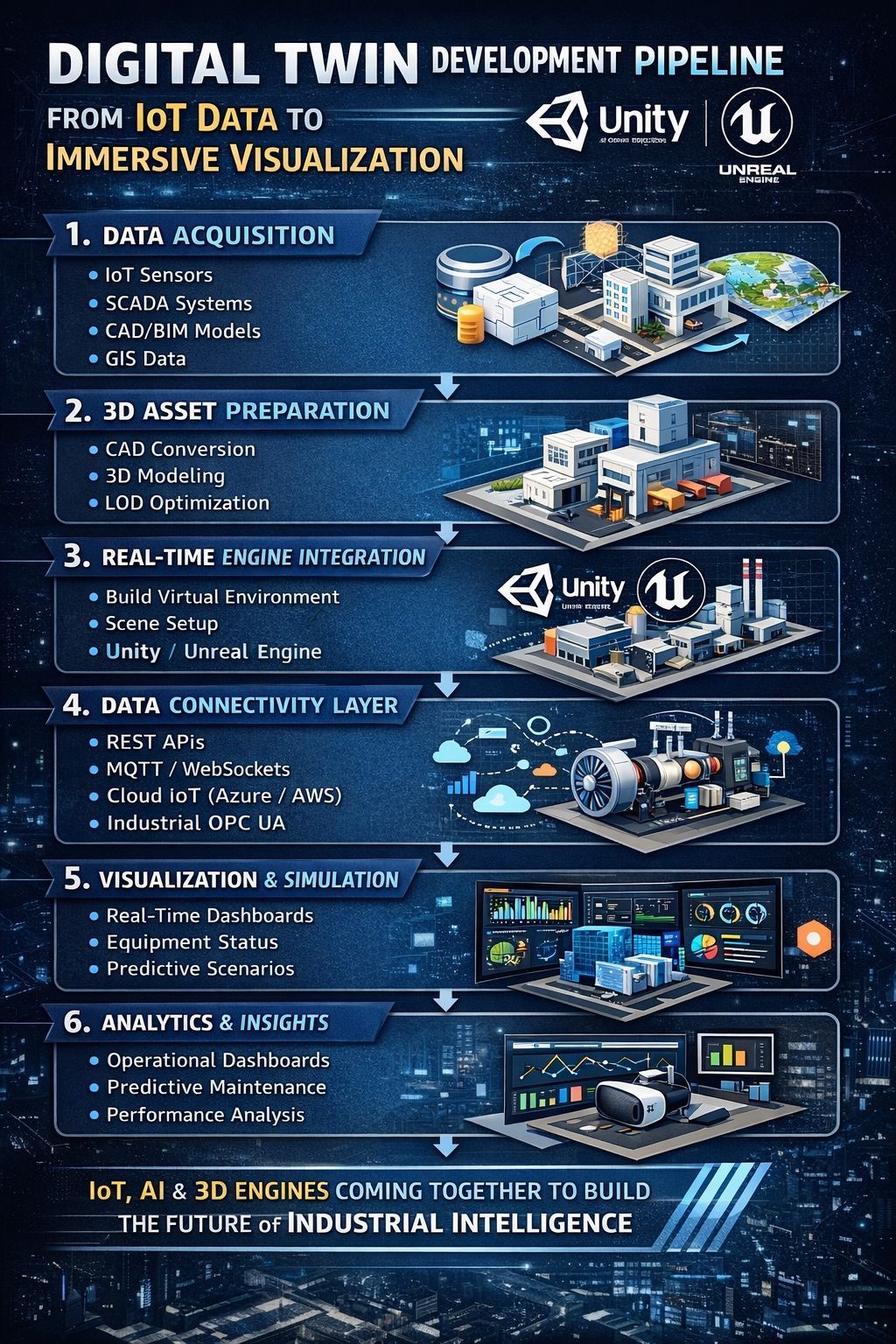
Digital twins are no longer a futuristic concept; they are a present-day reality rapidly transforming industries across the globe. From optimizing complex manufacturing processes and enhancing urban infrastructure to revolutionizing energy management and fostering smart cities, digital twins offer an unparalleled capability to monitor, analyze, predict, and ultimately control physical assets and systems in real-time. This profound shift is powered by the convergence of real-time data, sophisticated simulation models, and immersive visualization technologies. The ability to create a living, synchronized virtual representation of a physical entity allows organizations to gain unprecedented insights, predict potential failures, and make data-driven decisions that translate into significant operational efficiencies and strategic advantages.
At the heart of this revolution are powerful real-time engines like Unity and Unreal Engine. These platforms, traditionally known for gaming, have evolved into robust environments for building interactive, visually rich, and highly functional digital twin applications. They provide the necessary tools for creating stunning 3D visualizations, integrating diverse data sources, and enabling dynamic interactions that bring the virtual copy of a physical system to life.
This article delves into the practical development pipeline for building enterprise-grade digital twin solutions. We will explore each critical stage, from the fundamental process of acquiring real-world data to the sophisticated mechanisms of integration, visualization, analytics, and deployment, culminating in the delivery of an immersive and intelligent digital twin experience.
The Genesis of a Digital Twin: Data Acquisition
The cornerstone of any effective digital twin is a rich, accurate, and continuous stream of real-world data. Without this foundational element, a digital twin remains merely a static 3D model. The data acts as the lifeblood, constantly updating the virtual representation to reflect the precise state and behavior of its physical counterpart. This acquisition process is multifaceted, drawing from various sources to create a comprehensive data landscape.
IoT Sensors: The Eyes and Ears of the Physical World
IoT (Internet of Things) sensors are perhaps the most common and vital source of real-time data for digital twins. These miniature devices, embedded within machinery, infrastructure, and environments, are designed to collect specific parameters, providing a continuous pulse of information from the physical world.
- Temperature Sensors: Crucial for monitoring environmental conditions in buildings, detecting overheating in machinery, or ensuring optimal process temperatures in industrial settings. In a smart city digital twin, temperature sensors could monitor localized heat islands, informing urban planning decisions.
- Vibration Sensors: Essential for predictive maintenance in manufacturing and energy sectors. By detecting abnormal vibration patterns in motors, pumps, or wind turbines, these sensors can signal impending equipment failure, allowing for proactive intervention and preventing costly downtime.
- Pressure Sensors: Utilized in pipelines, HVAC systems, and hydraulic equipment to monitor system integrity and performance. Deviations from expected pressure ranges can indicate leaks, blockages, or operational inefficiencies.
- Humidity Sensors: Important for environmental control in data centers, agricultural facilities, or museum archives, where precise humidity levels are critical for asset preservation or optimal growth conditions.
- Proximity and Presence Sensors: Used in smart buildings for occupancy detection, lighting control, and energy management, providing data for optimizing space utilization and resource consumption.
- Air Quality Sensors: Increasingly important in industrial and urban environments to monitor pollutants, providing actionable data for health and safety compliance, and informing environmental management strategies.
The sheer volume and velocity of data generated by these sensors necessitate robust IoT platforms and communication protocols to ensure efficient and reliable data transmission to the digital twin’s backend.
SCADA Systems: The Industrial Control Backbone
In industrial environments, Supervisory Control and Data Acquisition (SCADA) systems play a pivotal role in collecting and controlling data from geographically dispersed equipment. These systems monitor and control industrial processes, providing a centralized interface for operators.
Integrating SCADA data into a digital twin offers a holistic view of the operational status of an entire plant or facility.
- Process Variables: Digital twins can leverage SCADA data for real-time monitoring of critical process variables such as flow rates, tank levels, motor speeds, and valve positions. This enables operators to visualize the ongoing state of production lines or utility networks within the immersive digital twin environment.
- Alarm and Event Data: SCADA systems generate numerous alarms and events. Incorporating this into the digital twin allows for immediate visualization of critical incidents and their precise location within the 3D model, facilitating faster response times and diagnosis.
- Control Data: Beyond monitoring, digital twins can sometimes integrate with SCADA to display the current control commands being issued, offering a comprehensive understanding of automated operations.
By bringing SCADA data into the digital twin, organizations can move beyond traditional 2D dashboards to a spatial, real-time representation of their industrial operations, enhancing situational awareness and decision-making for operators and managers alike.
CAD/BIM Engineering Models: The Blueprint of Reality
Computer-Aided Design (CAD) and Building Information Modeling (BIM) models provide the essential geometric and semantic information about physical assets and environments. These models serve as the foundational blueprint upon which the digital twin’s visual representation is built.
- CAD Models: For individual components and machinery, CAD models provide precise 3D geometry, material specifications, and assembly information. This detail is crucial for creating accurate virtual replicas of industrial equipment, vehicles, or consumer products.
- BIM Models: For buildings and infrastructure projects, BIM models offer a rich dataset that includes architectural, structural, and MEP (mechanical, electrical, plumbing) information. A BIM-integrated digital twin can visualize the internal layout of a building, locate specific assets, and understand the interplay of various systems. For example, a digital twin of a smart building could leverage BIM data to visualize the energy consumption of specific floors or rooms alongside environmental sensor data.
These engineering models provide the initial structure for the digital twin, ensuring that the virtual representation is geometrically accurate and contextually rich, offering a powerful visual foundation for integrating live data.
GIS and Spatial Datasets: Understanding the Environment
Geographic Information Systems (GIS) and other spatial datasets provide the geographical context for digital twins, especially for large-scale applications like smart cities, infrastructure networks, or agricultural land.
- Mapping and Topography: GIS data offers detailed base maps, terrain models, and topographical information, providing the geographical canvas for a large-scale digital twin. This is essential for visualizing a city, a railway network, or a wind farm within its actual geographical context.
- Asset Location: GIS can precisely pinpoint the location of various assets within a broader area, such as streetlights, utility poles, sensor deployments, or individual buildings in a smart city. This spatial awareness is critical for managing and maintaining geographically distributed assets.
- Environmental Data: Satellite imagery, weather patterns, and environmental sensor networks (often integrated through GIS) can feed into a digital twin to provide comprehensive environmental context. For example, a digital twin for urban planning might integrate GIS data on traffic flow, air quality, and noise pollution to model and simulate the impact of new developments.
Integrating GIS data ensures that the digital twin operates within a true-to-life spatial context, enabling location-aware monitoring, analysis, and simulation.
Historical Operational Data: Learning from the Past
Beyond real-time streams, historical operational data provides invaluable context for understanding long-term trends, identifying patterns, and training predictive models.
- Performance Logs: Past performance records of machinery, systems, or processes can be used to establish baseline operational parameters and identify deviations from normal behavior.
- Maintenance Records: Historical maintenance logs, including details of repairs, replacements, and service schedules, are crucial for developing predictive maintenance strategies within the digital twin.
- Energy Consumption Data: Long-term energy usage patterns can inform energy optimization strategies and identify inefficiencies over time.
- Event Logs: Records of past events, such as system failures, alarms, or operational anomalies, help in understanding root causes and developing proactive measures to prevent recurrence.
This historical data acts as the memory of the digital twin, informing its predictive capabilities and refining its analytical models, allowing it to learn from past experiences and anticipate future scenarios.
Crafting the Digital Canvas: 3D Asset Preparation
Once the rich tapestry of real-world data begins to form, the next crucial step in developing a digital twin is to translate the raw engineering models and visual concepts into optimized 3D assets suitable for real-time rendering environments. This stage, 3D asset preparation, is about transforming detailed, often complex, engineering blueprints into performance-friendly virtual objects that can be efficiently displayed and interacted with in platforms like Unity or Unreal Engine.
CAD to Real-Time Asset Conversion: Bridging the Design Gap
Engineering design relies heavily on CAD (Computer-Aided Design) software, which produces highly detailed models. While essential for design and manufacturing, these models are often too complex for real-time applications. The process of converting CAD data for real-time engines involves several critical considerations.
- Software and Formats: Specialized software tools are often used to import native CAD formats (e.g., SolidWorks, Catia, AutoCAD) and export them into real-time friendly formats like FBX (Filmbox) or glTF (GL Transmission Format). These formats are specifically designed to store 3D model data, including geometry, materials, textures, and animations, in a way that is optimized for real-time rendering.
- Data Integrity: During conversion, it’s vital to maintain the integrity of the original design intent. This means ensuring that geometric accuracy is preserved while simplifying the model for performance. Losing critical features or proportions can undermine the fidelity of the digital twin.
- Metadata Preservation: CAD models often contain rich metadata – material properties, part numbers, manufacturing details, and more. Effective conversion processes try to preserve this metadata, as it can be invaluable for linking the visual twin to backend data and analytical insights later in the pipeline. This metadata can be exposed within the real-time engine, allowing users to query information about specific components in the virtual environment.
This conversion process is the first step in making highly detailed engineering designs visually accessible and performant within a real-time interactive environment.
Polygon Optimization and Mesh Cleanup: Performance Through Simplification
CAD models are typically built with an emphasis on precision for manufacturing, resulting in an extremely high polygon count which can significantly hinder real-time rendering performance. Polygon optimization and mesh cleanup are crucial steps to reduce this complexity without sacrificing visual fidelity.
- Decimation: This process intelligently reduces the number of polygons (triangles or quads) in a 3D model. Algorithms analyze the mesh and remove polygons that contribute less to the overall shape, preserving essential features and edges. The goal is to achieve a balance between visual quality and performance.
- Mesh Cleanup: CAD imports can sometimes result in problematic geometry, such as non-manifold edges, overlapping faces, or isolated vertices. Mesh cleanup involves correcting these imperfections to ensure rendering stability and prevent visual artifacts.
- Retopology: In some cases, especially for highly complex or organic shapes, manual or automated retopology might be necessary. This involves rebuilding the mesh with a cleaner, more efficient polygon distribution, often with a focus on creating quad-based topology which is generally easier to work with for animations and deformations.
- Material and Texture Optimization: Beyond geometry, materials and textures also need optimization. This includes combining multiple smaller textures into larger atlas textures to reduce draw calls, compressing textures for efficient memory usage, and ensuring that material properties are compatible with the real-time engine’s rendering pipeline.
Effective optimization ensures that the digital twin application runs smoothly across various devices and platforms, from high-end workstations to mobile or XR devices.
LOD Generation for Performance: Scaling Detail Dynamically
Level of Detail (LOD) generation is a technique used in real-time graphics to optimize rendering performance by displaying simpler versions of objects when they are further away from the viewer, and more detailed versions when they are closer. This is particularly important in large-scale digital twins with numerous objects or expansive environments.
- LOD Groups: Objects are assigned to LOD groups, each containing several versions of the same mesh with varying levels of detail (e.g., LOD0 for highest detail, LOD1 for medium, LOD2 for lowest).
- Distance-Based Switching: The real-time engine automatically switches between these LOD levels based on the object’s distance from the camera. When an object is far away, a low-polygon version is rendered, saving computational resources. As the camera approaches, a higher-detail version takes its place.
- Imposter LODs: For very distant or small objects, imposter LODs can be used. This involves replacing a 3D model with a 2D textured billboard, which is extremely efficient to render and still provides a visual representation from a distance.
- Importance-Based LOD: Beyond distance, some LOD systems can also consider the object’s importance or visual impact, prioritizing detail for more critical elements in the scene, even if they are slightly further away.
By implementing LODs, developers can maintain a high visual quality for immediate surroundings while ensuring that the overall scene remains performant, preventing frame rate drops and enhancing the user experience in complex digital twin environments.
Bringing It to Life: Real-Time Engine Integration
With the data sources identified and the 3D assets meticulously prepared, the next pivotal stage in digital twin development is the integration into a real-time engine. This is where the static models and raw data begin to converge, forming a dynamic, interactive virtual environment. Unity and Unreal Engine stand out as the industry-leading platforms for this task, offering powerful toolsets and extensive capabilities.
Building the Virtual Environment: Canvas of the Digital World
Creating the virtual environment involves assembling all the prepared 3D assets into a coherent, spatial representation of the physical system. This virtual space will serve as the primary interface for users to interact with the digital twin.
- Asset Import and Placement: The optimized 3D models (buildings, machinery, components, terrain) are imported into the real-time engine. Developers then precisely place these assets within the virtual scene, mirroring the layout and scale of their physical counterparts. This often involves working with real-world coordinates and measurements to ensure accuracy.
- Hierarchical Structures: Complex systems are often broken down into smaller, manageable components. In the virtual environment, these components are organized into hierarchical structures (parent-child relationships). For instance, a factory digital twin might have a “Factory” object as the parent, with individual “Assembly Line” objects as children, and “Robot Arm” objects as children of the assembly line. This structure is vital for managing interactions, animating parts, and connecting data to specific components.
- Scalability Considerations: For large-scale digital twins, such as entire cities or sprawling industrial complexes, efficiency in environment building is paramount. Techniques like prefab instantiation (reusing pre-configured assets), level streaming (loading and unloading parts of the environment dynamically), and aggressive culling (not rendering objects outside the camera’s view) are employed to manage performance effectively.
The virtual environment provides the immersive context that allows users to spatially understand and navigate the digital twin, moving beyond abstract data points to a tangible, visual representation.
Scene Setup: Setting the Stage for Immersion
Beyond just placing objects, scene setup involves establishing the visual and interactive elements that make the digital twin experience intuitive and engaging. This includes critical aspects like lighting, materials, and atmospheric effects.
- Lighting and Shading: Realistic lighting is crucial for immersion and for highlighting important details within the digital twin. This involves placing various light sources (directional, point, spot), configuring their properties (color, intensity, shadows), and setting up global illumination systems. Proper shading, often implemented through Physically Based Rendering (PBR) materials, makes surfaces react realistically to light, enhancing the visual fidelity. For instance, in a smart factory twin, specific equipment might be highlighted with colored lights to indicate operational status (green for active, red for errors).
- Material Application: Materials define how surfaces look and behave. Applying appropriate materials (metals, plastics, concrete, glass) to the 3D assets helps to accurately represent their physical properties and visual characteristics. This also ties into data integration, as material properties can sometimes be dynamically updated based on real-time sensor data (e.g., a “hot” area might glow red).
- Cameras and Viewpoints: Setting up camera perspectives is essential for navigating the digital twin. This includes defining fixed viewpoints, implementing free-roaming cameras, or creating cinematic camera paths for presentations. The choice of camera controls (first-person, third-person, orbital) depends on the intended user interaction and application type.
- Post-Processing Effects: To enhance visual realism and mood, post-processing effects like ambient occlusion (simulating soft shadows), bloom (light glow), color grading (adjusting overall color), and anti-aliasing (smoothing jagged edges) are often applied. These effects can significantly elevate the visual quality of the digital twin.
A well-executed scene setup creates a visually compelling and intuitive environment, drawing users into the digital twin and facilitating a deeper understanding of the underlying data.
Unity / Unreal Engine: The Powerhouses of Real-Time Interaction
Unity and Unreal Engine are the leading platforms enabling the sophisticated real-time rendering and interactivity required for digital twins. Both offer a rich feature set, but cater to slightly different strengths.
Unity: Versatility and Accessibility
- Ease of Use for Broad Applications: Unity is renowned for its relative ease of learning, particularly with its C# scripting API. This makes it highly accessible for developers from various backgrounds and suitable for a wide range of digital twin applications, from industrial visualization to smart building management.
- Cross-Platform Deployment: One of Unity’s strongest assets is its ability to deploy to virtually any platform – Windows, macOS, Linux, WebGL, iOS, Android, VR headsets (Oculus, SteamVR), and AR devices (HoloLens). This cross-platform capability is crucial for digital twins that need to be accessible across different devices and environments.
- Rich Asset Store: Unity boasts an extensive Asset Store, offering a vast library of pre-made 3D models, tools, scripts, and plugins. This can significantly accelerate the development process, especially for common functionalities or standardized components.
- Data Visualization and UI Capabilities: Unity’s UI toolkit (UI Builder, UGUI) allows for the creation of complex and interactive dashboards directly within the real-time environment, seamlessly blending 3D visualization with data displays. This is critical for presenting sensor readings, analytics, and operational metrics.
Unreal Engine: High Fidelity and Visual Realism
- Photorealism and Visual Quality: Unreal Engine is celebrated for its cutting-edge rendering capabilities, enabling photorealistic visuals that are often indistinguishable from real-world photography. Features like Lumen (real-time global illumination) and Nanite (virtualized micropolygon geometry) allow for incredibly detailed and dynamic scenes. This is particularly advantageous for digital twins where visual fidelity is paramount, such as high-end architectural visualization or detailed industrial equipment twins.
- Blueprint Visual Scripting: Unreal’s Blueprint system provides a powerful visual scripting language, allowing non-programmers and technical artists to create complex functionalities and interactions without writing a single line of code. This can accelerate prototyping and empower a broader team to contribute to the digital twin’s logic.
- Advanced Physics and Simulation: Unreal Engine includes a robust physics engine (Chaos) and can be extended with powerful simulation plugins, making it suitable for digital twins requiring accurate physical behaviors, such as fluid dynamics, structural stress analysis, or intelligent agent simulations.
- Industrial Focused Tools: Epic Games (the creators of Unreal Engine), has made significant investments in tools for industrial use cases, including Datasmith (for CAD/BIM import) and Twinmotion (for architectural visualization), further solidifying its position in the digital twin space.
Both engines offer a powerful foundation, and the choice between Unity and Unreal often depends on project-specific requirements for visual fidelity, performance targets, development team expertise, and deployment platforms. Regardless of the engine, this integration stage transforms static assets into a living, interactive virtual world, ready to be infused with real-time data.
The Lifeblood Connection: Data Connectivity Layer
Once the visually rich 3D environment is established within a real-time engine, the next crucial step is to connect this virtual replica to its physical counterpart through live data. The data connectivity layer is the bridge that continuously feeds real-world information into the digital twin, ensuring its “liveness” and dynamic behavior. This layer employs various protocols and platforms to establish robust and efficient communication channels.
REST APIs: Structured Data Exchange
Representational State Transfer (REST) APIs (Application Programming Interfaces) are a fundamental mechanism for transferring structured data between different software systems over HTTP. They are widely used for pulling historical data, configuration information, or less time-sensitive operational parameters into the digital twin.
- Request-Response Model: REST APIs operate on a request-response model. The digital twin application sends a request (e.g., to a cloud database or a specific device endpoint) and receives a response containing the requested data.
- Data Formats: Data is typically exchanged in lightweight formats like JSON (JavaScript Object Notation) or XML. These formats are easily parsed and integrated into real-time engines.
- Use Cases: REST APIs are excellent for:
- Retrieving daily production reports from an MES (Manufacturing Execution System).
- Fetching detailed maintenance records from a CMMS (Computerized Maintenance Management System).
- Accessing configuration settings for various machines.
- Updating metadata associated with a specific asset in the digital twin.
While REST APIs are highly versatile, they are generally better suited for intermittent data requests or data that doesn’t demand ultra-low latency, due to their synchronous nature.
MQTT / WebSockets: Real-Time Data Streams
For real-time, low-latency data streams, protocols like MQTT and WebSockets are indispensable. These enable the constant flow of sensor data, operational updates, and event notifications from the physical world to the digital twin.
- MQTT (Message Queuing Telemetry Transport):
- Lightweight and Pub/Sub Model: MQTT is a lightweight messaging protocol designed for constrained devices and unreliable networks, making it ideal for IoT sensors. It operates on a publish-subscribe model, where devices (publishers) send data to a central broker (e.g., Mosquitto, HiveMQ, AWS IoT Core) on specific topics. The digital twin application (subscriber) then listens to these topics and receives updates in real-time.
- Low Bandwidth: Its minimal overhead ensures efficient data transmission, even over low-bandwidth connections.
- Use Cases: Perfect for:
- Streaming temperature, pressure, vibration, or humidity readings from hundreds of IoT sensors.
- Receiving immediate alerts or status changes from machinery.
- Updating the state of virtual components within the digital twin as their physical counterparts change.
- WebSockets:
- Persistent Connection: Unlike HTTP (which closes the connection after each request), WebSockets establish a full-duplex, persistent connection between the client (digital twin application) and the server. This allows for continuous, bidirectional communication without the overhead of re-establishing a connection for each data exchange.
- Low Latency: The persistent connection and efficient framing make WebSockets excellent for low-latency, real-time data.
- Use Cases: Suited for:
- Live camera feeds or video streams within the digital twin.
- Interactive control signals for bi-directional communication (though often combined with MQTT for primary sensor data).
- Real-time chat or collaboration features within a multi-user digital twin environment.
Both MQTT and WebSockets are critical for ensuring that the digital twin remains a “living” representation, reflecting the physical world with minimal delay.
Cloud IoT Platforms (Azure / AWS): Managed Integration Services
Modern digital twin architectures often leverage comprehensive cloud IoT platforms like Azure IoT Hub/Digital Twins or AWS IoT Core/TwinMaker. These platforms provide managed services that simplify the ingestion, processing, and management of IoT data at scale.
- Azure IoT Services:
- IoT Hub: A central message hub for bidirectional communication between IoT devices and the cloud. It provides secure connections, device management, and message routing.
- Azure Digital Twins: A platform specifically designed for creating and managing knowledge graphs of digital twins. It allows developers to model entire environments, connect them to live data, and infer relationships between entities. Its Twin Definition Language (DTDL) allows for standardized modeling of physical entities and their properties. Developers use Digital Twin Explorer or SDKs to interact with the twin graph, reading properties and sending commands.
- Integration with Other Azure Services: Seamless integration with Azure Stream Analytics for real-time data processing, Azure Data Explorer for time series data storage, and Azure Machine Learning for predictive analytics.
- AWS IoT Services:
- AWS IoT Core: Similar to IoT Hub, it’s a managed cloud platform that enables connected devices to easily and securely interact with cloud applications and other devices. It supports MQTT, HTTP, and WebSockets.
- AWS IoT TwinMaker: An orchestration layer that connects existing IoT data sources (e.g., IoT SiteWise for time series, S3 for 3D models, DynamoDB for metadata) and visualizes them in 3D environments. It provides a Workspace as the top-level container, Entities representing physical things, Components to connect entities to data sources via Data Connectors (Lambda functions), and Scenes for 3D visualization. This service is designed to simplify the creation of digital twins by abstracting away much of the underlying data management complexity.
- Integration with Other AWS Services: Connects with AWS IoT SiteWise for industrial data, Amazon Kinesis for real-time data streams, and Amazon Sagemaker for machine learning model deployment.
These cloud platforms abstract away much of the infrastructure management, security, and scalability challenges associated with IoT data, allowing developers to focus on building the core digital twin functionality and integrating it into their real-time engine applications.
Industrial Protocols like OPC UA: On-Premise Connectivity
In traditional industrial settings, particularly within Operational Technology (OT) networks, specific protocols are prevalent for communication with PLCs (Programmable Logic Controllers), HMIs (Human-Machine Interfaces), and other industrial control systems. OPC UA (Open Platform Communications Unified Architecture) is a key protocol in this domain.
- Platform-Independent and Secure: OPC UA provides a secure, reliable, and platform-independent mechanism for exchanging data between industrial equipment and other applications. It supports various data types, historical data access, and alarms & events.
- Data Model Discovery: A significant advantage of OPC UA is its ability to discover the data models of connected devices and systems, making it easier to integrate diverse industrial assets.
- Gateways and Connectors: To bring OPC UA data into a cloud-based digital twin or a real-time engine, specialized OPC UA gateways or connectors are often used. These gateways translate the OPC UA data into cloud-friendly formats and protocols (like MQTT) and securely transmit it for further processing and visualization.
- Use Cases:
- Monitoring the real-time status of robotic arms, CNC machines, or conveyor belts on a factory floor.
- Collecting operational parameters from pumps, valves, and sensors in a water treatment plant.
- Integrating data from legacy industrial systems that rely on OPC UA.
Establishing a robust data connectivity layer is paramount. It ensures that the digital twin is not just a static model but a dynamic, real-time reflection of its physical counterpart, continuously updated with the latest operational intelligence. Organizations often use a combination of these approaches, tailoring the connectivity strategy to the specific data sources and application requirements, ensuring seamless and secure data flow from the physical to the virtual.
Seeing is Believing: Visualization & Simulation
With the 3D assets in place and the real-time data flowing seamlessly through the connectivity layer, the digital twin truly comes alive in the visualization and simulation phase. This is where raw data is transformed into actionable insights through immersive visual representations and dynamic predictive models, enabling users to understand, analyze, and interact with the physical system in unprecedented ways.
Real-Time Monitoring Dashboards: A Unified View
Traditional dashboards typically present data as static graphs and charts on a 2D screen. Digital twin applications elevate this by integrating these dashboards directly into the 3D virtual environment, providing a contextualized and unified view of operational data.
- In-World Data Displays: Instead of separate screens, key performance indicators (KPIs), sensor readings, and status updates can be overlaid directly onto the 3D models of the equipment or areas they pertain to. For example, a temperature gauge could appear hovering above a virtual piece of machinery, or a color-coded heat map could visualize energy consumption across a building’s floor plan.
- Dynamic Data Representation: Dashboards within the digital twin are dynamic, updating in real-time as new data flows in. This might involve animated graphs, numerical readouts, or visual alerts that change color or flash to indicate critical thresholds being met or exceeded.
- Customizable Layouts: Users can often customize the layout of these in-world dashboards, choosing which data points to display, their size, and their position, to suit their specific monitoring needs.
- Interactive Elements: These dashboards are not just passive displays. They can include interactive elements that allow users to drill down into more detailed information, filter data by time range, or trigger specific operations (e.g., opening a valve in a virtual representation to reflect a physical command).
By embedding real-time dashboards directly into the 3D canvas, operators gain immediate spatial context for the data, making it easier to identify problems, understand relationships, and make informed decisions.
Equipment Status Visualization: At-a-Glance Operational Insight
One of the most powerful aspects of a digital twin is its ability to provide an immediate, at-a-glance understanding of the operational status of individual pieces of equipment or entire systems.
- Color-Coding for State: A common technique is to use color-coding on the 3D models. For instance, a machine might appear green if it’s operating normally, yellow if it’s in a warning state, and red if it has failed or requires immediate attention. This visual cue can be applied to individual components or entire sub-systems.
- Animated Status Indicators: Beyond static colors, animated elements can convey status. Spinning fans, moving conveyor belts, or flashing lights within the virtual model can directly reflect the real-time activity of their physical counterparts.
- Annotated Information: Hovering over or selecting a piece of equipment in the digital twin can bring up contextual information, such as its current operational parameters, last maintenance date, or predicted time to failure.
- Fault Localization: When an issue arises, the digital twin can visually highlight the exact location of the problematic component within the complex assembly, significantly accelerating fault diagnosis and resolution. This is particularly valuable in large-scale industrial facilities where pinpointing a fault physically can be time-consuming and challenging.
This visual feedback loop between the physical and virtual worlds allows for rapid comprehension of operational health, enabling predictive maintenance, optimizing asset utilization, and reducing downtime.
Predictive Simulation Scenarios: Proactive Decision-Making
Beyond merely reflecting the present state, digital twins offer the profound capability to simulate future scenarios based on real-time data and predictive models. This moves the organization from reactive problem-solving to proactive strategic planning.
- “What-If” Analysis: Users can adjust parameters within the digital twin (e.g., increase production speed, change environmental conditions, simulate component failure) and observe the simulated impact on the entire system. This allows for risk assessment without affecting real-world operations.
- Operational Optimization: Simulations can be used to test different operational strategies. For instance, in a smart factory digital twin, one could simulate rescheduling production runs to identify the most efficient sequence, minimizing bottlenecks and maximizing throughput.
- Predictive Maintenance Models: Integrating machine learning models (trained on historical and real-time data) allows the digital twin to predict when a component is likely to fail. This prediction can then be visualized, for example, by showing a “remaining useful life” countdown or highlighting components at high risk in the 3D model. This enables maintenance teams to schedule interventions proactively, before a critical failure occurs.
- Training and Planning: Digital twin simulations provide a safe, virtual environment for training new personnel on operating complex machinery or for rehearsing emergency response procedures, without any risk to physical assets or personnel.
- Design Validation: For new product development or system upgrades, simulations within the digital twin can validate design changes, predict performance under various conditions, and identify potential issues before physical prototyping, significantly reducing development costs and time.
The integration of advanced simulation capabilities transforms the digital twin into a powerful predictive tool, enabling organizations to anticipate challenges, optimize performance, and innovate with confidence. This seamless blending of real-time monitoring and forward-looking simulation is a hallmark of truly advanced digital twin implementations.
Unlocking Deeper Value: Analytics & Insights
While real-time visualization shows “what is,” the analytics and insights stage dives deeper into “why” and “what next.” This phase leverages the rich data collected and displayed by the digital twin to extract meaningful patterns, predict future states, and provide actionable intelligence that drives smarter decision-making and continuous improvement. This is where the raw data truly transforms into strategic advantage.
Operational Dashboards: Comprehensive Performance Overview
Building upon the in-world monitoring, dedicated operational dashboards provide a more in-depth and often customizable view of performance metrics, trends, and anomalies across the entire system or specific sub-systems.
- Aggregated KPIs: These dashboards display a holistic view of Key Performance Indicators (KPIs) relevant to the operation, such as overall equipment effectiveness (OEE), energy consumption rates, production yield, downtime percentages, or infrastructure utilization.
- Trend Analysis: Interactive charts and graphs allow users to analyze historical trends, identify cyclical patterns, and compare current performance against past benchmarks or target values. For example, an energy manager could review the hourly power consumption of a building over the past month to identify peak usage times and potential areas for optimization.
- Customizable Reporting: Users can often generate custom reports based on specific time periods, equipment types, or operational metrics. These reports can be scheduled or generated on-demand for various stakeholders.
- Cross-Reference Data: Operational dashboards can consolidate data from various sources (IoT sensors, SCADA, ERP systems, CMMS) into a single, coherent view. This integrated data allows for correlation analysis, helping to understand the interplay between different factors affecting performance.
- Alert History and Management: A centralized view of all past and current alerts, their severity, and resolution status provides a critical audit trail and helps in identifying recurring issues.
These dashboards serve as the command center for understanding the broader operational picture, helping managers and engineers identify systemic issues and areas for improvement that might not be immediately apparent from individual sensor readings.
Predictive Maintenance Alerts: Anticipating and Preventing Failures
One of the most significant value propositions of digital twins is their ability to enable predictive maintenance, moving away from reactive (fix-it-when-it-breaks) or preventive (schedule-based) maintenance to a more intelligent, condition-based approach.
- Machine Learning Models: At the core of predictive maintenance are advanced machine learning models. These models are trained on historical data (sensor readings, maintenance logs, operational parameters) to learn the “normal” operating signature of equipment and identify anomalies that precede failures.
- Early Warning Systems: The digital twin constantly monitors real-time sensor data and feeds it into these ML models. When the models detect deviations or patterns indicative of impending failure, they trigger predictive maintenance alerts. These alerts can be prioritized by severity and predicted time to failure.
- Visualization of Risk: Within the 3D digital twin, components at high risk of failure can be visually highlighted (e.g., glowing red, flashing icons) to draw immediate attention. The twin might also display the “remaining useful life” (RUL) of a component, offering a quantifiable prediction.
- Automated Work Order Generation: Advanced digital twin systems can integrate with Enterprise Asset Management (EAM) or Computerized Maintenance Management Systems (CMMS) to automatically generate work orders for maintenance teams when a predictive alert is triggered. These work orders can include detailed information about the predicted fault, the affected component, and suggested repair procedures.
- Root Cause Analysis Support: By correlating sensor data leading up to a predicted failure, the digital twin can assist maintenance technicians in identifying the probable root cause, speeding up diagnosis and repair.
Predictive maintenance alerts dramatically reduce unplanned downtime, optimize spare parts inventory, extend asset lifespan, and lower overall maintenance costs, offering a substantial ROI for digital twin investments.
Performance Analysis: Continuous Improvement and Optimization
Performance analysis takes the insights gained from operational dashboards and predictive alerts a step further, aiming for continuous improvement and strategic optimization of processes and resource utilization.
- Bottleneck Identification: By visualizing the flow of materials or data through a virtual factory or logistics network, performance analysis can identify bottlenecks in real-time or through simulation. For example, a digital twin might show where materials are accumulating or where energy consumption spikes during specific operational phases.
- “What-If” Analysis with Data: Building on predictive simulation, performance analysis uses real historical data to drive “what-if” scenarios. An engineer could simulate the impact of adjusting machine speeds, changing staffing levels, or introducing new equipment on overall production efficiency and cost.
- Resource Utilization Optimization: The digital twin can track the utilization rates of various assets (machines, vehicles, personnel). By analyzing underutilized or overutilized resources, management can make informed decisions to reallocate resources, balance workloads, and maximize efficiency.
- Energy Optimization: Detailed analysis of energy consumption patterns across different operational modes, shifts, or environmental conditions allows for the identification of energy waste and the implementation of energy-saving strategies. For example, analyzing the energy profile of an HVAC system in a smart building twin could reveal opportunities for smarter climate control.
- Process Improvement: By providing a detailed, data-driven view of every step in a process, digital twins enable organizations to identify inefficiencies, eliminate waste, and optimize workflows. This could range from improving assembly line sequencing in manufacturing to optimizing traffic flow in a smart city.
- Comparative Analysis: Digital twins can be used to compare the performance of different assets or processes under similar conditions, identifying best practices and areas where improvements can be replicated.
Ultimately, the analytics and insights phase transforms the digital twin from a mere monitoring tool into a powerful engine for strategic decision-making and continuous operational excellence. It allows organizations to move beyond simply observing their physical assets to actively optimizing, predicting, and improving their performance.
Reaching the User: Deployment & Experience Delivery
The culmination of the digital twin development pipeline is the deployment of the application and the delivery of the immersive experience to end-users. The versatility of real-time engines allows for digital twins to be accessed and interacted with across a wide spectrum of devices and platforms, catering to diverse user needs and operational environments. This ensures that the powerful insights generated by the twin are accessible to the right people, in the right format, at the right time.
Desktop Monitoring Systems: High-Powered Control and Analysis
For detailed analysis, complex interactions, and comprehensive control within an office or control room environment, desktop monitoring systems remain a primary deployment target for digital twins.
- Rich User Interface: Desktop applications can support highly customizable and feature-rich user interfaces, allowing for complex data overlays, advanced analytical tools, and multi-panel displays. Users can interact with the digital twin using traditional keyboard and mouse controls for precise navigation and data manipulation.
- High Performance Hardware: Desktop systems typically have more powerful CPUs and GPUs, enabling the rendering of highly detailed 3D models and complex simulations without performance compromises. This is ideal for photorealistic twins or those requiring extensive computational resources.
- Integration with Enterprise Systems: Desktop digital twin applications often integrate deeply with existing enterprise resource planning (ERP), manufacturing execution systems (MES), or computer-aided facilities management (CAFM) systems, providing a unified operational view.
- Multi-Monitor Setups: Operators in control rooms can leverage multiple monitors to display different aspects of the digital twin simultaneously – perhaps a 3D view on one screen, live dashboards on another, and predictive alerts on a third.
Desktop monitoring systems empower engineers, analysts, and control room operators with a robust platform for in-depth digital twin interaction and strategic decision-making.
Web-Based Dashboards: Anytime, Anywhere Access
The move towards more accessible and flexible solutions has seen a significant rise in web-based digital twin dashboards. These leverage web technologies to deliver digital twin experiences directly within a browser, enhancing accessibility and collaboration.
- Platform Agnostic: Web-based solutions are platform-agnostic, meaning they can be accessed from any device with a modern web browser, regardless of the underlying operating system. This significantly lowers deployment barriers.
- Reduced Client Requirements: Users don’t need to install specific software. The digital twin application runs within the browser, relying on server-side rendering or WebGL capabilities for 3D visualization.
- Ease of Sharing and Collaboration: Sharing a digital twin view or specific insights becomes as simple as sending a URL. This facilitates collaboration among geographically dispersed teams and stakeholders.
- Lightweight Interactions: While often not as graphically intensive as dedicated desktop applications, web-based twins can still offer compelling 3D visualizations, interactive dashboards, and real-time data overlays. Technologies like WebGL and WebSockets enable dynamic and low-latency interaction.
- Use Cases: Ideal for management oversight, field technicians needing quick access to asset status on a tablet, or partners collaborating on project updates.
Web-based dashboards make digital twin insights widely available, democratizing access to critical operational intelligence across the organization.
XR Devices (VR / AR): Immersive and Contextual Experiences
Extended Reality (XR) devices, encompassing Virtual Reality (VR) and Augmented Reality (AR), represent the frontier of digital twin delivery, offering truly immersive and contextual experiences that blur the lines between the physical and virtual worlds.
Virtual Reality (VR): Full Immersion
- Immersive Walkthroughs: VR headsets allow users to be fully immersed in the digital twin, providing a sense of scale and presence that cannot be achieved on a 2D screen. This is invaluable for virtual factory tours, examining equipment in intricate detail, or conducting simulated training exercises.
- Spatial Understanding: Navigating a complex industrial plant or a large infrastructure project in VR provides an intuitive spatial understanding of the layout and interconnections of various components.
- Remote Collaboration: VR platforms enable multiple users in different physical locations to collaborate within the same virtual digital twin environment, conducting joint inspections, planning maintenance, or reviewing designs together.
Augmented Reality (AR): Contextual Overlay
- On-Site Information Overlay: AR devices (like smart glasses or tablets with AR apps) overlay digital twin data directly onto the physical asset in real-time. A technician servicing a machine could see digital overlays of its internal components, real-time sensor data, maintenance history, or step-by-step repair instructions directly in their field of view.
- Contextual Data Visualization: AR provides immediate, context-aware information. Instead of looking up a blueprint or data sheet, the relevant digital twin data appears precisely where and when it’s needed, enhancing efficiency and reducing errors.
- Guided Operations: AR can guide workers through complex procedures by showing virtual arrows, highlights, or annotations on physical objects, making tasks more intuitive and reducing the need for extensive training.
- Remote Assistance: Experts can remotely guide on-site personnel by drawing annotations or highlighting areas of interest on the digital twin view that the field worker sees through their AR device.
XR devices transform the way users interact with digital twins, moving from passive observation to active, intuitive, and highly contextual engagement, particularly valuable for field operations, training, and remote assistance.
Industrial Control Rooms: Integrated Operational Hubs
For process industries, utilities, and large-scale manufacturing, integrating digital twin views directly into existing industrial control rooms provides a powerful enhancement to operational oversight.
- Enhanced Situational Awareness: The digital twin visualization can be displayed on large-format screens within the control room, providing operators with a holistic, real-time 3D view of the facility alongside traditional SCADA and HMI displays. This enhances situational awareness, especially during critical events.
- Unified Information Access: Operators can interact with the 3D twin to quickly access contextual information, drill down into specific equipment data, or visualize the impact of control actions.
- Simulation for Decision Support: The digital twin’s simulation capabilities can be activated within the control room to test the impact of potential control adjustments before applying them to the physical system, minimizing risk.
- Security and Redundancy: Control room deployments emphasize high levels of security, data redundancy, and failover mechanisms to ensure continuous operation and data integrity, even in critical infrastructure environments.
By integrating digital twins directly into control room operations, organizations can empower their operators with richer, more intuitive insights, leading to faster response times, more informed decisions, and ultimately, safer and more efficient operations. The selection of deployment platforms depends entirely on the use case, the target users, and the required level of immersion and interactivity. A comprehensive digital twin strategy often involves a combination of these approaches to maximize reach and utility across the enterprise.
The Convergence: The Future of Industrial Intelligence
The true transformative power of digital twins emerges not from any single component, but from the intelligent convergence of IoT, AI, and real-time 3D engines. This powerful triad is building the foundation for the next generation of industrial intelligence applications, fundamentally reshaping how organizations operate, innovate, and maintain their competitive edge.
IoT (Internet of Things): The Digital Twin’s Sensory System
IoT devices are the eyes, ears, and touch of the digital twin, constantly feeding it with a rich stream of real-time data from the physical world. Without this continuous influx of sensor data – temperature, pressure, vibration, flow rates, environmental conditions, and countless others – the digital twin would be a static model, incapable of reflecting the dynamic reality of its physical counterpart. IoT ensures that the twin is a “living” entity, always synchronized with the operational pulse of the physical system, providing the factual basis for all subsequent analysis and visualization.
AI (Artificial Intelligence): The Digital Twin’s Brain
Artificial Intelligence transforms raw IoT data into actionable intelligence. AI models, particularly machine learning algorithms, are the brain of the digital twin, enabling it to:
- Predict Failures: By learning from historical data and identifying subtle patterns in real-time sensor streams, AI can predict equipment failures long before they occur, enabling proactive maintenance and minimizing costly downtime.
- Optimize Performance: AI algorithms can analyze complex data relationships to identify inefficiencies, suggest optimal operational parameters, and simulate the impact of changes, leading to significant improvements in throughput, energy efficiency, and resource utilization.
- Automate Decision-Making (and Assist): As digital twins mature, AI can increasingly automate routine operational decisions or provide highly informed recommendations to human operators, enhancing efficiency and reducing human error.
- Detect Anomalies: AI is crucial for identifying unusual behaviors or outliers in the vast streams of IoT data that might indicate an emerging problem or an opportunity for optimization.
This intelligent layer elevates the digital twin from a monitoring tool to a predictive and prescriptive engine.
3D Engines (Real-Time Visualization): The Digital Twin’s Interface
Real-time 3D engines, such as Unity and Unreal Engine, are the interface through which users interact with and understand the intelligent insights generated by the digital twin. They transform complex data and AI predictions into intuitive, immersive, and visually compelling experiences:
- Immersive Understanding: They allow users to explore and interact with the digital twin in a spatial context, providing a level of understanding that 2D dashboards simply cannot match. Seeing a virtual machine turn red as its temperature rises, or visualizing a projected fault directly on a component, makes insights immediate and impactful.
- Intuitive Interaction: These engines enable natural interaction models, from desktop navigation to VR/AR gestures, allowing users to intuitively query data, trigger simulations, and receive contextual information directly within the 3D environment.
- Enhanced Collaboration: By providing a shared, interactive virtual space, 3D engines facilitate better collaboration among teams, whether they are co-located or geographically dispersed.
- Simulation and Training: They create realistic environments for running simulations (“what if” scenarios) and for training personnel in a safe, risk-free virtual setting, accelerating learning and reducing operational risks.
The synergy between these three pillars creates a paradigm shift:
- IoT provides the real-time truth from the physical world.
- AI processes this truth to extract understanding, predict the future, and recommend actions.
- 3D Engines make this understanding accessible, intuitive, and interactive through immersive visualization.
As XR technologies continue their rapid advancement – with increasingly sophisticated VR headsets, more powerful AR glasses, and seamless mixed reality experiences – platforms like Unity and Unreal Engine will further solidify their role as essential tools for building the next generation of industrial intelligence applications. They will move beyond visualization to become active control interfaces, allowing real-time interaction with and even manipulation of complex physical systems through their digital counterparts.
The digital twin, empowered by this trilateral convergence, is not just a technology; it’s a strategic asset that unlocks unprecedented levels of efficiency, resilience, innovation, and competitive advantage across every industry it touches. It is truly building the future of industrial intelligence, enabling smarter decisions, proactive operations, and a deeper understanding of our incredibly complex physical world.
Build Your Future with IoT Worlds
The journey from raw IoT data to an immersive, intelligent digital twin is complex, requiring a blend of expertise in IoT systems, 3D modeling, real-time engine development, data analytics, and cloud infrastructure. At IoT Worlds, we specialize in navigating this intricate pipeline, transforming your operational data into powerful, actionable digital twin solutions tailored to your unique industrial needs.
Whether you are looking to optimize manufacturing processes, enhance infrastructure management, create smart city simulations, or revolutionize your energy systems, our team of experts is equipped with the knowledge and experience to bring your digital twin vision to life. We leverage cutting-edge technologies, including Unity and Unreal Engine, to create visually stunning and functionally robust applications that deliver measurable ROI.
Don’t just observe your operations; understand, predict, and optimize them.
Unlock the full potential of your physical assets and systems with a bespoke digital twin solution from IoT Worlds. Let’s collaborate to build the future of industrial intelligence together.
Contact us today to discuss your digital twin project: info@iotworlds.com
