

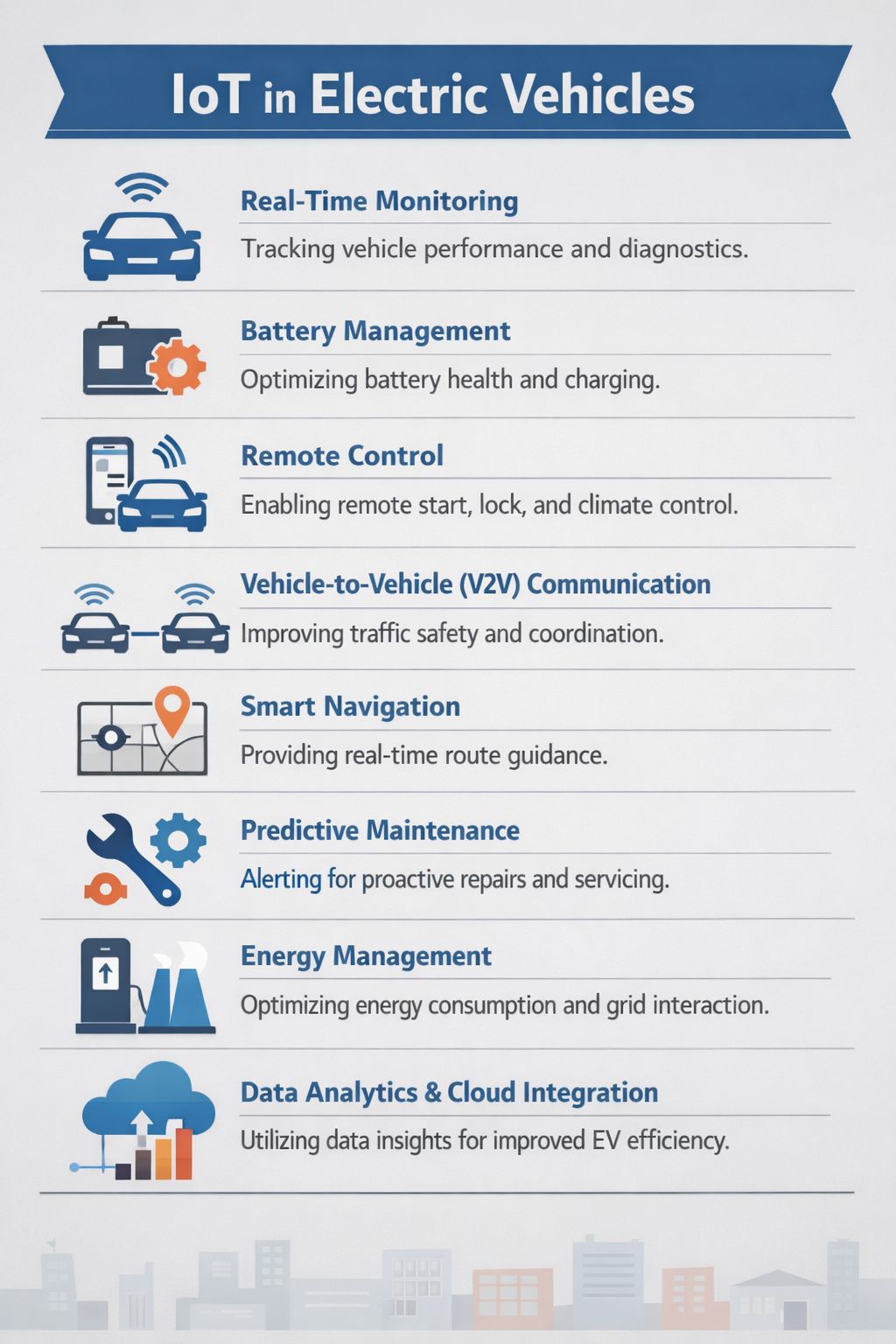
The automotive industry stands at the precipice of a monumental transformation, driven by two powerful and inextricably linked forces: Electric Vehicles (EVs) and the Internet of Things (IoT). The convergence of these technologies is not merely an incremental change; it is a fundamental re-architecture of how mobility systems are conceived, designed, operated, and optimized. This integration of IoT in Electric Vehicles is birthing an entirely new paradigm of intelligent, efficient, and sustainable transportation, promising a future where vehicles are not just modes of transport but sophisticated, connected ecosystems.
At its core, IoT equips electric vehicles with the capacity for continuous, bidirectional data exchange. This constant flow of information between vehicle components, cloud platforms, and the broader external infrastructure unlocks an unparalleled level of operational intelligence. From granular insights into battery health and performance to dynamic optimization of charging schedules and proactive maintenance, IoT is enhancing every facet of the EV ecosystem. This article delves into the multifaceted impact of IoT on electric vehicles, exploring how it is redefining safety, energy efficiency, operational intelligence, and the very concept of sustainable mobility.
The Foundation: Unpacking the IoT-EV Nexus
The fusion of IoT and EVs creates a robust foundation for next-generation mobility. Imagine vehicles that can “think,” “sense,” and “communicate” with their environment and each other. This is the promise of the IoT-EV nexus.
The Rise of Connected Vehicles
The traditional perception of a vehicle as a standalone mechanical device is rapidly being replaced by that of a complex, interconnected digital entity. Modern EVs are equipped with an array of sensors, microcontrollers, and communication modules that form the backbone of their IoT capabilities. These components enable real-time data collection on various parameters, from internal system performance to external environmental conditions.
The vehicle’s internal network, often leveraging technologies like CAN (Controller Area Network) or Ethernet, facilitates communication between different electronic control units (ECUs). This data is then aggregated and, through various wireless communication protocols such as cellular (4G, 5G), Wi-Fi, and Bluetooth, transmitted to cloud-based platforms for processing, analysis, and storage. This constant data stream transforms raw sensory input into actionable intelligence, forming the bedrock of advanced EV functionalities.
The Paradigm Shift in Mobility
The integration of IoT in EVs represents a significant philosophical shift in mobility. It moves beyond simply electrifying transportation to intelligentizing it. This shift fosters a future where vehicles are active participants in dynamic transportation networks, contributing to a more efficient, safer, and sustainable urban environment. The ability to collect and interpret vast amounts of data allows for a level of control and optimization previously unimaginable, extending the benefits far beyond individual vehicle performance to encompass entire transportation infrastructures.
Enhancing Operational Intelligence: Data-Driven EV Ecosystems
Operational intelligence is the linchpin of an efficient EV ecosystem, and IoT is the primary enabler. By providing continuous data streams and powerful analytical tools, IoT empowers stakeholders to make informed decisions that optimize every stage of the EV lifecycle.
Real-Time Monitoring: The Pulse of the EV
Real-time monitoring is perhaps one of the most immediate and impactful contributions of IoT to electric vehicles. This capability allows for the instantaneous tracking of crucial operational parameters, painting a vivid picture of the vehicle’s health and performance at any given moment.
Tracking Vehicle Performance and Diagnostics
IoT sensors embedded within the EV continuously collect data on various performance metrics. This includes motor speed, torque output, regenerative braking efficiency, traction control system activity, and overall powertrain health. This data is invaluable for diagnosing potential issues proactively. For instance, subtle deviations in motor performance characteristics can indicate impending mechanical failure, allowing for preventative maintenance before a critical breakdown occurs. Fleet managers can monitor the performance of their entire fleet, identifying underperforming vehicles or those exhibiting unusual operational patterns.
Battery Health Monitoring: The Heart of the EV
The battery is the most critical and often the most expensive component of an electric vehicle. IoT plays a pivotal role in meticulously monitoring its health and performance. Sensors track parameters such as voltage, current, temperature of individual cells, charge and discharge cycles, and overall state of charge (SoC) and state of health (SoH).
This real-time data allows for sophisticated battery management systems (BMS) to optimize charging and discharging patterns, balance cell loads, and prevent thermal runaway. By understanding the degradation patterns of the battery over time, manufacturers can refine their designs, and owners can make informed decisions about battery maintenance and replacement. Furthermore, the data collected can inform warranty claims and improve the residual value assessment of used EVs.
Energy Consumption Analysis
Understanding and optimizing energy consumption is paramount for electric vehicles. IoT enables precise tracking of energy usage patterns across different driving conditions, terrains, and driver behaviors. This includes monitoring the energy consumed by the propulsion system, as well as auxiliary systems like climate control, infotainment, and lighting.
Analysis of this data can identify inefficiencies and areas for improvement. For example, a sudden increase in energy consumption for a particular route might indicate a need for tire pressure adjustment or a change in driving style. For fleet operators, this granular data can be used to optimize routes, train drivers on energy-efficient driving techniques, and even model the energy requirements for future deployments.
Predictive Analytics: From Reactive to Proactive Maintenance
One of the most significant advantages of IoT in EVs is its ability to transition maintenance strategies from reactive to predictive. Instead of waiting for a component to fail, predictive analytics leverages real-time data to anticipate potential issues before they escalate.
Minimizing Unexpected Failures
By continuously monitoring critical components like the powertrain, brakes, and steer-by-wire systems, IoT sensors gather vast amounts of data. Machine learning algorithms analyze this data, looking for anomalies or patterns that indicate an increased probability of failure. For example, subtle vibrations, unusual temperature fluctuations, or changes in electrical resistance can be early warning signs.
When such patterns are detected, the system can issue alerts to the driver or fleet manager, recommending preventative maintenance. This proactive approach significantly reduces the likelihood of unexpected breakdowns, enhancing safety, minimizing downtime, and improving the overall reliability of the vehicle.
Reducing Maintenance Costs
Unexpected failures are not only inconvenient but also costly. Emergency repairs, towing services, and the loss of operational time contribute significantly to maintenance expenses. Predictive maintenance, enabled by IoT, helps mitigate these costs. By scheduling maintenance activities in advance and addressing minor issues before they become major problems, owners and fleet operators can optimize repair schedules, acquire necessary parts efficiently, and avoid costly emergency interventions. Furthermore, extending the lifespan of components through proactive care reduces the frequency of replacements, leading to long-term cost savings.
Optimizing Energy Management: Smart Charging and Grid Integration
The integration of IoT is revolutionizing how electric vehicles interact with the power grid, moving towards a future of smart, efficient, and sustainable energy management.
Smart Charging Systems: Intelligence at the Plug
Smart charging systems are a cornerstone of IoT in EVs, leveraging data to optimize the charging process in ways that benefit both the vehicle owner and the electrical grid.
Dynamic Optimization of Charging Schedules
IoT-enabled smart chargers can dynamically adjust charging schedules based on a multitude of factors. This includes real-time electricity prices, grid conditions (e.g., demand peaks, renewable energy availability), and user preferences (e.g., desired departure time, minimum charge level).
For example, a smart charging system might delay charging until off-peak hours when electricity is cheaper and the grid is under less strain. If the local grid is experiencing an abundance of renewable energy, the system could prioritize charging to utilize this clean power. This intelligent approach not only reduces charging costs for consumers but also helps stabilize the electrical grid by balancing demand.
Improving Overall System Efficiency
The dynamic optimization enabled by smart charging contributes significantly to the overall efficiency of the EV ecosystem. By strategically distributing charging loads, it prevents localized grid overloads and reduces the need for expensive infrastructure upgrades. Furthermore, it encourages the consumption of renewable energy, aligning EV adoption with broader sustainability goals. The ability to communicate with the grid (Vehicle-to-Grid, or V2G, capabilities) allows EVs to potentially feed power back into the grid during peak demand, transforming them from mere consumers to active participants in energy management.
Vehicle-to-Everything (V2X) Communication: The Connected Ecosystem
V2X communication is a critical component of IoT in electric vehicles, enabling a highly interconnected and intelligent transportation network. It encompasses various forms of communication that extend beyond the vehicle itself.
Strengthening Connectivity Between Vehicles
Vehicle-to-Vehicle (V2V) communication allows EVs to exchange data directly with each other, sharing information about speed, direction, braking, road conditions, and potential hazards. This real-time data exchange can significantly enhance road safety by providing early warnings of impending collisions or traffic congestion. For instance, if a vehicle brakes suddenly, it can instantly alert following vehicles, giving drivers more time to react. In autonomous driving scenarios, V2V communication is indispensable for coordinated maneuvers and platooning, improving traffic flow and energy efficiency.
Connecting with Charging Infrastructure
Vehicle-to-Infrastructure (V2I) communication enables EVs to interact with charging stations and other roadside infrastructure. This allows for seamless navigation to available charging points, reservation of charging slots, and automatic payment processing. It also facilitates the exchange of information regarding charger availability, pricing, and charging speed, providing drivers with crucial real-time data to plan their journeys efficiently. Furthermore, V2I communication is vital for smart charging, allowing the vehicle and charger to communicate with the grid for optimized energy management.
Integration with Smart Grids
Vehicle-to-Grid (V2G) communication represents a revolutionary aspect of V2X. It allows electric vehicles to not only draw power from the grid but also to feed surplus energy back into it. This bidirectional flow of energy transforms EVs into mobile energy storage units, acting as distributed resources for grid stabilization. During periods of high demand, pooled EV batteries could discharge power back into the grid, alleviating strain and preventing blackouts. During periods of low demand or high renewable energy generation, EVs can absorb excess power, acting as a buffer. This capability is crucial for the widespread adoption of renewable energy and the development of truly resilient and sustainable energy infrastructures.
Enhancing Safety and Reliability: The Intelligent Guardian
Beyond efficiency, IoT significantly elevates the safety and reliability standards of electric vehicles, offering both predictive capabilities and continuous improvement through software updates.
Safety Enhancements Through Real-Time Data
The continuous flow of data facilitated by IoT is a game-changer for EV safety. Beyond simply providing alerts, this data fuels sophisticated safety systems.
Proactive Hazard Detection
IoT sensors, combined with advanced analytics, can detect potential hazards long before a human driver might. This includes identifying slippery road conditions, unexpected obstacles, or even erratic driving behavior from other vehicles (via V2V communication). Early detection allows the vehicle’s safety systems to react more swiftly and effectively, deploying countermeasures like automatic emergency braking, lane keeping assist, or adaptive cruise control. This proactive approach significantly reduces the risk of accidents.
Driver Monitoring Systems
Integrated IoT solutions can also monitor the driver’s state, using cameras and sensors to detect signs of fatigue, drowsiness, or distraction. If such conditions are identified, the system can issue alerts, vibrate the steering wheel, or even suggest taking a break, thereby preventing accidents caused by human error. This adds another layer of safety, especially for long-haul journeys or in commercial fleet operations.
Remote Diagnostics and Over-the-Air (OTA) Updates
The ability to diagnose issues and update software remotely is a hallmark of IoT integration, ensuring continuous improvement and reliability.
Continuous Software Improvement without Physical Intervention
Traditional vehicles often require a visit to a service center for software updates or system reconfigurations. With IoT, electric vehicles can receive over-the-air (OTA) updates, similar to how smartphones receive updates. This means that manufacturers can push out new features, bug fixes, security patches, and performance improvements directly to the vehicle without any physical intervention.
This capability is vital for the rapid evolution of EV technology. It allows for continuous refinement of battery management algorithms, powertrain control software, infotainment systems, and advanced driver-assistance systems (ADAS), ensuring that the vehicle always has the latest and most optimized software.
Enhancing System Reliability and Security
OTA updates are crucial not only for feature enhancements but also for addressing potential security vulnerabilities. As EVs become increasingly connected, they also become potential targets for cyber threats. OTA updates allow manufacturers to swiftly patch security loopholes, protecting the vehicle’s systems and the personal data of its occupants. Furthermore, the ability to remotely diagnose and sometimes even rectify minor software-related issues without a service visit significantly enhances the overall reliability and convenience for the owner, reducing downtime and service costs.
Transforming Fleet Management: Efficiency and Sustainability on a Grand Scale
For fleet operators, the integration of IoT in electric vehicles offers a transformative suite of tools that redefine efficiency, cost management, and sustainability.
IoT-Enabled Insights for Optimal Operations
Fleet management in the age of IoT moves beyond simple tracking to sophisticated data-driven optimization.
Route Optimization: Smarter Journeys
IoT provides fleet managers with real-time data on traffic conditions, road closures, weather patterns, and vehicle locations. This information, combined with advanced algorithms, enables dynamic route optimization. Routes can be adjusted on the fly to avoid congestion, minimize travel time, and reduce energy consumption.
For electric vehicle fleets, route optimization also considers charging infrastructure availability and battery state of charge. The system can intelligently suggest routes that incorporate charging stops at optimal locations and times, ensuring vehicles remain operational and avoid range anxiety. This leads to significant savings in operational costs and improvements in delivery times.
Load Management: Maximizing Capacity
For logistics and delivery fleets, IoT sensors on board electric vehicles can monitor cargo weight and distribution. This data aids in optimal load management, ensuring that vehicles are not overloaded, which can reduce efficiency and accelerate wear and tear. Intelligent load distribution can also improve vehicle stability and safety. When combined with route optimization, efficient load management ensures that each journey is as productive and energy-efficient as possible.
Energy Utilization: A Holistic Approach
IoT provides an unparalleled level of insight into energy utilization across an entire EV fleet. Fleet managers can monitor the energy consumption of individual vehicles, identify drivers with less efficient driving styles, and track overall energy expenditure. This data can be used to implement targeted driver training programs and to identify vehicles or routes that are particularly inefficient.
Furthermore, by integrating with smart charging infrastructure, fleet managers can coordinate charging schedules for their entire fleet, taking advantage of off-peak electricity rates and leveraging renewable energy sources. This holistic approach to energy utilization not only reduces operational costs but also significantly lowers the carbon footprint of the fleet, aligning with corporate sustainability goals.
Beyond the Vehicle: Ecosystem-Wide Benefits
The benefits of IoT in EV fleets extend beyond the immediate operational efficiencies.
Predictive Maintenance for Fleets
The predictive maintenance capabilities discussed earlier are particularly impactful for large fleets. By anticipating and preventing failures across dozens or hundreds of vehicles, fleet operators can minimize downtime, reduce maintenance costs, and ensure a higher vehicle availability rate. This proactive approach leads to greater customer satisfaction and improved profitability.
Enhanced Asset Utilization
Through comprehensive data analysis, fleet managers can gain a deeper understanding of how their vehicles are being utilized. Identifying underutilized assets or bottlenecks in operations allows for better resource allocation, potentially reducing the need for additional vehicles and optimizing the existing fleet. This leads to a more lean and efficient operation.
Compliance and Reporting
IoT systems in EVs can automatically collect and log data relevant for regulatory compliance and reporting. This includes mileage tracking, emissions data (even for EVs, reporting energy source can be important), and maintenance records. Automated reporting reduces administrative burden and ensures accurate compliance with various standards and regulations.
Overcoming Challenges and Looking Towards the Future
While the integration of IoT in electric vehicles offers immense promise, it is not without its challenges. Addressing these will be crucial for realizing the full potential of this transformative technology.
Data Security and Privacy Concerns
The continuous exchange of vast amounts of data raises significant concerns regarding data security and privacy. Vehicle data, including location, driving patterns, and personal preferences, is highly sensitive. Ensuring robust cybersecurity measures to protect this data from unauthorized access, manipulation, or theft is paramount. This requires advanced encryption protocols, secure communication channels, and stringent access controls.
Furthermore, clear policies and regulations regarding data ownership, usage, and sharing are essential to protect consumer privacy. Transparency in how data is collected, used, and stored will be crucial for building trust and ensuring widespread adoption.
Interoperability and Standardization
For a truly seamless and intelligent EV ecosystem, interoperability between different IoT devices, platforms, and vehicle manufacturers is critical. A lack of standardized communication protocols and data formats can create fragmented systems, hindering the full potential of V2X communication and smart grid integration. Efforts are underway by various industry consortiums and regulatory bodies to establish common standards for data exchange and communication, but continued collaboration is needed.
Infrastructure Development
The full benefits of IoT in EVs, particularly smart charging and V2G capabilities, depend heavily on the development of robust and intelligent charging infrastructure and a modernized electrical grid. This requires significant investment in smart grid technologies, higher capacity charging stations, and the integration of renewable energy sources. Policy incentives and public-private partnerships will be vital to accelerate this infrastructure development.
The Evolving Landscape: Innovation on the Horizon
Despite these challenges, the future of IoT in electric vehicles is exceptionally bright. Continuous innovation is pushing the boundaries of what’s possible.
AI and Machine Learning Integration
The role of Artificial Intelligence (AI) and Machine Learning (ML) will become even more pronounced. AI-powered algorithms will not only analyze data but also learn from it, continuously improving the efficiency, safety, and autonomy of EVs. This includes more sophisticated predictive maintenance capabilities, highly personalized driver experiences, and advanced autonomous driving functions.
Edge Computing
As the volume of data generated by EVs explodes, edge computing will become increasingly important. Processing data closer to the source (i.e., within the vehicle or at local charging stations) reduces latency, improves real-time decision-making, and alleviates the burden on cloud infrastructure. This will be crucial for critical safety functions and highly responsive autonomous systems.
Blockchain for Security and Transparency
Blockchain technology could play a role in enhancing data security and transparency within the EV ecosystem. It could be used to create immutable records of maintenance history, ownership transfers, and even energy transactions in V2G scenarios, fostering trust and accountability.
Seamless Integration with Smart Cities
IoT in EVs will be a fundamental component of future smart cities. Vehicles will communicate not only with each other and charging infrastructure but also with smart traffic lights, parking systems, and pedestrian networks, contributing to truly integrated and intelligent urban environments that prioritize efficiency, safety, and environmental sustainability.
Conclusion: Driving Towards a Smarter, Greener Future
The integration of IoT in Electric Vehicles is not merely a technological advancement; it is a profound societal shift towards a more sustainable, efficient, and intelligent future of mobility. From enhancing real-time monitoring and predictive maintenance to enabling smart charging and sophisticated V2X communication, IoT is at the heart of transforming EVs into dynamic, data-driven ecosystems.
The benefits are extensive: improved safety through proactive hazard detection, significant energy efficiency gains through optimized charging and grid interaction, and substantial operational advantages for fleet managers through intelligent route planning and asset utilization. While challenges related to data security, interoperability, and infrastructure development remain, the relentless pace of innovation in both IoT and EV technologies promises to overcome these hurdles.
As IoT continues to evolve, its symbiotic relationship with electric vehicles will play an increasingly critical role in building scalable, intelligent, and sustainable mobility solutions for the future. We are moving towards a world where vehicles are not just electric, but truly intelligent, seamlessly integrated into our daily lives and working in harmony with our energy and urban infrastructures. The journey has just begun, and the destination is a greener, smarter, and infinitely more connected world.
Your Journey to a Connected Future Starts Here
At IoT Worlds, we are at the forefront of this revolution, providing cutting-edge solutions and expertise in integrating IoT technologies into electric vehicle ecosystems. Whether you are an automotive manufacturer, a fleet operator, or a smart city developer, we can help you unlock the full potential of connected mobility. From custom IoT sensor deployment and data analytics platforms to advanced V2X communication solutions and smart charging infrastructure integration, our team of experts is ready to guide you. Embrace the future of intelligent transportation with IoT Worlds.
To learn more about how IoT Worlds can help you navigate the complexities and opportunities of IoT in electric vehicles, send us an email at info@iotworlds.com. Let’s build the future of mobility, together.
