

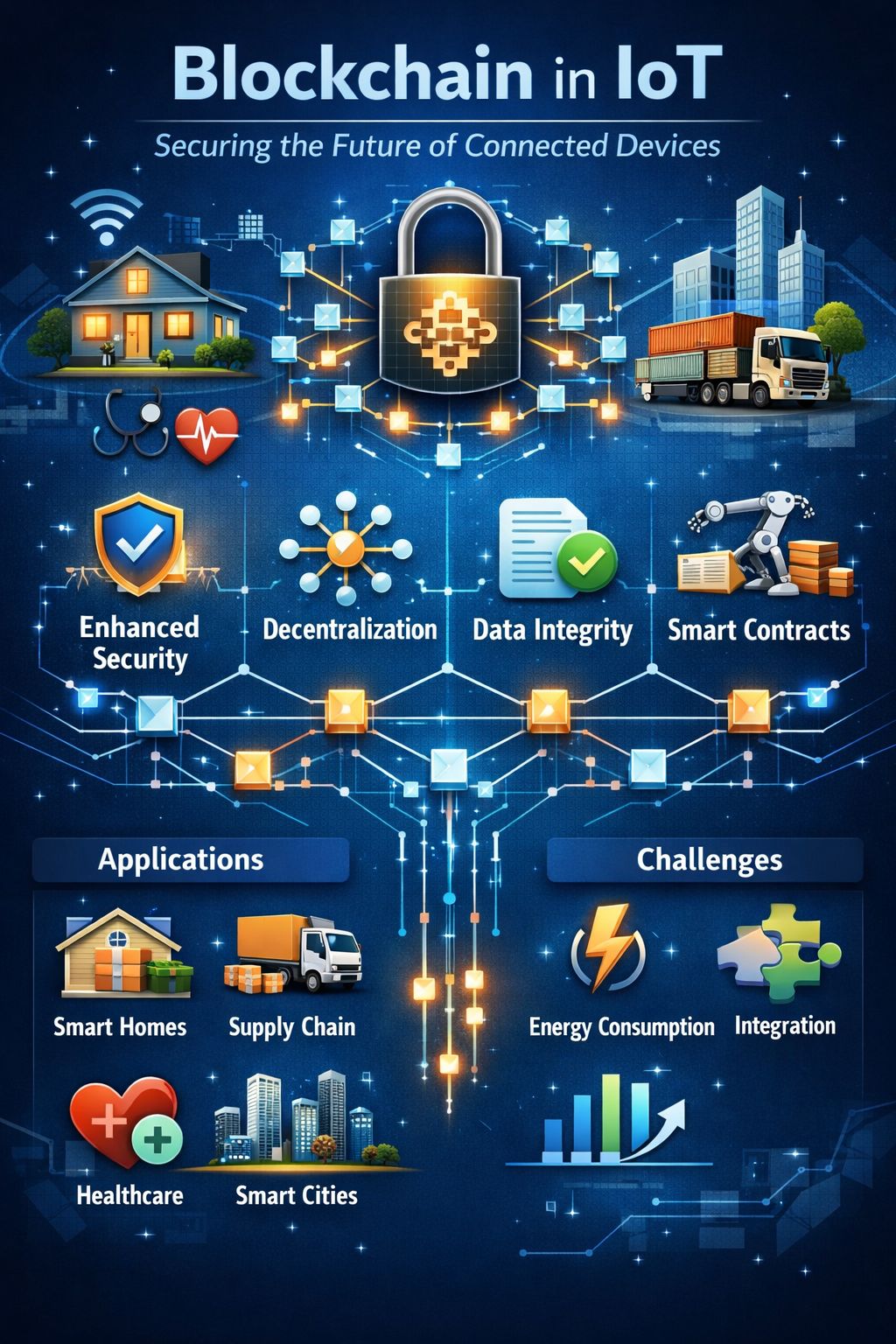
The Interwoven Future: IoT and the Need for Trust
The Internet of Things (IoT) has rapidly emerged as a transformative force, weaving a digital fabric across our physical world. From smart homes that anticipate our needs to industrial sensors optimizing manufacturing processes, billions of interconnected devices are generating an unprecedented volume of data. This intricate web promises unparalleled convenience, efficiency, and innovation. However, this remarkable interconnectedness introduces a parallel set of challenges, primarily centered around security, data integrity, and trust. As IoT devices proliferate, the vulnerabilities within these expansive networks become more pronounced, raising critical questions about how we can safeguard sensitive data, prevent malicious attacks, and ensure the reliable operation of these systems. The very essence of the IoT’s promise – seamless communication and automated action – hinges on an underlying foundation of unshakable trust. Without it, the fear of data breaches, system compromises, and widespread disruptions can significantly impede the adoption and growth of this revolutionary technology.
The IoT Landscape: A Dual-Edged Sword
The beauty of IoT lies in its ability to collect data from diverse sources and translate it into actionable insights. Consider a smart city: traffic sensors optimizing flow, environmental monitors assessing air quality, and smart lighting adjusting to pedestrian presence. Each device, while seemingly small, contributes to a larger, intelligent ecosystem. This granular data collection, however, also paints a detailed picture of our lives, our habits, and our infrastructure. The sheer volume and variety of data, coupled with the often-limited processing power and security features of individual IoT devices, create an attractive target for cybercriminals.
The decentralized nature of many IoT deployments, where devices communicate directly or through local hubs, can ironically lead to centralized points of failure if not properly secured. A compromised smart thermostat, for instance, could become a gateway to an entire home network, potentially exposing personal data or even physical security. In industrial settings, a breach in an IoT-enabled production line could lead to catastrophic operational halts or intellectual property theft. The current centralized models of data management and security, often reliant on single servers or cloud providers, struggle to keep pace with the distributed and dynamic nature of IoT. These traditional approaches introduce bottlenecks and single points of failure, making them susceptible to a range of threats, from denial-of-service attacks to sophisticated data manipulation. The imperative, therefore, is to find a security paradigm that mirrors the distributed and resilient characteristics of the IoT itself.
The Trust Deficit: Why Traditional Security Falls Short
Traditional security measures, while effective in many contexts, often fall short in the unique environment of IoT. These systems typically rely on a centralized authority to authenticate devices, manage access, and store data. In an IoT ecosystem with potentially millions or billions of devices, this centralized approach presents several critical weaknesses:
- Single Point of Failure: A compromise of the central server or authority can bring down the entire network, or worse, grant attackers control over all connected devices.
- Scalability Issues: Managing and securing an ever-growing number of diverse IoT devices through a centralized system becomes increasingly complex and resource-intensive.
- Data Vulnerability: Centralized databases are prime targets for data breaches, exposing vast quantities of sensitive information in one fell swoop.
- Lack of Transparency: Users often have limited visibility into how their data is collected, stored, and used by central authorities, leading to concerns about privacy and control.
- Interoperability Challenges: Different IoT platforms and devices often struggle to communicate securely due to proprietary standards and a lack of universal trust mechanisms.
These shortcomings highlight the urgent need for a more robust, decentralized, and transparent security framework for IoT. This is where blockchain technology enters the conversation, offering a paradigm shift in how we approach security and trust in the interconnected world.
Introducing Blockchain: The Decentralized Ledger
Blockchain technology, initially conceived as the underlying framework for cryptocurrencies like Bitcoin, has transcended its origins to become a foundational technology with far-reaching implications across various industries. At its core, a blockchain is a distributed, immutable ledger that records transactions in a secure and transparent manner. Unlike traditional databases, which are controlled by a central authority, a blockchain is maintained by a network of participants, with each participant holding a copy of the entire ledger. This decentralized architecture is what gives blockchain its inherent strength and resilience, making it an ideal candidate to address the trust and security challenges prevalent in IoT ecosystems.
The Pillars of Blockchain Technology
Understanding how blockchain enhances IoT security requires a grasp of its fundamental principles:
Decentralization
At the heart of blockchain is decentralization. Instead of a single, central server or authority managing all data and transactions, a blockchain network is distributed across multiple nodes (computers). Each node maintains a copy of the entire ledger. This means there is no single point of control or failure. If one node goes offline or is compromised, the network continues to operate seamlessly, relying on the remaining nodes to validate and record transactions. This distributed nature dramatically increases the resilience and robustness of the system, making it far more difficult for malicious actors to disrupt operations or corrupt data. In the context of IoT, this translates to a system where individual devices or clusters of devices can participate in network security without relying on a vulnerable central server.
Immutability
Once a transaction or data entry is recorded on a blockchain, it cannot be altered or deleted. This is achieved through cryptographic hashing. Each “block” in the chain contains a cryptographic hash of the previous block, creating an unbroken and verifiable link. Any attempt to tamper with data in an earlier block would change its hash, consequently invalidating all subsequent blocks and immediately alerting the network to the unauthorized alteration. This immutability is crucial for establishing trust, particularly in environments where data integrity is paramount, such as supply chains, healthcare records, or critical infrastructure monitoring. For IoT, it means that data generated by sensors and devices, once recorded, can be trusted as authentic and untampered.
Transparency
While often misunderstood as a complete lack of privacy, transparency in blockchain refers to the fact that all transactions on the public ledger are visible to all participants in the network. Each transaction is time-stamped and includes cryptographic details that allow for verification. While the identities of the participants can be pseudonymous (represented by public keys), the path and integrity of the data are fully auditable. This level of transparency fosters accountability and trust among network participants, as everyone can independently verify the history of transactions. In IoT applications, this means that the flow of data from device to application can be tracked and verified, eliminating disputes and enhancing confidence in the information being exchanged.
Cryptographic Security
Cryptography is the backbone of blockchain security. Every transaction and every block is secured using advanced cryptographic techniques. Public-key cryptography, for example, ensures that only authorized devices can sign off on transactions, preventing unauthorized access and data injection. Hashing algorithms ensure the integrity of the data within each block and the links between blocks. These cryptographic safeguards make it computationally infeasible for attackers to forge transactions, alter data, or impersonate legitimate devices. This mathematical foundation provides a level of security that is difficult to replicate with traditional centralized systems, where human error or single points of failure can often be exploited.
How it Works: Blocks, Chains, and Consensus
The elegantly simple yet profound mechanism of blockchain involves the continuous addition of “blocks” of data to a “chain.” Each block contains a set of validated transactions. Before a new block can be added to the chain, it must be validated by the network’s participants through a consensus mechanism.
- Blocks: Collections of verified transactions, timestamped, and linked to the previous block via a cryptographic hash.
- Chain: The continuous sequence of these blocks, forming an unbroken record of all network activity.
- Consensus Mechanisms: Protocols (like Proof of Work or Proof of Stake) that ensure all participating nodes agree on the validity of new transactions and the order of blocks, preventing fraudulent entries.
When a device generates data or a transaction occurs in an IoT-blockchain system, it is submitted to the network. Network nodes then verify the transaction using cryptographic signatures and other protocols. Once validated by the majority of the network (according to the consensus mechanism), the transaction is bundled into a new block. This block is then cryptographically linked to the previous block, added to the blockchain, and broadcast to all participating nodes, ensuring that every node has an updated, immutable, and synchronized copy of the ledger.
This robust framework, with its inherent decentralization, immutability, transparency, and cryptographic security, provides a compelling solution to many of the security and trust issues that plague the rapidly expanding IoT landscape.
Why Blockchain is the Missing Link for IoT Security
The convergence of blockchain and IoT presents a powerful synergy, addressing fundamental challenges that hinder the full potential of connected devices. The decentralized, secure, and transparent nature of blockchain directly counteracts the vulnerabilities inherent in centralized IoT architectures, making it the ideal candidate to secure the future of connected devices.
Enhanced Security: A Multi-Layered Defense
Blockchain significantly fortifies IoT security through multiple layers of defense that are intrinsically built into its architecture.
Data Encryption and Distribution
Unlike traditional systems where data might be stored in a single, vulnerable database, blockchain encrypts data and distributes it across numerous nodes. This means there’s no central honeypot for hackers to target. Even if an attacker manages to compromise one node, they only gain access to a fragment of the data, and the integrity of the overall data remains intact across the network. Furthermore, sophisticated encryption techniques ensure that data is unreadable to unauthorized parties, adding another layer of protection. This distributed encryption model significantly raises the bar for cyber attackers, making large-scale data breaches far more difficult and less rewarding.
Tamper-Proof Records
The immutability of blockchain records is a game-changer for IoT security. Once data from a sensor or device is recorded on the blockchain, it cannot be altered or deleted. This means that if a malicious actor attempts to tamper with sensor readings, device logs, or transaction histories, the cryptographic links in the blockchain will immediately flag the discrepancy. This tamper-proof nature is critical in applications where data integrity is paramount, such as tracking medical data, supply chain logistics, or environmental monitoring. It provides an undeniable audit trail, ensuring that the data collected from IoT devices is trustworthy and reliable.
Protection Against DDoS Attacks
Distributed Denial of Service (DDoS) attacks are a significant threat to centralized IoT systems, as they can overload a single server or network with traffic, rendering services unavailable. Blockchain’s decentralized nature inherently provides a strong defense against such attacks. Since there is no single server to target, attackers would need to overwhelm a significant portion of the entire distributed network, an undertaking that is far more complex and resource-intensive, often prohibitively so. The workload is distributed across many nodes, making the system far more resilient to localized attacks and ensuring continuous operation.
Decentralization: Eliminating Single Points of Failure
The architectural shift from centralized to decentralized systems is perhaps the most profound contribution of blockchain to IoT security.
Increased System Resilience
In a world increasingly reliant on interconnected devices, the concept of a single point of failure is a critical vulnerability. If a central server controlling an IoT network goes down, the entire system can cease to function. Blockchain eliminates this risk by distributing control and data across a network of independent nodes. If one node fails or is compromised, the remaining nodes continue to operate, ensuring the continuous availability and functionality of the IoT ecosystem. This inherent resilience is vital for critical infrastructure, smart cities, and industrial IoT applications where downtime can have severe consequences.
Peer-to-Peer Communication
Blockchain facilitates secure peer-to-peer communication between IoT devices. Instead of routing all data through a central server, devices can communicate and exchange data directly, with blockchain acting as a trust layer to authenticate and authorize these interactions. This reduces latency, lowers operational costs, and minimizes the attack surface by removing intermediary points that could be exploited. In a truly decentralized IoT, devices can negotiate directly, share information securely, and execute transactions without the need for a trusted third party.
Data Integrity: The Unquestionable Truth
The challenge of ensuring data integrity in complex IoT environments is significant, given the potential for data corruption, manipulation, or accidental loss. Blockchain provides an elegant and robust solution.
Immutable Audit Trails
Every piece of data recorded on the blockchain creates an immutable and transparent audit trail. This means that every action, every sensor reading, and every transaction is permanently logged with a timestamp and cryptographic signature. This audit trail is verifiable by any participant in the network, providing an undeniable record of events. This is invaluable for troubleshooting, regulatory compliance, and dispute resolution. In a dispute over a faulty sensor reading, for example, the blockchain record would provide definitive proof of the data’s origin and integrity.
Verifiable Data Sources
Blockchain can be used to authenticate and verify the origin of data from IoT devices. By assigning unique cryptographic identities to each device, and requiring devices to “sign” the data they generate, blockchain ensures that only authorized and legitimate devices are contributing data to the network. This prevents data injection attacks and ensures that the information being used to make decisions is coming from trusted sources. This is particularly crucial in critical applications where compromised data could lead to disastrous outcomes.
Smart Automation: Programmable Trust with Smart Contracts
Smart contracts, self-executing agreements with the terms of the agreement directly written into code, represent a revolutionary aspect of blockchain technology that deeply benefits IoT.
Automated Device Interactions
Smart contracts enable autonomous and secure interactions between IoT devices. For example, a smart contract could automatically trigger payment to a utility company when a smart meter records a certain energy consumption, or automatically order more supplies when an inventory sensor detects low stock levels. These interactions occur without human intervention, based on predefined rules encoded in the smart contract. This automation removes the need for intermediaries, reduces operational costs, and speeds up processes, all while maintaining a high level of security and transparency.
Enhanced Trust and Efficiency
By automating agreements and transactions, smart contracts eliminate the need for trust between individual parties. The “trust” is embedded in the code itself, which is transparent and immutable on the blockchain. This significantly enhances efficiency by streamlining processes and reducing the time and resources required to execute agreements. In IoT, this means systems can become truly autonomous, making decisions and executing actions based on verified data and pre-programmed logic, without the risk of human error or malicious interference. For example, in a supply chain, a smart contract could automatically release payment to a supplier once a shipment, verified by IoT sensors, arrives at its destination.
The integration of blockchain into IoT is not merely an incremental improvement; it is a fundamental shift that empowers the creation of secure, resilient, and autonomous connected ecosystems, paving the way for a more trustworthy and efficient digital future.
Real-World Applications: Blockchain in Action Across IoT Domains
The theoretical benefits of integrating blockchain with IoT translate into tangible solutions across various industries, addressing pressing challenges in security, transparency, and automation. As the technology matures, we are witnessing an increasing number of innovative applications that leverage the unique attributes of blockchain to enhance IoT systems.
Smart Homes: Securing the Domestic Ecosystem
The modern smart home, brimming with connected devices from thermostats and light bulbs to security cameras and entertainment systems, offers unparalleled convenience. However, this interconnectedness often comes with significant security vulnerabilities. A single compromised device can become a gateway for intruders, exposing personal data, monitoring activities, or even manipulating home systems.
Blockchain can fundamentally transform smart home security by:
Secure Device Communication and Access Control
Imagine a smart home where each device has a unique blockchain identity. Smart contracts can then be used to define precise access rules and communication protocols between devices. For example, a homeowner could use a smart contract to grant temporary access to a smart lock for a delivery person, with the access automatically expiring after a set period. All communication between devices, such as a motion sensor notifying a smart camera, can be encrypted and authenticated on the blockchain, preventing unauthorized eavesdropping or tampering. This creates a robust, decentralized access control system that is much harder to compromise than traditional, centralized systems.
Immutable Activity Logs
Every action performed by a smart home device – a door unlocking, a light turning on, a sensor detecting motion – can be recorded as an immutable entry on a private or consortium blockchain. This creates a tamper-proof audit trail of all activity within the home. In case of a security incident, this log can provide irrefutable evidence of what occurred, when, and by which device. It also allows for detailed analysis of device behavior over time, helping to identify anomalous patterns that might indicate a compromise.
Enhanced Data Privacy
Centralized smart home platforms often collect and store vast amounts of personal data, raising privacy concerns. Blockchain can enable a more privacy-centric approach by allowing homeowners greater control over their data. Data can be encrypted and stored on the blockchain, with homeowners granting selective access to specific service providers via smart contracts. This puts the user firmly in control of their own data, rather than relying on the data privacy policies of various manufacturers.
Supply Chain: Real-Time Tracking and Transparency
Modern supply chains are incredibly complex, often involving numerous intermediaries, multiple modes of transport, and global reach. This complexity makes them vulnerable to inefficiencies, fraud, and a lack of transparency, leading to issues like product counterfeiting, unethical sourcing, and delays.
Blockchain, combined with IoT sensors, can revolutionize supply chain management by:
End-to-End Product Traceability
IoT devices, such as RFID tags, GPS trackers, and environmental sensors, can continuously monitor products as they move through the supply chain. This data – location, temperature, humidity, handling, etc. – can be securely recorded on a blockchain. Each transaction (e.g., product leaving a factory, arriving at a port, being loaded onto a truck) becomes a verifiable block on the chain. This creates an immutable, end-to-end record of a product’s journey from origin to consumer. Consumers can then scan a QR code on a product to access its entire provenance, verifying its authenticity and ethical sourcing.
Automated Payments and Smart Contracts
Smart contracts can automate payments and streamline logistics. For example, a smart contract could automatically release payment to a supplier once IoT sensors confirm that a shipment has arrived at its destination and meets predefined quality standards. This eliminates delays, reduces disputes, and enhances trust between supply chain partners. Furthermore, smart contracts can automatically trigger insurance claims if sensors detect damage during transit, speeding up the resolution process.
Counterfeit Prevention
The immutable ledger helps combat counterfeiting by providing a verifiable history for every legitimate product. Each product can be assigned a unique cryptographic identity registered on the blockchain. When a product is scanned at various points in the supply chain, its unique ID and associated data can be verified against the blockchain record, immediately flagging any inconsistencies that suggest a counterfeit.
Healthcare: Secure Patient Data Sharing
Healthcare data is among the most sensitive and critical information, requiring stringent security and privacy measures. Traditional healthcare systems often struggle with fragmented patient records, interoperability issues, and the risk of data breaches.
Blockchain offers a transformative approach to managing healthcare data by:
Enhanced Data Security and Privacy
Patient medical records, sensor data from wearable health devices, and prescription information can be encrypted and stored on a blockchain, accessible only to authorized personnel through cryptographic keys. This distributed storage makes it highly resistant to hacking, as there is no single point of failure. Furthermore, patients can have greater control over their own health data, granting consent for specific doctors, hospitals, or researchers to access specific parts of their record via smart contracts, thus empowering individuals with their own medical information.
Interoperable Health Records
Healthcare systems often struggle to share data seamlessly due to disparate technologies and privacy regulations. Blockchain can create a secure, interoperable platform where patient records from different providers can be accessed and updated in a standardized and secure manner, providing a holistic view of a patient’s health history when necessary. Smart contracts can define the rules for data sharing, ensuring compliance with privacy regulations like HIPAA and GDPR.
Drug Traceability and Supply Chain Integrity
Similar to other supply chains, blockchain can track pharmaceuticals from manufacturing to dispensing, ensuring their authenticity and preventing the entry of counterfeit drugs into the market. IoT sensors can monitor storage conditions, while blockchain records immutable details of each drug’s journey, enhancing patient safety.
Smart Cities: Efficient Infrastructure Management
Smart cities leverage IoT to optimize urban services, from traffic management to waste collection, public safety, and energy distribution. The scale and complexity of these interconnected systems demand robust security and efficient management.
Blockchain can underpin smart city initiatives by:
Secure Data Exchange for Urban Services
In a smart city, data from traffic sensors, environmental monitors, public safety cameras, and utility grids needs to be exchanged securely and reliably. Blockchain can provide a trusted decentralized ledger for this data, ensuring its integrity and preventing manipulation. For example, traffic sensor data recorded on a blockchain can be used by smart contracts to dynamically adjust traffic light timings, optimizing flow in real-time.
Decentralized Energy Grids (Smart Grids)
Blockchain can facilitate peer-to-peer energy trading within a smart grid. Homes with solar panels, for instance, could sell excess energy directly to neighbors or the grid, with transactions automatically recorded and settled via smart contracts. IoT smart meters would provide the data, and blockchain would ensure the transparency and security of these energy exchanges. This promotes energy efficiency, decentralization, and reduces reliance on traditional energy providers.
Transparent Resource Allocation
Blockchain can be used to manage and track the allocation of public resources. For example, waste management systems can use IoT sensors in bins to monitor fill levels, with blockchain recording collection data, optimizing routes, and ensuring accountability. This transparency helps improve municipal services and build public trust.
The diverse applications demonstrate that blockchain is not merely an experimental technology for IoT; it is a vital enabler for building truly secure, efficient, and trustworthy connected ecosystems that will power the next generation of digital transformation.
Navigating the Road Ahead: Challenges and Considerations
While the promise of blockchain in IoT is immense, its widespread adoption is not without hurdles. Organizations and developers must navigate several key challenges to fully realize the symbiotic potential of these two transformative technologies. Addressing these considerations proactively will be crucial for the successful integration and scaling of blockchain-enabled IoT solutions.
Scalability Issues: The Volume Versus Velocity Dilemma
One of the most significant challenges for integrating blockchain with IoT is scalability. Traditional public blockchains, like Bitcoin and Ethereum, are designed for high security and decentralization but often struggle with the sheer volume and velocity of data generated by billions of IoT devices.
Throughput Limitations
Many existing blockchain networks have limited transaction throughput, meaning they can only process a certain number of transactions per second. IoT devices, on the other hand, can generate a constant stream of micro-transactions and data points. For example, a network of smart sensors monitoring environmental conditions might generate thousands of data points per second. Current blockchain architectures struggle to accommodate this scale without significant delays or increased transaction costs. This bottleneck can severely limit the real-time capabilities of many IoT applications.
Storage Requirements
As each node in a full blockchain network stores a copy of the entire ledger, the storage requirements grow with every new block. With billions of IoT devices potentially adding data frequently, the size of the blockchain could become prohibitively large, requiring massive storage capacities and increasing the resources needed to maintain a node. This can hinder decentralization if only powerful, resource-rich entities can afford to run full nodes.
Latency Concerns
The time it takes for a transaction to be confirmed and added to the blockchain (block finality) can be a concern for real-time IoT applications that require immediate responses. For instance, in an autonomous vehicle network or critical industrial control system, delays of even a few seconds can be unacceptable. Public blockchains often have confirmation times ranging from minutes to hours, which is too slow for many time-sensitive IoT use cases.
To address these scalability issues, researchers and developers are exploring various solutions:
- Layer 2 Solutions: These protocols (e.g., Lightning Network, sidechains, state channels) operate “on top” of the main blockchain, handling a large volume of transactions off-chain and only settling the final results on the main chain.
- New Consensus Mechanisms: Exploring alternatives to energy-intensive Proof of Work, such as Proof of Stake, Delegated Proof of Stake, or Directed Acyclic Graphs (DAGs), which can offer higher transaction speeds and lower energy consumption.
- Permissioned Blockchains (Consortium Blockchains): These blockchains restrict participation to a select group of known entities, allowing for faster consensus and higher throughput compared to public, permissionless blockchains. While they trade some degree of decentralization for performance, they are often suitable for enterprise IoT applications.
- Sharding: Dividing the blockchain network into smaller, independent segments (shards) that can process transactions in parallel, significantly increasing overall throughput.
High Energy Consumption: A Sustainability Dilemma
The energy consumption of some blockchain networks, particularly those relying on Proof of Work (PoW) consensus mechanisms, poses a significant environmental and economic challenge, especially when considering the widespread deployment across billions of IoT devices.
The Proof of Work Problem
PoW, used by Bitcoin and Ethereum (until its recent transition to Proof of Stake), requires “miners” to solve complex computational puzzles to validate transactions and create new blocks. This process is intentionally resource-intensive to secure the network. However, as the network grows, the energy consumption escalates, leading to a substantial carbon footprint. This is a critical concern for sustainable IoT initiatives and can also lead to higher operational costs for blockchain-enabled IoT systems.
Towards Sustainable Solutions
To counter this, the focus is shifting towards more energy-efficient consensus mechanisms. Proof of Stake (PoS) protocols, for example, replace energy-intensive mining with a system where validators are chosen based on the amount of cryptocurrency they “stake” as collateral. This significantly reduces energy consumption. Other energy-efficient options include Proof of Authority (PoA) and various DAG-based approaches. For specific IoT applications, particularly those within private or consortium networks, less computationally intensive consensus mechanisms can be employed, where trust is established through other means, thereby minimizing energy usage.
Integration Complexity: Bridging Disparate Worlds
Integrating blockchain technology into existing IoT ecosystems is a complex endeavor, fraught with technical and operational challenges.
Interoperability between Devices and Blockchain Networks
IoT devices come in a vast array of types, manufacturers, and communication protocols. Ensuring seamless communication and data exchange between these diverse devices and a blockchain network requires robust integration layers. This includes developing standardized APIs, SDKs, and middleware that can translate device data into a format suitable for blockchain transactions. Furthermore, ensuring interoperability between different blockchain platforms themselves is a growing challenge as the ecosystem expands.
Resource-Constrained Devices
Many IoT devices are resource-constrained, meaning they have limited processing power, memory, and battery life. Running complex blockchain client software on these devices is often not feasible. Solutions involve off-chain processing, edge computing, and lightweight blockchain clients that can interact with the network without maintaining a full copy of the ledger. This requires careful architectural design to balance security with the practical limitations of IoT hardware.
Data Governance and Regulation
The intersection of IoT data and blockchain raises complex questions about data governance, privacy, and regulatory compliance, particularly in jurisdictions with strict data protection laws like GDPR. Determining ownership of data, consent mechanisms, and the right to be forgotten (which conflicts with blockchain’s immutability) requires careful consideration and innovative solutions, such as zero-knowledge proofs or data tokenization, to ensure compliance without compromising the benefits of blockchain.
Skill Gap
Implementing blockchain-enabled IoT solutions requires specialized expertise in both fields, which can be scarce. Organizations need to invest in training and talent acquisition to build teams capable of designing, developing, and maintaining these complex integrated systems.
Addressing these challenges requires a collaborative effort from researchers, developers, industry stakeholders, and policymakers. As these issues are systematically tackled, the path towards a truly secure, decentralized, and efficient IoT ecosystem powered by blockchain will become clearer and more accessible.
The Future Landscape: Synergies and Evolution
The convergence of blockchain and IoT is not a static event but an ongoing evolution, promising to redefine the landscape of connected technologies. As these two powerful forces continue to mature and integrate, we can anticipate the emergence of increasingly intelligent, autonomous, and secure ecosystems that will drive the next wave of digital transformation. The future will see these technologies not just coexisting, but deeply intertwined, unlocking unprecedented capabilities and value.
Autonomous and Intelligent Ecosystems
The integration of blockchain provides the foundational trust layer necessary for truly autonomous IoT ecosystems. Without a central authority to mediate interactions, blockchain allows devices to interact directly, securely, and transparently, leading to systems that can largely manage themselves.
Self-Governing Device Networks
Imagine a network of smart city sensors that don’t just collect data, but can make decisions and initiate actions based on that data, validated and recorded on a blockchain. For example, traffic sensors could automatically adjust signal timings based on real-time traffic flow, with all actions logged and audited on the blockchain. In industrial settings, autonomous robots could negotiate tasks and exchange data with supply chain systems using smart contracts, ensuring efficient and verifiable operations without human intervention. This level of autonomy, underpinned by blockchain’s trust and immutability, reduces operational costs, increases efficiency, and minimizes human error.
AI and Machine Learning Integration
The data integrity and transparency provided by blockchain are crucial for training and operating Artificial Intelligence (AI) and Machine Learning (ML) models in IoT. AI algorithms thrive on vast amounts of clean, reliable data. Blockchain ensures that the data fed to these algorithms from IoT devices is authentic and untampered, leading to more accurate predictions and intelligent decision-making. Furthermore, smart contracts could govern the sharing of AI models or the monetization of data used for AI training, creating new economic paradigms within these ecosystems. We can foresee intelligent IoT devices leveraging blockchain to establish their own reputations and trust scores, enabling more sophisticated and reliable interactions.
New Business Models and Value Creation
The enhanced security, transparency, and automation enabled by blockchain-IoT integration will pave the way for innovative business models and unleash new forms of value creation across industries.
Decentralized Data Marketplaces
Blockchain can facilitate secure and transparent marketplaces for IoT-generated data. Device owners could control and monetize their data, granting selective access to businesses or researchers via smart contracts, ensuring fair compensation and data privacy. For example, anonymized traffic data from connected cars could be sold to urban planners, or environmental sensor data to research institutions, with transactions recorded on the blockchain. This shifts the power dynamics from centralized data aggregators to individual device owners, creating a more equitable data economy.
Tokenization of Assets
Physical assets in the IoT world, from machinery in a factory to individual products in a supply chain, can be tokenized on a blockchain. This means assigning a digital twin (a token) to a physical asset, which can then be tracked, managed, and even traded on a blockchain. This allows for fractional ownership, enhanced tracking of asset lifecycle, and more efficient management of high-value assets. For example, a smart contract could manage the maintenance schedule and ownership transfer of a piece of industrial machinery based on its tokenized representation.
Micro-Transactions and Pay-Per-Use Models
Blockchain’s ability to handle secure, low-cost micro-transactions is ideal for enabling pay-per-use models for IoT services. Imagine paying a small fee each time you use a specific smart street light, or automatically paying for short-term access to a charging station for an electric vehicle. Smart contracts can automate these tiny transactions efficiently and securely, promoting flexible consumption models. This granular monetization can unlock new revenue streams and optimize resource utilization.
The Evolving Landscape of Standards and Regulations
As blockchain-IoT solutions become more prevalent, the need for robust industry standards and clear regulatory frameworks will intensify.
Standardization Efforts
Collaboration across industries will be crucial to develop common protocols, APIs, and data models for blockchain-IoT integration. These standards will ensure interoperability between different devices, platforms, and blockchain networks, accelerating adoption and fostering a more cohesive ecosystem. Organizations like the IEEE and ISO are already active in this space, working to define best practices and technical specifications.
Regulatory Clarity
Governments and regulatory bodies will need to adapt existing laws and create new ones to address the unique challenges and opportunities presented by blockchain-IoT. This includes clarifying data ownership, privacy rights, liability in autonomous systems, and the legal enforceability of smart contracts. A clear and supportive regulatory environment will be essential for fostering innovation and encouraging investment in these transformative technologies.
The future of IoT, powered by blockchain, is one of unprecedented security, transparency, and autonomy. While challenges remain, the ongoing innovation and collaborative efforts are steadily paving the way for a connected world where trust is inherent, systems are resilient, and the full potential of digital transformation can be realized. It is an exciting prospect that promises to reshape industries, cities, and our daily lives in profound ways.
Taking the Next Step Towards a Secured IoT Future
The journey through the intricate world of Blockchain in IoT reveals a compelling vision for the future of connected devices – a future defined by unwavering security, undeniable data integrity, and unparalleled autonomy. The challenges, while significant, are being actively addressed by a global community of innovators, pushing the boundaries of what’s possible. As industries continue to embrace digital transformation, the strategic integration of blockchain into IoT ecosystems will not merely be an option, but a critical imperative for building resilient, trustworthy, and efficient operations.
The time to explore and implement these transformative solutions is now. At IoT Worlds, we are at the forefront of this revolution, providing the expertise and solutions necessary to navigate the complexities of this evolving landscape. Whether you are seeking to secure your smart home, optimize your supply chain, safeguard critical healthcare data, or build the next generation of smart city infrastructure, our team of experts is ready to partner with you.
Unlock the full potential of your IoT initiatives by integrating the power of blockchain. For a comprehensive consultation on how these cutting-edge technologies can secure your connected devices and drive your business forward, we invite you to connect with us.
Email us today at info@iotworlds.com to begin your journey towards a more secure, transparent, and intelligent IoT future.
