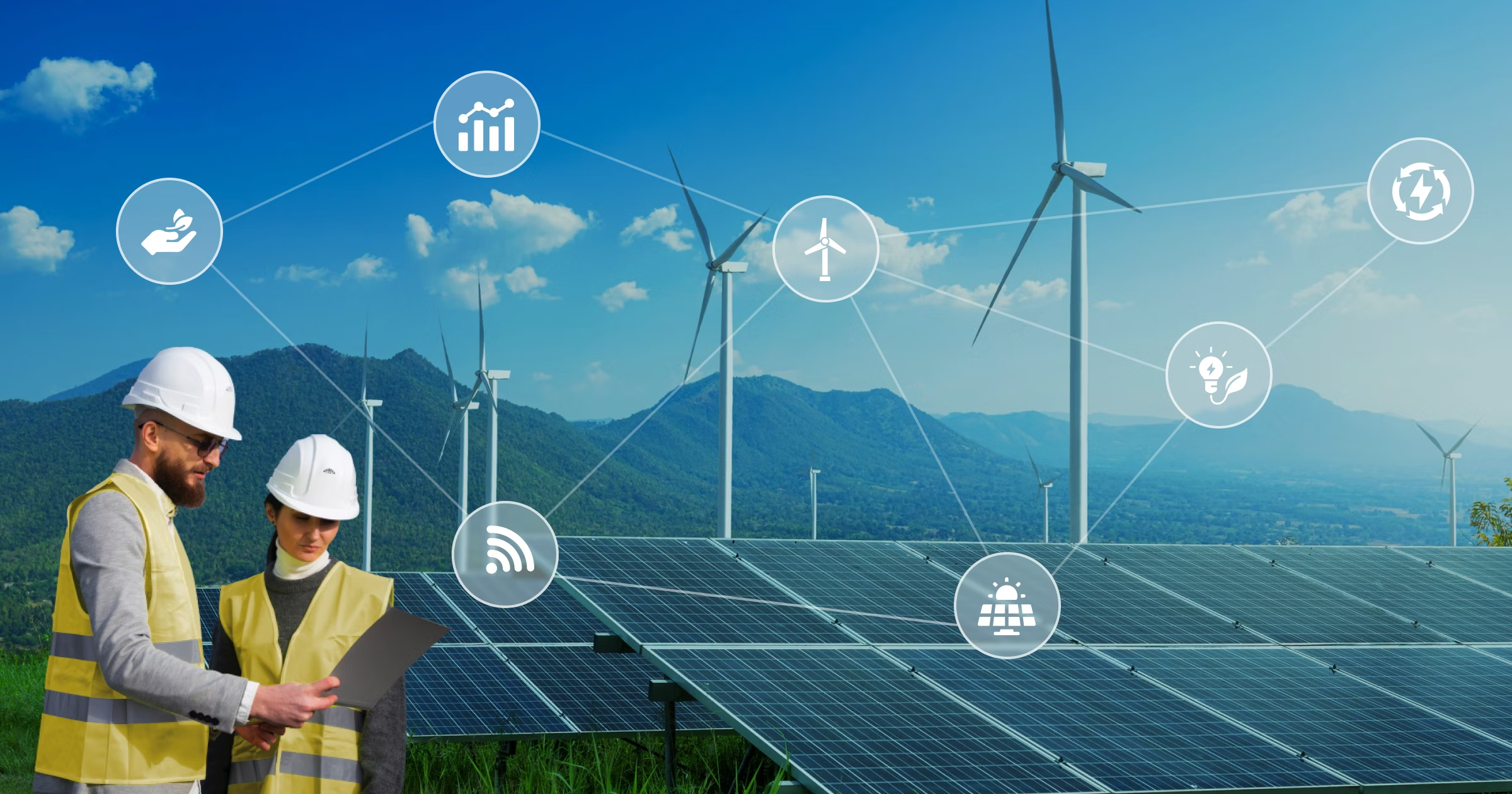
Energy systems across the world are being rewired—literally and digitally.
- Electricity networks are integrating massive amounts of renewable energy.
- Oil and gas operators are digitizing wells, pipelines, and refineries.
- Grid operators face new challenges from electric vehicles, prosumers, and microgrids.
- Homes, buildings, and factories are becoming smart, flexible loads and generators.
To handle this complexity, the industry is turning to Connected Energy—the fusion of the energy sector with IoT (Internet of Things), data platforms, and AI.
1. What Is Connected Energy?
Connected energy is an energy ecosystem in which:
- Physical assets (generators, turbines, transformers, meters, appliances, vehicles)
- Digital platforms (SCADA, EMS, DMS, CIS, billing)
- Stakeholders (utilities, operators, prosumers, regulators, technology providers)
are all linked through IoT, communications networks, and data platforms.
In a connected‑energy system:
- Every significant asset is instrumented with sensors and can be monitored remotely.
- Data flows from field devices through gateways and networks into cloud or on‑prem platforms.
- Analytics and AI provide real‑time insights, forecasts, and control signals.
- Customers become active participants, not just passive ratepayers.
The goal is to create an energy system that is:
- Reliable – fewer outages and faster restoration
- Efficient – optimized asset utilization and reduced losses
- Flexible – capable of handling variable renewables and new load types
- Sustainable – enabling decarbonisation and electrification
- Customer‑centric – offering new services and fair pricing
2. Centralised Energy Generation: Digital Power Plants
Centralised energy generation includes large plants that produce electricity at scale:
- Coal, gas, and oil‑fired plants
- Nuclear stations
- Large hydro plants
- Big industrial cogeneration facilities
Typical IoT activities for this segment include:
- Asset management
- Predictive maintenance
- Flow metering
- Storage
- Energy supply/demand optimisation
- IT infrastructure and remote troubleshooting
2.1 Challenges in Centralised Generation
Power‑plant operators face several pressures:
- Aging assets with high maintenance needs
- Tight availability and safety requirements
- Environmental regulations and emissions targets
- Fluctuating fuel prices and market conditions
- Workforce retirements and loss of tacit knowledge
IoT and digitalization help address these issues.
2.2 IoT Use Cases in Centralised Generation
2.2.1 Asset Management & Predictive Maintenance
Sensors on turbines, boilers, pumps, and generators continuously measure:
- Vibration and temperature
- Pressure and flow
- Electrical parameters (current, voltage, harmonics)
- Lubricant quality and particle counts
Data feeds condition‑monitoring systems and machine‑learning models that:
- Detect early signs of failure
- Estimate remaining useful life
- Recommend optimized maintenance windows
Benefits:
- Reduced unplanned outages
- Extended asset life
- Lower maintenance costs and spare‑parts inventory
2.2.2 Flow Metering and Fuel Management
IoT‑enabled flow meters track:
- Fuel inputs (gas, oil, coal slurry)
- Steam and water flows
- Cooling‑water usage
Combined with analytics, this supports:
- Efficiency optimization (heat‑rate improvements)
- Leak and loss detection
- Emissions monitoring and reporting
2.2.3 Storage and Standby Generation
Many plants integrate:
- On‑site fuel storage
- Large batteries for frequency control and peak shaving
- Standby generators for black‑start capability
IoT monitors:
- State of charge and health for batteries
- Fuel levels and readiness of backup generators
- Environmental and safety parameters (temperature, gas detection)
2.2.4 Industrial IoT for Big Plants
- Plant‑wide networks connect PLCs, DCS, and smart devices.
- Edge gateways aggregate data for central operations centers.
- Digital twins model the thermodynamic and mechanical behavior of the plant.
2.3 Benefits of Connected Centralised Generation
- Higher availability and capacity factors
- Better integration with markets and ancillary‑services programs
- Compliance with safety and environmental regulations
- Improved situational awareness and remote troubleshooting
3. Oil & Gas: From Wellhead to Decommissioning
The Oil & Gas segment covers the entire upstream and midstream chain:
- Exploration
- Well operations
- Extraction and production
- Storage and transport
- Pipeline operations
- Decommissioning
IoT activities include:
- Asset management
- Remote troubleshooting
- Predictive maintenance
- Plant operations
- Leakage and corrosion detection
- Fleet management and flow metering
3.1 Upstream: Digital Oilfields and Gas Fields
Well operations and extraction & production rely on:
- Downhole sensors for pressure, temperature, and flow
- Surface well‑head instrumentation
- Pump‑off controllers and artificial‑lift optimization
- Remote terminal units (RTUs) connected via satellite, cellular, or radio
IoT enables:
- Remote monitoring of marginal wells
- Real‑time optimization of production rates
- Early detection of gas kicks or water breakthrough
- Reduced travel for field technicians
3.2 Midstream: Pipelines, Storage, and Transport
Pipeline operations, storage & transport, and leakage/corrosion detection use:
- Flow meters and pressure sensors along pipelines
- Acoustic and fiber‑optic leak‑detection systems
- Cathodic‑protection monitoring for corrosion control
- Tank‑level sensors and floating‑roof monitoring in terminals
Connected systems:
- Detect leaks faster, reducing environmental impact and losses
- Support predictive maintenance on pumps, valves, and compressors
- Provide regulators with auditable records of safe operation
3.3 Downstream Plants and Petrochemical Facilities
While not explicitly detailed in the inner ring, many IoT practices apply to refineries and petrochemical plants:
- Industrial IoT for rotating equipment and process units
- Energy‑management systems to reduce fuel and steam consumption
- Emissions monitoring at stacks and flares
3.4 Decommissioning and Asset Lifecycle
Toward the end of an asset’s life, IoT helps:
- Monitor structural integrity during decommissioning
- Track equipment removal and waste handling
- Maintain safety in aging infrastructure until final shutdown
4. The Grid: Smart Transmission, Distribution, and System Operations
The Grid segment focuses on electricity transmission and distribution networks:
- Grid operations optimisation
- Network stabilisation
- Predictive maintenance
- Load management
- Monitoring and demand/response
- Capacity control
- Cybersecurity
- Data management/analytics
- Communications network
4.1 Transmission and Distribution Operations
Grid operators manage:
- High‑voltage transmission lines and substations
- Medium‑ and low‑voltage distribution networks
- Interconnections with neighboring systems
IoT extends traditional SCADA with:
- More granular sensors (line temperature, sag, weather stations)
- Intelligent electronic devices (IEDs) with automation logic
- Fault indicators on lines and transformers
Grid‑operations optimisation uses this data to:
- Detect and isolate faults faster
- Reconfigure networks automatically (self‑healing grids)
- Manage voltage and reactive power more efficiently
4.2 Load Management and Demand Response
Connected devices at the grid edge—smart thermostats, EV chargers, industrial loads—enable:
- Demand‑response programs where loads temporarily reduce consumption in response to price signals or grid emergencies.
- Load forecasting that accounts for weather, behavior, and distributed energy resources.
- Capacity control to avoid overloading lines or transformers.
IoT platforms coordinate these resources via:
- Aggregators
- Direct‑load control systems
- Distributed energy‑resource management systems (DERMS)
4.3 Predictive Maintenance and Asset Health
Predictive maintenance for grid assets covers:
- Power transformers (temperature, dissolved gas, partial discharge)
- Circuit breakers and switchgear (operation counts, timing)
- Lines (corrosion, mechanical stress, vegetation proximity)
Analytics provide health indices and maintenance priorities.
4.4 Cybersecurity and Data Management
Because the grid is critical infrastructure, we need the right:
- Cybersecurity
- Data management and analytics
- Communications networks
Best practices include:
- Segmented OT networks with firewalls and intrusion detection
- Encryption and authentication for field devices
- Comprehensive logging and anomaly detection
- Governance for sharing data with market participants and regulators
5. Retailers, Distributors, and Network Operators
The Retailers/District Network Operators segment bridges wholesale grid operations and end customers.
IoT activities include:
- Service providers and customer‑relations management
- Data collection and management
- IT infrastructure
- Power‑quality control
- Energy storage
- Billing and pricing
- Feedback/control loops
- Standards for connectivity and data exchange
- Security and regulatory compliance
5.1 Smart Metering and Data Collection
Retailers and distribution network operators depend on:
- Advanced Metering Infrastructure (AMI) – smart meters plus communication networks and head‑end systems.
- Metered data at intervals from minutes to hours.
Use cases:
- Time‑of‑use and dynamic tariffs
- Theft and non‑technical loss detection
- Outage detection and restoration verification
- Identification of phase imbalances and power‑quality issues
5.2 Billing, Pricing, and Customer Engagement
IoT‑enabled data supports:
- Near‑real‑time energy‑usage visualization for customers via apps and portals.
- Detailed billing and tariff comparisons.
- Personalized energy‑saving recommendations and alerts.
- Pre‑paid or pay‑as‑you‑go models.
Customer‑relations management (CRM) systems integrate with IoT platforms to manage:
- Service orders and meter installations
- Communications on outages or tariff changes
- Feedback and support tickets
5.3 Energy Storage and Local Networks
Retailers and local network operators can deploy:
- Community batteries and local storage assets
- Microgrids for campuses, industrial estates, or remote towns
- District‑heating and cooling networks with smart controls
IoT coordinates:
- Charging and discharging schedules
- Integration with distributed generation (rooftop solar, small wind)
- Market participation for flexibility services
5.4 Standards and Compliance
This segment emphasizes:
- Standards for connectivity and data exchange – interoperability between meters, gateways, and platforms.
- Regulatory compliance – privacy, data retention, and market rules.
6. Residential, Industrial, and Commercial Customers
This segment sits opposite “The Grid” representing energy consumers and prosumers.
IoT activities include:
- Smart metering
- Building‑hub communications
- Standby generation
- Meter‑data applications
- Heating control
- Motor recording and billing
- Air‑conditioning systems
- Smart‑home applications
6.1 Smart Homes
Smart homes contain:
- Smart meters and in‑home displays showing consumption and tariffs
- Connected thermostats, lighting, and appliances
- EV chargers and home batteries
- Rooftop solar inverters and controllers
IoT platforms enable:
- Automated response to price or carbon‑intensity signals
- Participation in demand‑response and peer‑to‑peer energy trading
- Integration with voice assistants and home‑automation systems
6.2 Smart Buildings and Commercial Customers
Commercial and industrial facilities deploy:
- Building‑energy management systems (BEMS) integrating HVAC, lighting, and plug loads.
- Motor‑recording and billing for sub‑metering across tenants or processes.
- Standby and backup generation (diesel gensets, gas turbines, batteries).
- Condition monitoring for large motors, compressors, and chillers.
IoT supports:
- Peak‑demand management and tariff optimization
- Fault detection and diagnostics for equipment
- Indoor‑climate monitoring and comfort optimization
- Compliance reporting for energy‑performance regulations
6.3 Industrial IoT and Process Integration
Energy‑intensive industries (chemicals, metals, cement, data centers) use IoT to:
- Correlate energy usage with production data
- Reallocate loads to low‑cost or low‑carbon periods
- Capture waste heat and integrate with district networks
7. Renewable Sources: Smart, Distributed Generation
The Renewable Sources segment includes:
- Solar, wind, wave, and hydro
- Geothermal and electrochemical sources
- Co‑generation and industrial/municipal combined heat and power (CHP)
IoT activities in this slice:
- Storage
- Energy supply/demand optimization
- Predictive maintenance
- Flow metering
- Asset management
- IT infrastructure
- Remote troubleshooting
7.1 Solar and Wind
Solar PV and wind farms rely heavily on IoT:
- Panel‑level or string‑level monitoring
- Inverter data (DC/AC conversion efficiency, status codes)
- Weather sensors for irradiance, wind speed, temperature
- Tracker controllers for solar tracking systems
IoT plus analytics provide:
- Performance‑ratio calculations and yield analysis
- Early detection of underperforming panels or turbines
- Condition‑based maintenance and inspection scheduling
7.2 Hydro, Wave, and Geothermal
Hydro and emerging sources such as wave and geothermal use:
- Flow‑metering and pressure sensors
- Vibration and condition monitoring for turbines and pumps
- Remote monitoring of remote sites (mountain reservoirs, offshore installations)
7.3 Co‑Generation and Microgrids
Co‑generation plants and microgrids integrate:
- Heat and power production
- Thermal storage (hot water tanks, phase‑change materials)
- Electrical storage and controllable loads
IoT controllers coordinate:
- Economic dispatch between heat and electricity demands
- Islanded operation during grid outages
- Interactions with district‑heating networks and neighboring microgrids
8. Horizontal Enablers Across All Segments
Certain technologies cut across all of them.
8.1 Sensors and Edge Devices
Common sensor types:
- Electrical: current, voltage, power factor, harmonics
- Mechanical: vibration, acceleration, displacement
- Thermal: temperature, infrared, heat‑flux
- Fluid: pressure, level, flow, quality
- Environmental: weather, solar irradiance, wind, humidity
Edge devices:
- RTUs, PLCs, and IEDs in substations and plants
- Smart meters and concentrators in distribution networks
- Home gateways and building‑automation controllers
8.2 Connectivity
Connectivity options depend on context:
- Wired Ethernet, serial, and fieldbuses in plants and substations
- Fiber‑optic networks for backbone communications
- Cellular (4G/5G), NB‑IoT, and LTE‑M for field devices and remote sites
- LPWAN (LoRaWAN, Sigfox) for wide‑area sensor networks
- Private radio networks in remote oilfields or mines
Reliability, latency, and security requirements are often stricter than in consumer IoT.
8.3 Cloud, Edge, and Hybrid Computing
Energy systems use a mix of:
- Edge computing – for local control, resilience, and privacy.
- Cloud computing – for fleet‑wide analytics, AI training, and integrated operations centers.
- Hybrid architectures – combining both via standardized APIs and messaging.
8.4 Data Platforms and Analytics
Data platforms must handle:
- Time‑series data from sensors and meters
- Events from alarms and protective devices
- Asset hierarchies and metadata
- Market and weather data
Analytics capabilities include:
- Descriptive dashboards and KPIs
- Predictive models (demand, renewable output, failure probabilities)
- Prescriptive optimization (unit commitment, dispatch, storage scheduling)
- Anomaly detection and cyber‑threat analytics
8.5 Cybersecurity and Resilience
Because energy systems are critical infrastructure, cybersecurity is non‑negotiable:
- Secure boot and firmware updates
- Certificate‑based identities for devices and users
- Encrypted communication and VPNs
- Network segmentation between IT and OT environments
- Continuous monitoring and incident‑response capabilities
9. Connected‑Energy Architectures: From Field to Cloud
Combining everything, we can sketch a generic connected‑energy reference architecture.
9.1 Field Layer
- Smart equipment with embedded sensors and control logic
- Meters, protective relays, IEDs, RTUs
- Local HMIs and operator panels
9.2 Edge and Substation Layer
- Gateways that aggregate data, perform protocol translation, and run local apps
- Substation automation systems with IEC‑61850 or similar standards
- On‑site servers or ruggedized edge computers
9.3 Communications Layer
- Redundant fiber rings and microwave links
- Cellular or satellite backhaul for remote assets
- Secure tunnels to data centers or clouds
9.4 Platform Layer
- IoT platforms handling device management, data ingestion, and security
- Data lakes and warehouses for analytics
- Digital‑twin platforms modeling assets and networks
- Integration with SCADA, EMS, DMS, CIS, and ERP systems
9.5 Application Layer
- Control‑room dashboards and situational‑awareness tools
- Maintenance and asset‑management systems
- Customer portals and mobile apps
- Market‑integration and trading platforms
This architecture should support modularity and interoperability, so new devices, apps, or market mechanisms can be added over time.
10. Business Models and Value in Connected Energy
Connected energy is not just about technology. It changes how value is created and shared.
10.1 Utilities and Network Operators
Benefits:
- Reduced outages and faster restoration
- Reduced technical and non‑technical losses
- Lower maintenance and operational costs
- Enhanced integration of renewables and flexibility services
- New revenue from value‑added services (monitoring, energy management, EV charging)
10.2 Oil & Gas Companies
Benefits:
- Increased production and reservoir recovery
- Reduced downtime and safety incidents
- Lower operating costs via remote operations
- Better regulatory compliance and environmental performance
10.3 Technology Providers and Startups
Opportunities:
- IoT platforms tailored to energy verticals
- Specialized sensors and edge devices
- AI‑based analytics for forecasting and optimization
- Cybersecurity solutions for OT networks
- Energy‑as‑a‑service offerings
10.4 Industrial and Commercial Customers
Benefits:
- Lower energy bills via efficiency and demand response
- Improved reliability and power quality
- Better alignment with sustainability goals
- New revenue as prosumers providing grid services
11. Implementation Roadmap for Connected‑Energy Projects
For utilities, oil and gas operators, or large customers considering connected‑energy initiatives, a structured roadmap helps reduce risk.
11.1 Step 1 – Define Objectives and Use Cases
Examples:
- Reduce grid SAIDI/SAIFI indicators by a certain percentage.
- Enable remote monitoring for isolated wind farms.
- Launch a smart‑metering and dynamic‑pricing program.
- Implement predictive maintenance for critical transformers.
Prioritize use cases based on:
- Business value
- Technical feasibility
- Time to impact
- Regulatory alignment
11.2 Step 2 – Assess Current Infrastructure
- Inventory existing sensors, communications, and systems.
- Identify data sources locked in proprietary systems.
- Understand cybersecurity posture and regulatory constraints.
11.3 Step 3 – Design the Architecture and Choose Partners
- Decide on edge vs cloud balance.
- Select standards (IEC‑61850, DLMS/COSEM, MQTT, OPC UA).
- Evaluate IoT platforms and integrators with domain expertise.
- Plan for interoperability and vendor‑agnostic approaches.
11.4 Step 4 – Pilot and Validate
- Start with limited assets or regions.
- Evaluate performance, reliability, and cybersecurity.
- Gather user feedback from operators, maintenance teams, and customers.
- Adjust processes and governance models.
11.5 Step 5 – Scale Up and Industrialize
- Automate deployment pipelines for devices and software.
- Implement comprehensive monitoring and logging.
- Train staff and update organizational structures.
- Extend to additional use cases and integrate with market mechanisms.
12. FAQ: Connected Energy and IoT
What is connected energy?
Connected energy is an energy ecosystem where assets, networks, and customers are instrumented with IoT sensors and connected to data platforms, enabling real‑time monitoring, analytics, and control across power plants, grids, oil and gas infrastructure, renewables, and end‑user sites.
How does IoT improve power‑plant operations?
IoT improves power‑plant operations through:
- Continuous condition monitoring of equipment
- Predictive‑maintenance models that prevent failures
- Real‑time efficiency optimization
- Better fuel and emissions tracking
- Remote troubleshooting and support
What is a smart grid in simple terms?
A smart grid is an electricity network that uses digital communication, IoT sensors, and automation to monitor and manage the flow of electricity from all sources to all users, improving reliability, efficiency, and the integration of renewables and flexible loads.
How do smart meters benefit consumers?
Smart meters provide:
- Accurate, near‑real‑time information about energy use
- Access to time‑of‑use or dynamic tariffs
- Faster detection of outages and service restoration
- The ability to participate in demand‑response and energy‑management programs
How does connected energy support renewable integration?
IoT and data analytics:
- Forecast solar and wind generation more accurately
- Monitor the performance and health of renewable assets
- Enable flexible loads and storage to balance variability
- Support new market mechanisms for distributed energy resources
What are the main cybersecurity concerns in connected energy?
Key concerns include:
- Unauthorized access to control systems
- Malware or ransomware disrupting operations
- Data breaches involving customer or operational data
- Supply‑chain attacks via compromised devices or software updates
Mitigation requires strong identity management, network segmentation, encryption, monitoring, and incident‑response capabilities.
Is connected energy only for large utilities?
No. While large utilities and operators are early adopters, industrial sites, commercial buildings, campuses, and even individual homes can benefit from connected‑energy solutions such as smart metering, building‑energy management, and rooftop‑solar monitoring.
13. Final Thoughts: Building the Future of Connected Energy
Modern energy systems are becoming deeply digital and interconnected, from centralised generation and oil and gas fields to grids, retailers, homes, factories, and renewable resources.
For anyone working in IoT, energy, or sustainability, this creates a powerful opportunity:
- Design sensing and communications solutions purpose‑built for harsh energy environments.
- Build data platforms and AI models that transform raw measurements into actionable intelligence.
- Create new business models where utilities and customers collaborate on flexibility and decarbonisation.
The journey is complex. It spans hardware, software, networks, regulation, finance, and human behavior. But by understanding how the pieces in the Connected‑Energy map fit together—centralised generation, oil and gas, the grid, retailers and network operators, customers, and renewables—you can design solutions that are scalable, secure, and future‑proof.
Whether you are planning a smart‑grid program, launching a predictive‑maintenance platform for wind farms, or designing smart‑home energy products, use this guide as a reference and checklist. Identify your segment, your use cases, and the enabling technologies you need, then build step by step toward a truly connected energy future.