

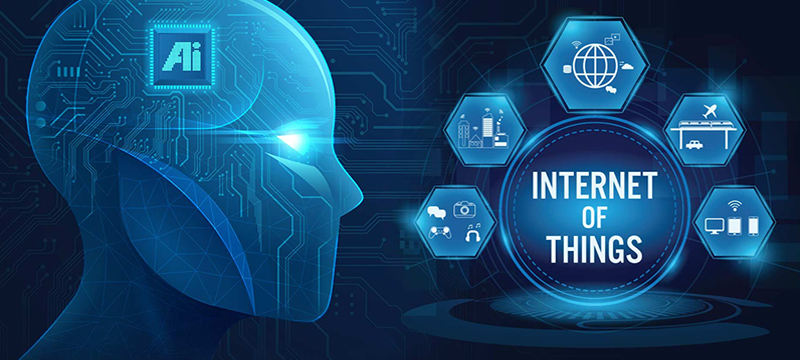
The digital world is awash with data, a relentless tide generated by everything from smart city sensors to industrial machinery. Yet, it’s not the sheer volume that holds the most transformative power, but rather the ability to harness this data in real-time. This is where Real-Time IoT AI emerges as a game-changer, enabling systems to sense, analyze, and act instantly on streaming data, fostering an era of continuous intelligence at an unprecedented scale.
This comprehensive guide delves into 20 core concepts that underpin Real-Time IoT AI, illustrating how data flows seamlessly, decisions are formed intelligently, and automation is sustained across the intricate edge-cloud continuum. Mastering these principles is not merely an advantage; it’s a prerequisite for building robust, agile, and intelligent systems that can truly thrive in our hyper-connected world.
Data Capture & Streaming: The Foundation of Real-Time Intelligence
The journey of continuous intelligence begins at the source: reliable and efficient data capture and streaming. Without a solid foundation here, even the most sophisticated AI models will falter, leading to flawed insights and misguided actions.
1. Sensor Telemetry: The Digital Pulse of Reality
At the very heart of any IoT system lies sensor telemetry – the continuous stream of signals emanating from machines and environments. These signals are the raw observations of the physical world, be it temperature readings, pressure levels, GPS coordinates, or vibration patterns.
The Criticality of Quality: The quality of this initial data is paramount. As the adage goes, “bad data here poisons everything downstream.” If sensor readings are inaccurate, noisy, or incomplete, every subsequent analysis, inference, and decision will be compromised. Ensuring robust sensor calibration, reliable data acquisition hardware, and appropriate sampling rates are fundamental to laying a trustworthy groundwork. Imagine an autonomous vehicle relying on faulty lidar data – the consequences could be catastrophic. Therefore, meticulous attention to the integrity of sensor telemetry is the first, indispensable step towards effective Real-Time IoT AI.
2. Event Streaming: Bringing Order to the Data Deluge
Raw sensor telemetry, while vital, is often a chaotic torrent of individual data points. To be truly useful for real-time analysis, this raw data must be transformed into structured, time-ordered events. Event streaming platforms act as the vital conduits, ingesting raw data and packaging it into meaningful, discrete events that can be easily consumed by downstream systems.
The Necessity of Structure: “No structure, no real-time analysis” encapsulates the importance of this concept. An event typically encapsulates a specific occurrence at a specific time, containing relevant attributes that describe that occurrence. For instance, a temperature sensor might generate an event like { "timestamp": "...", "sensor_id": "...", "temperature": "25.5", "unit": "Celsius" }. This structured format allows for efficient parsing, filtering, and aggregation, making the data amenable to the high-speed processing demanded by real-time applications. Technologies like Apache Kafka have become indispensable for building scalable and fault-tolerant event streaming architectures.
3. Time-Series Context: Unveiling Patterns Over Time
Beyond individual events, the temporal relationship between data points is often where profound insights lie. Time-series context refers to the critical role of timestamps and sequences in giving data meaning. Without this context, understanding trends, identifying anomalies, and making accurate predictions becomes mere guesswork.
Beyond Guesswork: Consider manufacturing equipment: a sudden spike in vibration might be a one-off anomaly, but a gradual increase over several hours, followed by a sharp drop, could indicate an impending mechanical failure. Only by analyzing these events in their proper time-series context can such patterns be identified. Time-series databases and analytics tools are specifically designed to handle this type of data, enabling powerful trend analysis, forecasting, and anomaly detection that would be impossible with isolated data points. This context allows AI models to learn not just what is happening, but when and in what sequence, which is crucial for predictive power.
4. Edge Preprocessing: Intelligence at the Source
The sheer volume of data generated by myriad IoT devices can quickly overwhelm network bandwidth and central cloud resources. Edge preprocessing addresses this challenge by intelligently filtering and enriching data locally, directly at the source, before it ever leaves the edge device or gateway.
Cutting Latency and Bandwidth: This concept is vital for “cutting latency and bandwidth at source.” Instead of sending every raw data point to the cloud, edge devices can perform initial computations, aggregation, or anomaly detection. For example, a smart camera might only send an alert and a short video clip to the cloud when motion is detected, rather than continuously streaming raw video. This significantly reduces the data burden on the network and cloud, leading to faster response times and lower operational costs. Furthermore, it enables real-time decisions that are truly localized and instantaneous, crucial for applications like autonomous systems where milliseconds matter.
Intelligence & Inference: Extracting Meaning from the Stream
Once data is captured and streamed effectively, the next critical step is to imbue it with intelligence. This involves using AI and machine learning models to extract meaningful insights, detect subtle patterns, and make informed inferences from the continuous flow of information.
5. Real-Time Inference: Decisions in the Moment
Real-time inference is the act of executing AI models the moment data arrives, enabling immediate decision-making based on the most current information. This stands in stark contrast to traditional batch processing, where data is collected over time and processed periodically.
The Cost of Delay: “If you’re batching when the use case demands streaming, you’ve lost.” This highlights the inherent problem with delayed processing in real-time scenarios. For applications like fraud detection in financial transactions or controlling robotic arms on an assembly line, waiting even a few seconds for an inference can render the insight useless or lead to significant losses. Real-time inference leverages optimized models and low-latency deployment strategies to ensure that predictions and classifications are made instantaneously, directly impacting the operational responsiveness of the system. This demands efficient model serving infrastructure and often, specialized hardware for accelerated inference at the edge.
6. Online Feature Engineering: Adapting to Evolving Data
Feature engineering, the process of creating relevant input variables for machine learning models, is traditionally a static, offline process. However, in dynamic IoT environments, static feature stores “won’t cut it” because data characteristics, and consequently, the most informative features, can change over time. Online feature engineering addresses this by dynamically building features from live data streams.
Dynamic Feature Creation: This means that as new data arrives, features are computed on the fly, ensuring that the model always operates on the most up-to-date and contextually relevant information. For instance, in an industrial setting, a feature might be the rate of change of a temperature reading over the last minute, or the standard deviation of pressure over the last five minutes. These features are not pre-computed and stored but are continuously generated from the streaming data, allowing the model to adapt and maintain its accuracy as operational conditions evolve.
7. Anomaly Detection: Proactive Problem Identification
One of the most valuable applications of AI in real-time IoT is anomaly detection – the ability to automatically catch irregular patterns before they escalate into outages or critical failures. This shifts an organization from a reactive to a proactive posture.
Proactive Over Reactive: “Proactive beats reactive every time.” Anomaly detection algorithms constantly monitor streaming data against established baselines or learned patterns. A sudden, uncharacteristic fluctuation in energy consumption, an unusual vibration signature from a machine, or an unexpected deviation in network traffic can all be flagged as anomalies. Early detection allows operators to investigate and intervene before a minor issue becomes a major problem, saving downtime, costs, and potential safety hazards. This is particularly crucial in critical infrastructure, healthcare, and manufacturing.
8. Predictive Signals: Anticipating the Future
Beyond merely detecting current abnormalities, Real-Time IoT AI excels at generating predictive signals, forecasting potential failures and degradation before they manifest. This is arguably “where AI earns its keep,” moving from identifying problems to preventing them.
AI’s True Value: Predictive signals leverage historical data and real-time streams to anticipate future events. For example, by analyzing trends in motor current, temperature, and vibration, an AI model can predict with high probability when a specific component is likely to fail, allowing for scheduled maintenance rather than emergency repairs. This not only reduces operational disruption but also optimizes resource allocation and extends asset lifespans. The accuracy and timeliness of these predictive signals are a direct measure of the effectiveness of the underlying AI models and the quality of the streaming data.
Agentic Decision Layer: Orchestrating Intelligent Actions
With intelligence extracted from the data, the next step is to translate those insights into concrete, timely actions. The agentic decision layer is responsible for orchestrating these intelligent responses, moving beyond mere analysis to automated execution.
9. Event-Driven Agents: Responsive Automation
The core principle of the agentic decision layer is the use of event-driven agents. These agents are unlike traditional scheduled jobs or polling loops; instead, they are “triggered by live events” as they occur in the data stream. This ensures immediate responsiveness to changing conditions.
Beyond Polling: Rather than constantly checking for updates, an event-driven agent springs into action only when a specific event of interest is detected – for example, an anomaly detected by Concept 7, or a predictive signal generated by Concept 8. This architecture is inherently more efficient, as resources are only consumed when there is a relevant stimulus. It enables rapid, targeted responses, such as automatically adjusting a building’s HVAC system in response to real-time occupancy data, or activating an emergency shut-off procedure if critical safety parameters are exceeded.
10. Contextual Reasoning: Intelligent, Informed Decisions
For an agent to make truly intelligent decisions, it needs more than just a trigger; it requires contextual reasoning. This means that decisions are always “shaped by device history, state, and environment.” Without this rich context, actions can be misguided.
Precision Over Guesses: Imagine a fire alarm agent. Simply detecting smoke isn’t enough to trigger an evacuation; the system needs to know the building’s current occupancy, the specific zone where smoke is detected, the status of sprinkler systems, and even external factors like weather conditions. This holistic view, pieced together from various data streams and historical records, allows the agent to make a precise and appropriate decision rather than a generic or potentially hazardous one. Context turns guesses into precision, greatly enhancing the reliability and effectiveness of automated actions.
11. Policy-Based Actions: Consistent and Auditable Responses
Ensuring that automated responses are both fast and consistent, while also being auditable, is achieved through policy-based actions. These actions are “governed by business rules” and defined policies, providing a structured framework for automation.
Fast, Consistent, Auditable: Policies encode the desired behavior of the system under various conditions. For example, a policy might dictate: “If temperature in Zone A exceeds X degrees for more than Y minutes, then activate cooling sequence 1; if temperature exceeds Z degrees, activate cooling sequence 2 and alert maintenance.” These rules are pre-defined, ensuring that the system responds exactly as intended every time. This not only guarantees consistency but also provides a clear audit trail of why a particular action was taken, which is crucial for compliance, debugging, and continuous improvement.
12. Human-in-the-Loop Control: Balancing Autonomy with Oversight
While automation offers immense benefits, there are situations where “autonomy without guardrails is reckless.” Human-in-the-loop control introduces a critical safety and oversight mechanism, requiring manual approvals for high-impact decisions.
Safety and Prudence: This concept acknowledges that not all decisions should be fully automated, especially those with significant financial, safety, or ethical implications. For instance, an AI system might detect a potential defect on an assembly line and recommend halting production. However, before a costly shutdown is initiated, a human operator might need to review the evidence and provide final approval. This hybrid approach combines the speed and analytical power of AI with human judgment, experience, and accountability, ensuring that critical operations remain secure and aligned with organizational values.
Edge + Cloud Coordination: The Continuum of Processing
Real-Time IoT AI rarely operates in isolation. It leverages a distributed architecture that spans from the edge of the network, where data is generated, to the powerful centralized cloud. Effective coordination between these environments is essential for optimizing performance, reliability, and cost.
13. Edge Autonomy: Resilience in Disconnection
One of the fundamental pillars of a resilient Real-Time IoT AI system is edge autonomy. This means that edge devices and local gateways retain the ability to make “local decisions when connectivity drops.” The consequence of going “blind offline” is a major production risk.
Production-Ready Systems: In many industrial or remote IoT deployments, internet connectivity can be intermittent or unreliable. If an edge device relies solely on the cloud for decision-making, a loss of connection would lead to a complete operational halt. Edge autonomy ensures that critical functions, such as safety shutdowns, local control loops, or basic anomaly detection, can continue to operate even when isolated from the central cloud. This local processing capability is not just about resilience, but also significantly reduces latency for mission-critical actions that cannot afford cloud round trips.
14. Hybrid Orchestration: The Right Tool for the Job
No single deployment model fits all Real-Time IoT AI needs. Hybrid orchestration involves intelligently “balancing workloads across edge and cloud,” recognizing that “one size never fits all.” This strategic distribution maximizes efficiency and effectiveness.
Optimizing Workloads: Certain tasks, like initial data filtering, immediate anomaly detection, or actuator control, are best performed at the edge due to latency requirements. Other tasks, such as complex model training, long-term data archival, global analytics, or large-scale data visualization, are better suited for the vast computational resources of the cloud. Hybrid orchestration involves strategically allocating these different workloads to the most appropriate compute environment. This dynamic distribution allows organizations to optimize for latency, bandwidth, cost, and security, creating a flexible and scalable infrastructure.
15. Latency Awareness: Directing the Flow of Intelligence
Critical to efficient hybrid orchestration is latency awareness. This principle dictates that execution should be routed “to the right compute tier based on response needs.” Understanding the latency budget for each operation is paramount.
Meeting Response Needs: For an autonomous vehicle, the response to an impending collision must be in milliseconds, demanding edge processing. For analyzing global supply chain trends, a latency of several minutes might be acceptable, making cloud processing viable. Latency awareness means designing the system to instinctively know where to perform each computational task to meet its specific response time requirements. This intelligence in routing ensures that ultra-low-latency applications are served locally, while less time-sensitive, often more compute-intensive, tasks are offloaded to the cloud.
16. State Synchronization: Maintaining a Consistent Reality
In a distributed environment, ensuring that edge and cloud systems have a consistent view of the operational state is absolutely vital. State synchronization aims to “keep edge and cloud aligned continuously,” as “stale state is silent failure.”
The Danger of Stale Data: If an edge device believes a valve is open, but the cloud system believes it’s closed due due to a synchronization lag, critical errors can occur. State synchronization mechanisms involve reliable communication protocols and data management strategies to ensure that changes made at the edge are propagated to the cloud, and updates from the cloud are reflected at the edge, in a timely and consistent manner. This prevents conflicting actions, ensures data integrity across the entire system, and provides a unified “single source of truth” about the current operational environment.
Operations & Trust: Sustaining and Securing Real-Time AI
Building a Real-Time IoT AI system is only half the battle. To realize its long-term value, organizations must focus on robust operations, continuous improvement, and establishing unwavering trust through governance, safety, and security.
17. Closed-Loop Automation: The Engine of Continuous Improvement
The true power of Real-Time IoT AI lies in its ability to operate as a closed-loop system: “sense, decide, act, learn — on repeat.” This continuous cycle is what “turns a pilot into a platform.”
From Pilot to Platform:
- Sense: Data is captured from sensors (Concept 1-4).
- Decide: AI models infer insights and make predictions (Concept 5-8).
- Act: Event-driven agents execute policies and actions (Concept 9-12).
- Learn: The outcomes of these actions and decisions are fed back into the system, continuously refining the AI models and policies. This feedback loop is crucial for model improvement, adaptation to changing conditions, and optimizing operational efficiency over time. It allows the system to autonomously improve its performance without constant human intervention, evolving from a reactive tool to a proactive, self-optimizing platform.
18. Model Drift Monitoring: Guarding Against Silent Degradation
AI models are not static entities; they can “degrade silently” over time as the real-world data they encounter deviates from the data they were trained on. Model drift monitoring is essential to “detect accuracy loss before bad calls start.”
Preventing Bad Calls: Factors like seasonal changes, new operational modes, or changes in machinery characteristics can cause model performance to decline. Continuous monitoring tracks key metrics (e.g., prediction accuracy, F1-score, data distribution shifts) to identify when a model’s performance begins to degrade. Upon detecting drift, the system can trigger alerts, initiate retraining with new data, or even fall back to a more robust, albeit less precise, model. This vigilance ensures that the insights and actions derived from AI remain reliable and effective, rather than silently leading to incorrect or suboptimal decisions.
19. System Observability: Seeing the Invisible
In complex, distributed Real-Time IoT AI systems, understanding what’s happening internally is critical. System observability involves the tools and practices to “track latency, performance, and failures across distributed systems.” You “can’t fix what you can’t see.”
Unveiling the Hidden: Observability goes beyond simple monitoring. It’s about being able to query and understand the internal state of the system from its external outputs. This includes monitoring data ingestion rates, processing latencies at different stages, AI model inference times, success/failure rates of automated actions, and resource utilization across edge devices and cloud infrastructure. Comprehensive dashboards, logging, tracing, and alerting mechanisms provide the necessary visibility to quickly diagnose issues, optimize performance, and ensure the entire distributed system is functioning as intended.
20. Governance & Safety: Earning Enterprise Trust
The deployment of powerful Real-Time IoT AI systems necessitates a strong emphasis on governance and safety. Concepts like “explainability, compliance, and security aren’t optional — they earn enterprise trust.”
The Cornerstone of Trust:
- Explainability: Can we understand why an AI made a particular decision? This is crucial for debugging, auditing, and building confidence, especially in critical applications.
- Compliance: Do the AI systems adhere to industry regulations, data privacy laws (e.g., GDPR), and ethical guidelines? This avoids legal repercussions and maintains reputation.
- Security: How are the data streams protected from unauthorized access or tampering? How are the AI models themselves secured against adversarial attacks? Robust security measures are non-negotiable for protecting sensitive data and preventing malicious exploitation.
By embedding these considerations from the design phase onwards, organizations not only mitigate risks but also build a foundation of trust with users, regulators, and stakeholders, making Real-Time IoT AI a responsible and sustainable enterprise asset.
The Symbiotic Relationship: When 20 Disciplines Converge
Real-Time IoT AI is undeniably a complex undertaking, not because of one singular capability, but because it represents the intricate concert of these 20 distinct yet interconnected disciplines. From the granular precision of sensor telemetry to the overarching frameworks of governance and safety, each concept plays a pivotal role in constructing systems that are truly intelligent, adaptive, and autonomous.
Mastering this full stack allows enterprises to build systems that sense faster, interpret data with greater accuracy, decide smarter, and act autonomously, ultimately unlocking unprecedented operational efficiencies, creating new revenue streams, and fostering disruptive innovation across every industry vertical. The journey to continuous intelligence is multifaceted, but with a clear understanding and strategic implementation of these 20 core concepts, the path to transformative AI-driven solutions becomes clear and achievable.
Ready to Transform Your Operations with Real-Time IoT AI?
The future of business is real-time, intelligent, and autonomous. Are you prepared to harness the full potential of your IoT data? At IoT Worlds, our expert consultants specialize in designing, developing, and deploying cutting-edge Real-Time IoT AI solutions that drive continuous intelligence and actionable insights for your enterprise. Whether you’re looking to optimize operational efficiency, enhance customer experiences, or create innovative new services, our team can guide you through every step of the journey, ensuring your systems are robust, secure, and future-proof.
Unlock the power of instant intelligence.
Contact us today to explore how Real-Time IoT AI can revolutionize your business. Send an email to info@iotworlds.com to initiate your transformation.
