

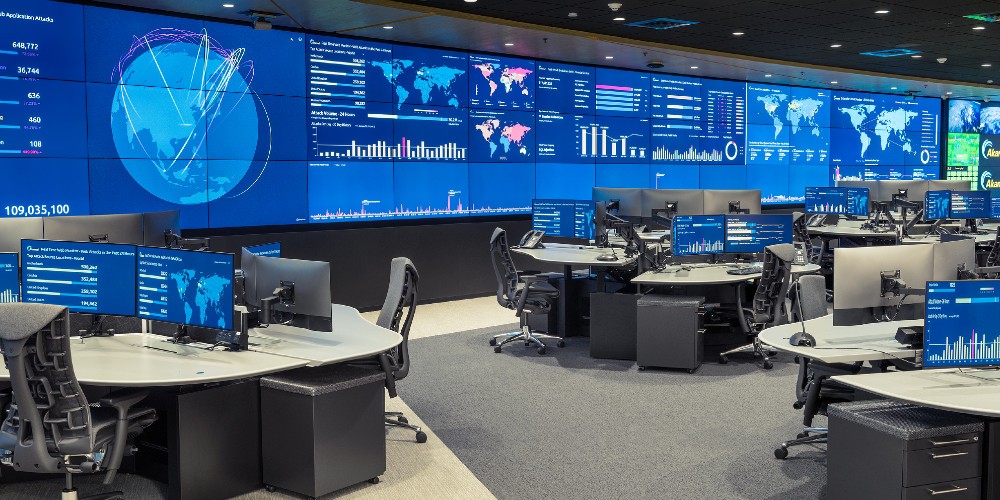
In the intricate tapestry of modern digital infrastructure, the Network Operations Center (NOC) stands as the vigilant guardian, ensuring the seamless flow of data and the uninterrupted delivery of services. Traditionally, NOCs have been centers of reactive monitoring, relying on static thresholds, manual correlation, and human intervention to troubleshoot and resolve issues. However, as IT environments grow exponentially in complexity, encompassing everything from vast Wide Area Networks (WANs) and Local Area Networks (LANs) to sophisticated Software-Defined Wide Area Networks (SD-WANs), sprawling data centers and colocation facilities, dynamic cloud and hybrid infrastructures, and the ever-expanding universe of IoT and Operational Technology (OT) networks, this conventional approach is no longer sustainable.
The sheer volume of data, the rapid pace of change, and the interconnected nature of modern systems create an environment where a single anomaly can trigger a cascade of alerts, overwhelming human operators and delaying critical incident resolution. The promise of Artificial Intelligence (AI) in transforming the NOC from a reactive hub into a proactive, predictive, and even autonomous operational center is not merely an incremental improvement; it represents a fundamental paradigm shift. This comprehensive guide will explore the profound impact of AI on NOC operations, detailing its technical capabilities, key outcomes, and its pivotal role in shaping the future of network management.
The Evolution of the NOC: A Paradigm Shift
The journey toward an AI-driven NOC is a response to the inherent limitations of traditional network management. Legacy NOCs are often characterized by:
- Static Thresholds: These fixed limits, once crossed, trigger an alert. While seemingly straightforward, they struggle to adapt to dynamic network conditions, leading to both false positives (alert noise) and missed anomalies.
- Manual Correlation: When an incident occurs, engineers expend significant effort manually cross-referencing alerts from disparate systems to identify the root cause. This is a time-consuming and error-prone process.
- Reactive Troubleshooting: Issues are typically addressed only after they have manifested and impacted service. This reactive stance leads to higher Mean Time To Resolution (MTTR) and potential service disruptions.
- Siloed Monitoring Tools: Different tools may be used for various aspects of the network (e.g., network performance, application performance, security), creating data silos and hindering a holistic view.
The modern business environment demands more. Enterprises, smart cities, and hyperscale data centers require networks that are not only resilient but also intelligent enough to anticipate problems, self-heal, and continuously optimize performance without constant human oversight. This is where the AI-powered NOC, also known as AIOps (Artificial Intelligence for IT Operations), steps in, fundamentally altering the operational model.
Core Technical Capabilities of AI in NOC Operations
At the heart of an AI-driven NOC lies an AI Analytics Engine, a sophisticated platform that harnesses the power of machine learning, event correlation, and predictive analysis. This engine ingests vast quantities of multidimensional telemetry data, processes it intelligently, and drives automated actions.
Multidimensional Telemetry Ingestion: Unifying Data for Comprehensive Visibility
A foundational capability of the AI-powered NOC is its ability to ingest and correlate a diverse array of telemetry and data sources. Unlike traditional systems that often operate in silos, an AI Analytics Engine acts as a central nervous system, integrating data from every corner of the network and beyond. This unified ingestion mechanism is crucial for achieving end-to-end visibility.
Consider the complexity of a typical modern enterprise network:
- Network Metrics: This includes traditional data sources such as SNMP (Simple Network Management Protocol) for device status and performance, as well as NetFlow/IPFIX for detailed traffic analysis. These metrics provide insights into interface utilization, error rates, congestion, and overall network health.
- Logs & Syslogs: These provide critical event data generated by network devices, servers, applications, and operating systems. Syslogs, in particular, offer a granular view of system activities, configuration changes, and potential security events.
- Cloud & IoT Data: The proliferation of cloud services (AWS CloudWatch, Azure Monitor) and IoT devices (sensors, smart devices, industrial controllers) introduces new streams of telemetry. Cloud-native telemetry offers insights into resource utilization, service health, and performance within cloud environments, while IoT sensor data can provide critical environmental or operational context that impacts network performance.
- Application Metrics (APM): Application Performance Management (APM) tools provide deep visibility into application health, response times, transaction rates, and error rates. Correlating these with network data is essential for understanding how network issues affect application performance and user experience.
By ingesting and correlating these diverse data streams, the AI Analytics Engine creates a holistic, cross-domain understanding of the entire infrastructure. This moves the NOC beyond siloed monitoring, where isolated alerts might be mistaken for root causes, to a state of true, interconnected operational intelligence.
ML-Based Anomaly Detection: Beyond Static Thresholds
One of the most transformative applications of AI in the NOC is its ability to move beyond static thresholds for anomaly detection. Traditional thresholding, while simple, is often insufficient for dynamic and complex networks. A fixed threshold of, for example, 80% CPU utilization might be normal during peak hours but indicate a problem during off-peak times.
Unsupervised Machine Learning (ML) models address this limitation by establishing dynamic baselines. Instead of rigid rules, the AI engine continuously learns the normal behavior patterns of various network metrics over time. These baselines are adaptive, evolving with network changes, traffic patterns, and operational cycles.
For instance, ML models can dynamically baseline:
- Latency & Jitter: Identifying abnormal delays or variations in packet delivery that deviate from learned norms.
- Packet Loss: Detecting unusual drops in traffic at specific interfaces or across network paths.
- Interface Utilization: Recognizing when an interface’s bandwidth usage significantly departs from its expected pattern, considering time of day or business cycles.
- Application Response Times: Pinpointing when an application’s performance degrades beyond its established normal range.
The result of ML-based anomaly detection is the ability to identify unknown and zero-day performance issues that would be missed by static thresholds. This proactive identification of subtle deviations allows NOC teams to intervene before problems escalate into major incidents, significantly reducing Mean Time To Detect (MTTD).
Event Correlation & Root Cause Analysis (RCA): Cutting Through the Noise
Network incidents rarely occur in isolation. A single fiber issue, for example, can trigger a cascade of events: an interface flap, routing churn, packet loss, increased retries, traffic inflation, queue drops, and ultimately, exploding application error rates. A traditional monitoring system, reacting to each symptom, might bombard engineers with hundreds of alerts, making it nearly impossible to discern the true source of the problem.
The AI Analytics Engine excels at event correlation and Root Cause Analysis (RCA). It achieves this by:
- Correlating Events Across Layers: AI can track how events ripple through the entire technology stack—from the network layer to compute, storage, and application layers. It understands the dependencies and interrelationships between different components.
- Causality Graphs and Dependency Mapping: By building and maintaining dynamic causality graphs and dependency maps, AI can visualize how different network elements and services are connected and influence each other. When an event occurs, it can trace back through these graphs to identify the original trigger.
The power of AI in RCA lies in its ability to sift through thousands of events and identify the true fault source, not just the symptoms. This capability is critical for focusing engineering efforts on rectifying the core problem, preventing wasted time on alleviating symptoms, and accelerating incident resolution.
Alert Deduplication & Noise Suppression: Reclaiming Engineer Focus
One of the most significant challenges in traditional NOCs is alert fatigue. An “alert storm” can desensitize engineers, leading to missed critical incidents and eroded trust in monitoring systems. The AI Analytics Engine directly addresses this problem through intelligent alert deduplication and noise suppression.
AI reduces alert storms by:
- Grouping Related Incidents: Instead of firing an alert for every single symptom, AI identifies and groups together alerts that stem from the same underlying event. For example, all alerts related to the cascading effects of a single router failure are consolidated into one actionable incident.
- Suppressing Cascading Alarms: Once the root cause is identified, AI can intelligently suppress subsequent, dependent alarms. If a core switch fails, and that failure triggers dozens of “device unreachable” alerts for connected devices, AI recognizes the primary failure and suppresses the secondary, less critical alarms.
- Prioritizing Based on Service Impact: AI doesn’t just reduce alerts; it prioritizes the remaining critical incidents based on their actual or potential impact on business services. This ensures that engineers focus their attention on issues that truly matter and could affect customer experience or business continuity.
The outcome is a dramatically cleaner, more actionable alert stream. Engineers are no longer drowning in a sea of notifications; instead, they receive a clear, concise, and prioritized view of critical incidents, allowing them to focus on resolution rather than sifting through irrelevant noise. As highlighted in a discussion on network AIOps, cutting alert noise without losing visibility is paramount for network teams.
Predictive Failure & Capacity Modeling: Anticipating the Future
Moving beyond reactive troubleshooting, the AI Analytics Engine enables proactive network management through predictive capabilities. By leveraging time-series forecasting and historical data analysis, AI can anticipate future issues before they impact services.
This involves:
- Hardware Failures: AI models can analyze patterns in device logs, component stress, and environmental data to predict the likelihood of hardware failures (e.g., aging hard drives, failing power supplies). This allows for just-in-time replacement, preventing unexpected outages.
- Link Saturation: By analyzing historical traffic patterns and growth trends, AI can predict when network links are likely to approach saturation limits. This gives ample time for capacity upgrades or traffic engineering adjustments.
- Resource Exhaustion: AI can forecast the exhaustion of critical resources such as CPU, memory, or storage in servers and network devices. This enables proactive scaling or reallocation of resources.
The ability to predict potential failures and capacity bottlenecks transforms maintenance from a reactive, break-fix model to a proactive, predictive one. This ensures higher network availability, optimized resource utilization, and prevents costly service disruptions.
Closed-Loop Automation & Self-Healing: The Path to Autonomous Networks
The ultimate goal of an AI-driven NOC is to move towards autonomous network operations, where the system can not only detect and diagnose issues but also automatically remediate them without human intervention. This is achieved through closed-loop automation and self-healing mechanisms, integrated with existing orchestration tools.
With the AI Analytics Engine as the intelligence layer, AI can:
- Reroute Traffic: In response to detected link failures or congestion, AI can automatically reroute traffic to alternative paths, ensuring continuous connectivity and minimizing service impact.
- Restart Failed Services: If an application or service exhibits anomalous behavior or outright failure, AI can trigger automated restarts or failovers to restore functionality.
- Adjust QoS or Routing Policies: AI can dynamically adjust Quality of Service (QoS) settings or routing policies based on real-time network conditions and application demands, optimizing performance and prioritizing critical traffic.
These automated actions, orchestrated through tools like Ansible, Terraform, or direct API calls, represent a significant leap towards self-healing networks. This reduces the need for manual intervention for routine issues, freeing up highly skilled engineers to focus on more complex strategic initiatives.
NOC + SOC Convergence: Unified Operational and Security Intelligence
In the modern threat landscape, the traditional separation between Network Operations Centers (NOCs) and Security Operations Centers (SOCs) is becoming increasingly inefficient. Performance issues can be symptoms of security breaches, and security incidents can severely impact network performance. The AI-driven NOC facilitates the convergence of these two critical functions.
AI can detect security-related anomalies by:
- Lateral Movement: Analyzing network traffic patterns to identify unusual horizontal communication within a network, which can indicate an attacker moving between systems.
- Traffic Anomalies: Detecting sudden, unusual spikes or drops in traffic volume, atypical protocol usage, or connections to suspicious external IP addresses, all of which could signify a DDoS attack or malware activity.
- DDoS & Zero-Trust Violations: Identifying the characteristics of Distributed Denial of Service (DDoS) attacks and flagging attempts to bypass zero-trust security policies.
By bridging performance monitoring and security operations, an AI-powered NOC provides a more holistic view of the network’s health and security posture. This unified approach enables faster detection and response to both operational incidents and security threats, enhancing overall organizational resilience.
Key Outcomes: The Tangible Benefits of an AI-Driven NOC
The comprehensive capabilities of an AI-driven NOC translate into significant, tangible benefits for organizations. These outcomes drive operational excellence, improve business resilience, and provide a competitive edge.
Reduced Mean Time To Resolution (MTTR)
One of the most critical metrics in IT operations, MTTR, directly impacts business continuity and customer satisfaction. By providing rapid anomaly detection, precise root cause analysis, and intelligent alert prioritization, an AI-driven NOC drastically reduces the time it takes to identify, diagnose, and resolve network incidents. Engineers are directed straight to the problem, equipped with the context needed for swift resolution, rather than spending hours sifting through logs and alerts. The reduction in alert noise and the ability to proactively identify issues before they escalate directly contribute to this lower MTTR.
Higher Network Availability and Uptime
Network availability is paramount for modern businesses, where every minute of downtime can translate into significant financial losses and reputational damage. The predictive capabilities of AI, combined with self-healing automation, significantly enhance network uptime. By anticipating hardware failures, link saturations, and resource exhaustion, organizations can take proactive measures to prevent outages. When incidents do occur, swift resolution through AI-powered RCA and automation minimizes their duration and impact. This proactive and efficient approach ensures that critical services remain operational, maximizing business continuity.
Lower Operational Expenditure (OPEX)
The move to an AI-driven NOC is not just about improved performance; it also brings substantial cost efficiencies. Lower OPEX is achieved through several mechanisms:
- Reduced Manual Workloads: Automation of routine tasks, incident diagnosis, and even remediation frees up highly paid engineers from repetitive, time-consuming activities. This allows them to focus on strategic initiatives, innovation, and complex problem-solving.
- Optimized Resource Utilization: Predictive capacity modeling prevents both over-provisioning (idle resources) and under-provisioning (performance bottlenecks), ensuring that IT infrastructure is utilized efficiently.
- Fewer Service Disruptions: Preventing outages and quickly resolving those that do occur reduces the financial impact of downtime, including lost revenue, customer churn, and potential penalties.
- Enhanced Efficiency: The overall streamlined operations and improved incident management processes contribute to a more efficient and cost-effective NOC.
An IDC report emphasizes that leveraging AIOps and automation is key to transforming legacy NOCs into modern operations centers that reduce costs and enhance customer experiences.
Scalable NOC Operations
As IT environments scale rapidly, encompassing an ever-growing number of devices, services, and data points, traditional NOCs struggle to keep pace. Adding more human operators is not always a feasible or efficient solution. AI-driven NOCs are inherently scalable. The AI Analytics Engine can ingest and process exponentially larger volumes of telemetry data without a proportional increase in human intervention. This allows organizations to expand their digital footprint, integrate new technologies, and manage vast, complex infrastructures without overwhelming their operations teams. The ability to handle this complexity lays the groundwork for the rapid growth characteristic of hyperscale data centers and cloud-first enterprises.
SLA-Driven Service Assurance and Compliance
Service Level Agreements (SLAs) are fundamental contracts between service providers and their customers, defining the parameters of service quality, such as uptime, performance, and availability. Failing to meet SLAs can result in significant financial penalties and damage to reputation. An AI-driven NOC is a powerful tool for ensuring SLA compliance.
- Proactive Performance Monitoring: By continuously monitoring performance metrics against dynamic baselines, AI can detect potential SLA violations before they occur, allowing for proactive intervention.
- Real-time Performance Insights: The cross-domain visibility provided by AI ensures that the NOC has a clear, real-time understanding of how the network is performing relative to defined service levels.
- Automated Remediation: For certain types of incidents, AI-driven automation can quickly resolve issues that might otherwise lead to SLA breaches.
- Advanced Reporting: AI can provide detailed reports on network performance and incident resolution, offering transparent evidence of SLA adherence.
This proactive and data-driven approach instills confidence, strengthens customer relationships, and minimizes the risk of non-compliance.
Autonomous Networks: The Future Unfolds
The progression from reactive monitoring to predictive management and automated remediation culminates in the vision of autonomous networks. While full autonomy is a long-term goal, the AI-driven NOC is the foundational step in this journey. Autonomous networks are self-configuring, self-monitoring, self-healing, and self-optimizing. They can adapt to changing conditions, anticipate problems, and resolve them without human intervention. The AI Analytics Engine, with its capabilities in anomaly detection, RCA, predictive maintenance, and self-healing automation, serves as the intelligent core driving this evolution. This vision is particularly resonant for smart cities, hyperscale data centers, and advanced cloud infrastructures, which demand networks that can operate with minimal human oversight and maximum resilience.
The Pillars of the AI-Driven NOC Transformation
Successfully transitioning to an AI-driven NOC involves several strategic considerations that extend beyond just implementing AI tools. It requires a holistic approach to technology, processes, and people.
Data Strategy: The Fuel for AI
The effectiveness of any AI system is directly proportional to the quality and quantity of data it receives. A robust data strategy is paramount for an AI-driven NOC. This involves:
- Comprehensive Data Collection: Ensuring that all relevant telemetry sources—including network metrics, logs, application performance data, cloud telemetry, and IoT sensor data—are consistently collected and integrated into the AI Analytics Engine.
- Data Normalization and Cleansing: AI models perform best with clean, consistent data. Data normalization and cleansing processes are essential to remove inconsistencies, errors, and redundancies.
- Historical Data Archiving: Long-term storage of historical data is critical for training AI models, establishing accurate dynamic baselines, and performing time-series forecasting.
- Real-Time Ingestion Pipelines: Establishing efficient and scalable pipelines for real-time data ingestion ensures that the AI engine always has the most current information.
AI Model Development and Management (LLMOps)
The AI Analytics Engine relies on sophisticated Machine Learning (ML) models. The development, deployment, and ongoing management of these models are crucial. This often falls under the umbrella of LLMOps (Large Language Model Operations), though the principles apply to broader ML models used in AIOps:
- Model Selection and Training: Choosing appropriate ML algorithms (e.g., for anomaly detection, clustering, time-series forecasting) and training them with relevant historical data.
- Continuous Learning: AI models in the NOC must be capable of continuous learning and adaptation as network behavior evolves. This involves retraining models with new data to maintain their accuracy and relevance.
- Performance Monitoring: Regular monitoring of AI model performance, including accuracy, false positive rates, and false negative rates, is essential for refinement.
- Explainable AI (XAI): As AI takes on more critical roles, the ability to understand and explain its decisions becomes important for gaining trust and troubleshooting.
Companies are increasingly building multi-agent orchestration platforms to deploy, manage, and scale collaborative AI agents, driving real-time decisions and transformative outcomes.
Integration with Existing IT Ecosystem
The AI-driven NOC is not a standalone island; it must seamlessly integrate with the broader IT ecosystem. This includes:
- IT Service Management (ITSM) Tools: Integration with ITSM platforms (e.g., ServiceNow, Jira) for automated ticket creation, incident assignment, and workflow management.
- Orchestration and Automation Tools: Connecting the AI engine with automation tools (e.g., Ansible, Terraform, custom scripts) to enable closed-loop automation and self-healing actions.
- Configuration Management Databases (CMDBs): Leveraging CMDBs for accurate dependency mapping and understanding the relationships between network components and services.
- Security Information and Event Management (SIEM) Systems: Integration with SIEM for enhanced security visibility and coordinated response to security incidents.
Skillset Transformation: Upskilling the NOC Team
The advent of AI in the NOC necessitates a shift in the skillset of operations teams. While AI automates many repetitive tasks, it enhances the role of human engineers, requiring them to operate at a higher level of abstraction and strategic thinking.
- Data Science and Analytics Literacy: NOC engineers will need a foundational understanding of data science principles to interpret AI insights, validate model performance, and provide feedback for model improvement.
- Automation and Scripting Expertise: A strong grasp of automation tools, scripting languages (e.g., Python), and API interactions will be essential for creating and managing automated remediation workflows.
- Strategic Problem Solving: With AI handling routine issues, engineers can focus on complex, novel problems, architectural improvements, and strategic planning.
- Cross-Domain Knowledge: A holistic understanding of the entire technological stack (network, compute, storage, applications, security) will be more critical than ever for leveraging AI’s cross-domain visibility.
This evolution is not about replacing humans but augmenting their capabilities, allowing them to be more effective and impactful. As one expert notes, the shift is from “just turn off the noisy alerts” to a more strategic approach where engineers truly trust the intelligence provided by AI.
Organizational Buy-in and Change Management
Implementing an AI-driven NOC is a significant organizational undertaking that requires strong leadership support and a well-managed change process.
- Stakeholder Alignment: Ensuring that all relevant stakeholders—IT leadership, network engineers, security teams, application owners—understand the benefits and are committed to the transformation.
- Pilot Programs: Starting with pilot programs to demonstrate the value of AI in specific use cases can build momentum and gather feedback for broader deployment.
- Continuous Improvement Culture: The AI-driven NOC is not a one-time deployment but an ongoing journey of continuous learning and improvement.
The Broader Impact: Reshaping IT Operations
The influence of the AI-driven NOC extends beyond technical capabilities and efficiency gains; it reshapes the very nature of IT operations within an organization.
From Cost Center to Value Creator
Traditionally, IT operations, and the NOC in particular, have often been viewed as cost centers—necessary expenses to keep the business running. By reducing OPEX, improving uptime, and enabling faster innovation, the AI-driven NOC transforms this perception. It becomes a strategic asset that directly contributes to business value by ensuring optimal performance of critical systems, enabling new digital initiatives, and enhancing customer satisfaction.
Empowering Innovation
With AI handling the grunt work of monitoring and initial incident response, highly skilled engineers are liberated to focus on more innovative projects. This could include researching new technologies, optimizing network architecture, developing new services, or contributing to business-level strategic planning. This shift fosters a culture of innovation and continuous improvement.
Enhanced Security Posture
The convergence of NOC and SOC capabilities, driven by AI, leads to a significantly enhanced security posture. Early detection of anomalies that could indicate a security breach, faster response times to security incidents, and a more integrated view of performance and security events make the organization more resilient against cyber threats. This proactive security stance is vital in an era of increasingly sophisticated attacks.
Supporting Digital Transformation Initiatives
Many organizations are undergoing digital transformation, adopting cloud-native architectures, microservices, and IoT strategies. These initiatives introduce immense complexity. An AI-driven NOC provides the underlying operational intelligence to manage this complexity effectively, ensuring that these transformative projects are not hampered by operational blind spots or excessive manual overhead. It becomes an enabler, not a bottleneck, for digital change.
The Foundation for Smart Cities and Hyperscale Data Centers
The demands of smart cities, with their vast networks of interconnected IoT devices, and hyperscale data centers, with their immense scale and dynamic workloads, cannot be met by traditional NOC models. An AI-driven NOC is not just beneficial; it’s essential for these environments. It provides the necessary automation, predictive power, and autonomous capabilities to manage these colossal and mission-critical infrastructures efficiently and reliably. The complexity and volume of data generated in such environments necessitate intelligence that far surpasses human capacity to process manually.
Looking Ahead: The Future of Autonomous Network Operations
The journey to a fully autonomous network is ongoing, and AI will continue to play an increasingly central role. Future developments in AI-driven NOCs are likely to include:
- More Sophisticated Predictive Models: Incorporating external factors (e.g., weather, social media trends, geopolitical events) into predictive models to anticipate even broader impacts on network performance.
- Advanced Generative AI for Incident Response: Utilizing Generative AI to automatically generate incident reports, suggest resolution steps, or even create necessary code for automated remediation, further reducing human effort. Blogs like Red Hat’s “DarkNOC: GenAI & Automation propels insights driven NetOps” highlight the future of AI in this space.
- Contextual Awareness: AI systems becoming even more adept at understanding the business context of network events, allowing for more intelligent prioritization and tailored responses.
- Human-in-the-Loop AI: While aiming for autonomy, maintaining effective human oversight and intervention points will remain crucial, evolving into a sophisticated partnership between AI and human experts.
- Adaptive Security Policies: AI dynamically adjusting security policies and access controls in real-time based on observed threats and network conditions, moving towards a truly adaptive and proactive security posture.
The AI-driven NOC represents a powerful convergence of technological innovation and operational necessity. It signifies the evolution from a reactive, human-intensive command center to an intelligent, proactive, and increasingly autonomous operational hub. This transformation is not merely an upgrade; it is a fundamental redefinition of how networks are managed, secured, and optimized in an era of unprecedented digital complexity.
Unlock Your Network’s Full Potential with IoT Worlds
Are you ready to transform your Network Operations Center from a reactive monitoring station into a hub of intelligent, predictive, and autonomous network operations? The future of network management is here, and it’s powered by AI. At IoT Worlds, we specialize in guiding organizations through this critical transition, leveraging cutting-edge AI and automation strategies to optimize your network infrastructure, enhance security, and drive operational excellence.
Our expert team is ready to help you:
- Assess your current NOC capabilities and identify key areas for AI integration.
- Design and implement a tailored AI-driven NOC solution that aligns with your unique business needs and infrastructure.
- Integrate multidimensional telemetry across your WAN/LAN/SD-WAN, data centers, cloud infrastructure, and IoT/OT networks for complete visibility.
- Implement advanced ML-based anomaly detection to preempt issues before they impact services.
- Automate event correlation and root cause analysis to significantly reduce MTTR.
- Establish predictive maintenance and self-healing automation for unparalleled network resilience.
- Bridge the gap between your NOC and SOC for a unified and robust security posture.
Don’t let alert noise, manual interventions, and reactive troubleshooting hold your network back. Embrace the power of AI to achieve higher network availability, lower operational costs, and scalable operations that meet the demands of tomorrow.
Take the first step towards an autonomous, intelligent network operations center. Let’s discuss how an AI-driven NOC can revolutionize your business.
Contact us today to explore our consultancy services.
Send an email to info@iotworlds.com
