

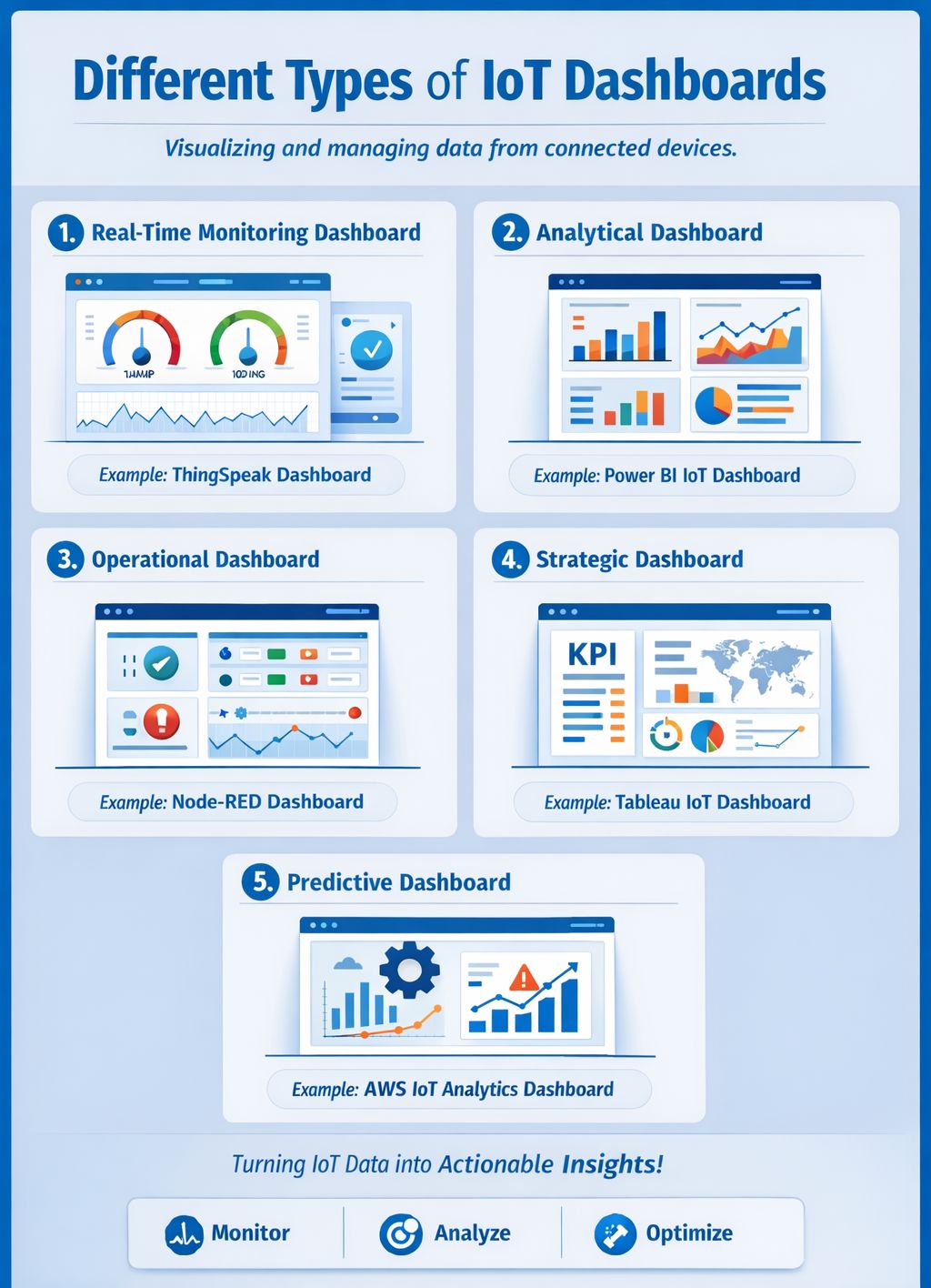
The Internet of Things (IoT) has revolutionized how industries operate, homes function, and cities are managed. At its core, IoT involves a vast network of interconnected physical objects—devices, vehicles, home appliances, and other items—embedded with sensors, software, and other technologies that enable them to connect and exchange data over the internet. This deluge of data, generated continuously and in immense volumes, holds invaluable insights. However, without a systematic, intuitive, and efficient way to process, visualize, and interact with this data, its true potential remains untapped. This is where IoT dashboards come into play.
IoT dashboards are the central nervous system for any IoT ecosystem. They act as graphical user interfaces that present key performance indicators (KPIs), metrics, and critical information derived from IoT devices in an easily digestible format. Imagine trying to comprehend thousands, or even millions, of data points streaming in every second from various sensors. It would be an impossible task for the human mind. Dashboards transform this raw data into meaningful visual representations—charts, graphs, gauges, maps, and tables—allowing users to quickly grasp device performance, system health, and operational trends.
The primary purpose of an IoT dashboard is to empower users, from technical engineers to business executives, to make informed decisions swiftly. By providing a consolidated, real-time, or historical view of IoT data, these dashboards enable proactive problem-solving, optimize resource allocation, enhance operational efficiency, and ultimately drive business growth. The effectiveness of an IoT solution often hinges on the quality and usability of its associated dashboard.
There isn’t a one-size-fits-all IoT dashboard. The diverse applications and diverse user needs within the IoT landscape necessitate a variety of dashboard types, each tailored to specific objectives and functionalities. Understanding these different types is crucial for any organization embarking on or expanding its IoT journey, as selecting the right dashboard directly impacts the ability to derive maximum value from connected devices. This comprehensive guide will delve into the various types of IoT dashboards, exploring their characteristics, use cases, and the unique advantages they offer.
The Foundation of IoT Dashboards: Data Acquisition and Processing
Before diving into the different types of IoT dashboards, it’s essential to understand the underlying process that feeds these visual powerhouses. An IoT dashboard is only as good as the data it receives and processes. The journey of IoT data from device to dashboard involves several critical stages:
Device Connectivity and Data Ingestion
At the very beginning of the IoT data pipeline are the connected devices themselves. These devices, ranging from simple sensors measuring temperature or humidity to complex industrial machinery, collect data from their environment. This data is then transmitted through various communication protocols (e.g., Wi-Fi, cellular, LoRaWAN, Zigbee, MQTT) to an IoT platform or a cloud-based service. Data ingestion refers to the process of collecting this data, often in raw and unstructured formats, and reliably transferring it into a central repository. This step is critical for ensuring that all relevant data points are captured and available for subsequent processing. Challenges at this stage can include managing diverse device types, ensuring secure and scalable data transmission, and handling intermittent connectivity.
Data Storage and Management
Once ingested, IoT data needs to be stored efficiently and securely. Given the sheer volume and velocity of IoT data, specialized databases are often employed. These can include time-series databases, which are optimized for storing data points indexed by time, or NoSQL databases, which offer flexibility for handling varying data structures. Effective data management involves not only storage but also indexing, archiving, and ensuring data integrity. The choice of storage solution depends on factors such as data volume, query patterns, retention policies, and security requirements. A well-managed data layer is foundational for the performance and responsiveness of any IoT dashboard.
Data Processing and Analytics
Raw IoT data often contains noise, redundancies, and requires transformation before it can yield meaningful insights. This is where data processing and analytics come into play. Data processing can involve cleaning the data, filtering out irrelevant information, aggregating data points, and applying various algorithms to extract features. Analytics goes a step further, applying statistical methods, machine learning models, and other advanced techniques to identify patterns, detect anomalies, predict future events, and derive actionable intelligence. This stage transforms inert data into valuable information that directly informs the visual elements of an IoT dashboard. Edge computing, where some processing occurs closer to the data source (on the device or gateway), can also play a significant role in reducing latency and bandwidth usage for certain applications.
API Integration and Visualization Layer
The processed and analyzed data is then typically exposed through Application Programming Interfaces (APIs). These APIs act as interfaces that allow the dashboard application to request and retrieve the necessary data. The visualization layer is the actual dashboard interface itself, where software components render the data into various graphical representations. This layer is responsible for creating a user-friendly and interactive experience, allowing users to customize views, drill down into details, and explore data relationships. The integration between the data backend and the front-end visualization is crucial for a responsive and effective dashboard.
Real-Time Monitoring Dashboards: The Pulse of Your IoT Ecosystem
What are Real-Time Monitoring Dashboards?
Real-time monitoring dashboards are perhaps the most immediately impactful type of IoT dashboard. As their name suggests, these dashboards provide an instantaneous, up-to-the-minute view of data streaming from IoT devices. They are designed to display live sensor readings, current device statuses, and immediate alerts, offering a dynamic snapshot of the IoT ecosystem’s present state. The emphasis here is on immediacy and continuous updates, allowing users to observe changes as they happen.
Key Characteristics
- Live Data Streams: The defining feature is the continuous display of incoming data with minimal latency. Data refreshes frequently, often within seconds or sub-seconds, to reflect the most current conditions.
- Instantaneous Feedback: Users receive immediate visual feedback on device performance, environmental conditions, or operational parameters.
- Alert Generation: These dashboards are often integrated with alerting systems that trigger notifications (e.g., emails, SMS, push notifications) when predefined thresholds are exceeded or anomalies are detected.
- Simple Visualizations: While complex analytics can be integrated, the primary focus is on clear, concise visualizations that convey immediate status. Gauges, trend lines, digital readouts, and status indicators are common elements.
- High Availability: Due to their critical nature, real-time dashboards require high availability and robust infrastructure to ensure uninterrupted monitoring.
Use Cases and Examples
Real-time monitoring dashboards are indispensable in scenarios where immediate awareness and quick responses are paramount.
- Smart Homes and Buildings: Monitoring ambient temperature, humidity, security camera feeds, door/window sensor statuses, and energy consumption in real-time. A sudden spike in energy usage during off-hours might indicate a problem.
- Smart Factories and Industrial IoT (IIoT): Tracking the operational status of machinery, production line throughput, sensor readings from critical equipment (e.g., pressure, temperature, vibration), and worker safety parameters. This allows for immediate intervention in case of equipment malfunction or safety hazards.
- Healthcare: Monitoring vital signs of patients in hospitals or remote care settings, tracking medical equipment status, and ensuring optimal environmental conditions in sensitive areas like operating rooms or pharmacies.
- Logistics and Fleet Management: Real-time tracking of vehicle location, speed, fuel levels, and cargo conditions (e.g., temperature for perishable goods). This enables route optimization and immediate response to unforeseen delays or issues.
- Environmental Monitoring: Observing live air quality metrics, water levels, weather patterns, and pollution indicators. This is crucial for emergency response and long-term environmental management.
Example: A real-time temperature monitoring dashboard in a cold storage facility might use gauges to show the current temperature in various sections. If a temperature falls below a critical threshold, the gauge might turn red, and an alert could be sent to facility managers, enabling them to prevent spoilage. ThingSpeak is a popular platform often used for building such real-time monitoring solutions due to its ease of integration with hardware and its real-time visualization capabilities.
Benefits and Challenges
Benefits:
- Immediate Problem Detection: Enables quick identification of issues, malfunctions, or critical events, allowing for rapid response and mitigation.
- Enhanced Operational Control: Provides operators and technicians with the necessary information to maintain optimal system performance and make on-the-fly adjustments.
- Improved Safety and Security: Critical in applications where real-time oversight directly impacts human safety or asset security.
- Increased Efficiency: By quickly identifying bottlenecks or inefficiencies, organizations can optimize processes and improve productivity.
Challenges:
- Data Volume and Velocity: Handling massive streams of data in real-time requires robust data ingestion and processing infrastructure.
- Latency Management: Ensuring minimal delay between data generation and dashboard display is crucial but technologically demanding.
- Scalability: The system must be able to scale efficiently as the number of connected devices and data points increases.
- Data Filtering and Prioritization: Presenting too much raw data can lead to information overload. Effective real-time dashboards prioritize and filter information to show only what’s most critical.
Analytical Dashboards: Unearthing Insights from Historical Data
What are Analytical Dashboards?
While real-time dashboards focus on the present, analytical dashboards delve into the past. These dashboards are designed to process, analyze, and visualize historical IoT data to uncover trends, identify patterns, and gain deeper insights into device performance, operational efficiency, and long-term behavior. They move beyond simply showing “what is happening” to revealing “why it happened” and “what the long-term implications are.”
Key Characteristics
- Historical Data Focus: Primarily utilizes archived data, allowing for retrospection and in-depth analysis over extended periods (days, weeks, months, or even years).
- Trend Identification: Excellent for spotting recurring patterns, seasonal variations, and long-term trends that might not be apparent from real-time views.
- Comparative Analysis: Enables comparisons between different time periods, devices, locations, or operational states to identify performance discrepancies or improvements.
- Complex Visualizations: Often employs more sophisticated charts and graphs, such as scatter plots, heat maps, complex bar charts, and detailed line graphs with multiple data series, to represent intricate data relationships.
- Data Aggregation and Summarization: Transforms vast amounts of raw data into summarized metrics and insights, making it easier to comprehend long-term performance.
- Drill-Down Capabilities: Allows users to start with a high-level overview and then progressively explore more granular details as needed.
Use Cases and Examples
Analytical dashboards are vital for strategic planning, performance optimization, and understanding the root causes of issues.
- Energy Management: Analyzing historical energy consumption patterns across a building or a fleet of devices to identify peak usage times, inefficiencies, and opportunities for energy saving.
- Predictive Maintenance (Historical Phase): While predictive dashboards forecast, analytical dashboards are used to analyze past maintenance records, sensor data leading up to failures, and repair times to understand degradation patterns.
- Asset Performance Management: Evaluating the long-term performance and reliability of assets, identifying assets that frequently fail or underperform, and optimizing maintenance schedules based on historical data.
- Supply Chain Optimization: Analyzing historical data on inventory levels, delivery times, and environmental conditions during transit (e.g., temperature, humidity) to improve logistics and reduce waste.
- Environmental Impact Assessment: Studying historical environmental sensor data to track pollution trends, climate change indicators, and the effectiveness of environmental protection measures.
Example: An energy consumption analysis using a Power BI IoT dashboard could visualize electricity usage over the past year, broken down by hour of day and day of week. Users could compare consumption before and after an energy efficiency upgrade to quantify the savings, or identify anomalies in consumption patterns that suggest faulty equipment. Power BI is a robust tool for creating such analytical dashboards, offering powerful data blending and visualization features.
Benefits and Challenges
Benefits:
- In-depth Insights: Uncovers deep-seated trends and patterns that are not visible in real-time data, leading to a more profound understanding of operations.
- Data-Driven Decision Making: Provides the evidence and insights needed to make strategic decisions, optimize resource allocation, and improve long-term planning.
- Root Cause Analysis: Helps in identifying the underlying causes of recurring problems or performance deviations.
- Performance Benchmarking: Allows organizations to benchmark current performance against historical data or industry standards.
Challenges:
- Data Storage and Retrieval: Handling and querying large volumes of historical data efficiently can be resource-intensive.
- Complexity of Analysis: Requires sophisticated analytical tools and techniques, and sometimes data science expertise, to extract meaningful insights.
- Data Quality: Dirty or inconsistent historical data can lead to flawed analyses and misleading conclusions.
- Visualization Overload: Presenting too much historical data without proper aggregation and filtering can overwhelm users.
Operational Dashboards: Orchestrating Day-to-Day IoT Operations
What are Operational Dashboards?
Operational dashboards bridge the gap between real-time data and historical analysis, focusing on the immediate health, performance, and operational status of IoT devices and systems on a day-to-day basis. While they may incorporate real-time elements, their primary goal is to provide a comprehensive view for operational teams—engineers, technicians, and system administrators—who are responsible for maintaining the smooth functioning of the IoT infrastructure. These dashboards are action-oriented, designed to facilitate quick problem identification and resolution.
Key Characteristics
- System Health Monitoring: Displays the health status of individual devices, gateways, networks, and backend services. This includes uptime, connectivity status, battery levels, and resource utilization.
- Alerts and Notifications Management: Provides a centralized view of all active alerts, warnings, and error notifications, often with severity indicators and timestamps. These alerts can be historical or real-time.
- Performance Metrics: Tracks key operational metrics such as data throughput, latency, API call rates, and processing loads.
- Diagnostic Information: May include detailed logs, event histories, and diagnostic tools to help troubleshoot issues.
- User and Access Control: Often includes features for managing user roles, permissions, and device provisioning.
- Actionable Insights: Designed to prompt specific actions, such as dispatching a technician, resetting a device, or adjusting system parameters.
Use Cases and Examples
Operational dashboards are critical for IT and operations teams to ensure the reliability and availability of IoT solutions.
- IT Operations and Network Monitoring: Monitoring the health of IoT gateways, network connections, cloud services, and device connectivity across a large deployment. This helps in detecting network outages or device disconnections.
- Field Service Management: Providing field technicians with a dashboard showing the status of devices in their assigned area, current alerts, and diagnostic information to facilitate efficient repairs and maintenance.
- Smart City Infrastructure Management: Monitoring the operational status of streetlights, waste management sensors, public transport systems, and environmental monitoring stations. This allows city operators to quickly identify and address infrastructure failures.
- Building Management Systems (BMS): Overseeing the operation of HVAC systems, lighting, access control, and fire safety systems within a building, identifying any anomalies or malfunctions.
- Industrial Control Systems (ICS) Monitoring: For critical infrastructure, these dashboards provide a consolidated view of control system health, security events, and operational parameters, enabling swift response to any operational deviations or cyber threats.
Example: A device monitoring dashboard built with Node-RED could display the status of multiple IoT devices within a factory. It might use color-coded indicators to show if a device is online (green), offline (red), or experiencing a warning (yellow). Furthermore, it could list recent error messages and provide controls to remotely restart devices or update their firmware. Node-RED’s flow-based programming makes it ideal for creating custom operational dashboards that integrate various IoT data sources and control functionalities.
Benefits and Challenges
Benefits:
- Proactive Issue Resolution: Enables operations teams to identify and address problems before they escalate into major disruptions.
- Reduced Downtime: By providing clear visibility into system health, dashboards help minimize downtime and service interruptions.
- Improved Efficiency of Operations: Streamlines maintenance, troubleshooting, and support processes, leading to more efficient resource utilization.
- Enhanced Security Posture: Helps in monitoring for security breaches, unauthorized access, or unusual activity within the IoT network.
Challenges:
- Complexity of Integration: Integrating data from diverse IoT devices, platforms, and backend systems can be challenging.
- Alert Fatigue: Poorly configured alerting systems can lead to an overwhelming number of notifications, causing critical alerts to be missed.
- User Interface Design: Must be intuitive and easy to navigate for operators who need to quickly grasp information and take action.
- Scalability for Large Deployments: Managing the operational data and alerts from thousands or millions of devices requires robust and scalable infrastructure.
Strategic Dashboards: Guiding Business Decisions with High-Level Insights
What are Strategic Dashboards?
Strategic dashboards ascend to a higher level of abstraction, designed specifically for business leaders, executives, and high-level management. Unlike operational or real-time dashboards which focus on granular details, strategic dashboards provide a consolidated, high-level overview of key performance indicators (KPIs) and overall system performance relevant to business objectives. Their purpose is to support long-term planning, identify overarching business opportunities or risks, and assess the broader impact of IoT initiatives on the organization’s strategic goals.
Key Characteristics
- Business-Oriented KPIs: Focus on metrics that directly correlate with business outcomes, such as return on investment (ROI), cost savings, revenue generation, customer satisfaction, market share, and sustainability goals.
- High-Level Aggregation: Data is highly aggregated and summarized, presenting trends and summaries rather than individual data points.
- Long-Term Perspective: Typically displays data over longer periods to show trends that impact strategic decisions.
- Customizable Views: Often offers customizable views to cater to the specific information needs of different executives or departments.
- Scenario Planning and Forecasting (Integrated): While not exclusively a strategic dashboard feature, they might incorporate elements that help in scenario planning or high-level forecasting based on historical performance and future projections.
- Clear and Concise Visualizations: Employs straightforward charts and graphs that are easy to interpret, avoiding overly technical jargon.
Use Cases and Examples
Strategic dashboards are invaluable for guiding executive decision-making and ensuring IoT investments align with business objectives.
- Overall IoT Program Performance: Assessing the total value generated by an organization’s IoT deployments, including cost savings from optimized operations, new revenue streams from IoT-enabled services, and improvements in efficiency.
- Market Trends and Competitive Analysis: Analyzing aggregated data from connected products or services to understand market demand, identify emerging trends, and benchmark against competitors.
- Resource Allocation and Investment Decisions: Providing insights into which IoT initiatives are delivering the best ROI, guiding future investment in technology, infrastructure, and human capital.
- Sustainability and Compliance Reporting: Tracking environmental impact metrics (e.g., carbon footprint reduction from smart energy systems) and compliance with regulatory requirements across the entire IoT footprint.
- Customer Experience Analytics: Aggregating data from connected products to understand customer usage patterns, identify pain points, and measure customer satisfaction. This helps in informing product development and service improvements.
Example: A business-level IoT analytics dashboard built with Tableau could display KPIs such as the average energy cost reduction across all smart buildings, the total number of connected assets online globally, and the percentage increase in equipment uptime due to preventive maintenance. It might also present a high-level geographical map showing the distribution and overall performance of IoT deployments worldwide. Tableau excels at creating visually rich and interactive strategic dashboards that allow executives to explore aggregated data and uncover business-level insights.
Benefits and Challenges
Benefits:
- Informed Strategic Planning: Provides executives with the necessary insights to formulate long-term strategies and make critical business decisions.
- Performance Monitoring against Business Goals: Enables tracking of progress against organizational objectives and identifying areas requiring strategic intervention.
- Justification of IoT Investments: Helps in demonstrating the tangible value and ROI of IoT initiatives to stakeholders.
- Cross-Departmental Alignment: Fosters a common understanding of key business metrics and encourages collaboration across different organizational units.
Challenges:
- Defining Relevant KPIs: Identifying the most impactful business KPIs and accurately mapping them to underlying IoT data can be complex.
- Data Aggregation at Scale: Aggregating and summarizing vast amounts of granular IoT data into meaningful strategic metrics requires robust data pipelines.
- Avoiding “Vanity Metrics”: Ensuring that the displayed KPIs are truly indicative of business value rather than superficial measures.
- Data Security and Access Control: Protecting sensitive business intelligence and ensuring that only authorized personnel have access to strategic information.
Predictive Dashboards: Foreseeing the Future with AI and Machine Learning
What are Predictive Dashboards?
Predictive dashboards represent the cutting edge of IoT data visualization. They go beyond simply showing what has happened or what is happening; they leverage advanced analytics, artificial intelligence (AI), and machine learning (ML) models to forecast future outcomes, anticipate potential problems, and recommend proactive interventions. These dashboards are designed to shift organizations from reactive to proactive and even prescriptive modes of operation.
Key Characteristics
- AI and ML Integration: Heavily relies on machine learning algorithms (e.g., regression, classification, anomaly detection, neural networks) trained on historical IoT data to build predictive models.
- Future Projections: Displays forecasted values, probabilities of events (e.g., equipment failure likelihood), and predicted trends.
- Anomaly Detection with Future Context: Not only identifies current anomalies but also predicts the onset of abnormal behavior based on evolving data patterns.
- Recommender Systems: May suggest specific actions or maintenance schedules based on predictive insights.
- Scenario Modeling: Some advanced dashboards allow users to explore “what-if” scenarios to understand the potential impact of different decisions.
- Confidence Intervals and Uncertainty: Often includes visualizations that convey the confidence level or uncertainty associated with predictions.
Use Cases and Examples
Predictive dashboards are transforming industries by enabling organizations to anticipate future events and optimize operations.
- Predictive Maintenance: The most prominent use case. Forecasting equipment failures before they occur, allowing maintenance to be scheduled proactively, reducing downtime, extending asset lifespan, and cutting maintenance costs. This moves away from time-based or reactive maintenance to condition-based maintenance.
- Energy Demand Forecasting: Predicting future energy consumption based on historical data, weather patterns, and operational schedules to optimize energy procurement and distribution.
- Supply Chain Demand Prediction: Forecasting demand for products or components based on IoT data from inventory levels, customer behavior, and market trends, leading to optimized inventory management and reduced stockouts.
- Quality Control and Defect Prediction: Using sensor data from manufacturing processes to predict potential quality issues or defects in products before they are fully formed, allowing for real-time adjustments and waste reduction.
- Resource Optimization: Predicting future resource needs (e.g., water, raw materials, staff) based on anticipated usage patterns, enabling more efficient allocation and cost savings.
Example: A predictive maintenance monitoring dashboard using AWS IoT Analytics could show the remaining useful life (RUL) for various industrial machines, presented as a percentage or a time frame. It might highlight machines that are predicted to fail within the next week, providing a probability score and recommending specific maintenance actions. The dashboard could also display a trend line of a machine’s health degradation over time, projected into the future based on its current operational parameters. AWS IoT Analytics provides a comprehensive set of services for collecting, processing, and analyzing IoT data at scale, making it suitable for building such predictive solutions.
Benefits and Challenges
Benefits:
- Proactive Decision Making: Enables organizations to anticipate future events and act proactively, minimizing risks and maximizing opportunities.
- Significant Cost Savings: Achieved through optimized maintenance schedules, reduced downtime, improved resource allocation, and minimized waste.
- Enhanced Operational Efficiency: By preventing failures and optimizing resource use, overall operational efficiency is dramatically improved.
- Unlocking New Business Models: Supports the development of new service offerings, such as “uptime-as-a-service” or pay-per-use models based on predicted performance.
Challenges:
- Data Quality and Volume: Predictive models require large volumes of high-quality, clean, and relevant historical data for accurate training.
- Model Complexity and Maintenance: Developing, deploying, and maintaining accurate machine learning models can be complex and requires specialized skills.
- Interpretability of Results: Understanding why a model makes a certain prediction can be challenging, especially with complex deep learning models.
- Integration with Operational Systems: Seamlessly integrating predictive insights into existing operational workflows and systems is crucial for impact.
- Ethical Considerations: In some applications, predictive insights might raise ethical concerns, requiring careful consideration and transparent implementation.
The Synergy of Dashboard Types: Building a Holistic IoT View
While each type of IoT dashboard serves a distinct purpose, the most effective IoT solutions often leverage a combination of these dashboards. Rather than being standalone entities, they form a synergistic ecosystem, providing different perspectives for different user roles and decision-making levels.
- From Real-Time to Strategic: An operational issue first detected on a Real-Time Monitoring Dashboard might trigger an investigation using an Operational Dashboard to diagnose the problem and alert technicians. The incident’s impact on long-term performance could then be analyzed using an Analytical Dashboard, and the aggregate financial implications reported on a Strategic Dashboard. Meanwhile, a Predictive Dashboard could have warned of the impending issue, potentially preventing it altogether.
- Hierarchical Information Flow: Picture a hierarchy where real-time and operational dashboards are at the front lines, providing granular, immediate data for day-to-day management. Analytical dashboards sit a layer above, offering retrospective insights for mid-level managers and analysts. At the apex are strategic dashboards, providing the high-level consolidated view for executives, often informed by the aggregated data and insights from the lower-level dashboards.
- Unified Platforms: Many modern IoT platforms offer integrated dashboarding capabilities that allow users to create and manage various types of dashboards within a single environment. This reduces complexity and ensures consistency in data presentation across different views. These platforms provide tools for data ingestion, processing, storage, and visualization, streamlining the entire IoT data pipeline.
The key is to design a dashboard strategy that aligns with the organization’s specific IoT goals, the maturity of its data infrastructure, and the diverse information needs of its stakeholders. A well-designed dashboard ecosystem ensures that everyone, from the factory floor technician to the CEO, has access to the right information at the right time, presented in the most relevant format.
Key Considerations for Implementing Effective IoT Dashboards
Developing and deploying effective IoT dashboards goes beyond merely selecting the right type. There are several overarching considerations that can significantly impact their success.
User-Centric Design
The most critical factor is putting the end-user at the center of the design process.
- Identify User Roles and Needs: Understand who will be using the dashboard, what their responsibilities are, and what questions they need answered. A maintenance technician will have different needs than a business analyst or a security officer.
- Intuitive Interface: Dashboards must be easy to navigate, with clear layouts, consistent styling, and intuitive interactions. Information should be presented in a way that minimizes cognitive load.
- Customization and Personalization: Allowing users to customize their views, select specific metrics, and set personal preferences can significantly enhance usability and relevance.
Data Security and Privacy
IoT data, especially from critical infrastructure or personal devices, can be highly sensitive.
- Access Control: Implement robust role-based access control (RBAC) to ensure that only authorized users can view specific data or perform certain actions.
- Data Encryption: Encrypt data both in transit (during transmission from devices to the cloud/dashboard) and at rest (when stored in databases).
- Compliance: Adhere to relevant data privacy regulations (e.g., GDPR, CCPA) and industry-specific compliance standards.
- Audit Trails: Maintain audit trails of all user activities and data access to ensure accountability and detect anomalies.
Scalability and Performance
As IoT deployments grow, dashboards must be able to handle increasing data volumes and user loads without compromising performance.
- Robust Backend Infrastructure: Utilize scalable cloud services and data architectures that can accommodate growing data ingestion, storage, and processing demands.
- Efficient Querying: Optimize database queries and data retrieval mechanisms to ensure dashboards load quickly and remain responsive, even with large datasets.
- Load Balancing and Redundancy: Implement load balancing and redundant systems to ensure high availability and prevent single points of failure.
Data Quality and Governance
The accuracy and reliability of dashboard insights depend entirely on the quality of the underlying data.
- Data Validation and Cleaning: Implement processes to validate incoming data, identify and correct errors, and handle missing values.
- Data Governance Policies: Establish clear policies for data ownership, data definitions, data retention, and data security.
- Metadata Management: Maintain comprehensive metadata about data sources, definitions, and transformations to ensure data lineage and transparency.
Integration Capabilities
IoT ecosystems are rarely isolated. Dashboards often need to integrate with other enterprise systems.
- API-First Approach: Design dashboards with open APIs to facilitate integration with other business intelligence tools, enterprise resource planning (ERP) systems, customer relationship management (CRM) systems, and operational technology (OT) systems.
- Support for Diverse Protocols: Ensure compatibility with various IoT communication protocols and data formats.
Alerting and Notifications
Beyond visualization, dashboards should actively inform users of critical events.
- Configurable Alerts: Allow users to set custom alert thresholds, sensitivity levels, and notification methods (e.g., email, SMS, push notifications, webhook integrations).
- Contextual Information: Alerts should include relevant context to help users understand the severity and potential cause of the issue.
- Escalation Policies: Implement escalation procedures for critical alerts that are not acknowledged or resolved within a defined timeframe.
The Future of IoT Dashboards: Beyond the Screen
The evolution of IoT dashboards is far from over. As IoT technology advances, so too will the ways we interact with and derive insights from connected device data.
- Augmented Reality (AR) and Virtual Reality (VR): Imagine walking through a smart factory and seeing real-time machine performance data overlaid on the actual machinery through an AR headset. VR could offer immersive environments for complex system monitoring and simulation.
- Voice Interfaces and Natural Language Processing (NLP): Users could query their dashboards using natural language, asking questions like, “What was the average temperature in Server Room 3 last week?” or “Show me all devices with low battery.”
- Enhanced AI and Predictive Capabilities: Even more sophisticated AI models will enable hyper-personalized insights, prescriptive recommendations, and potentially autonomous decision-making in highly controlled environments.
- Edge AI Integration: Processing and analytical capabilities will increasingly move to the edge, allowing for faster insights, reduced latency, and greater data privacy, with dashboards then visualizing the processed edge insights.
- Digital Twins Integration: Dashboards will increasingly integrate with digital twin technology, offering a virtual replica of physical assets or systems that updates in real-time with IoT data. This allows for advanced simulation, predictive modeling, and remote control in a highly contextualized manner.
- Proactive Personalization: Dashboards that dynamically adapt their content and layout based on user roles, historical interaction patterns, and current operational context.
These future trends point towards dashboards becoming more intelligent, immersive, and integrated with the physical world, further blurring the lines between digital information and physical reality.
Conclusion: Empowering Decisions with Visual Intelligence
IoT dashboards are more than just pretty graphs and charts; they are critical tools for unlocking the true value of the Internet of Things. By transforming raw, complex data into understandable visual insights, they empower a diverse range of users—from operations staff to C-suite executives—to monitor systems, optimize performance, and make smarter, more timely decisions.
Whether it’s the immediacy of a real-time monitoring dashboard, the deep understanding provided by an analytical dashboard, the operational oversight of a dedicated control panel, the strategic guidance from an executive summary, or the foresight offered by a predictive dashboard, each type plays a vital role in a comprehensive IoT strategy. The synergy among these different dashboard types creates a holistic view of the IoT ecosystem, ensuring that every facet of connected device deployment is managed, optimized, and leveraged for maximum impact.
As the IoT landscape continues to grow in complexity and scale, the significance of well-designed, secure, and performant dashboards will only intensify. They are the lens through which organizations gain clarity amid the data deluge, making the invisible operations of their connected world tangible and actionable. Investing in the right IoT dashboard strategy is not just about technology; it’s about investing in clearer insights, better decisions, and a more efficient, resilient, and innovative future powered by IoT.
Are you ready to transform your complex IoT data into clear, actionable insights? Do you need expert guidance in designing and implementing a robust dashboard strategy that aligns with your business goals?
At IoT Worlds, we specialize in crafting cutting-edge IoT solutions, including bespoke dashboards that drive efficiency, enable informed decision-making, and unlock the full potential of your connected devices. Let our team of experts help you navigate the complexities of IoT data visualization and turn your data into your greatest asset.
Contact us today to explore how we can help you build the perfect IoT dashboard solution for your needs. Send an email to info@iotworlds.com to start your journey towards intelligent IoT management!
