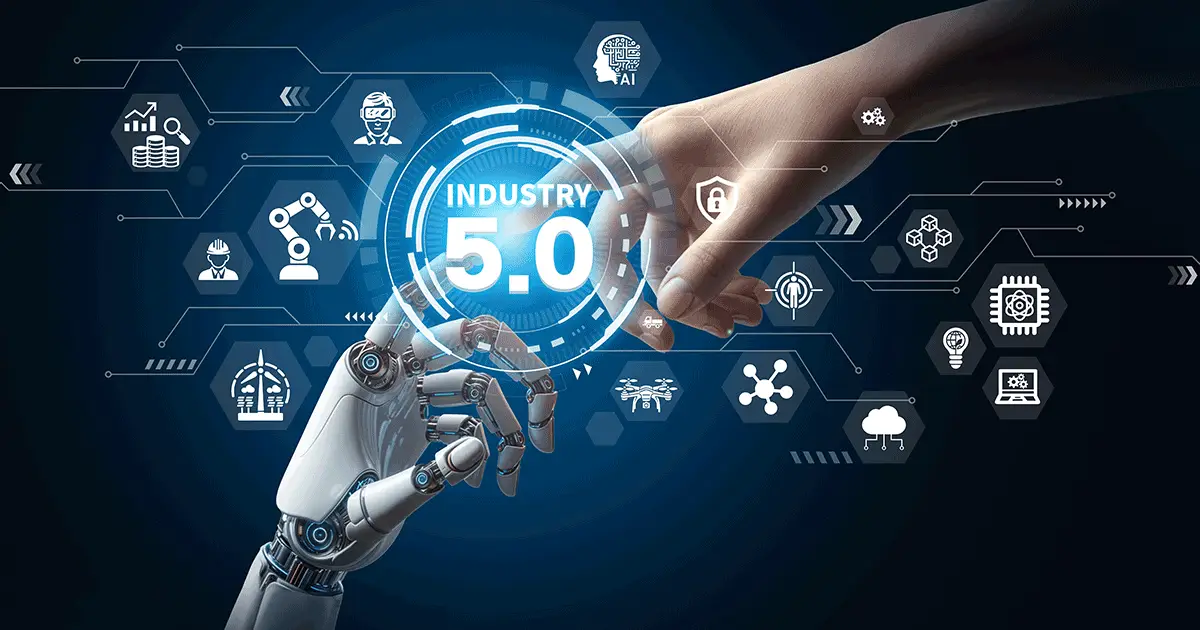
The landscape of modern manufacturing is undergoing another profound transformation, building upon the foundations laid by the Fourth Industrial Revolution. While often discussed in similar breaths, Industry 4.0 and Industry 5.0 represent distinct philosophies and priorities, though deeply interconnected. Industry 4.0 taught us how to automate, connect, and optimize at scale. It was a paradigm defined by sensors, data, and an unwavering pursuit of efficiency, leading to smart factories and unprecedented levels of process optimization. Yet, as we move further into the 21st century, a different emphasis is emerging. Industry 5.0 doesn’t discard the technological advancements of its predecessor; rather, it reframes the intent. The shift is subtle but significant, moving from a technology-first approach to a human-first manufacturing ecosystem.
This evolution signifies a critical re-evaluation of the role of people within industrial processes. In the era of Industry 4.0, humans frequently adapted to the demands and limitations of intricate systems. With Industry 5.0, the inverse becomes true: systems are meticulously designed to adapt to humans. Artificial Intelligence (AI) transitions its primary function from being a decision-maker to acting as a powerful decision-support tool. Collaborative robots, or cobots, enter the scene not as replacements for human labor, but as partners in a synergistic collaboration. Digital tools, previously focused predominantly on throughput metrics, now prioritize safety, foster creativity, and enhance contextual judgment, augmenting human capabilities rather than eclipsing them.
Another monumental shift lies in the prioritization of resilience over pure efficiency. Industry 4.0 meticulously optimized for predictable operations, striving for a world where every variable could be controlled and forecasted. Industry 5.0, however, embraces uncertainty, designing for inherent flexibility to withstand unforeseen challenges such as supply chain disruptions, energy market volatility, or dynamic workforce shifts. In this new paradigm, human intuition, when seamlessly combined with the analytical prowess of AI, transforms into a potent competitive advantage, shedding its former perception as a potential bottleneck. Industry 5.0 is not merely about more automation; it’s about achieving better outcomes – fostering sustainable operations, empowering workers, and leveraging technology to augment, not diminish, human potential. The manufacturing enterprises poised to dominate the future will not be those that are merely the most automated, but those that prove to be the most adaptable.
The Philosophical Divide: Robots or People?
At the core of the transition from Industry 4.0 to Industry 5.0 lies a fundamental shift in perspective regarding the central actor in the manufacturing process. Industry 4.0 was undeniably about smart machines, the proliferation of interconnected devices, and the emergence of cyber-physical systems. The narrative was clear: automate, optimize, and scale using advanced technology. Industry 5.0, however, purposefully re-centers the human element, placing people back in focus as the indispensable contributors to value creation.
The Rise of Smart Machines in Industry 4.0
Industry 4.0, or the Fourth Industrial Revolution, was heralded by the fusion of advanced digital technologies with industrial operations. This era was characterized by the widespread adoption of:
- Internet of Things (IoT): Devices and sensors connected to the internet, gathering vast amounts of data in real-time.
- Big Data Analytics: The processing and analysis of these massive datasets to uncover insights and optimize processes.
- Artificial Intelligence (AI) and Machine Learning (ML): Algorithms that could learn from data to make predictions and automate decisions, often without direct human intervention.
- Cyber-Physical Systems (CPS): Integrated computational and physical components that communicate and cooperate over networks to control processes.
- Cloud Computing: Providing scalable and flexible infrastructure for data storage and processing.
The primary objective was optimizing production through comprehensive digitalization and automation. Factories became “smart,” capable of self-optimization, predictive maintenance, and highly efficient mass production. The vision was a largely self-operating factory, where machines managed complex tasks, minimized errors, and maximized output. While this brought immense benefits in terms of efficiency and cost reduction, it implicitly positioned humans as operators, supervisors, or even potential bottlenecks in an increasingly automated environment.
Industry 5.0: Human-Centricity as the Core Principle
Industry 5.0 isn’t a rejection of Industry 4.0’s technological marvels, but rather an evolution that injects a critical human-centric dimension. The European Commission defines Industry 5.0 not as a new industrial revolution but as a complement to Industry 4.0, emphasizing human-centricity, sustainability, and resilience. It aims to integrate these technologies, keeping human emotion, intelligence, and ethics at the center.
This shift acknowledges that despite the incredible capabilities of AI and automation, there are intrinsically human attributes that machines cannot replicate. These include:
- Creativity and Innovation: The ability to conceive novel ideas, solve unstructured problems, and drive breakthrough innovation.
- Critical Thinking and Contextual Judgment: The capacity to understand complex situations, account for qualitative factors, and make nuanced decisions beyond algorithmic logic.
- Empathy and Emotional Intelligence: Essential for teamwork, customer interaction, and understanding the social and ethical implications of technological applications.
- Flexibility and Adaptability: The human ability to quickly adapt to new situations, learn new skills, and handle unexpected challenges with resourcefulness.
In Industry 5.0, technology serves to augment these human strengths, empowering individuals to perform more effectively, safely, and creatively. It’s an affirmation that the most advanced factories won’t be those that have removed humans entirely, but those that have most effectively integrated human ingenuity with machine precision.
The Tech Explosion: Collaboration over Automation
The “Tech Explosion” of Industry 4.0 undeniably made factories smart, creating environments where machines could perform tasks with unprecedented speed and accuracy. Industry 5.0 takes this technological prowess and poses a critical question: Can humans and robots truly work side by side, not just efficiently, but synergistically? The answer central to Industry 5.0 is a resounding yes, fostering a new era of collaborative integration.
From Smart Factories to Collaborative Ecosystems
Industry 4.0’s vision of smart factories concentrated on automating individual processes and connecting machines to create a seamless, data-driven operation. The goal was to minimize human intervention where possible, standardize tasks, and achieve peak efficiency through digital control. This led to highly optimized production lines and supply chains.
However, the pursuit of pure automation often resulted in environments where human roles were reduced to monitoring or performing repetitive tasks that machines couldn’t yet handle. While efficient, this approach sometimes overlooked the unique contributions humans could make, particularly in areas requiring flexibility, problem-solving, and creative input.
Industry 5.0 pivots toward collaborative ecosystems where advanced technology is explicitly designed to support human workers, leading to:
- Human-Robot Collaboration (HRC): The integration of cobots that can share workspaces with humans safely and effectively, assisting with tasks that are strenuous, repetitive, or require high precision. This is a significant departure from traditional industrial robots, which operate in caged-off areas for safety reasons.
- Augmented Reality (AR) and Virtual Reality (VR): Tools that provide real-time information overlays to workers, guiding them through complex assembly, maintenance, or quality control tasks. AR can project digital instructions onto physical objects, enhancing human perception and reducing errors.
- Advanced Human-Machine Interfaces (HMIs): Intuitive interfaces that allow workers to easily interact with complex machinery, access real-time data, and make informed decisions, transforming AI from a black box into a transparent decision-support system.
This focus transforms technology from a replacement for human labor into a powerful set of tools that amplify human capabilities, creating a more flexible and responsive manufacturing environment.
AI as Decision Support, Not Decision Maker
A key differentiator in Industry 5.0 is the redefined role of Artificial Intelligence. In Industry 4.0, AI’s role often involved making autonomous decisions based on data – optimizing production schedules, predicting equipment failures, or managing logistics. While effective for predictable processes, this approach could sometimes bypass human insight or fail to account for qualitative factors and ethical considerations.
Industry 5.0 repositioning AI as decision support fundamentally alters this dynamic. Instead of AI making the final call, it provides:
- Advanced Analytics and Insights: AI processes vast datasets and identifies patterns, trends, and anomalies that might be invisible to human operators. It then presents these insights in an understandable format.
- Predictive Foresight: AI can still predict potential issues, but instead of automatically adjusting, it alerts human operators, allowing them to review the situation, consider broader implications, and make the ultimate decision.
- Scenario Planning: AI can simulate various outcomes based on different interventions, empowering human decision-makers with a clearer understanding of potential consequences.
- Adaptive Learning for Human Use: AI systems learn from human decisions, refining their suggestions and improving their ability to provide relevant support over time, rather than learning to fully automate.
This approach ensures “humans remain empowered and in control”, integrating human expertise and contextual understanding with AI’s data processing and analytical power. It’s about harnessing the collective intelligence of both humans and machines for superior outcomes.
Factory Floors: Teamwork with Machines
The shift from Industry 4.0 to Industry 5.0 is perhaps most tangible on the factory floor itself. In Industry 4.0, the factory floor was characterized by a profusion of sensors, vast data streams, and increasing levels of automation. The emphasis was on machine autonomy and efficiency. Industry 5.0 introduces a new dynamic: more teamwork with machines, not just machines operating alone. This entails a fundamental rethinking of how work is organized, executed, and perceived within industrial settings.
Industry 4.0: Automation Dominance
The Industry 4.0 factory floor was a testament to technological sophistication:
- Sensor Proliferation: Every machine, every component, every process step was monitored by an array of sensors—temperature, pressure, vibration, RFID, vision systems—feeding continuous streams of data.
- Data Lakes and Analytics: This immense volume of data was collected in centralized systems (data lakes) and analyzed to identify bottlenecks, optimize parameters, and predict failures.
- Automated Processes: Robots performed repetitive, dangerous, or high-precision tasks. Automated guided vehicles (AGVs) transported materials. Production lines were highly automated, minimizing direct human contact with the manufacturing process.
- Remote Monitoring and Control: Supervisors and managers could monitor factory performance from centralized control rooms or even remotely, making adjustments based on real-time data reported by smart systems.
While these advancements led to unprecedented levels of efficiency and reduced human exposure to hazardous environments, they also sometimes created environments where human skill sets became less critical or required adaptation to the rigid logic of automated systems. The factory floor, while smart, could feel impersonal, with humans largely outside the direct flow of automated production.
Industry 5.0: The Rise of Human-Machine Teaming
Industry 5.0 redefines the factory floor around the concept of human-machine symbiosis. It’s about creating an agile collaboration where the strengths of both humans and intelligent machines are fully leveraged. The key features include:
- Cobots as Coworkers: Collaborative robots are designed to work immediately alongside humans without safety barriers. They can assist with physically demanding tasks, provide an extra set of hands for complex assemblies, or perform precise operations while a human handles the more cognitive aspects of the job. For example, a cobot might hold a heavy component steadily while a human worker precisely screws it into place.
- Ergonomic and Safe Workspaces: Factory layouts and machine design in Industry 5.0 prioritize human comfort, safety, and well-being. Technology is used to reduce physical strain, improve lighting, and minimize exposure to repetitive motions or hazardous materials.
- Augmented Human Capabilities: Digital tools act as extensions of human senses and intellect. AR glasses can provide step-by-step instructions for maintenance, highlighting the exact part to be serviced. Voice-controlled interfaces allow workers to interact with machines hands-free.
- Knowledge Sharing and Training: Data-driven insights from machines are translated into actionable knowledge for human workers, enabling continuous learning and skill development. This fosters a dynamic environment where human expertise grows in tandem with technological advancements.
- Decentralized Decision-Making: While Industry 4.0 often centralized decision-making through algorithms, Industry 5.0 empowers shop floor workers with better information and tools to make on-the-spot contextual decisions, recognizing their unique understanding of local conditions.
This integration transforms the factory floor into a vibrant space of interaction, creativity, and problem-solving, where the intelligence of machines complements the intuition and adaptability of humans. The focus is on processes where “humans remain empowered and in control” rather than merely supervised by technology.
Personal Touch: Customization over Mass Production
Another profound evolution from Industry 4.0 to Industry 5.0 is the shift from the dominance of mass production to an emphasis on customized products tailored specifically for individual needs. Industry 4.0 excelled at producing identical items at scale with unparalleled efficiency. Industry 5.0 leverages this foundation to deliver a “personal touch,” making things just for you.
The Reign of Mass Production in Industry 4.0
Industry 4.0 significantly refined mass production methodologies. By automating processes, integrating supply chains digitally, and leveraging data to predict demand, factories could produce large volumes of standardized goods with minimal waste and maximum speed. Key characteristics included:
- Standardization: Products were designed for broad appeal, with limited variations, to optimize production runs and reduce costs.
- Scalability: Factories were optimized to increase output rapidly to meet global demand for identical products.
- Efficiency Metrics: Success was largely measured by throughput, cost per unit, and lead times for large batches.
- Predictive Demand Planning: Advanced analytics helped forecast market needs, ensuring factories produced the right quantities of standardized goods.
While highly effective for consumer markets that valued affordability and availability, mass production inherently limited personalization and ignored unique customer preferences beyond a few predefined options.
Industry 5.0: The Era of Personalized Manufacturing
Industry 5.0 moves beyond this, recognizing a growing consumer demand for products and experiences that feel unique and tailored. It utilizes the flexibility and data capabilities of Industry 4.0 technologies to enable “mass customization” or “hyper-personalization.” This transformation is fueled by:
- Flexible Production Systems: Factories are designed with modularity and reconfigurability in mind. Advanced robotics and additive manufacturing (3D printing) allow for quick changes to product designs and small batch production without significant retooling.
- Customer-Centric Design: AI and data analytics are used to understand individual customer preferences at a granular level. This data informs product development, allowing for iterative design based on direct user feedback and preferences.
- Real-time Feedback Loops: Digital twins and IoT-enabled products provide continuous usage data back to manufacturers, allowing for ongoing product improvement and customization even after purchase.
- Human Creativity in Design: Instead of strict adherence to standardized blueprints, Industry 5.0 encourages human designers to collaborate with AI tools to explore novel aesthetic and functional variations that cater to niche markets or individual tastes. The “personal touch” comes from human creativity empowered by flexible manufacturing.
- Blockchain for Supply Chain Transparency: While not directly customization, blockchain can ensure the authenticity and ethical sourcing of custom components, adding value to personalized products.
The Industry 5.0 approach, therefore, means products can be “customized… just for you”, moving beyond simple configurations to truly bespoke items. This empowers consumers with more choices and allows manufacturers to build stronger relationships by delivering highly relevant products.
Caring for People: Beyond Speed and Smoothness
The defining characteristic that truly separates Industry 5.0 from its predecessor is its profound emphasis on human well-being and satisfaction at work. While Industry 4.0’s primary drivers were speed and smooth operations, leading to efficiency gains, Industry 5.0 cares about how people feel at work. This reorientation moves beyond purely economic metrics to prioritize the human element within the industrial ecosystem.
Industry 4.0: The Efficiency Imperative
For Industry 4.0, the metrics of success were predominantly tied to operational excellence:
- Throughput Optimization: Maximizing the quantity of goods produced in a given time.
- Process Efficiency: Streamlining workflows, minimizing waste, and reducing cycle times.
- Cost Reduction: Automating tasks to lower labor costs and optimize resource utilization.
- Predictive Maintenance: Using data to prevent machine breakdowns and ensure continuous operation.
In this paradigm, human factors were often considered in terms of how they contributed to or detracted from these efficiency goals. Worker roles were often simplified, standardized, and geared towards supporting automated systems. While safety protocols were paramount, the broader aspects of job satisfaction, mental well-being, or creative fulfillment were not central to the design of the Industry 4.0 factory. The focus was firmly on “fast and smooth” processes.
Industry 5.0: Prioritizing Human Well-being and Empowerment
Industry 5.0 recognizes that a sustainable and resilient manufacturing future depends not just on smart machines, but on empowered and engaged human workers. This means actively designing systems and environments that enhance the working lives of people. Key aspects include:
- Improved Ergonomics and Safety: Leveraging technology to design workplaces that reduce physical strain, prevent injuries, and minimize exposure to hazardous materials or repetitive tasks. Cobots, for instance, are designed to work safely alongside humans, taking over demanding physical labor.
- Skill Development and Reskilling: Investing in continuous learning programs that allow workers to adapt to new technologies, acquire advanced skills, and move into higher-value roles. This counters the fear of job displacement and fosters a culture of lifelong learning.
- Enhanced Job Satisfaction: Designing jobs that incorporate more cognitive engagement, problem-solving, and creativity. By offloading monotonous or dangerous tasks to machines, humans are freed to focus on design, innovation, complex decision-making, and quality assurance.
- Work-Life Balance: Implementing flexible work arrangements, enabled by connected technologies, that support better work-life integration for employees.
- Ethical Considerations in AI Deployment: Ensuring that AI systems are developed and used in a way that respects human rights, privacy, and avoids biases, building trust between humans and technology.
- Human-AI Co-creation: Fostering environments where humans and AI actively collaborate in product design, process optimization, and problem-solving, leading to innovative solutions that neither could achieve alone. This includes “human-in-the-loop optimization”.
By “caring how you feel at work”, Industry 5.0 aims to create a manufacturing environment that is not only efficient but also humane, engaging, and fulfilling for its workforce. This ultimately leads to a more resilient and adaptable enterprise, as motivated and skilled workers are better equipped to navigate challenges and drive innovation.
Smarter, Not Colder: Infusing Meaning and Heart
Industry 4.0, with its relentless pursuit of data-driven efficiency, could sometimes render work high-tech but also somewhat impersonal or “cold.” The emphasis on algorithmic optimization and standardized processes occasionally overlooked the deeper human need for meaning, purpose, and connection in their work. Industry 5.0 actively counters this tendency by adding more meaning and heart, striving for a manufacturing environment that is not just smarter, but also more human-centric and values-driven.
The Detachment of Industry 4.0’s Efficiency Drive
The drive for automation and efficiency in Industry 4.0, while immensely beneficial for productivity, could inadvertently lead to a sense of detachment for human workers:
- Reduced Ownership: As processes became more automated, individual workers might have felt less ownership or impact on the final product, their role becoming a smaller cog in a vast machine.
- Repetitive Tasks: Even with automation, many human roles involved supervising machines or performing highly repetitive tasks not yet suitable for robots, leading to monotony and disengagement.
- Data-Driven, Not Value-Driven: Decisions were predominantly made based on cold, hard data and efficiency metrics, sometimes overshadowing qualitative factors like employee well-being, ethical concerns, or broader societal impact.
- Limited Creative Outlet: Work environments prioritized adherence to established processes, leaving little room for creative input or innovative problem-solving from the average worker.
This could result in a disconnect, where workers felt their contributions were measured solely by output, without consideration for their ingenuity, judgment, or sense of purpose.
Industry 5.0: The Integration of Purpose and Values
Industry 5.0 seeks to reintroduce meaning and purpose into the manufacturing workplace by integrating human values with technological advancements. This includes:
- Value-Driven Production: Moving beyond purely economic metrics, Industry 5.0 emphasizes values such as sustainability, resilience, and human-centricity. This means aligning production goals with broader societal and environmental benefits, giving employees a clearer sense of purpose in contributing to a better world.
- Empowering Creativity: By automating mundane tasks, Industry 5.0 frees up human intellect for creative problem-solving, design, and innovation. Workers are encouraged to contribute ideas, experiment, and find novel solutions, fostering a sense of engagement and intellectual stimulation.
- Contextual Judgment and Ethics: AI systems are designed to support human decision-making, especially in complex situations requiring ethical consideration or nuanced contextual judgment. This ensures that machines serve human values, rather than purely optimizing for arbitrary targets set by algorithms.
- Collaborative Innovation: The human and machine collaboration extends to innovation cycles. Humans bring the intuition and imaginative leaps, while AI provides the data analysis and simulation capabilities to test and refine those ideas, leading to break-through solutions that are both technically feasible and human-centered.
- Transparent and Trustworthy Technology: Developing AI and automation systems that are transparent in their operations and adhere to ethical guidelines builds trust among the workforce. When workers understand how technology works and perceive its beneficial intent, they are more likely to embrace it as a partner.
- Fostering a Culture of Learning and Growth: Investing in continuous upskilling and reskilling empowers employees to grow alongside technology, rather than fearing obsolescence. This creates a dynamic work environment where learning is valued, and personal development is encouraged.
By making work “smarter, not colder” and infusing it with “more meaning and heart”, Industry 5.0 aims to create workplaces where individuals feel valued, empowered, and connected to a larger purpose, ultimately leading to greater job satisfaction, higher productivity, and more sustainable business outcomes.
Your Choices Matter: Shaping Products, Not Just Following Rules
In Industry 4.0, adherence to standardized processes and optimal algorithms largely dictated product outcomes. While efficient, this system often limited individual human input in shaping the product itself. Industry 5.0 represents a significant departure, asserting that “your ideas shape products.” This moves beyond merely following strict rules to actively empowering individuals within the manufacturing ecosystem to influence creation, embodying a more democratic and responsive approach to product development.
The Structured World of Industry 4.0
Industry 4.0, with its emphasis on precision and efficiency, typically operated within highly structured environments:
- Process-Driven: Manufacturing processes were extensively documented, optimized, and automated. Variation from these established norms was minimized to ensure consistency and quality at scale.
- Top-Down Design: Product design usually originated from dedicated R&D departments or design teams, with production workers responsible for execution rather than conceptual input.
- Error Minimization: The goal was to eliminate human error through automation and strict adherence to protocol, which inherently reduced opportunities for spontaneous innovation or adaptation on the factory floor.
- Algorithmic Optimization: AI systems often focused on optimizing predefined parameters within existing constraints, rather than questioning those constraints or proposing radical new directions.
While this structure maintained high quality and efficiency for mass-produced goods, it could stifle the creative potential and ingenious insights that might arise from those directly involved in production.
Industry 5.0: Empowering Individual Contribution and Co-creation
Industry 5.0 fundamentally redefines the role of individuals by empowering them to be active participants in shaping products and processes. This paradigm values the unique perspectives, experiences, and creativity of every person involved. Key aspects include:
- Human-Centric Design Thinking: Products are designed with a deep understanding of user needs, preferences, and even behaviors. This doesn’t just mean customer feedback, but also insights from production workers who understand practical limitations and possibilities.
- Participatory Innovation: Factory floor workers, engineers, designers, and even customers are brought into collaborative processes where their “ideas shape products.” This can involve dedicated feedback channels, hackathons, or integrated design-production teams.
- AI as a Creative Partner: AI tools move beyond pure optimization to assist in the creative process. Generative AI can propose design variations based on parameters set by human designers, allowing for rapid iteration and exploration of novel forms or functions. AI can also analyze user data to suggest features for personalized products.
- Flexible Manufacturing for Rapid Prototyping: The adaptability of Industry 5.0 systems, facilitated by modular production lines and additive manufacturing, enables quick prototyping and testing of new ideas proposed by employees or customers. This reduces the barrier to trying out novel concepts.
- Contextual Decision-Making by Workers: Empowering workers with real-time data and AI-driven insights allows them to make informed, on-the-spot decisions that can improve product quality, adapt to unexpected issues, or suggest process optimizations that directly influence the final product.
- Feedback Loops for Continuous Improvement: Establishing clear mechanisms for workers to provide feedback on tools, processes, and product designs ensures that their insights are captured and integrated into ongoing improvements.
In Industry 5.0, the phrase “Your Choices Matter” underscores a shift towards a truly collaborative and adaptive manufacturing environment. It acknowledges that valuable insights and innovative ideas can come from anyone, anywhere within the organization, leading to more relevant, high-quality, and personalized products that genuinely meet evolving needs. This move away from “only about following strict rules” fosters an environment where innovation is organic and driven by collective intelligence.
Greener Thinking: Beyond Speed and Profit
The progression from Industry 4.0 to Industry 5.0 marks a significant expansion of priorities, moving beyond the singular focus on speed and profit to embrace a crucial consideration: planet health. Industry 4.0 optimized for economic output and process efficiency. Industry 5.0 integrates “Greener Thinking,” recognizing that long-term industrial success is inextricably linked to environmental stewardship and sustainable practices.
Industry 4.0’s Efficiency, but Not Always Sustainability
Industry 4.0 brought with it remarkable advancements in efficiency, which could indirectly contribute to sustainability by reducing waste and optimizing resource use:
- Resource Optimization: IoT sensors and AI analytics enabled precise monitoring and control of energy, water, and raw material consumption, leading to reductions in waste.
- Predictive Maintenance: Minimizing equipment breakdowns prevented material spoilage and reduced the need for replacement parts, thus conserving resources.
- Optimized Logistics: AI-driven supply chain management could reduce fuel consumption and emissions by finding the most efficient transportation routes.
However, sustainability was often a secondary benefit or not a primary design criterion. The core drivers remained output, speed, and profit maximization. The scale of mass production, while efficient per unit, still led to substantial overall resource consumption and waste generation. Environmental impact was often a regulatory or compliance concern rather than an inherent design principle.
Industry 5.0: Sustainability as a Core Design Principle
Industry 5.0 elevates sustainability to a foundational pillar, making “Greener Thinking” an integral part of operations and innovation. This involves:
- Circular Economy Principles: Designing products for durability, repairability, reuse, and recyclability from the outset. This moves away from the linear “take-make-dispose” model towards a circular system that minimizes waste and maximizes resource utility.
- Energy Efficiency and Renewable Integration: Factories are designed to be highly energy-efficient, utilizing smart grids to optimize energy consumption and integrating renewable energy sources. AI can manage energy flows, storing surplus and drawing from the grid during off-peak hours.
- Waste Reduction and Management: Advanced robotics and AI can precisely sort and process waste streams, enabling better recycling and repurposing of materials. Digital twins can simulate material flows to identify and eliminate waste hotspots before production.
- Eco-Friendly Materials and Processes: Research and development are focused on incorporating sustainable materials, reducing hazardous substances, and developing manufacturing processes with lower environmental footprints.
- Localized Production: Leveraging flexible manufacturing and customization, Industry 5.0 can facilitate more localized production, reducing the carbon footprint associated with long-distance shipping.
- Resilience to Environmental Shocks: Designing operations to be less vulnerable to climate change-related events (e.g., extreme weather, resource scarcity) by building flexibility into supply chains and diversifying energy sources.
- Ethical Supply Chains: Using technologies like blockchain to ensure transparency and accountability in sourcing, verifying that materials are ethically and sustainably procured.
The idea that “5.0 thinks about planet health too” underscores a fundamental shift in corporate responsibility and industrial strategy. It acknowledges that true progress cannot come “just about speed and profit anymore”, but must balance economic prosperity with environmental stewardship and social well-being. This integrated approach ensures that industry contributes positively to the planet, securing its future alongside human prosperity.
New Kinds of Jobs: Guiding Tech with Creativity
A common apprehension surrounding industrial automation is the fear of widespread job displacement, the idea that “robots are taking everything.” While Industry 4.0 did automate many routine and repetitive tasks, Industry 5.0 offers a more optimistic outlook, emphasizing the emergence of “New Kinds of Jobs” that require creative people to guide technology. This transition highlights a redefinition of roles, focusing on uniquely human skills that complement, rather than compete with, machine capabilities.
Industry 4.0: Automation and the Redefinition of Roles
In the era of Industry 4.0, while many new highly specialized roles emerged in data science, AI development, and cybersecurity, there was also a concern for how existing manufacturing jobs would evolve. Automation indeed took over many manual tasks, requiring workers to adapt to supervisory roles, machine maintenance, or data interpretation. The fear of being replaced by machines was palpable, leading to a focus on training for technical skills directly related to operating or maintaining smart systems. The question was often “how can humans interface with these machines?” rather than “how can humans creatively leverage them?”.
Industry 5.0: The Demand for Creative Human Guidance
Industry 5.0 reframes the human role, explicitly stating “No, robots aren’t taking everything. 5.0 needs creative people to guide tech.” This demand stems from the shift towards human-centricity, resilience, and sustainability, all of which require uniquely human attributes. New kinds of jobs are emerging, often hybrid in nature, that blend traditional skills with technological fluency and a strong emphasis on soft skills:
- Human-Robot Collaboration Specialists: These roles involve designing, programming, and managing cobot interactions, ensuring seamless and safe teamwork with humans. They require an understanding of both robotic capabilities and human ergonomics and social interaction.
- AI Ethicists and Auditors: As AI becomes more pervasive, there’s a growing need for professionals who can ensure AI systems are fair, unbiased, transparent, and aligned with human values and ethical principles.
- Experience Designers (User Experience/Worker Experience): With the focus on human-centricity, there’s a demand for designers who can create intuitive and engaging interfaces for workers interacting with complex machinery and AI systems, leading to better work experiences overall.
- Data Curators and Storytellers: Beyond just analyzing data, these roles involve understanding the context, identifying meaningful insights relevant to human needs, and effectively communicating those insights to drive human decision-making and innovation.
- Sustainability and Circular Economy Engineers: Professionals who design products, processes, and supply chains with a full lifecycle perspective, focusing on waste reduction, resource efficiency, and environmental impact.
- Adaptive Learning and Upskilling Coaches: As technology evolves rapidly, there’s a need for experts who can design and deliver continuous learning programs, helping the workforce adapt to new tools and develop essential 5.0 skills.
- Hybrid Technicians/Engineers: Individuals with deep domain expertise in manufacturing combined with strong digital skills, capable of troubleshooting complex integrated systems and proposing innovative solutions that leverage both human and machine intelligence.
- Creative Problem Solvers and Innovators: Freed from mundane tasks, human workers are empowered to apply their creativity to solve unstructured problems, develop new products, or optimize processes in ways that algorithms alone cannot conceive.
These “New Kinds of Jobs” necessitate a workforce proficient in skills such as critical thinking, creativity, complex problem-solving, emotional intelligence, communication, and adaptability. Industry 5.0 views technology as a powerful enablement tool that expands human potential, rather than limiting it. The future workforce in Industry 5.0 will be one that “needs creative people to guide tech,” transforming the workplace into a hub of innovation and human ingenuity.
Why Collaboration Wins: Bringing Out the Best
The evolution from Industry 4.0 to Industry 5.0 profoundly redefines the relationship between humans and machines, moving from a model of automation and human adaptation to one where “Collaboration Wins.” This new motto is built on the premise that machines and people can bring out the best in each other, forging synergistic partnerships that yield superior outcomes to either operating in isolation.
Industry 4.0: Automation as the Driving Force
In Industry 4.0, automation was often seen as the primary driver of progress. The goal was to identify tasks that could be automated by machines, thereby increasing efficiency, reducing errors, and operating at scales unachievable by human labor alone. In this paradigm:
- Machines performed: Repetitive, precise, high-volume tasks.
- Humans supervised: Monitored automated processes, performed maintenance, or handled exceptions.
- Integration was about: Connecting data streams and optimizing machine-to-machine communication.
While effective, this approach sometimes led to a hierarchical structure where machines drove the process, and human roles were secondary or reactive. The inherent strengths of humans – creativity, flexibility, and contextual judgment – were often underutilized or not explicitly integrated into the core system design.
Industry 5.0: A Symbiotic Partnership
Industry 5.0 champions a truly symbiotic relationship where the distinct strengths of humans and machines are combined, recognizing that their complementary capabilities lead to better results. “Machines and people can bring out the best in each other” is the guiding principle, leading to:
- Augmented Human Intelligence: Machines handle the data processing, pattern recognition, and heavy computation, presenting concise insights to humans. This liberates human cognitive capacity for higher-level thinking, creativity, and strategic decision-making. Humans are not replaced but augmented.
- Enhanced Machine Capability: Humans provide the context, intuition, adaptive problem-solving skills, and ethical judgments that machines lack. By continuously interacting with and guiding AI, human input refines machine learning models and ensures they operate effectively within dynamic, real-world scenarios.
- Improved Problem Solving: Complex problems often require both analytical rigor (machine strength) and creative, out-of-the-box thinking (human strength). Collaborative teams, featuring both human and AI agents, can tackle challenges that either entity alone would struggle with.
- Greater Flexibility and Adaptability: In an unpredictable world, the ability to pivot rapidly is crucial. Humans provide the flexibility and judgment to adapt to unforeseen circumstances, while machines provide the tools to quickly reconfigure, simulate new scenarios, and execute changes.
- Innovation through Co-creation: The interaction between human imagination and machine capacity for rapid prototyping and data validation accelerates innovation cycles. New products and processes are “co-created” through this ongoing dialogue.
- Higher Employee Engagement and Job Satisfaction: When workers are empowered to collaborate with advanced tools and contribute their unique skills, job satisfaction increases. They become innovators and problem-solvers rather than mere operators, leading to greater motivation and retention.
- Ethical and Sustainable Outcomes: By embedding human values and oversight into processes amplified by technology, Industry 5.0 ensures that operations are not just efficient but also ethically sound and environmentally responsible.
This collaborative approach underpins the entire Industry 5.0 philosophy. It’s the “new motto” because it represents a harmonious future where technology serves humanity to achieve outcomes that are both productive and profoundly impactful, embodying resilience, sustainability, and human-centricity.
Learning Never Stops: Cultivating Curiosity and New Skills
In the fast-evolving landscape of industrial revolutions, the permanence of change mandates a new approach to skills and knowledge. Industry 4.0 necessitated adaptation to new digital tools. Industry 5.0 solidifies the principle that “Learning Never Stops,” fostering environments where curiosity is valued, and people are continuously picking up new skills, rather than being stuck in old ways. This commitment to lifelong learning is crucial for individuals and organizations alike, ensuring relevance and adaptability in dynamic times.
Industry 4.0: Adaptation to Digital Tools
The advent of Industry 4.0 demanded that workforces adapt to a new suite of technologies. Employees needed to learn how to:
- Operate Digital Interfaces: Interact with HMI panels, software for process control, and data visualization tools.
- Understand IoT Data: Interpret information from sensors and connected devices to make operational decisions.
- Work with Automated Systems: Program basic robotic tasks or supervise automated production lines.
- Cybersecurity Awareness: Understand basic cybersecurity protocols to protect interconnected systems.
While significant, this was often about acquiring specific technical skills to integrate with existing or new automated systems. The pace of change was rapid, but the emphasis was often on defined skill sets required for current technological implementations.
Industry 5.0: A Culture of Continuous Learning and Curiosity
Industry 5.0 elevates continuous learning to a core organizational value, recognizing that a static skill set quickly becomes obsolete in a world driven by rapid technological and societal shifts. “5.0 values curiosity,” emphasizing a proactive and intrinsic drive for knowledge and growth. This manifests in several ways:
- Upskilling and Reskilling for Human-AI Collaboration: Training programs focus on developing skills needed for effective human-robot and human-AI collaboration, including areas like interaction design, ethical AI use, and advanced problem-solving with AI support.
- Development of Soft Skills: With machines handling repetitive tasks, the demand for uniquely human skills—creativity, critical thinking, complex problem-solving, emotional intelligence, and communication—increases exponentially. Learning initiatives focus on cultivating these essential soft skills.
- Adaptive Learning Platforms: Leveraging AI and digital platforms to provide personalized learning paths for employees, allowing them to acquire new skills at their own pace and relevance, tailored to their existing roles and future career aspirations.
- Fostering a Growth Mindset: Organizations promote a culture where continuous improvement, experimentation, and learning from failure are encouraged. This moves away from a fixed mindset where employees might feel “stuck in old ways”.
- Cross-functional Skill Development: Encouraging employees to learn skills across different departments and technological domains, creating a more versatile and resilient workforce. This fosters a holistic understanding of the manufacturing ecosystem.
- Learning from Data: Empowering employees to utilize data analytics tools to not only optimize processes but also to learn about their own performance, identify areas for improvement, and discover new insights collaboratively with AI.
- Embracing Disruption: Instead of resisting technological changes, a learning-centric culture embraces them as opportunities for growth and innovation, preparing the workforce for future industrial shifts.
By making “Learning Never Stops” a foundational principle, Industry 5.0 ensures that its human workforce remains adaptable, innovative, and engaged, transforming technological advancements from a threat into an ongoing opportunity for personal and collective development. This continuous evolution of human capital is as critical as the evolution of technology itself.
Better Work, Better World: Beyond Production Metrics
The ultimate aspiration of Industry 5.0 transcends mere production metrics, aiming for a more holistic impact: “Better Work, Better World.” This perspective encapsulates the commitment to not only produce goods efficiently and sustainably but also to cultivate “better lives at work too,” thereby contributing to broader societal well-being. It signifies a profound shift from a purely industrial focus to a more socio-economic and ethical one.
Industry 4.0: Production-Centric Progress
Industry 4.0’s primary focus was on revolutionizing production. Its successes were largely quantifiable in terms of:
- Increased Output: Producing more goods faster than ever before.
- Enhanced Efficiency: Optimizing resource allocation, energy consumption, and process flows.
- Cost Reduction: Leveraging automation to lower manufacturing costs.
- Global Competitiveness: Enabling companies to compete on a global scale through technological superiority.
While these advancements undeniably contributed to economic growth and material abundance, the broader societal implications and the quality of human work life were often secondary considerations. The goal was largely about making things better for the business and the consumer through optimized production.
Industry 5.0: Holistic Value Creation
Industry 5.0 expands this vision, recognizing that true progress must encompass human well-being and planetary health alongside economic prosperity. It’s about generating “holistic socio-technical integration”. This philosophy translates into initiatives designed to foster “Better Work, Better World”:
- Human-Centric Work Design: Creating jobs that are more meaningful, safe, and engaging by offloading monotonous tasks to machines and empowering humans with tools for creativity, complex problem-solving, and decision-making. This directly leads to “better lives at work.”
- Sustainable Manufacturing: Implementing circular economy principles, maximizing energy efficiency, minimizing waste, and using eco-friendly materials helps in preserving the environment and contributing to a “Better World.” This is not just about compliance but a core value.
- Resilient Operations: Designing systems and supply chains to withstand shocks (economic, environmental, social) ensures stability for businesses, employment, and the continuous provision of essential goods, thus contributing to societal stability.
- Ethical AI and Technology Deployment: Ensuring that advanced technologies are used responsibly, respecting privacy, avoiding bias, and promoting fairness, thereby building public trust and ensuring technology serves humanity’s best interests.
- Community Engagement: Companies operating under Industry 5.0 principles are more likely to engage with their local communities, contributing to local economies through skill development, providing quality employment, and supporting social initiatives.
- Increased Innovation for Societal Challenges: By combining human creativity with AI’s analytical power, Industry 5.0 fosters innovation directed at solving grand societal challenges, from healthcare to sustainable energy and personalized medicine.
- Enhanced Education and Skill Development: Investing in the continuous development of the workforce ensures that individuals are equipped for the jobs of the future, leading to economic mobility and a more capable society.
This overarching vision signifies a maturity in industrial thinking. It acknowledges that “it’s not only about making things – it’s about better lives at work too”. By prioritizing people and planet alongside profit, Industry 5.0 aims to build a future where industrial progress contributes holistically to human flourishing and a sustainable global ecosystem.
So, What’s the Difference?: Human Feel with Technology
The journey from Industry 4.0 to Industry 5.0 might appear as a continuum of technological advancement, but the pivotal distinction lies in a profound reordering of priorities. Industry 4.0 optimized for “fast and smart” processes, driven by machines and data. Industry 5.0, in contrast, “cares how people feel as we work with technology,” ushering in an era where human experience and well-being are paramount.
Industry 4.0: Machine-Centric Optimization
The essence of Industry 4.0 was to create hyper-efficient, data-driven, and highly automated production systems. This involved:
- Technology as the Driver: New technologies (IoT, AI, big data, cloud) were implemented to achieve operational excellence.
- Efficiency Metrics: Speed, throughput, cost reduction, and error minimization were the primary indicators of success.
- Human Adaptation: Workers often adapted to the rhythms, interfaces, and demands of intelligent machines and automated processes. Training focused on the technical skills required to operate and maintain these systems.
- Predictive and Prescriptive: AI aimed to predict outcomes and prescribe optimal actions, often with minimal human intervention in routine scenarios.
While groundbreaking, this approach sometimes led to a perception that humans were either ancillary to the core processes or merely serving the machines, making the work experience potentially impersonal or sterile.
Industry 5.0: Fostering Human-Technology Harmony
Industry 5.0 represents a deliberate shift toward designing technology around human needs and enhancing the human experience within the industrial environment. “5.0 cares how people feel as we work with technology” is not just a soft aspiration but a strategic imperative that translates into concrete design principles and operational changes:
- Human-Centric Design: Systems are intuitively designed to be user-friendly, reducing cognitive load and enhancing worker comfort and safety. This includes ergonomic considerations for cobots and intuitive interfaces for complex AI tools.
- Emotional and Psychological Well-being: Technology is deployed to reduce stress, improve work-life balance, and make tasks more engaging. By automating arduous or dangerous tasks, humans are freed for more creative and fulfilling work.
- Empowerment and Control: Instead of technology dictating actions, AI acts as a sophisticated assistant, providing insights and options, but leaving the final decision to the human operator. This restores a sense of agency and control to the workforce.
- Ethical Integration: Implementing AI and automation with strong ethical guidelines ensures that technology serves human values, protects privacy, and promotes fairness, building trust and comfort among employees.
- Collaborative Creativity: Providing tools that enable humans to co-create with AI, using technology to amplify human imagination and innovation, rather than constraining it.
- Focus on Skills and Growth: Investing in continuous learning and reskilling demonstrates a commitment to employee development, ensuring that workers feel valued and prepared for the evolving workplace, reducing anxiety about technological change.
- Resilience and Adaptability for People: Designing flexible systems that support human ingenuity in responding to unforeseen challenges, rather than rigid systems that demand constant human adjustment.
The fundamental “difference” lies in this re-prioritization. Industry 5.0 argues that truly progressive industry is not just about what machines can do, but how those machines can enable humans to thrive, contribute meaningfully, and feel good about their work, ultimately leading to a more resilient, sustainable, and innovative future. It’s “not just machines anymore” – it’s about “The Heart of Industry 5.0”.
The Heart of Industry 5.0: Work, Tech, and Humanity Converge
The transition from Industry 4.0 to Industry 5.0 is not merely an incremental update; it’s a paradigm shift towards a more holistic, humane, and sustainable industrial future. While Industry 4.0 gave us the tools for automation, connectivity, and efficiency, Industry 5.0 provides the crucial framework for how we wield those tools. It’s about remembering that the ultimate purpose of industry is to serve humanity, not the other way around.
The defining essence of Industry 5.0 can be encapsulated in three core pillars:
- Human-Centricity: This is the bedrock. Instead of humans adapting to systems, systems are designed to adapt to humans. AI becomes decision support, not a cold, autonomous decision-maker. Cobots work with people, not instead of them. Digital tools prioritize safety, creativity, and contextual judgment, empowering workers to apply their unique human skills rather than stifling them. This focus on “caring for people” and fostering “better work” ensures that technology enhances, rather than diminishes, human potential and job satisfaction.
- Resilience: The world is unpredictable. Industry 4.0 optimized for predictable operations, but Industry 5.0 accepts uncertainty and designs for flexibility. This means building robust systems that can withstand supply chain shocks, energy volatility, and workforce dynamics. Human intuition, when combined with AI’s analytical power, transforms into a competitive advantage, enabling agile responses to unforeseen challenges. It’s about building factories that are not just efficient, but inherently adaptable.
- Sustainability: Beyond profit margins, Industry 5.0 integrates environmental and societal responsibility as core objectives. It embraces “greener thinking,” promoting circular economy principles, energy efficiency, and ethical supply chains. This commitment ensures that industrial activities contribute positively to planetary health and the well-being of future generations, moving beyond a narrow focus on “speed and profit alone.”
In essence, “The Heart of Industry 5.0” declares that “Work is more human, tech is there to help, and everyone matters. This is the big change.” It’s an understanding that the factories of the future won’t be the most automated, but the most adaptable—those that truly unlock the synergistic potential of human creativity and technological precision to achieve not just economic growth, but profound societal and environmental benefits. It’s an invitation to a future where purpose and prosperity are deeply intertwined.
In this transformative era, understanding and strategically implementing Industry 5.0 principles can differentiate leaders from laggards. It requires more than just acquiring new technology; it demands a re-evaluation of culture, process, and purpose.
Unlock Your Industry 5.0 Potential with IoT Worlds
Are you ready to transform your operations and position your business at the forefront of the human-centric, resilient, and sustainable manufacturing revolution? Industry 5.0 is not just a concept; it’s a strategic imperative that demands expert guidance and a tailored approach.
At IoT Worlds, we specialize in helping organizations navigate the complexities of this transition. Our team of seasoned consultants brings unparalleled expertise in integrating cutting-edge IoT, AI, and collaborative technologies with a human-first philosophy. We can help you:
- Assess your current Industry 4.0 maturity and identify pathways to Industry 5.0.
- Develop human-centric technology strategies that empower your workforce.
- Design resilient and sustainable operational frameworks.
- Implement collaborative robotic and AI solutions that enhance productivity and innovation.
- Cultivate a culture of continuous learning and adaptability.
Don’t just automate; innovate with purpose. Partner with IoT Worlds to build a future where your technology serves your people, your planet, and your profits.
For a personalized consultation and to explore how Industry 5.0 can redefine your success, reach out to us today:
Email: info@iotworlds.com
Let’s build a brighter, smarter, and more human-centered industrial future, together.