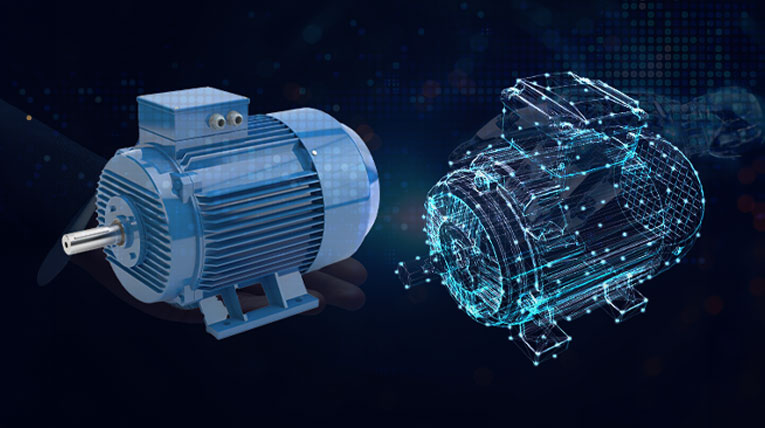
The landscape of industrial automation and digital transformation is evolving at an unprecedented pace. At its core, this evolution is powered by the convergence of the Internet of Things (IoT) and Digital Twins. While IoT devices flood environments with data, the true potential of Digital Twins – dynamic, real-time virtual replicas of physical systems – often remains untapped. This isn’t due to a lack of innovation in sensors or modeling, but rather a fundamental bottleneck in the connectivity fabric. Wi-Fi 7 emerges as the critical enabler, bridging the gap between raw IoT data and live, actionable Digital Twin intelligence.
The Unfulfilled Promise: Why Digital Twins Still Fail
Many organizations have diligently invested in the foundational components of a connected enterprise. They possess a myriad of sensors meticulously gathering environmental parameters, a diverse fleet of IoT devices performing specialized tasks, robust telemetry pipelines channeling data, and sophisticated cloud dashboards visualizing insights. Yet, a significant number of Digital Twin initiatives still falter, failing to deliver on their promise of real-time operational understanding and control.
The issue isn’t with the inherent value of Digital Twins or the accuracy of their underlying models. Instead, the primary impediment lies in the network’s inability to reliably and continuously transport the real-time reality of the physical world to its digital counterpart.
The Core Problem: Network Limitations
IoT generates massive, often intermittent, streams of data. However, for a Digital Twin to be truly effective as a “living system,” it demands continuous, synchronized state updates. Traditional Wi-Fi networks, while ubiquitous, have inherent limitations that struggle to meet these stringent requirements. These limitations manifest as:
- Congestion: As the number of connected IoT devices escalates, traditional Wi-Fi networks quickly become overwhelmed, leading to bottlenecks and dropped data packets.
- Jitter: Variability in packet arrival times introduces inconsistency, making it difficult for Digital Twins to maintain a precise, synchronized view of the physical world. This is particularly problematic for applications requiring tight timing.
- Roaming Instability: For mobile IoT devices like automated guided vehicles (AGVs) or robots traversing large physical spaces, handoffs between access points in older Wi-Fi standards can be unstable, causing momentary disconnections and data loss.
- Packet Loss: Data packets failing to reach their destination reliably means incomplete or inaccurate information feeding the Digital Twin, eroding its fidelity.
- Unpredictable Latency: Delays in data transmission can render the Digital Twin’s insights outdated, moving it away from a real-time representation to a historical snapshot.
These challenges collectively prevent Digital Twins from evolving beyond mere data visualization tools into sophisticated, actionable operational systems. The vital link for continuous synchronization is broken, making the Digital Twin’s ability to mirror and predict the physical world a significant hurdle.
Redefining Connectivity: How Wi-Fi 7 Changes the Game
Wi-Fi 7, formally known as IEEE 802.11be or Extremely High Throughput (EHT), is far more than just a speed upgrade over its predecessors. It introduces a suite of groundbreaking capabilities specifically designed to address the connectivity shortcomings that have plagued high-density, real-time IoT environments and hindered the success of Digital Twins. It’s not just about enabling faster internet access; it’s about orchestrating real-time machine intelligence.
Key Innovations Driving Digital Twin Enablement
Wi-Fi 7 ushers in a new era of wireless performance by integrating technologies that enhance reliability, reduce latency, and improve capacity, making it the ideal backbone for complex IoT and Digital Twin deployments.
Multi-Link Operation (MLO) for Unprecedented Reliability
One of the most transformative features of Wi-Fi 7 is Multi-Link Operation (MLO). Traditional Wi-Fi devices connect to an access point on a single frequency band (e.g., 2.4GHz, 5GHz, or 6GHz). MLO allows devices to simultaneously utilize multiple frequency bands and channels.

This multi-path communication provides several critical advantages for Digital Twins:
- Redundancy: If one link experiences interference or congestion, data can seamlessly switch or be simultaneously transmitted over another link, dramatically improving reliability and reducing packet loss.
- Aggregated Throughput: By combining the bandwidth of multiple links, MLO enables significantly higher effective data rates, crucial for transmitting complex data such as high-resolution camera feeds and aggregated sensor telemetry.
- Lower Latency: Data can choose the fastest available path, minimizing delays and jitter, which is paramount for real-time synchronization of Digital Twins.
This innovation ensures that even in electromagnetically noisy industrial environments, crucial IoT data will maintain stable connections, preventing the Digital Twin from losing sync with its physical counterpart. We highlight that hybrid solutions leveraging both Private 5G and Wi-Fi 7 will likely be the future, showcasing how unique strengths can be combined for robust wireless infrastructure.
Lower Latency and Jitter for Real-Time Updates
Wi-Fi 7 introduces advancements that directly target latency and jitter reduction. Features like enhanced Quality of Service (QoS) mechanisms and improved channel access strategies prioritize critical Digital Twin traffic. This deterministic handling of priority data streams ensures that real-time sensor updates are delivered with minimal delay and maximum consistency.
Imagine a robotic arm in a smart factory being controlled by a Digital Twin. High jitter could lead to jerky, imprecise movements, while high latency would cause a dangerous delay between command and action. Wi-Fi 7’s ability to provide predictable and ultra-low latency connections is vital for such mission-critical applications.
We note that Wi-Fi 7’s enhanced QoS enables deterministic handling of priority traffic for better performance in latency-sensitive applications.
Higher Device Density Support
Modern industrial settings, smart cities, and large campuses are characterized by an explosion of connected devices – from thousands of sensors and tags to trackers, robots, and cameras. Servicing this massive device density without network collapse is a significant challenge for older Wi-Fi standards.
Wi-Fi 7 leverages advanced techniques like Orthogonal Frequency-Division Multiple Access (OFDMA) and Multiple Resource Units (MRU) more efficiently than Wi-Fi 6, enabling more devices to communicate simultaneously without contention. We describe MRU as improving allocation efficiency, minimizing wasted spectrum. This means that a factory floor teeming with hundreds of sensors, robotic arms, and AGVs can all reliably connect and transmit data to their respective Digital Twins.
Massive Throughput for Telemetry Streams
A real Digital Twin is not built on just a few sensor values. It incorporates a rich tapestry of data, including:
- High-resolution camera feeds for visual inspection and anomaly detection.
- Detailed machine logs for predictive maintenance.
- Programmable Logic Controller (PLC) and Supervisory Control and Data Acquisition (SCADA) signals for operational control.
- Numerous sensor models, potentially in the dozens, each contributing vital real-time information.
This mixed data, often voluminous, requires massive throughput without choking the network. Wi-Fi 7’s 320 MHz channel width and 4096-QAM modulation significantly boost data capacity and spectral efficiency, enabling the seamless transmission of these heavy data loads. We highlight that 4096 QAM increases modulation density by 20% and 320 MHz channel width doubles data capacity compared to Wi-Fi 5 and Wi-Fi 6. This ensures that the Digital Twin receives a comprehensive and high-fidelity view of the physical asset.
Through these innovations, Wi-Fi 7 transcends the conventional understanding of “Wi-Fi for internet access” and firmly establishes itself as the prerequisite for real-time machine intelligence, paving the way for truly living Digital Twin systems.
The Bridge: Connecting IoT to Digital Twins with Wi-Fi 7
To fully appreciate the transformative role of Wi-Fi 7, it’s essential to visualize the complete data pipeline, from physical world to digital replica. Without reliable connectivity, this pipeline breaks, rendering Digital Twins ineffective.
Defining the IoT to Digital Twin Pipeline
The journey from a physical event to a Digital Twin’s intelligent response can be broken down into distinct stages:
- IoT Devices Collect Data:
- Sensors: Gather environmental parameters (temperature, pressure, humidity, vibration).
- Telemetry: Stream continuous operational data from machinery and assets.
- Machine Signals: Report status, errors, and performance metrics from industrial equipment.
- Camera Feeds: Provide visual context, enabling advanced analytics and remote inspection.
- Device Logs: Record operational history and events from various connected devices.
- Wi-Fi 7 Transports Data Reliably and Continuously:
This is where Wi-Fi 7 acts as the crucial bridge. It handles the high volume, high speed, high reliability, and low latency simultaneously required to move disparate data types from the physical realm to the digital one. - Digital Twins Process and Simulate Live State:
Armed with real-time, high-fidelity data, Digital Twins perform critical functions:- Real-time Updates: Continuously mirror the current state of physical assets.
- Continuous Replication: Ensure the digital model is always in sync with its physical counterpart.
- Event Response: Detect and react to anomalies or operational changes in real-time.
- Simulation Accuracy: Run simulations based on live data to predict outcomes and optimize performance.
- Control Feedback Loops: Enable autonomous or semi-autonomous control of physical systems based on Digital Twin insights.
Without deterministic wireless performance, this entire pipeline becomes unreliable. The “raw telemetry” collected by IoT devices fails to translate into “live operational state” within the Digital Twin, fundamentally undermining its purpose.
The Consequences of Connectivity Gaps: What Breaks Without Wi-Fi 7
When the network cannot carry real-time reality, the consequences for Digital Twin initiatives are severe. Organizations experience a series of cascading failures that reduce the Digital Twin’s utility from an actionable intelligence platform to merely another analytics dashboard.
The Breakdown of Real-Time Intelligence
Without the robust and reliable connectivity offered by Wi-Fi 7, teams frequently encounter:
- Delayed Telemetry Updates: Information from sensors reaches the Digital Twin too late, rendering its “real-time” insights obsolete. Decisions based on outdated data can lead to inefficiencies, missed opportunities, or even safety hazards.
- Twin Models Falling Out of Sync: Inconsistent data flow means the digital replica deviates from its physical twin, compromising the very foundation of the Digital Twin concept. The virtual model no longer accurately reflects the current conditions of the asset.
- Unreliable Control Feedback Loops: For Digital Twins designed to actively control physical processes, an unstable network can lead to erratic behavior, loss of precision, or complete failure of automation. This undermines the potential for closed-loop control and autonomous operations.
- Unstable Roaming for Mobile Sensors: Devices like AGVs, robots, or even handheld scanners used by personnel, constantly move across physical zones. Without seamless and stable roaming capabilities, these devices experience disruptive handoffs, leading to data gaps and operational interruptions.
- Congestion in Dense Environments: As the device count increases in a facility, traditional networks quickly become saturated. This congestion leads to packet loss and significant delays, paralyzing the flow of critical data and impacting all connected IoT elements.
These collective failures lead to a critical distinction: most “Digital Twins” without Wi-Fi 7 become mere “data visualization twins,” incapable of providing the “actionable real-time twins” that businesses truly need. They offer a historical view, not a living, breathing operational tool.
The Seven Pillars of Wi-Fi 7: Enabling Digital Twin Success
Wi-Fi 7 finally delivers the wireless characteristics that Digital Twins not only desire but fundamentally require to transition from passive monitoring tools to active, self-optimizing operational systems.
1. Ultra-Low Latency for Instant Twin Synchronization
Digital Twins thrive on near-real-time updates. Any delay between a physical event and its reflection in the digital realm diminishes the twin’s value. Wi-Fi 7 targets and significantly reduces network latency, ensuring that the Digital Twin mirrors reality instantly. This is crucial for applications where immediate reactions are paramount, such as precision robotics or critical infrastructure monitoring.
2. Low Jitter for Predictable Performance
Consistent timing is vital for digital twin automation. Jitter, the variation in packet delay, can introduce unpredictability and compromise the accuracy of automated responses. Wi-Fi 7’s architectural enhancements are designed to minimize jitter, leading to more stable connections and enabling more accurate and reliable automation, where processes can operate with consistent timing.
3. High Device Density Support Without Collapse
Modern industrial and urban environments are becoming increasingly dense with IoT devices. From thousands of sensors and tags to industrial robots and cameras, Wi-Fi 7 is built to support these high-density setups without network collapse. This means that expanding an IoT deployment won’t automatically lead to crippling network congestion or performance degradation, allowing Digital Twins to scale with the physical environment.
4. Stable Throughput for Mixed Data
A truly intelligent Digital Twin requires a rich blend of data, not just simple sensor readings. This includes high-resolution camera feeds, detailed machine logs, and critical PLC/SCADA signals. Wi-Fi 7 provides the massive and stable throughput necessary to carry these heavy and mixed data types simultaneously, ensuring no data stream chokes the network. This comprehensive data feed enhances the fidelity and intelligence of the Digital Twin.
5. Seamless Roaming Across Physical Zones
For mobile assets like autonomous forklifts, inspection robots, or human operators carrying scanners across large warehouses or extensive plants, seamless roaming is indispensable. Wi-Fi 7 significantly improves the handoff process between access points, preventing data gaps and ensuring continuous connectivity for moving entities. This uninterrupted data flow is critical for maintaining the Digital Twin’s real-time accuracy and for supporting mobile automation.
6. Redundancy via Multi-Link Operation (MLO)
MLO stands as a reliability game-changer. By allowing devices to use multiple frequency bands (2.4GHz, 5GHz, and 6GHz) simultaneously, Wi-Fi 7 ensures robust data flow even in noisy or congested environments. If one link encounters interference, data can be transmitted or switched to another, maintaining stable connections, preventing data loss, and ensuring the Digital Twin remains perfectly synchronized. We delve into MLO’s performance, anomalies, and solutions, underscoring its importance.
7. Real-Time Closed-Loop Control Support
The most advanced Digital Twins aren’t just observational; they are active. They sense, simulate, decide, and act. Wi-Fi 7 enables this closed-loop automation by providing the necessary low-latency and deterministic connectivity for control signals. This transforms Digital Twins from passive visualization tools into active operational systems that can trigger automated responses without delay, effectively becoming control planes rather than just analytics dashboards. We mention that URLLC (Ultra-Reliable Low-Latency Communication) for autonomous vehicles and robotics is a key property where 5G is being deployed, indicating the critical nature of low-latency communication for real-time control.
The Future Blueprint: Digital Twins Become Living Systems
With Wi-Fi 7 firmly in place, the evolution of Digital Twins is no longer theoretical but imminent. The shift is profound: the future isn’t simply “Wi-Fi for internet access”; it’s “Wi-Fi for real-time machine intelligence.” Digital Twins will transcend their current limitations and evolve into dynamic, proactive operational control planes.
The Transformation of Digital Twin Capabilities
Once underpinned by the robust and reliable connectivity of Wi-Fi 7, Digital Twins will evolve through several critical stages:
- Real-time Process Monitoring: This is the baseline, offering an immediate and accurate reflection of physical operations. With Wi-Fi 7, this monitoring becomes truly real-time, providing an unvarnished view of the current state.
- Predictive Maintenance Engine: Based on continuous, high-fidelity data streams enabled by Wi-Fi 7, Digital Twins can integrate sophisticated predictive maintenance algorithms. They can analyze machine logs, sensor telemetry, and operational patterns to foresee potential failures before they occur, scheduling maintenance proactively and minimizing downtime.
- Anomaly Detection Layer: By consistently monitoring deviations from normal operating parameters, Digital Twins, powered by low-latency Wi-Fi 7 data, can rapidly identify anomalies. This immediate detection is crucial for preventing minor issues from escalating into major disruptions.
- Automated Response System: The ability to detect anomalies in real-time paves the way for automated responses. A Digital Twin, informed by its constant connection to the physical world, can trigger pre-programmed actions or alert human operators with sufficient lead time to intervene effectively.
- Operational Control Plane: This is the pinnacle of Digital Twin evolution. Here, the Digital Twin is no longer just a monitoring or predictive tool; it becomes a direct control mechanism. It can simulate scenarios, decide on optimal courses of action, and execute commands in the physical world without human intervention, continuously optimizing operations and driving autonomous functions. This level of control demands ultra-low latency and unwavering reliability, precisely what Wi-Fi 7 delivers.
Beyond Speed: The Need for Predictable Connectivity
The misconception that Digital Twins primarily need “speed” is often misleading. While high throughput is certainly beneficial for voluminous data, the more critical requirements are:
- Low Latency: The speed at which data travels from the sensor to the Digital Twin and back for control.
- Low Jitter: The consistency of that latency, ensuring predictable and reliable timing.
- Predictable Connectivity at Scale: The ability to maintain these characteristics across a massive and expanding network of devices, even under peak loads.
Wi-Fi 7 addresses these granular, yet fundamental, requirements. By providing this infrastructure layer, it enables Digital Twins to finally realize their full potential – transforming from passive analytical tools into active, living systems that intelligently interact with and optimize the physical world.
The IoT Worlds Advantage: Building Your Future with Wi-Fi 7 and Digital Twins
The journey from foundational IoT components to fully operational, intelligent Digital Twins is complex, requiring not just advanced technology but also strategic foresight and expert integration. Understanding the pivotal role of Wi-Fi 7 as the “missing link” is the first step. The next is to leverage this understanding to design, implement, and optimize your connected ecosystems.
IoT Worlds is at the forefront of this convergence, guiding enterprises through the intricacies of next-generation wireless infrastructure and Digital Twin deployment. Whether you’re in manufacturing, logistics, healthcare, smart cities, or any sector grappling with the demands of real-time operational intelligence, we provide the insights and solutions to harness the full power of Wi-Fi 7 and transform your Digital Twin initiatives into living systems.
Unlocking the true potential of your IoT and Digital Twin investments is within reach. Connect with our experts today to explore how Wi-Fi 7 can revolutionize your operations.
Send an email to info@iotworlds.com to start a conversation about transforming your enterprise with real-time machine intelligence.