

The Fourth Industrial Revolution, or Industry 4.0, is not just a buzzword; it’s a transformative era defined by the seamless integration of digital technologies into industrial operations. At the heart of this revolution lies the Industrial Internet of Things (IIoT), a paradigm shift that is fundamentally reshaping how businesses operate, innovate, and compete. IIoT represents the convergence of operational technology (OT) and information technology (IT) to create intelligent, data-driven industrial ecosystems.
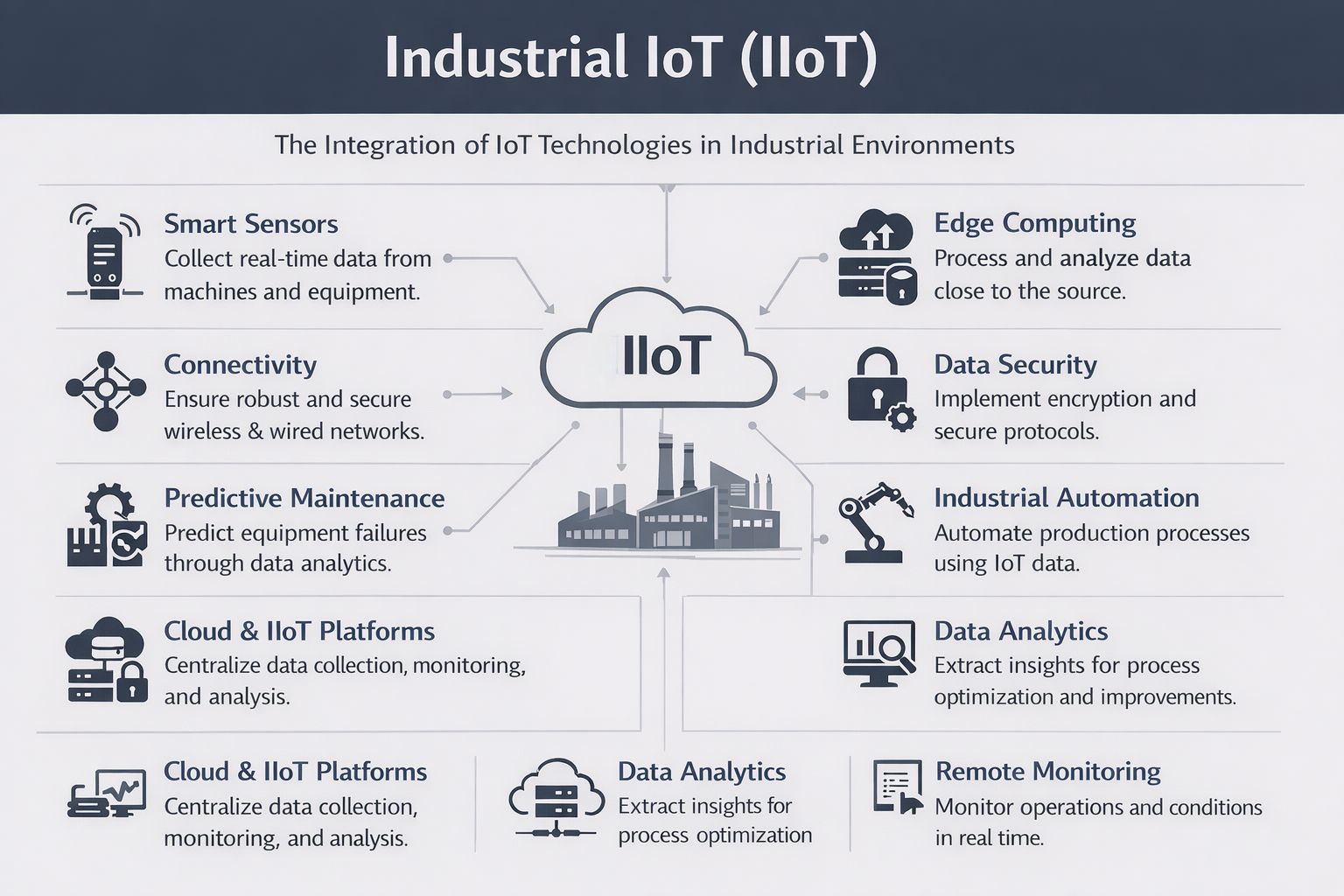
By integrating smart sensors, secure connectivity, edge computing, cloud platforms, predictive analytics, and automation systems, IIoT enables real-time visibility, improved asset utilization, and data-backed decision-making across manufacturing and industrial environments. The true value of IIoT lies not just in connectivity, but in transforming raw operational data into actionable insights that enhance reliability, efficiency, safety, and scalability. As industries move toward Industry 4.0, structured IIoT architectures are becoming foundational to smart factories, energy systems, logistics networks, and process industries. This comprehensive guide will delve deep into the intricacies of IIoT, exploring its core components, profound benefits, diverse applications, challenging considerations, and the strategic roadmap for successful implementation.
The Foundation of IIoT: Bridging OT and IT
For decades, operational technology (OT) and information technology (IT) existed as largely distinct domains within industrial environments. OT focused on physical processes, controlling machinery, and ensuring operational uptime, often relying on proprietary systems and specialized protocols. IT, on the other hand, managed data, networks, and business applications, primarily concerned with information flow and enterprise-level operations. The convergence of these two worlds is the cornerstone of IIoT, unlocking unprecedented levels of data collection, analysis, and control.
The Historic Divide: OT and IT
The traditional separation between OT and IT stemmed from differing priorities, skill sets, and technological approaches.
Operational Technology (OT)
OT encompasses hardware and software that monitors and controls physical processes, devices, and infrastructure. This includes systems like SCADA (Supervisory Control and Data Acquisition), DCS (Distributed Control Systems), PLCs (Programmable Logic Controllers), and MES (Manufacturing Execution Systems). OT systems are designed for real-time performance, extreme reliability, and often operate in harsh industrial environments. Their primary objective is to keep operations running safely and efficiently.
Information Technology (IT)
IT, in contrast, deals with the computing infrastructure, networks, and data management that support business operations. This includes enterprise resource planning (ERP) systems, customer relationship management (CRM) software, and various business intelligence tools. IT systems prioritize data integrity, security, and broad interoperability, often operating in controlled office environments.
The Power of Convergence
IIoT bridges this gap by enabling OT devices to communicate with IT systems and leverage IT’s data processing and analytical capabilities. This convergence creates a unified data environment where operational insights can inform business decisions, and business strategies can be translated into operational adjustments. For example, production data from an OT system can be analyzed by IT applications to optimize supply chains or predict maintenance needs, leading to a more agile and responsive enterprise.
Core Components of an IIoT Ecosystem
A robust IIoT ecosystem is a complex interplay of various technologies working in concert. These components form the backbone of data collection, transmission, processing, and actionable insight generation.
Smart Sensors: The Eyes and Ears of IIoT
At the very edge of the IIoT network are smart sensors, the fundamental data collectors. These devices are equipped with sensing elements, microprocessors, and communication capabilities, allowing them to collect real-time data from machines, equipment, and the environment.
Types of Smart Sensors
IIoT deployments utilize a wide array of sensors, each designed for specific parameters:
- Temperature Sensors: Monitoring crucial heat levels in machinery, processes, and storage.
- Pressure Sensors: Gauging pressure in pipes, tanks, and hydraulic systems.
- Vibration Sensors: Detecting abnormal vibrations in rotating machinery, indicating potential wear or failure.
- Acoustic Sensors: Identifying unusual sounds that might signal emerging equipment problems.
- Flow Sensors: Measuring the rate and volume of fluid or gas movement.
- Proximity Sensors: Detecting the presence or absence of objects, crucial for automation and safety.
- Chemical Sensors: Monitoring air quality, gas leaks, and chemical compositions in process industries.
- Vision Sensors (Cameras): Providing visual data for quality control, anomaly detection, and security.
The Role of Smart Sensors
Smart sensors don’t just collect raw data; they often perform some level of pre-processing or filtering at the source. This reduces the volume of data transmitted, minimizing network congestion and latency, and enhancing the efficiency of the entire system.
Connectivity: The Lifeline of Industrial Data
Secure and reliable connectivity is paramount for any IIoT solution. It enables the seamless flow of data from sensors and machines to higher-level processing and analysis platforms.
Wired and Wireless Networks
IIoT environments rely on a mix of wired and wireless communication technologies:
- Wired Networks: Traditional Ethernet, industrial Ethernet protocols (e.g., EtherNet/IP, PROFINET), and fiber optics provide high bandwidth, low latency, and robust security for critical applications and fixed assets.
- Wireless Networks: Wi-Fi, Bluetooth, Zigbee, LoRaWAN, and cellular technologies (4G, 5G) offer flexibility and mobility, particularly for geographically dispersed assets or equipment in challenging locations. The emergence of 5G is particularly significant for IIoT due to its ultra-low latency, high bandwidth, and massive connectivity capabilities, enabling real-time control and massive sensor deployments.
Communication Protocols
Beyond the physical network, various protocols facilitate communication between IIoT devices and platforms:
- MQTT (Message Queuing Telemetry Transport): A lightweight, publish/subscribe messaging protocol ideal for constrained devices and unreliable networks, widely adopted in IIoT.
- OPC UA (Open Platform Communications Unified Architecture): A platform-independent, service-oriented architecture that enables secure and reliable data exchange in industrial automation applications.
- AMQP (Advanced Message Queuing Protocol): A robust messaging protocol designed for reliable and flexible message routing, often used in enterprise-level IIoT integrations.
- Modbus/TCP: An older, widely used industrial protocol now adapted for TCP/IP networks.
Edge Computing: Processing Data Closer to the Source
Edge computing involves processing and analyzing data physically closer to where it’s generated, rather than sending all data to a centralized cloud platform. This approach offers significant advantages in IIoT.
Benefits of Edge Computing
- Reduced Latency: Critical decisions and actions can be taken in near real-time, essential for applications like autonomous robots or safety systems.
- Bandwidth Optimization: Only relevant and pre-processed data needs to be sent to the cloud, reducing network traffic and associated costs.
- Enhanced Security: Data can be filtered and anonymized at the edge, reducing the vulnerability of sensitive information.
- Offline Operation: Edge devices can continue to function and process data even if cloud connectivity is temporarily lost.
- Local Data Governance: Compliance requirements for data residency can be met by processing data locally.
Edge Devices
Edge computing is implemented through various devices, from ruggedized industrial PCs to specialized gateways and controllers that can perform local data aggregation, analysis, and even machine learning inference.
Cloud Platforms and IIoT Platforms: Centralized Intelligence
While edge computing handles immediate, localized processing, cloud platforms provide the scalable infrastructure for centralized data collection, long-term storage, advanced analytics, and enterprise-wide visibility. IIoT platforms are specialized cloud-based solutions designed specifically for industrial applications.
Cloud Platform Capabilities
- Scalable Storage: Storing vast quantities of historical and real-time operational data.
- Big Data Analytics: Applying advanced algorithms, machine learning, and AI to uncover patterns, predict failures, and optimize processes.
- Dashboarding and Visualization: Presenting complex data in intuitive, customizable dashboards for operators, engineers, and management.
- Remote Monitoring and Control: Enabling supervisors to monitor assets and even issue commands remotely.
- Integration with Enterprise Systems: Connecting IIoT data with ERP, MES, and other business systems for holistic decision-making.
Key Features of IIoT Platforms
IIoT platforms offer specialized functionalities tailored to industrial needs, often including:
- Device Management: Provisioning, monitoring, and updating thousands of connected devices.
- Data Ingestion and Normalization: Handling diverse data formats from various OT systems.
- Asset Performance Management (APM): Tools specifically designed to track asset health, predict maintenance, and optimize performance.
- Digital Twin Capabilities: Creating virtual replicas of physical assets or processes for simulation, analysis, and predictive modeling.
Data Analytics: Transforming Data into Actionable Insights
Data analytics is the engine that drives value from the raw data collected in an IIoT ecosystem. It’s the process of examining raw data to discover meaningful insights, draw conclusions, and support decision-making.
Types of Data Analytics
- Descriptive Analytics: What happened? (e.g., operational dashboards, production reports).
- Diagnostic Analytics: Why did it happen? (e.g., root cause analysis of equipment failure).
- Predictive Analytics: What will happen? (e.g., predicting equipment breakdowns, forecasting demand).
- Prescriptive Analytics: What should we do? (e.g., recommending optimal settings, scheduling maintenance).
Machine Learning and AI in IIoT
Machine learning (ML) and artificial intelligence (AI) are particularly powerful in IIoT, enabling:
- Anomaly Detection: Automatically identifying unusual patterns in data that may indicate impending failures or security breaches.
- Predictive Maintenance: Forecasting when equipment is likely to fail, allowing for proactive maintenance and minimizing downtime.
- Process Optimization: Identifying optimal equipment settings, resource allocation, and production schedules to maximize efficiency.
- Quality Control: AI-powered vision systems can detect defects in products with greater speed and accuracy than human inspection.
Industrial Automation: Acting on Insights
The ultimate goal of IIoT is not just to understand but to act. Industrial automation, powered by IIoT data, translates insights into physical actions, closing the loop and delivering tangible operational improvements.
Automation Systems
- Robotics: Collaborative robots (cobots) and industrial robots can perform repetitive, dangerous, or precise tasks, guided by IIoT data for adaptive manufacturing.
- Automated Guided Vehicles (AGVs) and Autonomous Mobile Robots (AMRs): Enhancing logistics and material handling by autonomously transporting goods within facilities.
- Advanced Process Control (APC): Using data analytics to dynamically adjust process parameters for optimal output and efficiency.
- Closed-Loop Control Systems: Systems that automatically adjust their output based on sensor feedback, constantly striving for a desired setpoint.
Integration with IIoT
IIoT provides automation systems with richer, real-time data, enabling more intelligent and adaptive operations. For example, a robot might adjust its trajectory based on real-time sensor data detecting an obstruction, or a ventilation system might optimize energy usage based on IIoT-monitored air quality and occupancy.
Data Security: Protecting the Industrial Frontier
The interconnected nature of IIoT introduces new cybersecurity challenges. Protecting valuable operational data, intellectual property, and critical infrastructure from cyber threats is paramount.
IIoT Security Principles
- Layered Security (Defense in Depth): Implementing multiple security controls across the IIoT architecture, including device security, network security, application security, and cloud security.
- Authentication and Authorization: Ensuring that only authorized devices and users can access the IIoT network and its resources.
- Encryption: Protecting data in transit and at rest using strong encryption protocols.
- Intrusion Detection and Prevention Systems (IDPS): Monitoring network traffic and system behavior for suspicious activities.
- Regular Security Audits and Updates: Proactively identifying and remediating vulnerabilities.
- Physical Security: Securing edge devices and network infrastructure from unauthorized physical access.
- Secure Boot and Firmware Updates: Ensuring the integrity of device software from the moment of power-on.
OT-Specific Security Concerns
Traditional IT security measures may not be directly applicable to OT environments due to different protocols, real-time requirements, and legacy systems. IIoT security strategies must therefore be tailored to the unique characteristics of industrial control systems, prioritizing operational continuity and safety.
Remote Monitoring: Overseeing Operations from Anywhere
Remote monitoring is a powerful application of IIoT, allowing stakeholders to oversee operations and conditions in real-time, regardless of their physical location.
Benefits of Remote Monitoring
- Improved Visibility: Gain a comprehensive view of equipment status, production metrics, and environmental conditions across multiple sites.
- Faster Problem Resolution: Detect anomalies and potential issues early, enabling quicker diagnosis and resolution.
- Reduced Travel Costs: Minimize the need for on-site inspections and maintenance visits.
- Enhanced Safety: Monitor conditions in hazardous environments without placing personnel at risk.
- Optimized Resource Allocation: Dispatch maintenance teams only when necessary, based on real-time data.
Technologies for Remote Monitoring
Remote monitoring heavily relies on:
- Cloud-based Dashboards and HMI (Human-Machine Interface): Providing intuitive visualizations of operational data.
- Mobile Applications: Enabling on-the-go access to critical information and alerts.
- Alerting Systems: Notifying personnel via email, SMS, or push notifications when predefined thresholds or anomalies are detected.
- Secure VPNs and Remote Access Solutions: Ensuring secure connectivity to industrial assets.
The Transformative Benefits of Industrial IoT
The strategic implementation of IIoT yields a multitude of benefits that directly impact an organization’s bottom line, operational efficiency, and competitive standing.
Enhanced Reliability and Uptime
One of the most compelling benefits of IIoT is its ability to significantly improve asset reliability and reduce unplanned downtime.
Predictive Maintenance
By continuously monitoring machine health data (vibration, temperature, current, etc.) and applying predictive analytics, IIoT can forecast equipment failures before they occur. This allows maintenance teams to schedule interventions proactively during planned downtime or before a critical failure, minimizing disruption and costly emergency repairs.
Condition-Based Monitoring (CBM)
IIoT enables CBM, where maintenance is performed based on the actual condition of an asset rather than on a fixed schedule. This optimizes maintenance schedules, extending asset life and reducing unnecessary maintenance activities.
Real-time Anomaly Detection
Sensors and analytics can instantly detect deviations from normal operating parameters, alerting operators to potential problems that might otherwise go unnoticed until a catastrophic failure.
Increased Operational Efficiency
IIoT provides the granular data and insights needed to fine-tune operations, eliminate waste, and optimize resource utilization.
Process Optimization
By analyzing data from every stage of a production process, IIoT can identify bottlenecks, inefficiencies, and areas for improvement. This might involve optimizing machine settings, improving material flow, or adjusting environmental controls.
Energy Management
Smart sensors can monitor energy consumption at the machine, line, or facility level. Analytics can then identify energy waste, suggest energy-saving measures, and optimize energy usage patterns, leading to significant cost reductions and a smaller carbon footprint.
Inventory Optimization
Real-time tracking of raw materials, work-in-progress, and finished goods using IIoT sensors and RFID can significantly improve inventory accuracy, reduce carrying costs, and prevent stockouts.
Workforce Productivity
IIoT tools can empower workers with real-time information, streamline workflows, and automate tedious tasks, allowing them to focus on higher-value activities.
Improved Safety and Compliance
Industrial environments often pose inherent risks. IIoT significantly enhances safety by providing real-time monitoring and predictive capabilities.
Proactive Risk Mitigation
By monitoring conditions like gas leaks, temperature excursions, or equipment malfunctions, IIoT systems can issue early warnings, allowing personnel to take corrective action before incidents occur.
Remote Monitoring in Hazardous Environments
IIoT enables the monitoring of dangerous areas without requiring human presence, protecting workers from exposure to harmful substances, extreme temperatures, or hazardous machinery.
Enhanced Emergency Response
In the event of an incident, IIoT systems can provide real-time data on the situation, assisting emergency responders with critical information and optimizing intervention strategies.
Regulatory Compliance
IIoT can automate data collection for compliance reporting (e.g., environmental emissions, safety protocols), ensuring accuracy and reducing manual effort.
Enhanced Scalability and Agility
IIoT architectures are designed to be scalable and flexible, allowing businesses to adapt quickly to changing market demands and technological advancements.
Modular and Flexible Systems
IIoT solutions often feature modular components that can be easily added or reconfigured as needs evolve, supporting rapid expansion or modification of operations.
Data-Driven Decision Making
With accurate, real-time data, businesses can make more informed and agile decisions regarding production schedules, resource allocation, and market entry strategies.
Digital Transformation Foundation
IIoT provides a strong foundation for broader digital transformation initiatives, enabling innovation and the creation of new business models.
New Business Models and Revenue Streams
Beyond internal efficiencies, IIoT can open doors to innovative business models and new sources of revenue.
Product-as-a-Service (PaaS)
Manufacturers can shift from selling products outright to offering them as a service, where customers pay for usage or outcomes. IIoT data is crucial for monitoring product performance and billing.
Predictive Services
Companies can offer predictive maintenance services to their customers, leveraging IIoT data from deployed products to enhance customer value and create recurring revenue.
Optimized Supply Chains
Sharing IIoT data across the supply chain can lead to greater transparency, better collaboration, and more resilient logistics networks.
Diverse Applications of IIoT Across Industries
The versatility of IIoT makes it applicable across a vast spectrum of industrial sectors, each leveraging its capabilities to address unique challenges and seize new opportunities.
Manufacturing (Smart Factories)
The manufacturing sector is perhaps the most prominent adopter of IIoT, leading the charge towards “smart factories.”
Real-time Production Monitoring
Monitoring OEE (Overall Equipment Effectiveness), cycle times, and throughput in real-time, identifying bottlenecks and optimizing production flow.
Quality Control
Automated inspection systems using IIoT sensors and AI-powered vision detect defects with precision, minimizing waste and improving product quality.
Predictive Maintenance on Production Lines
Ensuring continuous operation of critical machinery by predicting failures and scheduling proactive maintenance.
Supply Chain Integration
Connecting factory operations with supply chain logistics for just-in-time inventory and optimized material flow.
Energy and Utilities
IIoT plays a crucial role in modernizing energy grids, optimizing resource management, and enhancing infrastructure reliability.
Smart Grids
IIoT sensors monitor power flow, detect outages, and enable demand-response management, leading to more efficient and resilient energy distribution.
Renewable Energy Management
Optimizing the performance of solar farms and wind turbines by monitoring environmental conditions and equipment health in real-time.
Oil and Gas Exploration and Production
Remote monitoring of pipelines, drilling rigs, and refinery equipment to prevent leaks, enhance safety, and optimize extraction processes.
Water Management
Monitoring water infrastructure for leaks, pressure anomalies, and water quality, enabling efficient resource conservation.
Transportation and Logistics
IIoT is transforming how goods are moved, tracked, and managed, leading to more efficient and transparent supply chains.
Fleet Management
Tracking vehicle location, fuel consumption, driver behavior, and predictive maintenance for trucks and trains, enhancing safety and operational efficiency.
Asset Tracking
Monitoring the location and condition of containers, pallets, and individual packages throughout the supply chain.
Smart Ports and Warehouses
Automating cargo handling, optimizing storage, and improving throughput in logistics hubs.
Predictive Maintenance for Transportation Assets
Ensuring the reliability of aircraft, ships, and rail cars through continuous monitoring and predictive analytics.
Healthcare (Industrial side of Healthcare)
While consumer IoT focuses on personal health, the industrial side of healthcare leverages IIoT for managing medical devices, hospital infrastructure, and pharmaceutical manufacturing.
Asset Tracking in Hospitals
Locating critical medical equipment (e.g., wheelchairs, IV pumps) in large hospital environments, improving utilization and reducing theft.
Pharmaceutical Manufacturing
Monitoring environmental conditions in cleanrooms, tracking drug production processes, and ensuring compliance with stringent regulatory standards.
Predictive Maintenance for Medical Devices
Ensuring the uptime of MRI machines, CT scanners, and other expensive medical equipment.
Agriculture (Smart Farming / AgTech)
IIoT is revolutionizing agriculture by enabling precision farming practices that enhance yields, conserve resources, and reduce environmental impact.
Soil and Crop Monitoring
Sensors measure soil moisture, nutrient levels, and crop health, guiding precise irrigation and fertilization.
Livestock Monitoring
Tracking animal health, location, and behavior, enabling early detection of diseases and optimizing feeding schedules.
Automated Irrigation Systems
Optimizing water usage based on real-time soil and weather data.
Smart Greenhouses
Automating climate control, lighting, and irrigation to maximize yield and minimize resource consumption.
Navigating the Challenges of IIoT Implementation
While the benefits of IIoT are profound, successful implementation is not without its challenges. Organizations must strategically address various technical, operational, and organizational hurdles.
Data Management and Interoperability
The sheer volume, velocity, and variety of data generated by IIoT systems can be overwhelming.
Data Silos
Integrating data from disparate OT systems (legacy equipment, proprietary protocols) with IT systems can be complex, leading to data silos that hinder holistic analysis.
Data Quality
Ensuring the accuracy, consistency, and completeness of IIoT data is crucial for reliable insights. “Garbage in, garbage out” applies emphatically to IIoT.
Interoperability Standards
Lack of universally adopted standards for IIoT devices and platforms can create compatibility issues and vendor lock-in.
Cybersecurity and Data Privacy
The expanded attack surface due to interconnected devices presents significant security risks.
Threat Landscape
Industrial control systems are increasingly targeted by sophisticated cyber criminals and state-sponsored actors, posing risks to critical infrastructure and intellectual property.
Legacy System Vulnerabilities
Integrating older OT systems, often designed without modern security considerations, into networked IIoT environments can introduce vulnerabilities.
Data Privacy Regulations
Compliance with evolving data privacy regulations (e.g., GDPR, CCPA) becomes more complex with the collection and processing of vast amounts of operational data.
Cost and Return on Investment (ROI)
The initial investment in IIoT infrastructure can be substantial, requiring careful planning to demonstrate clear ROI.
High Initial Costs
Investing in sensors, connectivity infrastructure, edge devices, cloud platforms, and cybersecurity measures can be expensive.
Proving ROI
Quantifying the precise financial benefits of IIoT, particularly in areas like avoided downtime or improved safety, can be challenging.
Scalability Costs
Ensuring that the IIoT infrastructure can scale efficiently as more devices are added and data volumes grow.
Skill Gaps and Organizational Change
Implementing IIoT requires a blend of new skills and a cultural shift within the organization.
Talent Shortage
A scarcity of professionals with expertise in IIoT technologies, data science, industrial cybersecurity, and cloud integration.
OT/IT Convergence
Bridging the cultural and operational divide between OT and IT teams requires effective collaboration, mutual understanding, and potentially new organizational structures.
Resistance to Change
Employees may be resistant to adopting new technologies and workflows, requiring robust change management strategies.
Scalability and Integration
Ensuring that IIoT solutions can grow with the business and integrate seamlessly with existing systems.
Integrating Legacy Systems
Connecting modern IIoT technologies with older, proprietary industrial equipment can be a significant technical hurdle.
Managing Device Diversity
Handling the management, updates, and security of a vast and diverse fleet of IIoT devices from multiple vendors.
A Strategic Roadmap for IIoT Implementation
Successful IIoT adoption requires a well-defined strategy, starting with clear objectives and progressing through thoughtful execution and continuous optimization.
1. Define Clear Objectives and Use Cases
Before investing in any technology, clearly articulate what specific business problems IIoT will solve and what outcomes are expected.
- Identify Pain Points: Where are the inefficiencies, downtime, safety risks, or quality issues that IIoT can address?
- Prioritize Use Cases: Start with high-impact, achievable projects to demonstrate early success and build momentum. Examples include predictive maintenance on a critical asset or real-time energy monitoring.
- Quantify Expected ROI: Define measurable key performance indicators (KPIs) to track the success of IIoT initiatives.
2. Assess Existing Infrastructure and Capability Gaps
Understand your current state before designing your future state.
- Evaluate OT/IT Environment: Inventory existing machinery, networks, control systems, and IT infrastructure.
- Identify Connectivity Gaps: Determine where robust wired or wireless connectivity is lacking.
- Assess Skill Sets: Identify internal expertise gaps that need to be addressed through training or external recruitment.
3. Design a Scalable and Secure Architecture
A well-designed architecture is fundamental for long-term success.
- Layered Approach: Implement a layered architecture encompassing devices, edge, network, and cloud components.
- Security by Design: Integrate cybersecurity measures from the outset, not as an afterthought. This includes end-to-end encryption, robust authentication, and network segmentation.
- Interoperability: Choose open standards and platforms where possible to avoid vendor lock-in and ensure future flexibility.
- Data Strategy: Plan for data ingestion, storage, processing, and analysis, considering data volume, velocity, and variety.
4. Pilot Projects and Phased Rollout
Starting small allows for learning and adaptation before a full-scale deployment.
- Proof of Concept (PoC): Implement a small-scale pilot project to test the technology, validate assumptions, and refine the solution.
- Iterative Development: Adopt an agile approach, continuously iterating and improving based on feedback from pilot projects.
- Phased Expansion: Gradually expand the IIoT deployment to other areas or assets, leveraging lessons learned from earlier phases.
5. Data Analytics and Actionable Insights
The value of IIoT lies in transforming data into information, and then into action.
- Establish Data Pipelines: Ensure efficient and reliable data flow from devices to analytics platforms.
- Develop Analytics Capabilities: Utilize descriptive, diagnostic, predictive, and prescriptive analytics to extract meaningful insights.
- Visualization and Reporting: Create intuitive dashboards and reports that provide relevant information to different stakeholders (operators, managers, executives).
- Operationalize Insights: Integrate analytical insights into operational workflows, enabling automated responses or informing human decision-making.
6. Emphasize Cybersecurity Throughout
Continuous vigilance is necessary to protect IIoT assets.
- Threat Monitoring: Implement continuous monitoring for cyber threats across the IIoT network.
- Regular Audits and Penetration Testing: Proactively identify and remediate vulnerabilities.
- Access Control: Implement strict access control policies based on the principle of least privilege.
- Employee Training: Educate employees about cybersecurity best practices and the importance of secure behaviors.
7. Foster Organizational Alignment and Training
People are a critical component of any successful technological transformation.
- Cross-Functional Teams: Establish teams comprising OT, IT, and business stakeholders to foster collaboration and shared understanding.
- Upskilling and Reskilling: Invest in training programs to equip employees with the necessary skills for managing and leveraging IIoT technologies.
- Change Management: Communicate the benefits of IIoT clearly, address concerns, and involve employees in the transformation process to ensure buy-in.
- Cultural Shift: Promote a data-driven culture where insights from IIoT are integrated into decision-making at all levels.
8. Continuous Optimization and Innovation
IIoT is not a one-time project but an ongoing journey.
- Monitor Performance: Continuously track the performance of IIoT solutions against defined KPIs.
- Feedback Loops: Establish mechanisms for collecting feedback from users and incorporating it into future enhancements.
- Stay Abreast of Technology: Keep up with emerging IIoT technologies, standards, and best practices to ensure your solutions remain cutting-edge.
- Explore New Use Cases: As your understanding and capabilities grow, identify new opportunities to expand the application of IIoT across the enterprise.
The Future of Industrial IoT: Trends and Outlook
The IIoT landscape is constantly evolving, driven by rapid technological advancements and increasing industrial demand. Several key trends are shaping its future.
Hyper-Connectivity with 5G and LPWAN
The widespread rollout of 5G networks will unlock new possibilities for IIoT, offering ultra-low latency, massive device connectivity, and high bandwidth. This will enable more real-time control, autonomous operations, and the deployment of even more sensors. Alongside 5G, Low-Power Wide-Area Networks (LPWANs) like LoRaWAN and NB-IoT will continue to expand, providing cost-effective connectivity for battery-powered, geographically dispersed sensors.
Advanced AI and Machine Learning at the Edge
The sophistication of AI and ML algorithms will continue to grow, moving beyond merely predictive capabilities to more prescriptive and autonomous decision-making. More of this processing will occur at the edge, further reducing latency and bandwidth requirements, enabling intelligent automation directly on the factory floor or in remote industrial settings without constant cloud dependency.
Digital Twins Go Mainstream
Digital twins, virtual replicas of physical assets, processes, or entire systems, will become more prevalent. These sophisticated models, continuously updated with real-time IIoT data, will enable more accurate simulations, predictive modeling, and remote optimization, revolutionizing product design, process engineering, and maintenance strategies.
Increased Emphasis on Cybersecurity and Resilience
As IIoT becomes more embedded in critical infrastructure, the focus on cybersecurity will intensify. Expect to see more robust security standards, AI-powered threat detection, and resilient, self-healing IIoT networks designed to withstand sophisticated cyberattacks and ensure operational continuity. Zero Trust architectures will become a standard.
Edge-to-Cloud Continuum Architectures
The line between edge and cloud will blur further, leading to more integrated “edge-to-cloud continuum” architectures. Data will seamlessly flow between edge devices (for immediate, local processing), fog computing layers (for regional aggregation), and centralized cloud platforms (for enterprise-wide analytics and long-term storage), optimized based on latency, bandwidth, and security requirements.
Sustainability and Green IIoT
IIoT will play an increasingly vital role in achieving sustainability goals. From optimizing energy consumption in smart factories and buildings to monitoring environmental conditions for pollution control and enabling precision agriculture, IIoT will be a key enabler for a greener, more resource-efficient industrial future.
Human-Machine Collaboration
The future of IIoT will emphasize augmenting human capabilities rather than replacing them. Collaborative robots (cobots), augmented reality (AR) for maintenance and training, and intuitive human-machine interfaces will enhance worker safety, productivity, and decision-making by providing real-time contextual information.
Conclusion
The Industrial Internet of Things is more than just a technological trend; it is a fundamental shift in how industries operate, innovate, and create value. By intelligently connecting physical assets with digital intelligence, IIoT empowers organizations to transform raw operational data into actionable insights, driving unprecedented levels of efficiency, reliability, safety, and scalability. From revolutionizing manufacturing processes with smart factories to optimizing energy grids, streamlining logistics, and enabling precision agriculture, IIoT is the bedrock upon which the smart industrial future is being built.
As industries navigate the complexities of Industry 4.0, embracing a structured and strategic approach to IIoT implementation is critical for remaining competitive and resilient. The convergence of OT and IT, powered by smart sensors, secure connectivity, edge computing, cloud platforms, and advanced analytics, is not just improving existing processes; it is enabling entirely new business models and fostering a culture of continuous innovation. The journey into the fully connected industrial world is dynamic, challenging, and immensely rewarding, promising a future where every machine communicates, every process is optimized, and every decision is data-backed.
Are you ready to unlock the full potential of Industrial IoT for your organization? Whether you’re just beginning to explore IIoT or looking to optimize an existing deployment, IoT Worlds provides the expertise, solutions, and strategic guidance to transform your industrial operations.
Connect with our experts today to embark on your IIoT journey and build a more intelligent, efficient, and sustainable future. Email us at info@iotworlds.com to learn more.
