

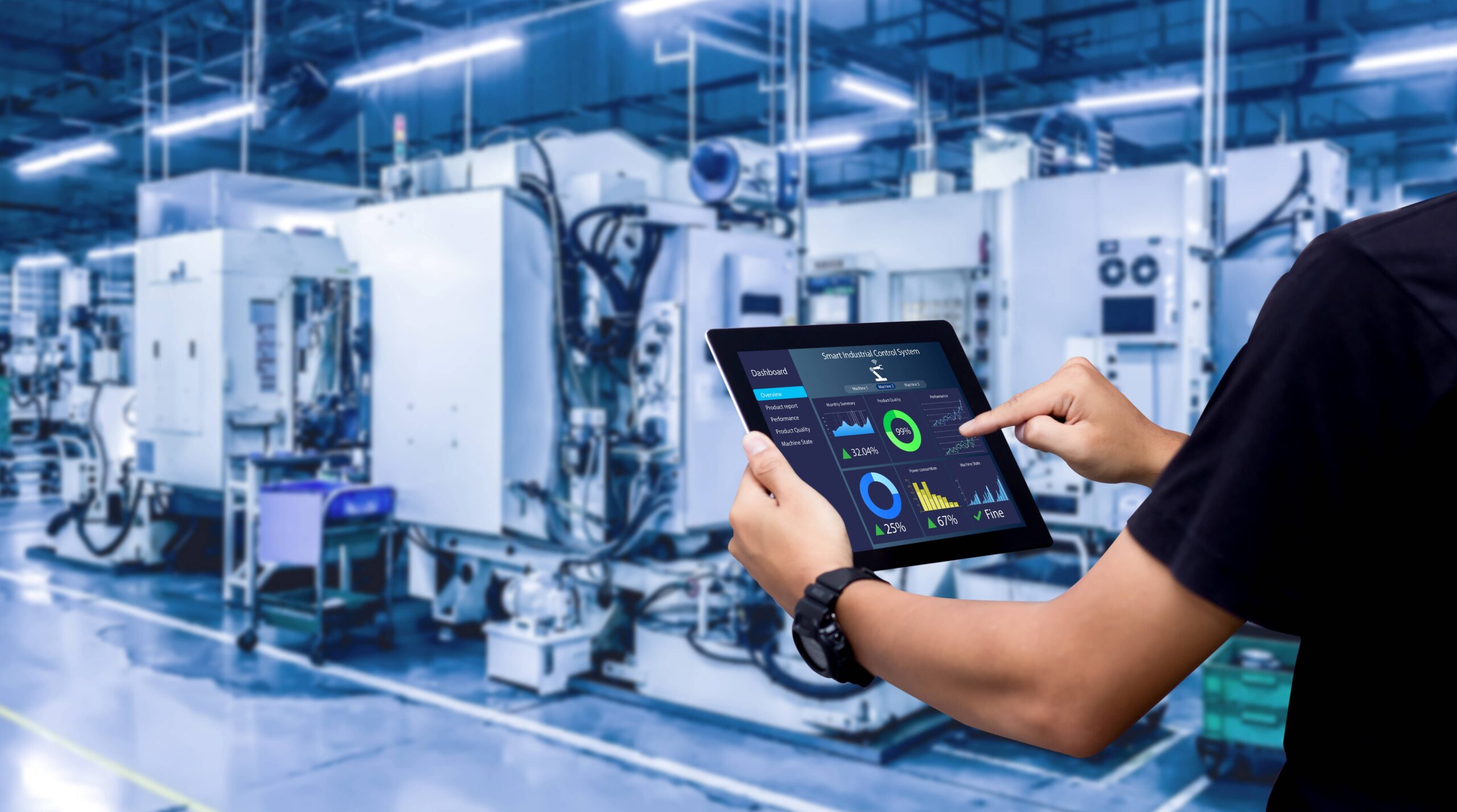
In the rapidly evolving landscape of Industry 4.0, the goal for global enterprises—particularly those in the high-end manufacturing and luxury retail sectors—is the creation of a seamless “Digital Thread.” This thread connects a product’s initial design to its raw material sourcing, through the factory floor, into the warehouse, and finally into the hands of a consumer. Achieving this level of visibility requires more than just hardware; it requires the sophisticated orchestration of five core pillars: ERP, WMS, MES, IoT, and OT platforms.
For organizations managing complex global supply chains, several high-impact use cases emerge when these systems are correctly integrated. Consider the lifecycle of a high-value asset. Without vertical integration, data is siloed. With it, a single Radio Frequency Identification (RFID) tag can trigger a financial update in the ERP, a shelf-space adjustment in the WMS, a quality check in the MES, and a telemetry alert on an IoT platform—all while being moved by a robotic arm controlled by an OT platform.
This guide provides a deep dive into these fundamental technologies, their core functions, and the specific role RFID plays in bridging the gap between physical operations and digital intelligence.
Enterprise Resource Planning (ERP): The Strategic Command Center
At the highest level of the enterprise hierarchy sits the ERP. If the company were an organism, the ERP would be the brain. It is the system of record for the entire organization, designed to manage the “macro” view of the business.
Core Functions of the ERP
The primary purpose of an ERP is to integrate all facets of an operation into a single database. This includes:
- Finance and Accounting: Managing the General Ledger, accounts payable/receivable, and automated financial reporting.
- Human Capital Management (HCM): Payroll, workforce planning, and employee lifecycles.
- Procurement: Managing vendor relationships and large-scale purchasing of raw materials.
- Sales and Order Management: Converting customer interest into formal orders and tracking revenue.
Data Integration across the Stack
The ERP acts as the ultimate aggregator. It receives “summarized” data from the lower levels. For example, while an MES might track every minute of a machine’s operation, the ERP only cares about the total cost of goods sold (COGS) and the final quantity of shippable items. Integration is typically achieved through Application Programming Interfaces (APIs) or Electronic Data Interchange (EDI), ensuring that when a warehouse ships a product, the ERP automatically generates an invoice.
Examples of ERP Systems
Market leaders include SAP S/4HANA, Oracle ERP Cloud, and Microsoft Dynamics 365. For mid-market luxury firms, niche players like NetSuite or Infor are frequently utilized to handle multi-currency and multi-subsidiary global operations.
The Relevance of RFID to ERP
In an ERP context, RFID provides “Ground Truth.” Traditionally, ERPs relied on manual data entry, which is prone to human error. RFID replaces “guesses” with “facts.” When an RFID portal at a factory gate scans a pallet, the ERP immediately knows that raw material assets have transitioned into work-in-progress (WIP) value. This real-time asset valuation is critical for accurate financial tax reporting and inventory depreciation models.
Warehouse Management Systems (WMS): Precision in Motion
While the ERP manages the “what” and the “how much,” the WMS manages the “where.” It is the software layer responsible for the movement and storage of goods within the four walls of a distribution center or warehouse.
Core Functions of the WMS
A WMS is designed to optimize the physical flow of goods. Its core responsibilities include:
- Inventory Accuracy: Real-time tracking of stock levels down to the specific bin and shelf.
- Receiving and Put-away: Directing warehouse staff (or robots) to the most efficient location to store incoming goods based on turnover rates.
- Picking, Packing, and Shipping: Sequencing orders to minimize the travel distance for picking teams, ensuring the right product gets in the right box.
- Returns Management (Reverse Logistics): A critical function for high-end retail, managing the inspection and restocking of returned items.
Data Integration: WMS to ERP and Beyond
The WMS must have a “heartbeat” connection to the ERP. When the ERP receives a customer order, it sends a “pick request” to the WMS. Once shipped, the WMS sends a “shipping confirmation” back to the ERP to trigger billing. Furthermore, in modern facilities, the WMS communicates with OT platforms to move automated guided vehicles (AGVs) or conveyors.
Examples of WMS Solutions
Prominent examples include Manhattan Associates, Blue Yonder, and SAP EWM (Extended Warehouse Management).
The Relevance of RFID to WMS
RFID is transformative for warehouse operations. Unlike traditional barcodes, which require a line-of-sight scan for every single item, RFID allows for bulk scanning.
- Inbound Logistics: An entire truckload can be “received” in seconds as it passes through an RFID tunnel.
- Cycle Counting: Instead of shutting down a warehouse for a weekend to count stock, an employee with a handheld RFID reader can walk down an aisle and capture thousands of items per minute.
- Loss Prevention: RFID portals at exit points can detect if a high-value item is leaving the facility without a corresponding shipping order, alerting security in real-time.
Manufacturing Execution Systems (MES): The Pulse of the Factory Floor
The MES is where the physical creation of the product is managed. It bridges the gap between the high-level planning of the ERP and the low-level control of the factory machinery.
Core Functions of the MES
The MES focuses on the execution of production orders. Its roles include:
- Production Scheduling: Taking the ERP’s demand and breaking it into specific shifts and machine assignments.
- Work-In-Progress (WIP) Tracking: Monitoring the exact state of a product as it moves from raw material to finished goods.
- Quality Management: Enforcing digital “checkpoints” where a product must pass a manual or automated inspection.
- Genealogy and Traceability: Recording exactly which batch of raw material went into which finished product—vital for luxury goods where provenance and craftsmanship are part of the value proposition.
Data Integration: MES as the Bridge
The MES sends production completion data up to the ERP and requests raw materials from the WMS. Simultaneously, it pulls real-time performance data from OT platforms (like PLC data) to calculate Overall Equipment Effectiveness (OEE).
Examples of MES Platforms
Key players include Siemens Opcenter, Rockwell Automation FactoryTalk, and specialized boutique solutions for high-end apparel or jewelry manufacturing.
The Relevance of RFID to MES
In the factory, RFID is the “Digital Travel Traveler.” A tag attached to a garment or a watch case tells the MES exactly which station the item is at.
- Automated Routing: RFID readers at conveyor junctions can “read” an item and tell the OT system to divert it to the “Engraving” station versus the “Standard Assembly” station.
- Labor Tracking: By linking an worker’s RFID badge to a workstation scan, the MES can calculate the exact labor hours required for specific handcrafted components, providing a precise cost-to-build.
Internet of Things (IoT) Platforms: The Connected Ecosystem
IoT platforms are the “glue” that allows diverse devices to communicate. They are designed to ingest massive volumes of data from sensors located anywhere in the world and turn that data into actionable insights.
Core Functions of the IoT Platform
IoT platforms offer the infrastructure to manage the “Things” in the Internet of Things:
- Device Management: Provisioning, updating, and monitoring the health of thousands of connected sensors.
- Data Ingestion and Analytics: Handling the “Big Data” flow of telemetry (temperature, vibration, location) and using AI to find patterns.
- Connectivity Management: Orchestrating communication over cellular (5G), LoRaWAN, Wi-Fi, or Satellite.
- Edge Computing: Processing data locally on the device to reduce latency before sending only the important bits to the cloud.
Data Integration: The Global Fabric
The IoT platform typically feeds data into the ERP for high-level dashboards or into the MES for predictive maintenance. For instance, if an IoT sensor detects a machine is vibrating at an abnormal frequency, it can automatically trigger a “Maintenance Work Order” in the ERP.
Examples of IoT Platforms
Global standards include AWS IoT Core, Microsoft Azure IoT Hub, and PTC ThingWorx.
The Relevance of RFID to IoT
RFID readers are essentially “Edge IoT Devices.” A modern IoT platform treats an RFID read event as a data packet.
- Global Asset Tracking: When an RFID tag is read at a third-party logistics provider’s warehouse, the data is pushed to a cloud IoT platform, allowing the parent company to track an asset’s global movement in real-time without owning the local infrastructure.
- Sensor Fusion: IoT platforms can combine an RFID “location” read with a temperature sensor read to prove that a sensitive material (like exotic leather or high-end cosmetics) stayed within a specific environmental range throughout its journey.
Operational Technology (OT) Platforms: The Physical Controllers
OT is the domain of hardware and software that detects or causes a change through the direct monitoring and control of physical devices. While IT is about data, OT is about physics.
Core Functions of the OT Platform
OT platforms manage the “hands” of the company:
- Supervisory Control and Data Acquisition (SCADA): High-level supervision of machines and industrial processes.
- Programmable Logic Controllers (PLCs): The ruggedized computers that tell a motor to turn or a valve to open.
- Distributed Control Systems (DCS): Managing complex, continuous manufacturing processes.
- Human-Machine Interface (HMI): The screens that allow factory operators to interact with the machines.
Data Integration: The IT-OT Convergence
Modern business relies on “IT-OT Convergence.” This means taking the data from the PLCs (OT) and sending it to the MES or ERP (IT). This allows for “smart factories” where production speeds up or slows down based on real-time sales data from the ERP.
Examples of OT Platforms
Industrial giants like Schneider Electric, Honeywell, and Emerson provide the foundational OT platforms for modern manufacturing.
The Relevance of RFID to OT
In the OT world, RFID is a sensor that triggers physical action.
- Automation Triggering: In an automated sorting facility, an RFID reader identifies a crate. The OT platform (PLC) receives this ID and instantly calculates the timing to fire a pneumatic pusher to move that crate into a specific lane.
- Tooling Management: OT systems can check an RFID tag on a CNC tool to ensure it hasn’t exceeded its safe usage hours before allowing the machine to start, preventing physical damage and ensuring product quality.
Achieving the Integrated Vision: A Unified Strategy
The true power of these systems is realized only when they work in concert. For a high-end enterprise, the “Perfect Order” looks like this:
An ERP forecasts demand; the WMS ensures raw materials are ready; the MES orchestrates the production; the IoT platform monitors the health of the machines and the environment; and the OT platform moves the robotic arms to build the product.
At every step of this journey, RFID acts as the common language, ensuring that the digital record in the software matches the physical reality on the floor. However, implementing this architecture is a massive undertaking that requires specialized knowledge of hardware (antennas, tags), software (middleware, APIs), and cybersecurity (protecting the OT-IT bridge).
Transform Your Digital Infrastructure with IoT Worlds
The transition to a fully integrated IT-OT environment is fraught with technical hurdles, from selecting the right RFID frequency to securing your PLC networks against modern threats. At IoT Worlds, we specialize in bridging these gaps. Our consultancy services are designed to help you navigate the complexities of ERP-WMS-MES-IoT-OT integration with a focus on scalability, security, and measurable ROI.
Whether you are looking to deploy a global RFID tracking system or need to architect a secure IT-OT convergence strategy, our team of experts provides the technical leadership required for success in the era of Industry 4.0.
Take the first step toward a smarter, more transparent enterprise:
Email us today at: info@iotworlds.com
IoT Worlds: Engineering the future of connected industry.
