

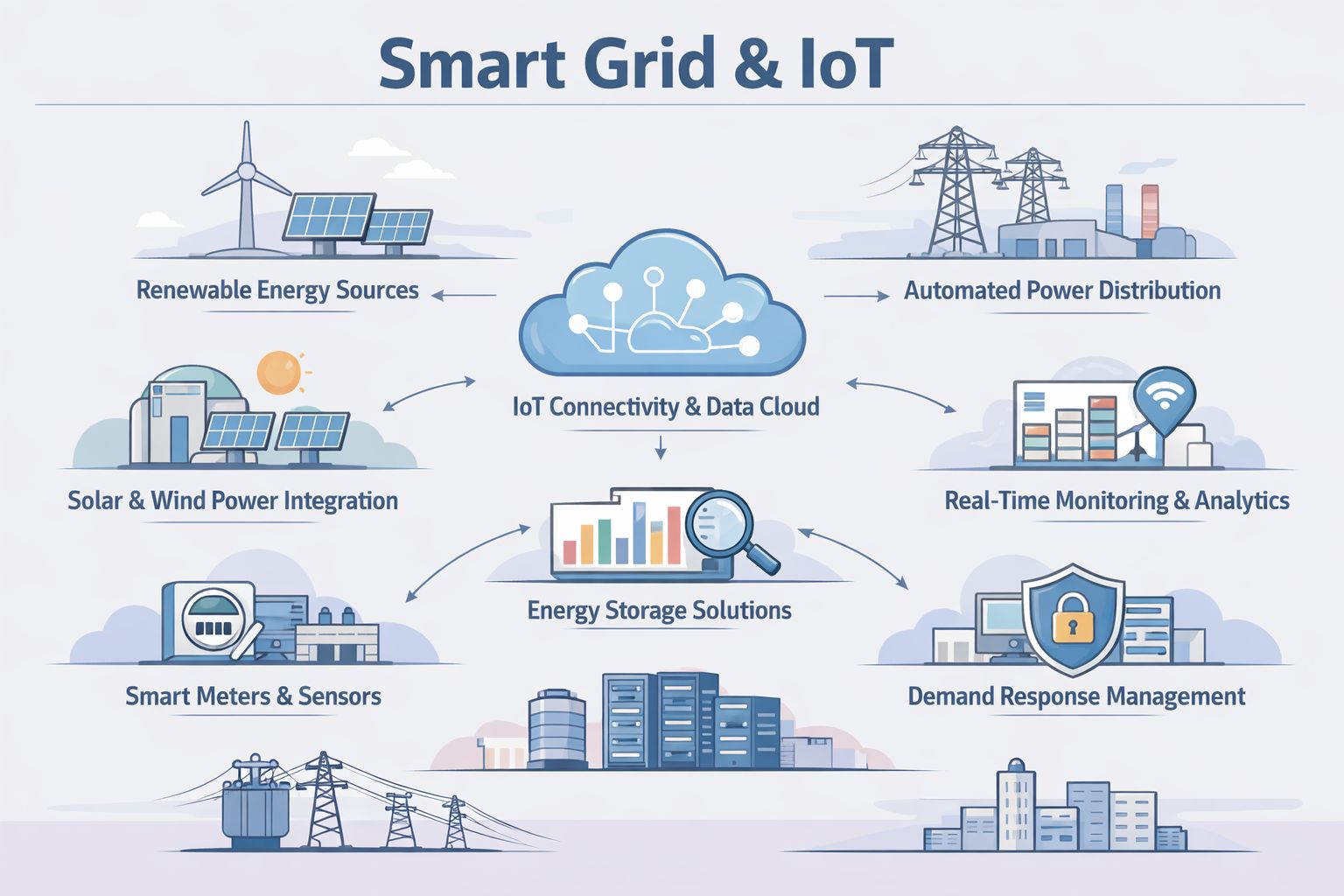
The way we generate, distribute, and consume energy is undergoing a profound transformation. At the heart of this revolution lies the convergence of the Smart Grid and the Internet of Things (IoT). This powerful integration is reshaping the entire energy ecosystem, ushering in an era of unprecedented efficiency, reliability, and sustainability. Gone are the days of a static, one-way power flow; instead, we are witnessing the emergence of a dynamic, intelligent, and interconnected energy network that promises to power our world more effectively and responsibly than ever before. Smart energy isn’t some distant vision – it’s already here, actively redefining our present and shaping our future.
The Dawn of an Intelligent Energy Ecosystem
The traditional electrical grid, a marvel of engineering for its time, was designed for a centralized power generation model, largely relying on fossil fuels. While robust, it lacked the flexibility, responsiveness, and granular insights needed to truly optimize energy flow in a rapidly evolving world. The introduction of the Smart Grid addresses these limitations by infusing intelligence into every facet of the energy delivery system. Coupled with the pervasive connectivity and data-gathering capabilities of the IoT, this creates a synergistic relationship that unlocks a new paradigm for energy management.
Real-time Monitoring and Automated Control
One of the most significant advantages of integrating the Smart Grid with IoT is the ability to achieve real-time monitoring and automated control across the entire energy ecosystem. This goes far beyond simply knowing if power is on or off. Instead, a vast network of IoT-enabled sensors and devices, ranging from advanced smart meters in homes and businesses to sensors embedded in transmission lines and substations, constantly collects data on various parameters.
This data includes voltage levels, current flows, power consumption patterns, equipment status, and even environmental conditions. This continuous stream of information provides grid operators with an unparalleled level of visibility into the health and performance of the network. This real-time intelligence is crucial for identifying potential issues before they escalate, optimizing power flow to prevent bottlenecks, and ensuring the stable operation of the grid.
Furthermore, the data collected by IoT devices feeds into advanced analytics platforms, enabling automated control systems to make rapid, informed decisions. For instance, if a fault is detected in a section of the grid, automated systems can quickly isolate the affected area, re-route power, and minimize service interruptions, often before consumers even notice a flicker. This proactive approach significantly enhances grid resilience and reliability.
Data-Driven Decision-Making for Enhanced Efficiency
The sheer volume of data generated by IoT devices across the Smart Grid provides an invaluable resource for data-driven decision-making. Beyond real-time monitoring and control, this data can be analyzed over time to identify trends, predict future energy demands, and optimize grid operations for maximum efficiency.
Utility companies can leverage this data to forecast peak demand periods more accurately, allowing them to adjust power generation and distribution strategies accordingly. This reduces the need for expensive and often less efficient “peaker plants” that are only brought online during high-demand times. Moreover, analyzing consumption patterns can help identify areas of energy waste and inform targeted efficiency programs for consumers.
For example, by understanding how different sectors or even individual households consume energy throughout the day, utilities can implement dynamic pricing models that incentivize off-peak consumption, thereby flattening the demand curve and reducing strain on the grid. This not only benefits the utility by optimizing resource allocation but also empowers consumers to make more informed choices about their energy usage, potentially leading to cost savings.
The integration of IoT with the Smart Grid transforms the grid from a passive conduit of electricity into an active, intelligent, and responsive network. This foundational shift is essential for navigating the complexities of modern energy landscapes, particularly with the increasing penetration of renewable energy sources and the growing demand for electricity.
Key Pillars of the Smart Grid and IoT Integration
The comprehensive benefits of a Smart Grid integrated with IoT are built upon several interconnected pillars, each contributing to a more resilient, adaptive, and sustainable energy future. These components work in harmony, facilitated by the continuous flow of data and intelligent control mechanisms enabled by the IoT.
The Role of Smart Meters
Smart meters are perhaps the most visible and widely recognized component of the Smart Grid at the consumer level. Unlike traditional analog meters that merely record cumulative energy consumption, smart meters are IoT-enabled devices that offer a wealth of advanced functionalities.
These devices communicate wirelessly with the utility, providing real-time or near real-time data on energy consumption. This capability allows utilities to implement more accurate billing cycles, identify outages more quickly, and even remotely connect or disconnect service without dispatching a technician.
For consumers, smart meters provide unprecedented insights into their energy usage. Many smart meter systems come with online portals or mobile applications that display detailed consumption data, allowing users to track their electricity use by hour, day, or month. This transparency empowers consumers to understand their consumption habits better and identify opportunities for energy savings. Furthermore, smart meters are a critical enabler for demand response programs, which we will explore in more detail.
Beyond basic consumption data, advanced smart meters can also monitor voltage levels and power quality, feeding this information back to the grid for further analysis and optimization. They are, in essence, the data collection points at the very edge of the grid, providing the granular insights necessary for intelligent energy management.
Energy Storage Solutions: Balancing the Grid
The intermittency of renewable energy sources like solar and wind power has historically posed a challenge for grid stability. The sun doesn’t always shine, and the wind doesn’t always blow consistently. This is where advanced energy storage solutions, seamlessly integrated with the Smart Grid via IoT, play a transformative role.
Energy storage systems, ranging from large-scale battery banks at utility sites to smaller distributed batteries in homes and businesses, can store excess energy generated during periods of high production and discharge it when demand is high or renewable output is low. This acts as a buffer, smoothing out fluctuations in renewable energy supply and ensuring a more consistent and reliable power flow.
IoT connectivity is essential for managing these storage assets effectively. Sensors within the storage systems monitor charge levels, temperature, and performance metrics, while control systems, often leveraging AI and machine learning, decide when to charge and discharge based on real-time grid conditions, electricity prices, and forecasted demand.
Advanced energy storage also enhances grid resilience. In the event of an outage, energy stored in batteries can provide temporary backup power, acting as microgrids and ensuring critical services remain operational. This ability to store and dispatch energy on demand is a cornerstone of a truly flexible and resilient Smart Grid.
Demand Response: Engaging Consumers in Grid Management
Demand response programs are a critical element of the Smart Grid, enabling a dynamic interaction between electricity providers and consumers. These programs incentivize consumers to reduce or shift their energy consumption during peak demand periods or when grid stability is threatened.
With IoT integration, demand response becomes far more sophisticated and effective. Smart thermostats, smart appliances, and other connected devices can be programmed to automatically respond to signals from the grid. For instance, during a peak demand event, a utility might send a signal to smart thermostats to slightly increase the indoor temperature setting by a few degrees or to smart water heaters to delay their heating cycle. These small, often imperceptible adjustments across a large number of consumers can collectively result in significant demand reduction, alleviating strain on the grid and preventing potential outages.
Consumers participating in demand response programs often receive financial incentives, such as bill credits or reduced rates, for their flexibility. This creates a win-win scenario: utilities gain a powerful tool for grid management and cost reduction, while consumers can save money on their energy bills and contribute to a more sustainable energy system.
IoT platforms facilitate the communication between the grid and these smart devices, enabling real-time adjustments and precise control. This moves beyond traditional manual demand response, which relied on consumers physically turning off appliances, to an automated and highly efficient system that leverages the intelligence of connected devices.
Renewable Integration: A Greener Energy Future
The push for a sustainable energy future is inextricably linked to the increased integration of renewable energy sources. The Smart Grid, underpinned by IoT technologies, is fundamental to achieving this goal. While renewable energy offers immense environmental benefits, its intermittent nature poses challenges for grid management.
IoT sensors on solar panels and wind turbines provide real-time data on energy generation, allowing grid operators to accurately forecast output and adjust other generation sources accordingly. This granular data, combined with advanced weather forecasting and grid analytics, enables more efficient dispatch of renewable energy and reduces the need for fossil fuel backups.
Furthermore, IoT facilitates the integration of distributed renewable energy resources, such as rooftop solar panels on homes and businesses. These “prosumers” (producers and consumers of energy) can feed excess electricity back into the grid, transforming the traditional one-way power flow into a bidirectional system. Smart inverters and meters, enabled by IoT, manage this two-way flow, ensuring grid stability and compensating prosumers for the electricity they contribute.
The Smart Grid and IoT provide the technological infrastructure necessary to intelligently manage a complex energy portfolio that increasingly includes a significant proportion of renewable energy. This is crucial for decarbonizing the energy sector and mitigating climate change.
The Transformative Impact of Smart Grid and IoT
The integration of the Smart Grid with IoT extends far beyond individual components, delivering overarching benefits that revolutionize the entire energy landscape. These transformative impacts touch upon crucial aspects of reliability, efficiency, economic viability, and future preparedness.
Enhanced Reliability and Resilience
One of the most immediate and impactful benefits of the Smart Grid and IoT integration is a significant improvement in grid reliability and resilience. The ability to monitor the grid in real-time allows for proactive identification and mitigation of potential issues. Sensors can detect anomalies such as equipment degradation, unusual voltage fluctuations, or incipient faults before they lead to widespread outages.
When an outage does occur, IoT-enabled fault detection, isolation, and restoration (FDIR) systems can pinpoint the exact location of the fault almost instantly. Automated switches and reclosers can then isolate the affected section and reroute power around it, minimizing the number of consumers impacted and restoring service much faster than traditional methods. This not only reduces the duration of outages but also improves the overall stability and robustness of the grid against disturbances, whether from extreme weather events, equipment failures, or even cyber-attacks.
Furthermore, the distributed nature of many Smart Grid components, including energy storage and distributed renewable generation, creates a more decentralized and resilient architecture. If one part of the grid fails, other parts can continue to operate, forming microgrids that provide essential services and reduce cascading failures. This inherent redundancy makes the Smart Grid inherently more resilient than its predecessors.
Reduced Energy Losses
Traditional power grids suffer from significant energy losses during transmission and distribution, primarily due to resistance in power lines and inefficiencies in equipment. While some losses are unavoidable, the Smart Grid with IoT offers powerful tools to minimize them.
Real-time monitoring of power flow and voltage levels across the entire network allows operators to identify and address areas of inefficiency. By optimizing power factor, balancing loads, and dynamically adjusting voltage, the Smart Grid can significantly reduce line losses. IoT sensors can also detect equipment operating inefficiently, signaling the need for maintenance or replacement, further contributing to overall energy conservation.
Moreover, the integration of distributed energy resources (DERs), such as rooftop solar, can reduce the distance electricity needs to travel from generation to consumption, thereby minimizing transmission losses. Smart meters and advanced metering infrastructure (AMI) also help detect and prevent energy theft, which is another form of energy loss that impacts grid efficiency and economics. By making the flow of electricity more transparent and controllable, the Smart Grid helps ensure that more generated energy reaches its intended destination.
Paving the Way for Future-Ready Technologies
The foundational framework established by the Smart Grid and IoT is not just about optimizing current energy systems; it’s about building an infrastructure capable of supporting future technologies and evolving energy demands. This forward-looking approach positions the grid to seamlessly integrate innovations that are rapidly emerging.
Electric Vehicle (EV) Infrastructure
The rapid adoption of Electric Vehicles (EVs) presents both immense opportunities and significant challenges for the electrical grid. While EVs offer a cleaner transportation solution, a large influx of charging demand, especially during peak hours, could strain the existing grid infrastructure.
The Smart Grid and IoT are critical for managing this transition effectively. Smart charging stations, integrated with the grid via IoT, can communicate charging needs and grid conditions. This allows for intelligent charging, where EVs can be charged during off-peak hours when electricity prices are lower and grid capacity is abundant. Vehicle-to-Grid (V2G) technology, enabled by the Smart Grid, takes this a step further, allowing EVs to not only draw power but also feed excess power back to the grid during periods of high demand, essentially turning them into mobile energy storage units.
IoT devices embedded in charging infrastructure and EVs themselves can monitor battery health, charging status, and user preferences, enabling sophisticated charging management systems. This intelligent approach ensures that the growth of EV adoption is sustainable and beneficial for the entire energy ecosystem, rather than a burden.
Decentralized Energy Systems
The Smart Grid, in conjunction with IoT, is accelerating the shift towards more decentralized energy systems. This involves moving away from a purely centralized model of large power plants towards a more distributed network that includes numerous smaller-scale generation sources and storage units. Microgrids, for instance, are self-sufficient energy systems that can operate independently from the main grid, providing localized power generation and storage for communities, campuses, or industrial complexes.
IoT plays a crucial role in managing these complex, decentralized systems. Sensors monitor the output of various distributed generators (solar, wind, small hydro), the status of battery storage, and local demand within the microgrid. Intelligent control systems, leveraging IoT data, optimize power flow, manage energy trading within the microgrid, and ensure seamless transition between grid-connected and islanded (independent) operation.
This move towards decentralization significantly enhances energy security, resilience, and local control. It also fosters greater community engagement in energy production and consumption, paving the way for more localized and tailored energy solutions.
Sustainability and Environmental Benefits
Beyond operational efficiencies, the Smart Grid and IoT are pivotal in advancing environmental sustainability. By enabling the seamless integration of renewable energy sources, they reduce reliance on fossil fuels, thereby decreasing greenhouse gas emissions and combating climate change. The optimized power delivery inherent in the Smart Grid also means less energy is wasted, further reducing the overall carbon footprint of electricity generation.
The granular data provided by IoT devices allows for better management of peak demand, which often necessitates bringing inefficient and high-emission “peaker plants” online. By flattening the demand curve through demand response and energy storage, the Smart Grid helps minimize the operation of these environmentally impactful facilities.
Furthermore, by promoting energy efficiency at the consumer level through smart meters and demand response programs, the Smart Grid empowers individuals and businesses to play an active role in reducing their environmental impact. This collective effort, facilitated by intelligent energy infrastructure, is crucial for achieving global sustainability goals.
The Technological Underpinnings: IoT in Action
The seamless operation of the Smart Grid relies heavily on the advanced capabilities of the Internet of Things. IoT provides the sensory network, communication backbone, and data processing power that transforms a traditional grid into an intelligent energy ecosystem.
Sensors and Actuators: The Eyes and Hands of the Grid
At the most fundamental level, IoT in the Smart Grid is powered by a vast array of interconnected sensors and actuators. Sensors are the “eyes” of the grid, continuously collecting data on every imaginable parameter across the entire energy infrastructure. These include:
- Voltage and Current Sensors: Monitoring electrical parameters across transmission lines, distribution networks, and at consumer premises to detect anomalies and ensure stable power flow.
- Temperature Sensors: Tracking the temperature of transformers, substations, and other critical equipment to prevent overheating and predict potential failures.
- Smart Meters: As discussed, these are sophisticated sensors that measure energy consumption and can provide detailed usage patterns.
- Environmental Sensors: Monitoring weather conditions (wind speed, solar irradiance, temperature) to optimize renewable energy forecasting and emergency response.
- Fault Detectors: Identifying the precise location of electrical faults on power lines for rapid isolation and restoration.
Actuators, on the other hand, are the “hands” of the grid, allowing for remote and automated control. These include:
- Smart Switches and Reclosers: Remotely controlled devices that can isolate faulty sections of the grid and reroute power.
- Transformer Tap Changers: Adjusting voltage levels in transformers to optimize power quality.
- Smart Inverters: Managing the conversion of DC power from solar panels or batteries to AC power for the grid, often with advanced grid-support functions.
- Demand Response Devices: Smart thermostats, smart appliances, or load control switches that respond to grid signals to adjust energy consumption.
The constant interplay between these sensors collecting data and actuators executing commands forms a dynamic feedback loop that underpins the intelligence of the Smart Grid.
IoT Connectivity and Data Cloud
The effectiveness of these sensors and actuators is entirely dependent on robust and reliable communication. This is where IoT connectivity and the data cloud come into play. Various communication technologies are employed to transmit data from billions of devices back to central control systems and data centers. These include:
- Cellular Networks (4G/5G): Providing wide-area coverage for remote devices and rapid data transmission.
- Low-Power Wide-Area Networks (LPWANs): Such as LoRaWAN or NB-IoT, ideal for devices with low data rates and long battery life, like many smart meters.
- Fiber Optics: Offering high bandwidth and low latency for critical infrastructure and data backbones.
- Wi-Fi and Mesh Networks: For localized connectivity within substations, industrial facilities, or smart homes.
Once collected, the vast torrent of data flows into centralized or distributed data clouds. These cloud platforms provide the storage, processing power, and analytical tools necessary to make sense of the information. They host sophisticated algorithms, machine learning models, and artificial intelligence frameworks that analyze real-time and historical data to:
- Predict demand and supply: Optimizing power generation and dispatch.
- Identify anomalies and predict failures: Enabling proactive maintenance.
- Optimize grid operations: Reducing losses and improving efficiency.
- Support decision-making: Providing insights for grid operators and managers.
The data cloud is essentially the brain of the intelligent energy ecosystem, continuously learning and adapting to optimize grid performance.
Cybersecurity: Securing the Intelligent Grid
As the Smart Grid becomes increasingly interconnected and reliant on digital communication, cybersecurity becomes paramount. The sheer number of IoT devices and communication pathways presents a larger attack surface than traditional grids, making robust security measures essential to protect against cyber threats.
Cybersecurity in the Smart Grid focuses on several key areas:
- Secure Communication Protocols: Encrypting data transmission between devices and control centers to prevent eavesdropping and data manipulation.
- Authentication and Authorization: Ensuring that only authorized devices and personnel can access and control grid components.
- Intrusion Detection Systems (IDS): Monitoring network traffic for suspicious activity and alerting operators to potential threats.
- Regular Security Audits and Updates: Proactively identifying and patching vulnerabilities in software and hardware.
- Resilience and Redundancy: Designing the grid to withstand and recover from cyber-attacks, potentially by segmenting networks and implementing fail-safe mechanisms.
Protecting the Smart Grid from cyber threats is not just about safeguarding data; it’s about ensuring the reliable and secure delivery of electricity, which is fundamental to national security and economic stability. As such, cybersecurity is an integral and continuously evolving aspect of Smart Grid and IoT implementation.
The Economic and Business Implications
The transformation brought about by the Smart Grid and IoT has profound economic and business implications across the energy sector and beyond. These changes are reshaping business models, creating new opportunities, and fostering innovation.
New Business Models and Revenue Streams
For utility companies, the Smart Grid unlocks new avenues for revenue generation and operational efficiencies. Beyond traditional electricity sales, utilities can offer:
- Value-added services: Such as energy management consulting for businesses, personalized energy efficiency recommendations for residential customers, and smart home integration services.
- Grid services: Leveraging distributed energy resources and flexible loads to provide ancillary services to the grid, like frequency regulation, voltage support, and capacity markets.
- Data monetization: Anonymized and aggregated data on energy consumption patterns can be valuable for market research, urban planning, and developing new products and services.
The ability to accurately measure and manage energy flow at a granular level also enables new pricing models, such as time-of-use (TOU) rates, demand charges, and real-time pricing, which can better reflect the true cost of electricity and incentivize efficient usage.
Investment in Infrastructure and Technology
The deployment of the Smart Grid and IoT requires substantial investment in new infrastructure and advanced technologies. This includes:
- Upgrading existing grid infrastructure: Replacing outdated equipment with smart, connected components.
- Developing and deploying new software platforms: For data analytics, grid management, and cybersecurity.
- Installing smart meters and communication networks: At homes, businesses, and across the distribution system.
- Investing in energy storage solutions: From utility-scale batteries to residential storage systems.
- Building out EV charging infrastructure: Integrated with grid intelligence.
While these investments are significant, the long-term benefits in terms of reduced operational costs, improved reliability, increased efficiency, and new revenue streams generally outweigh the initial outlay. Furthermore, these investments stimulate economic activity, create jobs in technology and construction, and drive innovation in the energy sector.
Empowering Consumers and Prosumers
The Smart Grid and IoT empower consumers in unprecedented ways. With access to real-time energy data and participation in demand response programs, consumers gain greater control over their energy consumption and costs. This transparency fosters behavioral changes that lead to reduced energy waste.
The rise of distributed energy resources also transforms consumers into “prosumers” – individuals or businesses that both consume and produce electricity. With rooftop solar, home battery storage, and even V2G-enabled EVs, prosumers can actively participate in the energy market, selling excess power back to the grid and becoming more self-sufficient. This decentralization of power generation shifts some control away from traditional utilities, fostering a more dynamic and democratic energy landscape.
Fostering Innovation and Competition
The open, data-rich environment of the Smart Grid fosters significant innovation and competition within the energy sector. New companies are emerging to offer:
- Smart home energy management systems: Integrating various smart devices and optimizing energy usage.
- Grid analytics and optimization software: Leveraging AI and machine learning for predictive maintenance and operational efficiency.
- Energy trading platforms: Facilitating peer-to-peer energy exchange in decentralized systems.
- Specialized cybersecurity solutions: Tailored for critical infrastructure protection.
This influx of innovation drives down costs, improves service quality, and accelerates the development of even more advanced energy technologies. The competitive landscape pushes established players to innovate and adapt, ultimately benefiting the entire energy ecosystem.
Challenges and the Path Forward
While the benefits of the Smart Grid and IoT are undeniable, their widespread implementation also comes with a set of challenges that need to be addressed thoughtfully and strategically.
Interoperability and Standardization
One of the primary challenges is ensuring interoperability between the vast array of devices, platforms, and systems from different vendors. A Smart Grid relies on seamless communication and data exchange across numerous components. Without common standards and protocols, integration can be complex, costly, and hinder the full potential of the system. Efforts are underway globally to develop and adopt open standards for communication, data formats, and cybersecurity, but this remains a continuous process. Collaboration between industry stakeholders, regulatory bodies, and research institutions is crucial to overcome this hurdle.
Data Management and Analytics
The sheer volume of data generated by billions of IoT devices in the Smart Grid presents a significant data management challenge. Storing, processing, and analyzing this “big data” requires robust infrastructure, scalable cloud platforms, and sophisticated analytical tools. Extracting meaningful insights from this data, especially in real-time for operational decisions, necessitates advanced machine learning and artificial intelligence capabilities. Developing the talent pool with the necessary data science and engineering skills is also critical.
Cybersecurity and Privacy Concerns
As previously discussed, cybersecurity is a paramount concern. The interconnected nature of the Smart Grid makes it a target for sophisticated cyber-attacks that could disrupt critical services or compromise sensitive data. Continuous investment in advanced cybersecurity defenses, threat intelligence, and a resilient architecture is essential.
Data privacy is another crucial consideration. Smart meters collect detailed information about energy consumption patterns, raising concerns about how this data is used, stored, and protected. Strict regulations, transparent data handling policies, and robust anonymization techniques are needed to build consumer trust and ensure privacy is maintained. Balancing the need for data-driven insights with individual privacy rights is a delicate but critical balance to strike.
Regulatory and Policy Frameworks
Traditional energy regulations were designed for a centralized, one-way power flow. The dynamic, bidirectional nature of the Smart Grid and the emergence of prosumers and decentralized energy systems necessitate updated regulatory and policy frameworks. These frameworks need to:
- Incentivize Smart Grid investments: Ensuring utilities are rewarded for deploying new, intelligent infrastructure.
- Facilitate market participation for new players: Such as aggregators of distributed energy resources or energy service companies.
- Address ownership and operation of microgrids: Defining roles and responsibilities.
- Establish clear rules for data sharing and privacy: Protecting both consumers and grid operators.
- Promote fair compensation for prosumers: For the electricity they feed back into the grid.
Adapting regulatory landscapes to keep pace with technological advancements is a continuous challenge that requires proactive engagement from policymakers, utilities, and consumers.
Public Acceptance and Education
The success of the Smart Grid also depends on public acceptance and understanding. Consumers need to be educated about the benefits of smart meters, demand response programs, and other Smart Grid technologies. Addressing misconceptions, providing transparent information, and demonstrating tangible benefits can help overcome resistance to change. Engaging communities in the energy transition and empowering them to participate actively in a smarter energy future is crucial for widespread adoption.
The Future is Now: Embracing the Intelligent Energy World
The journey towards a fully intelligent and interconnected energy ecosystem is an ongoing one, but the foundations are firmly in place. The integration of the Smart Grid with IoT is no longer a futuristic concept; it is a present-day reality that is already delivering tangible benefits. From enhanced reliability and reduced losses to the seamless integration of renewable energy and the advent of future-ready technologies like EV infrastructure and decentralized energy systems, the transformation is profound and pervasive.
As we move forward, continuous innovation in AI, machine learning, advanced sensor technology, and communication networks will further enhance the capabilities of the Smart Grid. The grid will become even more predictive, self-healing, and adaptive, capable of responding to complex challenges with unprecedented agility. We are witnessing the birth of an energy system that is not only robust and efficient but also inherently sustainable and responsive to the evolving needs of our planet and its inhabitants.
The energy landscape is dynamic, and the demands on our infrastructure are growing. To thrive in this evolving environment, embracing intelligent energy solutions is not just an option – it’s a necessity. The Smart Grid, powered by the Internet of Things, represents the most comprehensive and effective path forward, ensuring a resilient, efficient, and sustainable energy future for generations to come.
Empower Your Energy Future with IoT Worlds!
Are you ready to unlock the full potential of a Smart Grid integrated with cutting-edge IoT solutions? At IoT Worlds, we specialize in designing, implementing, and optimizing intelligent energy systems that drive efficiency, enhance reliability, and pave the way for a sustainable future. Whether you’re a utility seeking to modernize your infrastructure, a business aiming to optimize energy consumption, or a community exploring decentralized energy solutions, our expert team is here to guide you every step of the way.
Contact us today to explore how we can help you navigate the intelligent energy revolution.
Email us at: info@iotworlds.com
