

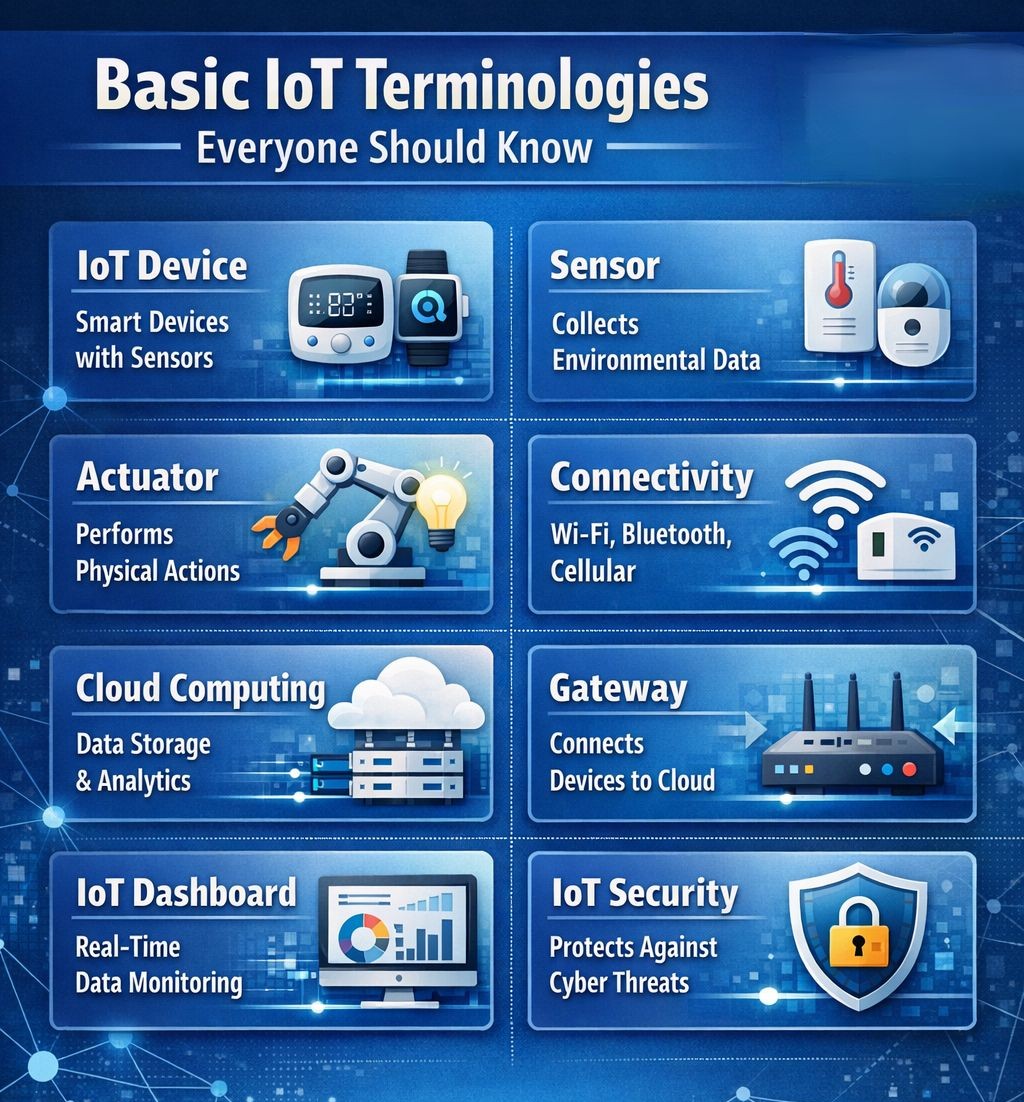
The Internet of Things (IoT) has rapidly transitioned from a futuristic concept to an everyday reality, weaving itself into the fabric of our homes, workplaces, and cities. From smart thermostats that learn your preferences to industrial sensors optimizing manufacturing processes, IoT solutions are reshaping how we interact with our environment and manage resources. As this interconnected world expands, understanding its foundational language becomes increasingly critical. Whether you’re an aspiring engineer, a business leader looking to leverage IoT, or simply a curious individual navigating the digital age, a solid grasp of key IoT terminologies is your first step towards unlocking its immense potential.
This comprehensive guide will demystify the essential vocabulary of the IoT, providing a clear and accessible explanation of the core components, processes, and concepts that make up this transformative technology. By the end of this exploration, you will be equipped with the knowledge to confidently discuss, design, and even troubleshoot basic IoT systems.
The Foundation: Understanding the Building Blocks of IoT
At its heart, IoT is about connecting physical objects to the internet, allowing them to gather and exchange data. This fundamental principle is supported by several critical components that work in concert.
IoT Device: The Physical Interface to the Digital World
An IoT device is the tangible entry point for data collection and interaction within an IoT ecosystem. Imagine any everyday object imbued with a digital intelligence – that’s an IoT device. These devices are physical objects equipped with embedded sensors, software, and connectivity capabilities, enabling them to collect and exchange data over the internet. They bridge the gap between the physical and digital realms, acting as the eyes and ears of the IoT network.
What Makes a Device an IoT Device?
Not every electronic gadget is an IoT device. The distinguishing characteristics include:
- Embedded Sensors: These devices are integrated with one or more sensors that allow them to perceive their environment.
- Processing Power: Often, they contain microcontrollers or microprocessors that enable local data processing and decision-making, reducing reliance on constant cloud communication.
- Communication Modules: They are equipped with modules for various connectivity options, allowing them to transmit and receive data.
- Software and Firmware: Operating systems and application-specific software control their functions and interactions.
Examples of IoT Devices in Action
The range of IoT devices is vast and continually expanding:
- Smart Thermostats: Devices like Nest or Ecobee are prime examples. They use temperature and occupancy sensors to learn user preferences and automatically adjust heating and cooling, saving energy and enhancing comfort.
- Wearable Fitness Trackers: Fitbit, Apple Watch, and similar devices monitor activity levels, heart rate, sleep patterns, and other vital signs, providing users with insights into their health and fitness.
- Connected Appliances: Refrigerators that track inventory, washing machines that can be remotely started, and smart ovens all fall under this category, bringing convenience and efficiency to the home.
- Industrial Sensors: In manufacturing, these devices monitor machinery performance, detect anomalies, and predict maintenance needs, thus preventing costly downtime.
- Smart Streetlights: These lights can adjust their brightness based on ambient light and traffic flow, contributing to energy savings and improved public safety.
The versatility of IoT devices means they are constantly evolving and finding new applications across diverse sectors.
Sensor: The Perceptors of the Physical World
If IoT devices are the eyes and ears, then sensors are the actual perceptors. A sensor is a fundamental component that detects changes in its environment and collects specific data. These minuscule marvels convert physical phenomena into electrical signals that can be read and processed by an IoT device. Without sensors, IoT devices would be blind and deaf to the world around them, unable to gather the crucial data that drives intelligent decision-making.
How Sensors Work
At a high level, a sensor works by:
- Detection: Identifying a specific physical property or change (e.g., temperature, pressure, light intensity).
- Transduction: Converting this physical stimulus into an electrical signal (e.g., voltage, current).
- Output: Sending this electrical signal to an IoT device for further processing.
Types of Sensors and Their Applications
The variety of sensors available is immense, each designed for a specific purpose:
- Temperature Sensors: Measure heat or cold. Crucial in smart homes (thermostats), industrial process control, and cold chain logistics (monitoring food and vaccine storage).
- Humidity Sensors: Detect moisture levels in the air. Used in agriculture for crop monitoring, HVAC systems, and environmental control in museums or data centers.
- Motion Sensors: Detect movement. Commonly found in security systems, smart lighting, and automated doors.
- Light Sensors (Photodetectors): Measure light intensity. Essential for smart lighting systems that adjust brightness based on ambient light, and in solar panels for efficiency monitoring.
- Pressure Sensors: Measure force applied over an area. Used in industrial machinery, automotive systems (tire pressure monitoring), and medical devices.
- Gas Sensors: Detect the presence and concentration of various gases. Vital for air quality monitoring, industrial safety, and smart home carbon monoxide detectors.
- Proximity Sensors: Detect the presence of nearby objects without physical contact. Used in parking assistance systems, assembly lines, and smartphones.
- Accelerometers and Gyroscopes: Measure acceleration and angular velocity, respectively. Found in wearable devices for activity tracking, in smartphones for orientation detection, and in drones for stabilization.
The data collected by these sensors forms the raw material for all subsequent IoT processes, from simple alerts to complex analytical insights.
Actuator: Bridging the Digital and Physical Actions
While sensors gather information, actuators are the components that transform digital commands back into physical actions. An actuator is a device that converts electrical signals received from an IoT system into a physical action, such as turning on a motor, opening a valve, switching a light, or adjusting a robotic arm. They are the “movers and shakers” of the IoT world, enabling automated responses and control over the environment.
The Role of Actuators in IoT Systems
Actuators complete the feedback loop in an IoT system. A sensor detects a change, the IoT device or cloud processes this information and determines a response, and then an actuator executes that response.
Consider a smart home scenario: a temperature sensor detects the room is too cold. The smart thermostat (IoT device) processes this data and sends a command to the furnace. An actuator in the furnace opens a gas valve, initiating the heating process.
Common Actuators and Their Applications
Like sensors, actuators come in many forms, each tailored for specific physical tasks:
- Electric Motors: Convert electrical energy into mechanical movement. Used in robotic arms, automated windows, industrial machinery, and drones.
- Solenoids: Electrically controlled switches that generate a magnetic field to produce linear or rotary motion. Commonly used in door locks, automatic valves, and fuel injectors.
- Relays: Electrically operated switches that control a high-power circuit with a low-power signal. Essential for turning lights on/off, controlling appliances, and industrial automation.
- Pumps: Move fluids. Used in irrigation systems, chemical processing, and smart home water management.
- Valves: Regulate the flow of liquids or gases. Found in smart irrigation, industrial pipelines, and HVAC systems.
- Heating Elements: Convert electrical energy into heat. Used in smart ovens, water heaters, and industrial heating processes.
- Lights (LEDs): Can be controlled to turn on/off or change brightness and color. Central to smart lighting systems.
The combination of sensors and actuators allows IoT systems to perceive, analyze, and then intelligently react to their surroundings, leading to automation, efficiency, and enhanced control.
The Interconnection: Making IoT Possible
Data is the lifeblood of IoT, and for data to flow, robust and reliable connections are indispensable. Connectivity forms the crucial nervous system of any IoT ecosystem.
Connectivity: The Lifeline of IoT Data Exchange
Connectivity refers to the communication link that allows IoT devices to send and receive data. It encompasses the various technologies and protocols that facilitate the seamless exchange of information between devices, gateways, and the cloud. Without effective connectivity, even the most advanced IoT device or sophisticated sensor would be an isolated island, unable to contribute to the larger system.
Key Characteristics of IoT Connectivity
The choice of connectivity technology for an IoT application depends on several factors:
- Range: How far can the signal travel? (e.g., short-range for smart home, long-range for smart city applications).
- Bandwidth: How much data can be transmitted per unit of time? (e.g., low for simple sensor readings, high for video streaming).
- Power Consumption: How much energy does the communication module consume? (critical for battery-powered devices).
- Cost: The financial implications of implementing and maintaining the network.
- Security: The robustness of encryption and authentication mechanisms.
Diverse Connectivity Technologies
A spectrum of technologies caters to different IoT needs:
- Wi-Fi (Wireless Fidelity):
- Description: A widely adopted wireless technology for local area networking.
- Pros: High bandwidth, widespread infrastructure, common household technology.
- Cons: High power consumption, limited range, potential for network congestion.
- Applications: Smart homes (streaming, high-data devices), office automation.
- Bluetooth (including Bluetooth Low Energy – BLE):
- Description: Short-range wireless technology for connecting devices over a personal area network. BLE is optimized for very low power consumption.
- Pros: Very low power consumption (BLE), low cost, suitable for personal devices.
- Cons: Very short range, limited bandwidth compared to Wi-Fi.
- Applications: Wearable fitness trackers, smart health devices, smart locks, proximity-based marketing.
- Cellular (2G, 3G, 4G, 5G, 6G):
- Description: Wide-area wireless communication using cellular networks.
- Pros: Wide coverage (especially 4G/5G), high bandwidth (4G/5G), reliable for long-distance communication.
- Cons: Higher cost per data unit, higher power consumption than LPWAN, infrastructure dependency.
- Applications: Connected cars, smart city infrastructure, asset tracking, remote monitoring in industrial settings.
- LPWAN (Low-Power Wide-Area Networks):
- Description: A category of wireless communication technologies designed for long-range communication with minimal power consumption, ideal for small data packets. Examples include LoRaWAN, Sigfox, and NB-IoT (Narrowband IoT).
- Pros: Extremely low power consumption (multi-year battery life for devices), long range, low cost.
- Cons: Very low bandwidth, not suitable for real-time applications requiring high data rates.
- Applications: Smart agriculture (soil sensors), utility metering, smart environmental monitoring, asset tracking that doesn’t require constant updates.
- Ethernet:
- Description: Wired local area network technology.
- Pros: High bandwidth, highly reliable, excellent security, very low latency.
- Cons: Requires physical cabling, not suitable for mobile devices, higher installation cost.
- Applications: Industrial IoT (IIoT) for critical data, data centers, building automation where fixed installations are feasible.
- NFC (Near Field Communication):
- Description: Very short-range wireless technology for communication between devices when they are very close together (a few centimeters).
- Pros: Extremely simple pairing, very low power, high security for close-range transactions.
- Cons: Very short range, extremely low bandwidth.
- Applications: Contactless payments, access control, smart posters, easy device pairing.
The appropriate connectivity solution is paramount for the success and efficiency of any IoT deployment.
The Brain and the Hub: Processing and Managing IoT Data
Once data is gathered and transmitted, it needs a place to go for storage, analysis, and effective management. This is where cloud computing and gateways play pivotal roles.
Cloud Computing: The Command Center for IoT Data
Cloud computing serves as the indispensable infrastructure where vast amounts of IoT data are stored, processed, and analyzed. It’s the “brain” of the IoT ecosystem, providing the scalable resources needed to transform raw sensor data into actionable insights and automate complex decisions. Without the cloud, managing the sheer volume and velocity of data generated by millions, even billions, of IoT devices would be impossible for most organizations.
Why Cloud Computing is Essential for IoT
- Scalability: IoT deployments can grow rapidly. Cloud platforms offer elastic resources that can scale up or down based on demand, accommodating fluctuating data loads without requiring massive upfront investment in hardware.
- Storage: The sheer volume of data generated by IoT devices can be staggering. Cloud storage solutions provide cost-effective and highly available options for storing petabytes of data.
- Processing Power: Analyzing big data from IoT requires significant computational power. Cloud services offer powerful processors and parallel computing capabilities for real-time analytics, machine learning, and artificial intelligence.
- Accessibility: Data and insights can be accessed from anywhere, on any device, facilitating remote monitoring and management.
- Cost-Effectiveness: Cloud computing often operates on a pay-as-you-go model, reducing capital expenditure and allowing businesses to only pay for the resources they consume.
- Disaster Recovery and Redundancy: Cloud providers typically offer robust disaster recovery capabilities and data redundancy, ensuring business continuity.
Key Cloud Services for IoT
Modern cloud platforms (like AWS IoT, Azure IoT, Google Cloud IoT) offer a suite of services specifically designed for IoT:
- Device Management: Tools for registering, provisioning, monitoring, and updating millions of devices.
- Data Ingestion: Services optimized for securely collecting data from a massive number of devices at high velocity.
- Data Storage: Databases (both relational and NoSQL) and object storage solutions tailored for time-series data and large unstructured datasets.
- Analytics and Machine Learning: Powerful tools for real-time data processing, predictive analytics, anomaly detection, and training AI models using IoT data.
- Function as a Service (FaaS) / Serverless Computing: For running code in response to IoT events without managing servers, enabling efficient event-driven architectures.
- Security Services: Features for identity and access management, encryption, and threat detection specific to IoT environments.
Cloud computing transforms raw data into intelligence, enabling predictive maintenance, optimized operations, personalized user experiences, and entirely new business models.
Gateway: The Bridge Between Local Devices and the Cloud
A gateway acts as an intermediate device that connects IoT devices to the cloud or network. It serves as a critical bridge, often handling data filtering, protocol translation, and enhancing security at the edge of the network. In essence, it’s a ‘mini-server’ or a smart router that manages communication between potentially diverse local IoT devices and the broader internet or cloud infrastructure.
The Essential Functions of an IoT Gateway
Gateways are more than just simple relays; they perform several vital functions:
- Protocol Translation: IoT devices often use various communication protocols (e.g., Zigbee, Z-Wave, Modbus, BLE) that are not directly compatible with internet protocols (TCP/IP). The gateway translates these protocols, standardizing the data format before sending it to the cloud.
- Data Pre-processing and Filtering: Instead of sending all raw data to the cloud, gateways can perform local data analysis, aggregation, and filtering. This reduces the volume of data transmitted to the cloud, saving bandwidth and cloud processing costs. For instance, a gateway might only send data when a sensor reading exceeds a certain threshold.
- Security: Gateways can act as a first line of defense, implementing encryption, authentication, and authorization protocols for local devices. They can isolate the local IoT network from the public internet, enhancing overall security.
- Edge Computing: With increasing processing power, many gateways now offer edge computing capabilities. This means they can run applications and perform complex analytics closer to the data source, enabling real-time decision-making without the latency of sending data to the cloud and back. This is crucial for applications requiring immediate responses, such as industrial control or autonomous vehicles.
- Connectivity Management: Gateways manage the various connectivity options for local devices, such as Wi-Fi, Bluetooth, or cellular, ensuring reliable communication.
- Offline Operation: In some cases, gateways can store data locally if cloud connectivity is temporarily lost, uploading it once the connection is restored, ensuring data integrity.
Examples of Gateways
- Smart Home Hubs: Devices like Amazon Echo (with Zigbee hub), SmartThings, or Google Nest Hub often function as gateways, connecting various smart home devices to the internet and allowing them to communicate with each other.
- Industrial Routers: Ruggedized gateways designed for harsh industrial environments, connecting sensors and machinery to control systems and the cloud.
- Vehicle Gateways: In connected cars, these manage communication between vehicle sensors (engine data, GPS, etc.) and external networks or cloud services.
The strategic placement and capabilities of an IoT gateway can significantly impact the efficiency, security, and responsiveness of an entire IoT solution.
Visualization, Control, and Security: Managing the IoT Ecosystem
With devices, connectivity, and data processing in place, the next crucial steps involve making sense of the data, controlling the devices, and safeguarding the entire infrastructure.
IoT Dashboard: Your Window into the IoT World
An IoT dashboard is a visual interface that allows users to monitor device data, control devices, and analyze system performance in real-time. It serves as the command center for end-users and administrators, presenting complex data in an intuitive and understandable format. Dashboards translate raw numbers and states into insightful graphs, charts, and actionable controls.
Key Features and Benefits of IoT Dashboards
- Real-time Monitoring: Displays live data feeds from connected devices, giving immediate insights into current conditions, operational status, and potential issues.
- Data Visualization: Transforms raw data into easy-to-understand visual representations (e.g., line graphs for temperature trends, pie charts for power consumption, gauges for sensor readings).
- Device Control: Provides an interface to send commands to actuators and control devices remotely (e.g., turn lights on/off, adjust thermostat settings, open/close valves).
- Alerts and Notifications: Configurable alerts based on predefined thresholds or anomalies, notifying users via email, SMS, or in-app messages when critical events occur.
- Historical Data Analysis: Allows users to review past performance, identify trends, detect anomalies over time, and troubleshoot issues.
- Customization: Many dashboards offer customization options, allowing users to select which data points to display, arrange widgets, and tailor the interface to their specific needs.
- Reporting: Generates reports on system performance, energy consumption, efficiency metrics, and other key performance indicators (KPIs).
Examples of IoT Dashboard Use Cases
- Smart Home: A homeowner uses a dashboard on their smartphone or computer to monitor security cameras, adjust lighting, check indoor temperature, and manage connected appliances.
- Industrial IoT (IIoT): Plant managers use dashboards to oversee production line efficiency, monitor machine health, track energy usage, and receive alerts for equipment malfunctions.
- Smart Agriculture: Farmers access dashboards to monitor soil moisture levels, weather data, irrigation system status, and livestock health, enabling data-driven decisions.
- Fleet Management: Logistics companies use dashboards to track vehicle locations, monitor fuel consumption, drivers’ behavior, and maintenance schedules.
An effective IoT dashboard is crucial for extracting value from the collected data, empowering users to make informed decisions and maintain control over their interconnected environments.
IoT Security: Safeguarding the Connected Frontier
IoT security refers to the practices, technologies, and protocols used to protect IoT devices, networks, and data from cyber threats, unauthorized access, and vulnerabilities. Given the pervasive nature of IoT and the sensitive data it often handles, robust security is not just an add-on but a fundamental necessity. A breach in an IoT system can have severe consequences, ranging from data leaks and privacy violations to physical damage and disruption of critical infrastructure.
The Multifaceted Challenges of IoT Security
Securing IoT is particularly complex due to several factors:
- Diverse Devices: A vast array of devices with varying processing powers, operating systems, and connectivity options, making a “one-size-fits-all” security approach difficult.
- Limited Resources: Many IoT devices are low-power and resource-constrained, making it challenging to implement complex encryption or security protocols.
- Vulnerability at Scale: A single vulnerability in a device model can potentially affect millions of deployed units.
- Long Lifecycles: Many IoT devices have long operational lifecycles, requiring continuous security patching and updates over many years.
- Physical Vulnerabilities: Devices in the field can be physically tampered with.
- Edge to Cloud Complexity: Security needs to be enforced at multiple layers: device, gateway, network, and cloud.
Pillars of Robust IoT Security
Effective IoT security relies on a multi-layered approach:
- Device Security:
- Secure Boot: Ensures only authenticated and authorized software runs on the device.
- Hardware Security Modules (HSM): Dedicated hardware to securely store cryptographic keys and perform encryption operations.
- Firmware Updates: Mechanism for securely delivering over-the-air (OTA) updates to patch vulnerabilities.
- Default Password Management: Preventing the use of easily guessable default passwords.
- Authentication and Authorization:
- Strong Authentication: Verifying the identity of devices, users, and applications connecting to the IoT ecosystem using certificates, multi-factor authentication, or unique device IDs.
- Role-Based Access Control (RBAC): Limiting access to resources and data based on user roles and permissions.
- Data Security:
- Encryption In Transit: Securing data as it moves between devices, gateways, and the cloud using protocols like TLS/SSL.
- Encryption At Rest: Protecting data stored in databases and cloud storage with encryption.
- Data Minimization: Collecting and retaining only necessary data to reduce the impact of a breach.
- Network Security:
- Network Segmentation: Isolating IoT devices onto separate network segments to limit the spread of an attack.
- Firewalls and Intrusion Detection Systems (IDS): Monitoring network traffic for suspicious activity.
- Secure Gateways: Using gateways with built-in security features for protocol translation and threat detection.
- Cloud Security:
- Leveraging the robust security features offered by cloud providers for data storage, processing, and application hosting.
- Implementing proper identity and access management within cloud environments.
- Threat Detection and Monitoring:
- Continuous monitoring of device behavior, network traffic, and logs to identify and respond to security incidents in real-time.
- Utilizing security information and event management (SIEM) systems.
IoT security is an ongoing commitment, requiring constant vigilance, regular audits, and adaptation to evolving threat landscapes.
Expanding the Lexicon: More Essential IoT Terminologies
As IoT continues to mature, its vocabulary expands. Here are some additional terminologies crucial for a deeper understanding.
Edge Computing: Processing Smarter, Closer to the Source
Edge computing is a distributed computing paradigm that brings computation and data storage closer to the data sources (the “edge” of the network), rather than relying solely on a centralized cloud. In the context of IoT, this means processing data on devices themselves or on local gateways, rather than sending all raw data to the cloud for analysis.
Why Edge Computing Matters for IoT
- Reduced Latency: For applications requiring immediate responses (e.g., autonomous vehicles, industrial control systems), processing data at the edge significantly reduces the time it takes to get actionable insights and trigger responses, as data doesn’t need to travel to the cloud and back.
- Bandwidth Optimization: By processing and filtering data locally, only relevant or aggregated data is sent to the cloud, reducing bandwidth consumption and associated costs, especially for large-scale deployments or areas with limited connectivity.
- Enhanced Security: Processing sensitive data locally reduces the exposure of that data to the broader internet, enhancing privacy and security, particularly in regulated industries.
- Offline Capability: Edge devices can continue to operate and make decisions even if cloud connectivity is temporarily lost, crucial for remote or critical infrastructure.
- Scalability: Distributing processing tasks to the edge can alleviate the load on central cloud infrastructure, improving overall system scalability.
Edge Computing vs. Cloud Computing
It’s not an either/or situation; edge and cloud computing are complementary.
- Edge: Ideal for real-time processing, immediate actions, local data filtering, and scenarios with limited connectivity.
- Cloud: Suited for long-term data storage, large-scale historical analysis, complex machine learning model training, and global data aggregation.
A common hybrid approach is to process critical real-time data at the edge and send aggregated insights or less time-sensitive data to the cloud for deeper analysis and long-term storage.
Fog Computing: A Layer Between Edge and Cloud
Fog computing is often described as an extension of cloud computing to the edge of the network, but it’s more distributed than traditional edge computing. It provides a distributed computing infrastructure with data centers existing at varying points between the data source and the cloud. While edge computing focuses on computation directly on the device or gateway, fog computing involves a collaborative continuum of compute, storage, and networking services from the cloud to the edge, often involving multiple intermediate nodes.
Key Characteristics of Fog Computing
- Hierarchy: It creates a hierarchical architecture where processing can occur at various layers, from the device level (edge) up through local fog nodes to the centralized cloud.
- Geographic Distribution: Fog nodes are geographically distributed, allowing for localized data processing and analysis.
- Real-time Interaction: Facilitates more real-time interactions with data, reducing latency compared to solely cloud-based approaches.
- Heterogeneity: Supports diverse hardware and software platforms.
While the terms “edge” and “fog” are sometimes used interchangeably, fog computing generally implies a more extensive and layered network of intermediate nodes than a single edge device or gateway.
Machine-to-Machine (M2M) Communication: The Precursor to IoT
Machine-to-Machine (M2M) communication refers to the direct communication between two or more devices or machines without human intervention. While often used interchangeably with IoT, M2M is actually a foundational concept that predates and forms a subset of IoT. M2M typically involves point-to-point communication using wired or cellular networks, focusing on asset monitoring and control.
Distinguishing M2M from IoT
- Scope: M2M is generally more focused on specific, closed-loop communications between machines for a defined task. IoT is broader, encompassing a vast network of diverse devices, platforms, and services, all connected to the internet.
- Scalability: M2M solutions are often designed for smaller scale, localized deployments. IoT is designed for massive scale, connecting billions of devices globally.
- Connectivity: M2M often relies on cellular or wired connections. IoT leverages a wider array of connectivity options, including Wi-Fi, Bluetooth, LPWAN, and more.
- Data Analysis: While M2M collects data, the analysis is often more localized and basic. IoT heavily relies on cloud computing, big data analytics, and AI for deep insights and complex decision-making.
M2M represented the early stages of interconnected devices, particularly in industrial settings, which paved the way for the more expansive and internet-centric vision of IoT.
Digital Twin: A Virtual Replica for Real-World Insights
A digital twin is a virtual representation or model of a physical object, system, or process. It’s a dynamic, continuously updated replica that mirrors the physical counterpart in real-time. Created using sensor data from the physical asset, along with historical data and artificial intelligence, the digital twin can be used for simulations, performance analysis, predictive maintenance, and optimizing operations without impacting the real-world object.
How Digital Twins Work with IoT
- Data Collection: IoT sensors on the physical asset continuously collect data (temperature, pressure, vibration, etc.).
- Data Transmission: This data is sent to a platform that processes and feeds it into the digital twin.
- Model Creation: The digital twin is built using this real-time data, combined with existing design data, engineering models, and historical performance logs.
- Simulation and Analysis: Experts can then run simulations, perform “what-if” scenarios, and analyze the twin’s performance to predict potential issues or optimize operations.
- Feedback Loop: Insights gained from the digital twin can be used to make informed decisions and even send commands back to the physical asset, creating a continuous feedback loop for improvement.
Applications of Digital Twins
- Manufacturing: Optimizing production lines, predicting equipment failures, and designing new products.
- Aerospace: Monitoring aircraft health, predicting maintenance needs, and optimizing flight performance.
- Healthcare: Creating digital twins of organs or even entire human bodies for personalized medicine and surgical planning.
- Smart Cities: Simulating traffic flows, optimizing energy consumption in buildings, and planning urban development.
Digital twins provide an invaluable tool for understanding complex systems, reducing risks, and enhancing operational efficiency across various industries.
Middleware: The Glue That Binds IoT Together
In the context of IoT, middleware refers to the software layer that sits between the IoT devices (and their operating systems) and the applications that use the data. It acts as a bridge, facilitating communication, data management, and interoperability between disparate components of an IoT ecosystem. Without middleware, integrating different devices, platforms, and applications would be a daunting, if not impossible, task due to varying protocols, data formats, and communication standards.
Functions of IoT Middleware
- Device Management: Connecting, authenticating, and managing a diverse range of IoT devices.
- Data Ingestion and Processing: Collecting data from various sources, filtering, transforming, and routing it to the appropriate applications or storage.
- Protocol Translation: Handling the conversion between different communication protocols used by devices and applications.
- API Management: Providing standardized Application Programming Interfaces (APIs) to allow different applications to interact with IoT data and devices.
- Security: Implementing authentication, authorization, and encryption at the platform level.
- Scalability: Ensuring the system can handle a growing number of devices and increasing data volumes.
Examples of IoT Middleware
- Message Queues: Technologies like MQTT (Message Queuing Telemetry Transport) or Kafka enable asynchronous, reliable messaging between devices and applications.
- Platform-as-a-Service (PaaS) Offerings: Cloud IoT platforms often include middleware capabilities to manage device connections, data streams, and application integration.
- On-Premise IoT Platforms: Software suites deployed within an enterprise’s own data center to manage local IoT deployments.
Middleware is the unseen but vital layer that makes complex IoT systems operate cohesively and efficiently, reducing development complexity and enabling greater interoperability.
The Future Landscape: Staying Ahead in IoT
The world of IoT is dynamic and ever-evolving. New terminologies emerge as technology advances, but the core concepts discussed above remain fundamental. Continuous learning and adaptation are key to navigating this exciting frontier.
AIoT: The Convergence of AI and IoT
AIoT, or Artificial Intelligence of Things, represents the powerful integration of Artificial Intelligence (AI) capabilities with IoT infrastructure. It goes beyond simply collecting data; AIoT combines IoT’s ability to sense and collect vast amounts of data with AI’s power to analyze, learn, and make intelligent decisions from that data, often at the edge.
The Impact of AIoT
- Smarter Devices: IoT devices become more intelligent and autonomous, capable of local decision-making without constant cloud reliance.
- Predictive Analytics: AI algorithms analyze real-time and historical IoT data to predict future events, such as equipment failures, demand fluctuations, or security threats.
- Automated Insights: Instead of just presenting data, AIoT systems can automatically identify patterns, anomalies, and provide actionable recommendations.
- Enhanced Efficiency: Optimization of processes, resource allocation, and energy consumption through AI-driven insights and control.
- Personalization: Delivering highly personalized experiences in smart homes, healthcare, and retail by understanding individual preferences and behaviors.
Examples include smart cameras that not only detect motion but also identify known individuals, industrial machines that perform self-diagnosis and predict maintenance, and personalized healthcare devices that alert users to potential health risks based on AI analysis of their vital signs.
Semantic Interoperability: Understanding Rather Than Just Communicating
While traditional interoperability focuses on devices being able to exchange data (syntactic interoperability), semantic interoperability takes it a step further. It means that different systems and devices not only exchange data but also understand the meaning of that data. In a diverse IoT ecosystem with myriad data formats and ontologies, achieving semantic interoperability is crucial for truly intelligent and autonomous systems.
Why Semantic Interoperability is Challenging and Important
- Context: Understanding the context of data (e.g., is “temperature” in degrees Celsius or Fahrenheit? Is this a “door open” event or a “door locked” event?).
- Standardization: Lack of universal data models and ontologies across different vendors and domains.
- Meaningful Integration: Without semantic interoperability, data from different sources might be technically exchanged, but it can’t be automatically combined or acted upon intelligently by another system without human intervention.
Achieving semantic interoperability involves developing common data models, ontologies, and metadata frameworks that allow systems to interpret and use data meaningfully, enabling more sophisticated AI and automation in IoT.
Blockchain for IoT: Enhancing Trust and Transparency
Blockchain technology, known for its decentralized and immutable ledger, is finding compelling applications in IoT, primarily to enhance security, trust, and transparency.
How Blockchain Addresses IoT Challenges
- Security and Immutability: Each data transaction or interaction between IoT devices can be recorded on a blockchain, creating an unalterable and verifiable ledger, resistant to tampering. This is crucial for data integrity, especially in critical applications.
- Trust and Transparency: In multi-party IoT ecosystems (e.g., supply chain logistics involving many organizations), blockchain can establish a trusted environment without relying on a central authority, offering transparency on device states, data origins, and transactions.
- Decentralized Device Management: Blockchain could facilitate decentralized peer-to-peer communication between IoT devices, reducing the reliance on central servers and minimizing single points of failure.
- Secure Data Sharing: Allowing controlled and traceable sharing of IoT data with various stakeholders while maintaining data privacy.
- Microtransactions: Enabling automatic micro-payments between IoT devices (e.g., a smart meter paying for electricity, a connected car paying for parking).
While still in its early stages of adoption for IoT, blockchain holds significant promise for solving some of the inherent trust and security challenges in large, distributed IoT networks.
Conclusion: Mastering the Language of the Connected World
The Internet of Things is not merely a collection of smart gadgets; it’s a profound paradigm shift that is redefining industries, enhancing daily life, and creating unprecedented opportunities for innovation. From the humble sensor meticulously gathering environmental data to the sophisticated cloud platforms processing petabytes of information, each component plays a vital role in creating the intelligent, interconnected future we are building.
By taking the time to understand these basic IoT terminologies – from the physical IoT Device and its perceptive Sensor to the Actuator that brings digital commands to life, through the web of Connectivity and the intelligent processing of Cloud Computing and Gateway functions, to the user-friendly IoT Dashboard and the paramount importance of IoT Security – you are equipping yourself with the foundational knowledge to navigate this transformative landscape. Expanding your understanding to include concepts like Edge Computing, Digital Twins, AIoT, and the role of Blockchain further solidifies your expertise, preparing you for the accelerating pace of innovation.
Whether your journey involves designing the next generation of smart devices, developing secure and scalable IoT solutions, or simply making more informed decisions about the technology that surrounds you, mastering this lexicon is an essential first step. The world of IoT is ripe with possibilities, and a clear understanding of its language is your key to unlocking them.
Ready to dive deeper into the world of IoT, build innovative solutions, or secure your existing deployments?
Connect with IoT Worlds experts today! Send your inquiries to info@iotworlds.com and let us help you transform your vision into reality.
