

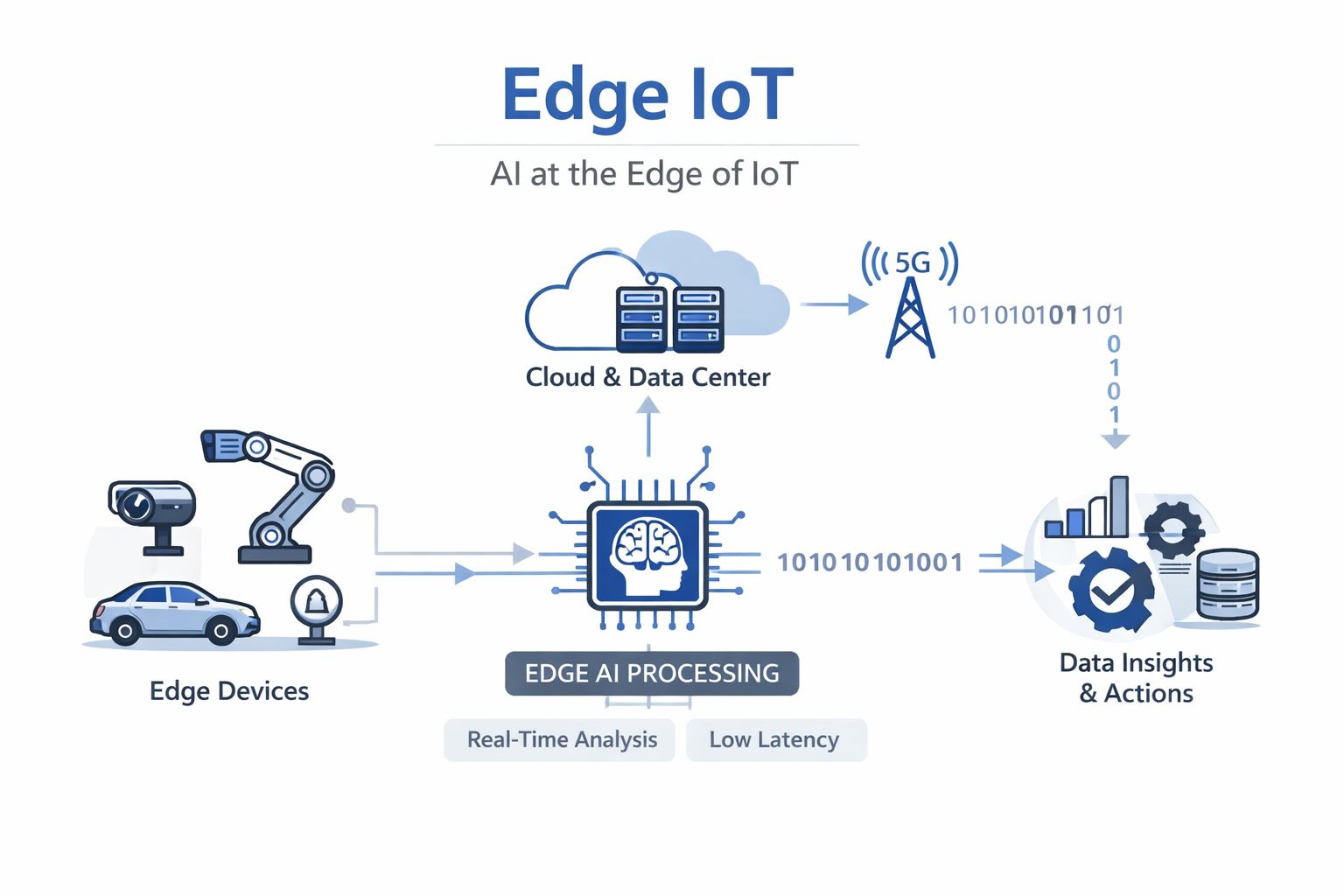
The Internet of Things (IoT) has rapidly transformed from a futuristic concept into an indispensable element of our daily lives and global infrastructure. From smart homes to intelligent factories, countless devices are continuously generating an unprecedented volume of data. Historically, the architectural backbone of IoT systems has been heavily reliant on centralized cloud computing. This model, while offering scalability and robust processing capabilities, faces increasing challenges as the sheer volume and velocity of IoT data continue to swell. The promise of ubiquitous connectivity and instant insights often clashes with the inherent limitations of transmitting vast quantities of data over long distances to a central processing unit, leading to bottlenecks, latency issues, and increased operational costs.
This reliance on a distant cloud infrastructure for data processing and decision-making has begun to expose its vulnerabilities, particularly in scenarios where ultra-low latency and real-time responsiveness are paramount. Consider autonomous vehicles, critical infrastructure management, or real-time industrial automation – systems where a delay of even milliseconds can have significant consequences. The traditional cloud-centric approach, with its inherent round-trip communication delays, is simply no longer sufficient to meet these evolving demands. This pivotal realization has paved the way for a paradigm shift in how we conceive, design, and deploy IoT solutions: the rise of decentralized intelligence, embodied by Edge IoT systems.
Edge IoT represents a fundamental re-imagining of the IoT architecture. Instead of sending all raw data to a central cloud for processing, computation is strategically shifted closer to the data source – to the “edge” of the network. This innovative approach brings intelligence directly to the devices themselves or to localized computing infrastructure, enabling faster processing, enhanced reliability, and significantly optimized bandwidth utilization. It’s a move from a hierarchical, top-down data flow to a more distributed, collaborative model, where intelligent decisions can be made instantaneously, right where the data is born. This article delves deep into the transformative power of decentralized intelligence in Edge IoT systems, exploring its core principles, technological underpinnings, myriad benefits, and its profound impact across various industries.
The Genesis of Edge IoT: Challenging the Cloud-Centric Dogma
For years, the cloud has been the undisputed king of data processing and storage for IoT. Its ability to scale on demand, provide powerful analytics engines, and offer centralized management was undeniably attractive. However, with the exponential growth of connected devices and the increasing demand for real-time applications, the limitations of this model began to surface.
The Bottlenecks of Centralized Cloud Architectures
The primary challenge with a purely cloud-centric IoT architecture lies in the inherent latency introduced by transmitting data to and from a distant data center. Every piece of information, from a simple sensor reading to complex video feeds, needs to traverse the internet, adding precious milliseconds, or even seconds, to the processing cycle. While acceptable for some applications, this delay becomes a critical impediment for time-sensitive operations.
Beyond latency, the sheer volume of data generated by billions of IoT devices poses a significant bandwidth challenge. Continuously streaming raw data to the cloud can overwhelm network infrastructure, leading to congestion, increased operational costs for data transfer, and even service interruptions. Furthermore, storing and processing petabytes of raw, undifferentiated data in the cloud can be inefficient and expensive, as much of this data might be redundant or irrelevant after initial analysis.
Security and privacy concerns also escalate in a purely cloud-based model. Transmitting all sensitive data over public or even private networks increases the attack surface and the risk of data breaches. Keeping data localized at the edge inherently reduces this exposure, as critical information remains closer to its point of origin.
The Imperative for Real-Time Decision-Making
Modern IoT applications are increasingly demanding instantaneous responses. Imagine an autonomous vehicle needing to make split-second decisions based on sensor input, a smart factory requiring immediate adjustments to machinery to prevent costly downtime, or an intelligent grid needing to balance energy loads in real-time to avoid blackouts. In these scenarios, the delay inherent in cloud-based processing is simply unacceptable. The need for real-time decision-making, coupled with the escalating challenges of latency, bandwidth, and security, has been the primary catalyst for the widespread adoption and rapid evolution of Edge IoT. It’s a necessary step towards building truly responsive, resilient, and intelligent connected systems.
Core Principles of Edge IoT: Bringing Intelligence Closer to the Source
Edge IoT isn’t merely about shifting computational resources; it represents a fundamental paradigm shift centered around distributing intelligence throughout the network. This distributed approach optimizes various aspects of IoT operations, making systems more efficient, resilient, and responsive.
Localized Data Collection and Processing
At its heart, Edge IoT involves edge devices collecting raw sensor data locally. This is the first and most crucial step in decentralizing intelligence. Instead of immediately forwarding this raw, often voluminous data to a remote cloud, the edge devices themselves, or nearby edge gateways, initiate the processing.
This localized processing means that preliminary analysis, filtering, and aggregation of data occur right at the source. For example, a smart camera at a manufacturing plant might analyze video streams locally to detect anomalies or identify objects, rather than transmitting continuous raw video to the cloud. This significantly reduces the amount of data that needs to be transmitted, addressing the bandwidth challenge head-on.
On-Device AI Models for Real-Time Analytics
A cornerstone of decentralized intelligence is the deployment of sophisticated AI models directly on edge devices. These on-device AI models perform real-time analytics, enabling intelligent decision-making without constant reliance on cloud connectivity. This leap in capability transforms passive data collection points into active, intelligent agents.
These AI models can range from simple rule-based inference engines to complex machine learning algorithms, trained in the cloud but deployed and executed at the edge. This allows devices to identify patterns, detect anomalies, predict failures, and even trigger autonomous actions instantaneously. For instance, a predictive maintenance system on an industrial machine can analyze vibration data in real-time using an on-device AI model to forecast potential equipment failures, alerting maintenance teams before a breakdown occurs. This proactive approach significantly enhances efficiency and reduces downtime.
Selective Data Transmission and Summarization
One of the most significant advantages of Edge IoT is the ability to only transmit critical or summarized data to the cloud. After local processing and analysis, edge devices can determine what information is truly valuable for long-term storage, high-level analytics, or broader system-wide coordination.
This selective data transmission drastically reduces the network traffic. Instead of sending gigabytes of raw sensor data, the edge device might only send a few kilobytes of summarized insights, anomaly alerts, or aggregate statistics. This not only saves bandwidth but also reduces the computational load on the cloud, allowing it to focus on higher-level tasks such as long-term trend analysis, model retraining, and strategic decision-making across the entire IoT ecosystem. The cloud effectively becomes a repository for distilled intelligence rather than a raw data dump.
Drastically Reduced Latency
The most immediate and impactful benefit of bringing computation closer to the data source is the significant reduction in latency. By eliminating the round-trip communication delay to a distant cloud server, edge IoT enables time-sensitive automation and instantaneous responses.
In applications like autonomous driving, robotics, or critical infrastructure control, where split-second decisions are vital, reduced latency is not just an advantage; it’s a fundamental requirement. Edge processing ensures that data is analyzed and acted upon almost immediately, bridging the gap between perception and action. This immediate feedback loop is crucial for creating truly responsive and autonomous systems, elevating the capabilities of IoT far beyond simple monitoring.
Optimized Bandwidth Consumption
Localized filtering and processing directly translate into decreased bandwidth consumption. When only aggregated or critical data is transmitted to the cloud, the demands on the network infrastructure are substantially lessened. This is particularly beneficial in environments with limited or expensive bandwidth, such as remote locations or mobile deployments.
Reduced bandwidth consumption also leads to lower operational costs, as data transfer fees can be a significant expenditure in large-scale IoT deployments. Furthermore, it improves the overall efficiency and reliability of the network by preventing congestion and ensuring that critical communications can pass through unhindered. This optimization is key to scaling IoT deployments economically and effectively.
Enhanced Security and Privacy
Security improves significantly as sensitive data remains near the source. By processing data locally and only transmitting aggregated or anonymized insights to the cloud, the risk of data interception or breach during transit is substantially reduced. This localized data handling is particularly important for industries with strict regulatory compliance requirements, such as healthcare, finance, or defense, where data privacy is paramount.
Storing and processing sensitive information at the edge, within controlled environments, provides an additional layer of security. Edge devices can be designed with robust security features, including hardware-level encryption and secure boot processes, further fortifying the data security posture. This decentralized security model is more resilient against single points of failure, making the entire IoT ecosystem more robust and trustworthy.
Integration with 5G for Distributed Intelligence
The emergence of 5G technology acts as a powerful enhancer for distributed intelligence capabilities in Edge IoT. 5G’s characteristics – ultra-low latency, massive connectivity, and high bandwidth – are perfectly complementary to the principles of edge computing.
With 5G, the “edge” can extend beyond individual devices to local micro-data centers or base stations, creating a continuum of computing from the device to the cloud. 5G enables seamless and rapid communication between edge devices and localized edge servers, further accelerating data processing and decision-making. This integration facilitates the deployment of more complex AI models at the edge and supports a greater density of connected devices, pushing the boundaries of what’s possible with distributed intelligence. The synergy between 5G and Edge IoT is paving the way for truly autonomous and hyper-connected environments.
The Technological Underpinnings of Edge IoT
Delving deeper into the operational mechanics of Edge IoT reveals a sophisticated interplay of hardware, software, and communication technologies that make decentralized intelligence a reality. Understanding these components is crucial to appreciating the full scope and potential of this transformative paradigm.
Edge Devices: The Frontline of Intelligence
Edge devices are the foundational elements of any Edge IoT system. These are the physical sensors, actuators, cameras, and embedded systems that directly interact with the physical world, collecting raw data inputs. What differentiates them in an Edge IoT context is their enhanced computational capabilities.
Traditionally, IoT devices were often “thin clients,” primarily responsible for data collection and transmission. In an Edge IoT architecture, these devices are increasingly equipped with System-on-Chips (SoCs), microcontrollers, and specialized AI accelerators (like NPUs or VPUs) that enable local processing of complex algorithms. This processing power allows them to run on-device AI models for initial data analysis, filtering, and decision-making. Examples include smart cameras with built-in facial recognition, industrial sensors performing real-time anomaly detection, or connected vehicles executing immediate control commands based on sensor fusion. The evolution of low-power, high-performance computing at the device level is a critical enabler of decentralized intelligence.
Edge Gateways/Servers: Local Aggregation and Processing Hubs
While some edge devices possess significant processing power, not all devices are capable of, or require, extensive on-device AI. This is where edge gateways and localized edge servers come into play. These are intermediate computing nodes positioned strategically between the edge devices and the central cloud.
Edge gateways act as local aggregation points, collecting data from multiple, less powerful edge devices. They perform more substantial data processing, aggregation, and pre-analytics. An edge server, often a more robust computing unit, might host more complex AI models, manage local data storage, and orchestrate various edge applications. These gateways and servers act as miniature data centers, providing the necessary computational muscle to handle the data flow from numerous devices, performing tasks such as data compression, protocol translation, and running sophisticated machine learning inference engines before transmitting summarized data to the cloud. This tiered approach allows for a flexible and scalable distribution of intelligence.
AI at the Edge: Machine Learning and Deep Learning Models
The backbone of decentralized intelligence is the deployment and execution of Artificial Intelligence (AI) models directly at the edge. This encompasses a range of machine learning (ML) and deep learning (DL) techniques, optimized for resources and latency.
Training of these sophisticated models often takes place in the powerful cloud environment, leveraging its vast computational resources and large datasets. Once trained, these models are then compressed, optimized for edge-specific hardware, and deployed to individual edge devices or edge gateways. This process, known as “model inference at the edge,” allows devices to make predictions or decisions locally without constant connectivity to the cloud. Examples include image recognition for security cameras, natural language processing for voice assistants, predictive maintenance algorithms for industrial machinery, or anomaly detection for cybersecurity. The continuous development of efficient AI algorithms and specialized edge AI hardware, such as Tensor Processing Units (TPUs) or Neural Processing Units (NPUs), is making this capability increasingly feasible and powerful.
Communication Protocols and Network Architecture
The efficiency of Edge IoT heavily relies on robust and optimized communication protocols and network architectures. While traditional protocols like HTTP and MQTT are still used, the unique requirements of edge deployments often necessitate more specialized solutions.
Low-power wide-area networks (LPWANs) like LoRaWAN and NB-IoT are vital for connecting geographically dispersed, low-power edge devices. For higher bandwidth and lower latency applications, Wi-Fi 6, 5G, and even upcoming 6G technologies are critical. 5G, in particular, with its enhanced mobile broadband (eMBB), ultra-reliable low-latency communications (URLLC), and massive machine-type communications (mMTC) capabilities, is a game-changer for extending the “edge” and enabling real-time, high-data-rate applications. Furthermore, mesh networking architectures and peer-to-peer communication protocols are gaining traction, allowing edge devices to communicate directly with each other, further enhancing the decentralized nature of the system and reducing reliance on central coordination.
Edge Operating Systems and Orchestration Platforms
Managing a vast and distributed network of intelligent edge devices requires specialized software infrastructure. Edge operating systems (EOS) are lightweight, purpose-built operating systems designed to run on resource-constrained edge devices, providing the necessary environment for applications and AI models.
Beyond individual device management, robust edge orchestration platforms are essential for deploying, monitoring, updating, and managing applications and AI models across the entire edge ecosystem. These platforms allow administrators to remotely provision devices, deploy containerized applications, manage security policies, and even perform over-the-air (OTA) updates for software and AI models. Containerization technologies like Docker and Kubernetes are increasingly being adapted for edge environments, enabling flexible deployment and management of applications across diverse edge hardware. These orchestration capabilities ensure that the decentralized intelligence operates cohesively and securely, allowing for seamless scaling and maintenance of the entire Edge IoT solution.
Benefits of Decentralized Intelligence in Edge IoT
The shift to decentralized intelligence through Edge IoT offers a multitude of tangible benefits that address the inherent limitations of traditional cloud-centric architectures and unlock new possibilities for innovation across industries.
Ultra-Low Latency for Time-Critical Applications
Perhaps the most significant advantage of Edge IoT is its ability to deliver ultra-low latency. By processing data at or near the source, the time gap between data collection and action is drastically reduced. This is not merely an incremental improvement; it’s a fundamental shift that enables entirely new classes of applications and significantly enhances the performance of existing ones.
Consider surgical robots requiring instantaneous feedback, autonomous driving systems making split-second obstacle avoidance maneuvers, or financial trading platforms demanding real-time market insights. In these scenarios, every millisecond counts. Edge IoT circumvents the network travel time to a distant cloud, ensuring that critical data is analyzed and decisions are made in microseconds, making real-time, life-critical operations possible and reliable. This capability not only improves efficiency but also enhances safety and opens the door for truly autonomous systems.
Enhanced Reliability and Resilience
Decentralizing intelligence at the edge significantly enhances the overall reliability and resilience of IoT systems. In a cloud-centric model, a single point of failure (e.g., a cloud outage, network disconnection) can bring an entire system to a halt. Edge IoT mitigates this risk by allowing devices and local gateways to operate autonomously, even if connectivity to the central cloud is temporarily lost or degraded.
This local autonomy ensures continuous operation for critical functions, meaning a smart factory floor can continue its operations, or a smart city’s traffic management system can remain functional, irrespective of upstream network issues. Data can be stored locally and synced with the cloud once connectivity is restored, preventing data loss and ensuring operational continuity. This distributed resilience is vital for mission-critical applications where uninterrupted service is non-negotiable.
Significant Bandwidth and Cost Savings
The ability of Edge IoT to filter, aggregate, and process data locally before transmission leads to a dramatic reduction in bandwidth consumption. Instead of continuously streaming raw, high-volume data to the cloud, only essential insights, summarized data, or anomaly alerts are sent.
This optimization translates directly into substantial cost savings. Data transfer can be a significant operational expense, especially in large-scale IoT deployments or in regions with metered internet access. By minimizing the amount of data sent over the network, organizations can drastically lower their networking costs. Furthermore, reducing the volume of data stored and processed in the cloud can also lead to savings on cloud storage and compute resources, making large-scale IoT deployments more economically viable and sustainable.
Improved Data Security and Privacy
By keeping sensitive data closer to its source, Edge IoT inherently improves data security and privacy. Raw, unencrypted data needs to travel shorter distances, reducing its exposure to potential interception or malicious attacks during transit over public networks. Local processing also allows for the removal or anonymization of sensitive information before it ever leaves the local network.
This localized approach aligns well with stringent data privacy regulations like GDPR and CCPA, as it provides greater control over where and how data is handled. Organizations can implement robust security measures at the edge, including hardware-level encryption, secure boot processes, and access controls, creating a more fortified and compliant data ecosystem. In scenarios involving highly sensitive information, such as patient medical records or classified industrial processes, keeping data within a controlled, local perimeter significantly enhances trust and reduces risk.
Scalability and Flexibility for Massive Deployments
Edge IoT offers superior scalability and flexibility, particularly for massive deployments involving billions of interconnected devices. Traditional cloud architectures can struggle to handle the ingest and processing demands of such a vast number of devices simultaneously. By offloading a significant portion of the processing to the edge, the cloud’s burden is reduced, allowing the overall system to scale more efficiently.
The modular nature of edge deployments also provides greater flexibility. New edge devices and applications can be integrated into the system without necessarily requiring fundamental changes to the central cloud infrastructure. This allows for more agile development and deployment cycles, enabling organizations to quickly adapt their IoT solutions to evolving needs and expanding their reach into new areas without prohibitive infrastructure overhauls. The ability to push intelligence out to the “edge” means the system can grow organically and efficiently.
Enhanced Operational Efficiency and Maintenance
Decentralized intelligence at the edge contributes directly to enhanced operational efficiency and simplifies maintenance procedures. With real-time local analytics, issues can be identified and addressed immediately, often before they escalate into major problems. This enables proactive maintenance strategies and reduces costly downtime.
For instance, predictive maintenance systems running on edge devices can analyze machine performance data in real-time, detect early signs of impending failure, and trigger maintenance alerts, optimizing asset utilization and extending equipment lifespan. Furthermore, the ability to perform local analytics means that human operators receive actionable insights rather than raw data, allowing them to make faster and more informed decisions. By streamlining data flow and empowering devices with local intelligence, Edge IoT minimizes operational complexities and maximizes system uptime.
Edge IoT in Action: Transforming Industries
The transformative power of decentralized intelligence in Edge IoT is not confined to theoretical discussions; it is actively reshaping industries across the globe. From smart factories to intelligent cities, its applications are vast and varied, driving unprecedented levels of efficiency, safety, and innovation.
Smart Manufacturing and Industry 4.0
In the realm of smart manufacturing and Industry 4.0, Edge IoT is a fundamental enabler. Factories are becoming increasingly interconnected, with a multitude of sensors, robots, and machinery generating vast amounts of operational data. Centralized cloud processing simply cannot keep pace with the real-time demands of an agile production line.
Edge devices, equipped with AI, can monitor machine performance, detect anomalies, and predict maintenance needs in real-time. This allows for predictive maintenance, preventing costly equipment failures and minimizing downtime. Quality control can be enhanced through immediate defect detection on the production line, powered by edge-based computer vision. Furthermore, robots can collaborate and make autonomous decisions on the factory floor with ultra-low latency, optimizing production flows and ensuring worker safety. Edge IoT truly makes smart factories smarter and more responsive.
Autonomous Systems: Vehicles, Drones, and Robotics
Autonomous systems, such as self-driving cars, delivery drones, and industrial robots, are perhaps the most compelling use cases for Edge IoT. The necessity for instantaneous decision-making in these systems is paramount, as even a momentary delay can have catastrophic consequences.
Autonomous vehicles, for instance, rely on a multitude of sensors (LIDAR, radar, cameras) to perceive their surroundings. Edge computing on board these vehicles processes this sensor fusion data in real-time, enabling immediate object detection, path planning, and obstacle avoidance. Drones leveraging edge AI can perform complex navigation in dynamic environments and execute precise tasks, such as infrastructure inspection or package delivery, without constant reliance on a remote control center. Similarly, collaborative robots in warehouses or surgical theaters utilize edge intelligence to perform intricate tasks with precision and real-time responsiveness, adapting to their environment instantaneously.
Intelligent Grids and Energy Management
The energy sector is undergoing a profound transformation with the integration of Edge IoT. Modern electricity grids are becoming “smart grids,” characterized by bidirectional energy flow and real-time load balancing. Maintaining stability and efficiency in such complex systems requires immediate data processing and decision-making.
Edge devices integrated within the grid infrastructure – smart meters, sensors on transformers, and renewable energy generators – can monitor energy consumption, production, and distribution in real-time. Edge analytics can identify fluctuations, predict demand, and automatically reroute power to prevent overloads or blackouts, ensuring grid stability. For renewable energy sources like solar and wind farms, edge computing helps optimize energy harvesting and distribution by making instantaneous adjustments based on environmental conditions. This localized intelligence not only enhances energy efficiency but also improves grid resilience and reduces operational costs.
Predictive Maintenance Across Assets
Predictive maintenance is a powerful application of Edge IoT that transcends multiple industries, from fleet management to heavy machinery in mining and construction. The ability to anticipate equipment failures before they occur significantly reduces operational disruptions and maintenance costs.
Edge devices embedded in assets collect data points such as vibration, temperature, pressure, motor currents, and acoustic signatures. On-device AI models analyze this data in real-time, detecting subtle anomalies or deviations from normal operating parameters that indicate impending equipment failure. These insights are then used to schedule maintenance proactively, minimizing unscheduled downtime, extending asset lifespan, and optimizing maintenance schedules. Instead of reactive repairs or time-based preventative maintenance, Edge IoT enables a condition-based approach, leading to substantial savings and improved operational continuity.
Smart Cities and Public Safety
Edge IoT plays a pivotal role in the development of smart cities and enhancing public safety. Urban environments are complex ecosystems where myriad devices can contribute to a more efficient and secure living space.
Smart streetlights equipped with edge cameras can monitor traffic flow in real-time, adjusting signal timings dynamically to alleviate congestion. Environmental sensors with edge processing can detect air quality anomalies or unusual noise levels, alerting authorities to potential hazards. For public safety, edge-enabled surveillance cameras can perform real-time object detection, crowd analysis, and even identify suspicious activities, flagging potential threats to law enforcement without constant human oversight. Emergency services can also leverage edge intelligence for faster response times, using localized data to optimize resource allocation during critical events. This distributed intelligence makes urban infrastructures more responsive, efficient, and safer for citizens.
Challenges and Future Directions of Edge IoT
While the promise of decentralized intelligence in Edge IoT is immense, its widespread adoption and continued evolution are not without challenges. Addressing these complexities is crucial for unlocking the full potential of this transformative technology.
Security at the Edge
One of the most pressing challenges is ensuring robust security at the edge. While Edge IoT inherently improves some aspects of security by localizing data, it also introduces new vulnerabilities. Edge devices are often deployed in physically exposed or untrusted environments, making them susceptible to tampering, theft, or unauthorized access.
Securing a vast and distributed network of heterogeneous edge devices requires a multi-layered approach. This includes strong authentication mechanisms, hardware-level encryption, secure boot processes, firmware integrity checks, and robust access controls. Regular security updates and patch management become critical, as does the ability to remotely revoke compromised device access. Furthermore, ensuring data privacy and compliance with various regulations across diverse edge deployments adds another layer of complexity. The future of edge security will involve advanced techniques like trusted execution environments, homomorphic encryption, and blockchain-based security solutions to create a truly resilient and secure edge ecosystem.
Device Management and Orchestration Complexity
Managing and orchestrating thousands, or even millions, of diverse edge devices, applications, and AI models presents a significant operational challenge. Deploying, updating, monitoring, and debugging software and AI models across a geographically dispersed and often resource-constrained network requires sophisticated tools and platforms.
The heterogeneity of edge hardware, operating systems, and communication protocols further complicates management. Traditional cloud-centric management tools are often inadequate for the unique demands of edge environments. The future will see the development of more advanced, vendor-agnostic edge orchestration platforms that can seamlessly manage the lifecycle of edge devices, deploy containerized applications, perform over-the-air updates for software and AI models, and provide comprehensive remote monitoring and diagnostics capabilities. Simplification of device provisioning and configuration will be key to scaling Edge IoT deployments.
Data Sovereignty and Data Governance
As data processing moves to the edge, questions of data sovereignty and data governance become increasingly relevant. Different geographical regions and industries have varying regulations regarding where data can be stored, processed, and transmitted. Ensuring compliance across a distributed edge infrastructure can be complex.
Organizations need clear policies and technical mechanisms to control data flow, determine which data remains at the edge, what is transmitted to the cloud, and how it is ultimately used. This involves robust data lineage tracking, audit trails, and granular access controls. The development of standards for data interoperability and data sharing between different edge ecosystems will also be vital to foster broader adoption and collaboration while respecting regulatory boundaries.
Edge AI Model Development and Optimization
Developing and optimizing AI models specifically for edge deployments presents unique challenges. Edge devices often have limited computational power, memory, and battery life compared to cloud data centers. This necessitates the creation of “tiny AI” or “efficient AI” models that can perform complex inferencing with minimal resource consumption.
Techniques like model quantization, pruning, knowledge distillation, and neural architecture search are becoming crucial for shrinking AI models without significant loss of accuracy. Furthermore, continuous learning at the edge, where models are periodically retrained or fine-tuned based on new data observed locally, is an important area of research. The future will focus on developing more autonomous tools for edge AI model deployment, optimization, and lifecycle management, empowering developers to build sophisticated AI capabilities directly into resource-constrained edge environments.
Interoperability and Standardization
The nascent nature of the Edge IoT ecosystem means that there is a lack of widespread interoperability and standardization across different vendors, platforms, and devices. This fragmentation can lead to vendor lock-in, increased integration costs, and slower adoption rates.
Efforts are underway by various industry consortiums and open-source initiatives to establish common standards for edge computing architectures, APIs, communication protocols, and data formats. Standardized approaches for device onboarding, firmware updates, and application deployment will facilitate easier integration and foster a more open and collaborative ecosystem. The long-term success of Edge IoT hinges on achieving a greater degree of interoperability, allowing diverse components to work seamlessly together, creating truly plug-and-play solutions.
The Dawn of a Truly Distributed and Autonomous Future
The evolution of Edge IoT systems, driven by the imperative of decentralized intelligence, marks a pivotal moment in the trajectory of the Internet of Things. We are moving beyond mere connectivity to a future where intelligence is ubiquitous, distributed, and deeply embedded within the fabric of our physical world. The transition from monolithic, cloud-bound architectures to a more agile, responsive, and resilient edge-centric paradigm is not just a technological advancement; it’s a fundamental redefinition of how we interact with and derive value from connected systems.
The benefits are clear and compelling: ultra-low latency enabling mission-critical applications, enhanced reliability ensuring continuous operation, significant cost savings through optimized bandwidth, and robust security measures safeguarding sensitive data. These advantages are already visible in smart manufacturing, where factories operate with unparalleled efficiency; in autonomous vehicles, where split-second decisions ensure safety; and in intelligent grids, which adapt in real-time to balance energy demands.
As 5G continues its global rollout and subsequent generations of wireless technology emerge, the symbiotic relationship between advanced connectivity and edge computing will only deepen. This synergy will further blur the lines between physical and digital, embedding sophisticated AI capabilities into every corner of our infrastructure. The future promises a world where devices don’t just collect data, but actively comprehend, analyze, and act upon it, often autonomously, and always with unprecedented speed and precision.
The journey towards a fully decentralized intelligent ecosystem will undoubtedly present further challenges in terms of security, management, and standardization. However, the relentless pace of innovation in hardware, software, and AI algorithms suggests that these hurdles will be overcome, paving the way for even more sophisticated and integrated Edge IoT solutions. We are standing at the threshold of a new era – an era where the IoT is not merely connected, but truly distributed, exquisitely intelligent, and profoundly autonomous. This is the future being built, one intelligent edge at a time.
To explore how decentralized intelligence and Edge IoT can revolutionize your operations and enable your business to thrive in this new era of distributed intelligence, send an email to info@iotworlds.com. Discover bespoke solutions tailored to your unique needs and unlock the full potential of your connected future.
