

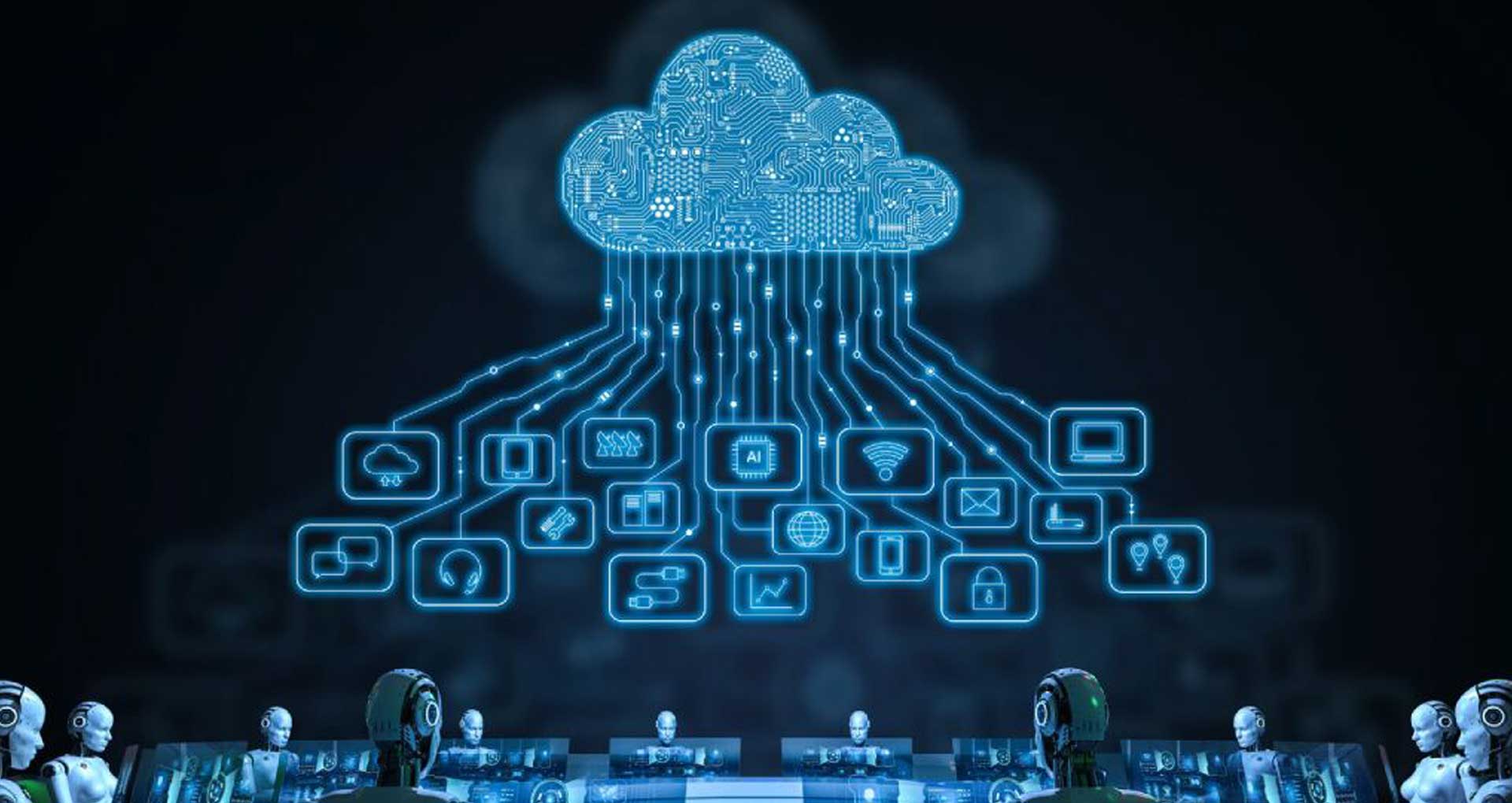
In the rapidly evolving landscape of the Internet of Things (IoT) and distributed systems, the act of “sending data to the cloud” is far more profound than a simple transmission. It represents a meticulously engineered pipeline, a sophisticated orchestration of hardware, software, and networking protocols designed to transform raw environmental stimuli into actionable intelligence that drives everything from smart cities to industrial automation. This comprehensive guide delves into the intricate architecture and critical considerations that define this essential process, offering a deep dive into the five fundamental stages of the IoT data journey.
The Genesis of Data: Collection at the Edge
The journey of data begins at the very edge of the network, where the physical world intersects with the digital. This initial phase, data collection, is the bedrock upon which all subsequent IoT operations are built. Without robust and accurate data acquisition, even the most advanced cloud analytics are rendered ineffective.
Sensors and Devices: The Eyes and Ears of IoT
At the heart of data collection are the sensors and devices that act as the eyes and ears of the IoT ecosystem. These components are designed to capture real-time physical parameters from their immediate environment. The diversity of phenomena they can detect is vast, encompassing everything from temperature, humidity, pressure, and light intensity to more complex metrics such as vibration, motion, chemical composition, and even biometric data.
Types of Sensors and Their Applications
The selection of appropriate sensors is a critical design decision, heavily influenced by the specific application and environment.
- Environmental Sensors: Thermistors, thermocouples, and RTDs measure temperature. Hygrometers gauge humidity. Barometers detect atmospheric pressure. Lux meters quantify light levels. These are vital for applications in smart agriculture, climate control, and environmental monitoring.
- Motion and Presence Sensors: Accelerometers detect changes in velocity and orientation. Gyroscopes measure angular velocity. Proximity sensors detect the presence or absence of an object. PIR (Passive Infrared) sensors sense motion. These are crucial for security systems, asset tracking, and human-computer interaction.
- Chemical and Gas Sensors: Electrochemical sensors detect specific gases like CO, CO2, methane. pH sensors measure acidity/alkalinity. These are indispensable in industrial safety, air quality monitoring, and smart irrigation.
- Vision and Audio Sensors: Cameras provide visual data for object recognition, surveillance, and quality control. Microphones capture sound for anomaly detection, voice commands, and security.
- Biometric Sensors: Fingerprint scanners, heart rate monitors, and glucose meters gather health-related data, foundational for wearable tech and remote patient monitoring.
Device Hardware and Firmware Considerations
Beyond the sensors themselves, the devices housing them play a crucial role. These can range from simple microcontrollers with a single sensor to complex embedded systems running entire operating systems.
- Microcontrollers (MCUs): Low-power, cost-effective, and ideal for simple, dedicated tasks. Examples include Arduino and ESP32.
- Single-Board Computers (SBCs): More powerful than MCUs, with greater processing capabilities and operating system support. Raspberry Pi is a prominent example, enabling more complex local processing.
- Connectivity Modules: Integrated Wi-Fi, Bluetooth, Zigbee, LoRa, or cellular modules are essential for communicating collected data.
- Power Management: Battery life is a paramount concern for many IoT devices, particularly those deployed in remote or difficult-to-access locations. Low-power design, energy harvesting, and efficient power management techniques are critical.
- Ruggedization: Devices deployed in harsh environments (e.g., industrial settings, outdoors) require robust enclosures, ingress protection (IP ratings), and resistance to extreme temperatures, vibrations, and corrosive agents.
- Firmware: The embedded software running on these devices orchestrates sensor readings, manages communication, and performs initial data handling. Efficient, bug-free firmware is vital for device reliability and longevity.
The Dynamics of Data Acquisition
Data collection is rarely a static process. It involves dynamic decisions about what to collect, when to collect it, and how frequently.
Sampling Rates and Data Volume
The sampling rate, or how often data is collected, directly impacts the volume of data generated. High sampling rates provide granular insights but consume more power and bandwidth. Low sampling rates conserve resources but may miss critical events. Optimizing this balance is a key engineering challenge. For example, a vibration sensor monitoring a critical machine component might need very high sampling rates to detect subtle anomalies, while a temperature sensor in a warehouse might only need to report every few minutes.
Event-Driven vs. Time-Driven Collection
Data collection can be triggered by events or occur at predefined intervals.
- Time-Driven: Data is collected periodically, regardless of changes in the environment. This is simpler to implement but can generate redundant data during stable periods.
- Event-Driven: Data is collected only when a significant change or event occurs. For instance, a motion sensor reports only when motion is detected. This is more resource-efficient but requires more complex logic at the device level. Hybrid approaches, combining periodic “heartbeat” messages with event-driven alerts, are common.
Data Aggregation at the Source
To reduce the load on communication channels and downstream systems, some devices perform rudimentary aggregation of data at the source. This might involve averaging readings over a specific period, summing events, or identifying peak values before transmission. This initial aggregation is a precursor to the more sophisticated processing that occurs at the edge.
Edge Intelligence: Local Processing of Raw Data
Once collected, raw sensor data is often unsuitable for immediate transmission to the cloud. It can be noisy, redundant, or contain irrelevant information. This is where local processing, often performed by edge devices, becomes indispensable. Edge computing brings computation and data storage closer to the sources of data, minimizing latency and bandwidth use.
Filtering and Noise Reduction
Raw sensor data is inherently susceptible to noise resulting from electromagnetic interference, sensor inaccuracies, or environmental fluctuations. Edge devices are typically equipped to perform initial filtering to enhance data quality.
Digital Filters
Algorithms like moving averages, median filters, and Kalman filters can be applied to smooth out noisy sensor readings, making the data more reliable for analysis.
- Moving Average: A simple yet effective filter that calculates the average of a specific number of previous data points, smoothing out short-term fluctuations.
- Median Filter: Particularly effective at removing “salt-and-pepper” noise or outliers by replacing each data point with the median of its neighbors.
- Kalman Filter: A more advanced algorithm used for estimating the state of a dynamic system from noisy measurements, often employed in control systems and navigation.
Anomaly Detection at the Edge
Sophisticated edge devices can even perform basic anomaly detection. By establishing baseline behaviors, they can flag unusual readings or patterns, potentially indicating equipment failure, security breaches, or critical environmental changes, and only transmit these exceptions to the cloud. This reduces the volume of data sent and allows for quicker responses to critical events.
Data Formatting and Standardization
Sensors from different manufacturers or even different models from the same manufacturer may output data in varying formats (e.g., JSON, XML, binary, custom protocols). Before data can be effectively processed and stored in the cloud, it needs to be standardized.
Data Conversion
Edge devices or gateways perform the crucial task of converting disparate data formats into a unified, machine-readable structure. This often involves parsing raw inputs and mapping them to predefined data models.
Metadata Enrichment
Adding metadata at the edge provides crucial context to the raw data. This can include:
- Device ID: Unique identifier for the sending device.
- Timestamp: The exact time the data was collected or processed.
- Location Data: GPS coordinates or other location identifiers.
- Sensor Type: Identification of the specific sensor that generated the data.
- Unit of Measurement: Ensuring consistency (e.g., Celsius vs. Fahrenheit).
This metadata is invaluable for later analysis, allowing for spatial, temporal, and source-based data segmentation and correlation.
Data Aggregation and Condensation
One of the primary drivers for local processing is to reduce the volume of data transmitted to the cloud, thereby conserving bandwidth and reducing cloud storage and processing costs.
Time-Series Aggregation
Instead of sending every raw data point, edge devices can aggregate data over specific time intervals. For instance, instead of sending temperature readings every second, the device might send the average, minimum, maximum, and standard deviation of temperature over a minute.
Data Summarization
More complex summarization techniques can be employed, such as counting events, calculating rates, or deriving key performance indicators (KPIs) directly at the edge. Only these summarized insights then travel to the cloud.
Thresholding and Rule-Based Processing
Edge devices can be programmed with rules or thresholds. If a sensor reading exceeds a predefined limit (e.g., temperature rises above a critical threshold), an alert is generated and sent to the cloud, while normal readings might be processed and stored locally or sent less frequently. This “processing by exception” model is highly efficient.
Real-time Local Decisions and Actuation
Beyond simply preparing data for the cloud, edge processing enables real-time decision-making and actuation without relying on cloud roundtrips.
- Immediate Control: In scenarios requiring extremely low latency, such as robotic control or automated safety systems, edge devices can analyze data and trigger actions locally. For example, an edge device monitoring machinery vibration could shut down an anomalous component within milliseconds, preventing catastrophic failure.
- Offline Operation: Local processing allows systems to continue functioning even if connectivity to the cloud is temporarily lost. Data can be stored locally and synced once connectivity is restored.
- Bandwidth Optimization: By making decisions locally, the amount of data that needs to be sent to the cloud for decision-making is drastically reduced, freeing up bandwidth for other critical communications.
Fortifying the Pipeline: Secure Transmission
The transmission of data from edge devices to the cloud is a particularly vulnerable point in the IoT pipeline. Any compromise during this phase can lead to data breaches, system manipulation, or service disruptions. Therefore, secure transmission is not merely an optional add-on but a fundamental requirement, built upon robust encryption and secure communication protocols.
Encryption: The Guardian of Data Integrity
Encryption transforms data into a coded format, rendering it unreadable to unauthorized parties. It is the cornerstone of secure data transmission.
Data in Transit Encryption (TLS/SSL)
The most common method for securing data in transit is through Transport Layer Security (TLS) or its predecessor, Secure Sockets Layer (SSL). These cryptographic protocols establish an encrypted channel between the sending device and the receiving server (e.g., an IoT gateway or cloud endpoint).
- Handshake Process: When a device initiates a connection, TLS performs a handshake to negotiate cryptographic parameters, authenticate the server (using digital certificates), and establish a shared secret key for symmetric encryption.
- Cipher Suites: TLS supports various cipher suites, including algorithms for key exchange (e.g., RSA, ECDH), authentication (e.g., SHA-256), and symmetric encryption (e.g., AES-256).
- Authentication: Digital certificates, issued by trusted Certificate Authorities (CAs), verify the identity of the cloud server, preventing man-in-the-middle attacks where an attacker impersonates the server to intercept data. Mutual TLS (mTLS) extends this by requiring both the client (device) and server to authenticate each other, offering even stronger security.
Data at Rest Encryption (for temporary storage)
While the primary focus here is on data in transit, it’s worth noting that data temporarily stored on edge devices before transmission must also be encrypted, especially if the device is susceptible to physical compromise. This often involves full disk encryption or encrypted file systems.
Secure Communication Protocols for IoT
The choice of communication protocol significantly impacts the security, efficiency, and scalability of data transmission. Modern IoT deployments leverage a variety of protocols, each with its strengths and weaknesses, but all adhering to strict security standards.
MQTT (Message Queuing Telemetry Transport)
MQTT is a lightweight, publish-subscribe messaging protocol designed for constrained devices and low-bandwidth, unreliable networks. It’s highly popular in IoT due to its efficiency and support for quality of service (QoS) levels.
- Publish/Subscribe Model: Devices publish messages to a “broker” on specific “topics,” and other devices or cloud services subscribe to these topics to receive messages. This decouples senders from receivers.
- MQTT over TLS/SSL: To secure MQTT communications, it is almost universally implemented over TLS/SSL (encrypted MQTT is often referred to as MQTTS). This encrypts the entire communication stream between the MQTT client (device) and the MQTT broker.
- Client Authentication: Beyond TLS, MQTT brokers often require client credentials (username/password) or client certificates for authentication, ensuring only authorized devices can connect and publish/subscribe to topics.
HTTP/HTTPS (Hypertext Transfer Protocol Secure)
HTTP is a widely used request-response protocol for web communication. For IoT, its secure variant, HTTPS (HTTP over SSL/TLS), is employed.
- RESTful APIs: Many IoT cloud platforms expose RESTful APIs, allowing devices to send data using standard HTTP methods (POST, PUT).
- Heavyweight: Compared to MQTT, HTTPS can be more resource-intensive due to its overhead, making it less suitable for extremely constrained devices or very high-frequency data transmissions.
- Simplicity for Cloud Integration: Its ubiquity makes it an easy choice for integrating with many cloud services, especially for devices with ample processing power and consistent connectivity.
CoAP (Constrained Application Protocol)
CoAP is a specialized web transfer protocol for use with constrained nodes and constrained networks in the IoT. It is designed to be highly efficient and is conceptually similar to HTTP but optimized for low-power devices.
- UDP-based: CoAP typically runs over UDP (User Datagram Protocol) rather than TCP, reducing overhead.
- DTLS (Datagram Transport Layer Security): For security, CoAP uses DTLS, the UDP-equivalent of TLS, to encrypt communications and provide authentication.
- Resource Efficiency: Its minimalistic design makes it suitable for devices with very limited memory and processing capabilities.
Proprietary Protocols and VPNs
In some industrial or highly specialized IoT deployments, proprietary protocols or Virtual Private Networks (VPNs) might be used to establish secure, isolated communication channels, offering an additional layer of security and network partitioning.
Access Control and Device Identity Management
Beyond encryption, robust access control mechanisms are essential to ensure that only authenticated and authorized devices can transmit data to the cloud.
Unique Device Identifiers
Each IoT device should possess a unique identifier, often a hardware-based serial number or a cryptographically generated ID, to distinguish it within the ecosystem.
Device Authentication
Devices authenticate themselves to the cloud using various methods:
- Pre-shared Keys (PSK): A secret key shared between the device and the cloud service. While simple, managing PSKs at scale can be challenging.
- X.509 Certificates: Digital certificates embedded in devices provide a strong, scalable, and revokable form of identity. Each device has a unique certificate signed by a trusted CA, allowing the cloud to verify its authenticity.
- OAuth/Token-Based Authentication: For more sophisticated devices, token-based authentication can be used where devices obtain temporary access tokens from an identity provider after initial authentication.
Authorization Policies
Once authenticated, authorization policies determine what actions a device is permitted to perform (e.g., which topics it can publish to, which data streams it can access). Role-based access control (RBAC) is commonly implemented to manage these permissions effectively.
Network Level Security
The underlying network infrastructure also plays a crucial role in secure transmission.
- Firewalls: Network firewalls filter incoming and outgoing traffic, blocking unauthorized access attempts.
- Network Segmentation: Isolating IoT devices and their networks from other enterprise networks can prevent lateral movement of attackers in case of a breach.
- Intrusion Detection/Prevention Systems (IDS/IPS): These systems monitor network traffic for suspicious patterns or known attack signatures, alerting administrators or actively blocking malicious activity.
The Digital Repository: Cloud Storage
Once securely transmitted, the diverse streams of IoT data converge in the cloud, where they are ingested, cataloged, and stored, forming the foundation for future analysis and insights. Cloud storage offers unparalleled scalability, durability, and accessibility, making it the ideal repository for the vast and ever-growing volumes of IoT data.
Scalable Cloud Infrastructure
Cloud platforms provide elastic and virtually limitless storage capacity, eliminating the need for organizations to provision and manage physical storage infrastructure. This scalability is crucial for IoT, where data volumes can fluctuate wildly and grow exponentially.
Object Storage
- S3 (Amazon Simple Storage Service), Azure Blob Storage, Google Cloud Storage: These services offer highly durable, available, and scalable object storage. They are ideal for storing unstructured data like sensor logs, images, video feeds, and any other file-based data from IoT devices.
- Key-Value Store: Data is stored as objects with associated metadata and can be retrieved using a unique key. This approach is highly flexible and cost-effective for large archives of raw data.
Relational Databases (SQL)
- Amazon RDS, Azure SQL Database, Google Cloud SQL: For structured IoT data that fits well into predefined schemas (e.g., device status, configuration parameters, aggregated time-series data), relational databases offer strong consistency, transactional integrity, and powerful query capabilities.
- Schema Enforcement: Data must conform to a fixed schema, which can be restrictive for evolving IoT data models but provides structure for complex joins and analytical queries.
NoSQL Databases
- DynamoDB (AWS), Azure Cosmos DB, Google Cloud Firestore/Bigtable: These non-relational databases are designed for high performance, scalability, and flexibility, making them exceptionally well-suited for the dynamic and often semi-structured nature of IoT data.
- Document Databases (e.g., MongoDB, Cosmos DB): Store data in flexible, schema-less JSON-like documents, ideal for diverse device data models.
- Key-Value Stores (e.g., DynamoDB, Redis): Provide fast read/write access for simple data lookups, often used for device state management or caching.
- Wide-Column Stores (e.g., Cassandra, Google Cloud Bigtable): Excellent for time-series data and handling very large datasets with high write throughput.
- Graph Databases (e.g., Neo4j, Amazon Neptune): Useful for representing relationships between devices, users, and data points in complex IoT networks.
Time-Series Databases
- InfluxDB, TimescaleDB, Amazon Timestream: Specifically optimized for storing and querying time-stamped data, which constitutes a significant portion of IoT data. They offer high ingest rates, efficient storage, and specialized functions for time-based analysis.
Data Ingestion and Cataloging
The process of ingesting data into cloud storage involves more than just dumping files; it requires structured pipelines for efficient handling and future discoverability.
Message Queues and Event Hubs
- Kafka, Amazon Kinesis, Azure Event Hubs, Google Cloud Pub/Sub: These highly scalable, fault-tolerant messaging systems act as buffers for incoming data streams from IoT devices. They decouple the data producers (devices) from consumers (storage, analytics engines), ensuring data is not lost even during peak loads or temporary service outages.
- Stream Processing: These services often integrate with stream processing engines that can perform real-time transformations, enrichments, and routing of data before it lands in final storage.
Data Warehouses and Data Lakes
- Data Warehouse (e.g., Amazon Redshift, Google BigQuery, Azure Synapse Analytics): Optimized for structured, historical data for analytical querying and reporting. IoT data, once processed and aggregated, can be loaded into a data warehouse for business intelligence and long-term trend analysis.
- Data Lake (e.g., S3, Azure Data Lake Storage, Google Cloud Storage): A centralized repository that stores all data—structured, semi-structured, and unstructured—at any scale. It allows organizations to store raw IoT data economically and then process it using various tools as needed, without needing to define schema upfront. This flexibility is crucial for exploratory analytics and machine learning applications.
Data Governance and Lifecycle Management
Effective cloud storage for IoT demands robust data governance and lifecycle management strategies.
Data Durability and Availability
Cloud providers offer multiple layers of redundancy and geographical distribution to ensure data durability (preventing data loss) and high availability (ensuring data is always accessible). This often includes replicating data across multiple data centers or availability zones.
Data Retention Policies
IoT data can be voluminous. Defining retention policies that specify how long different types of data should be stored (e.g., raw data for 30 days, aggregated data for 5 years, compliance data indefinitely) is essential for cost management and regulatory compliance.
Data Tiering
Cloud storage solutions typically offer different storage tiers (e.g., standard, infrequent access, archive) with varying costs and access speeds. Implementing data tiering allows organizations to automatically move older, less frequently accessed data to cheaper storage tiers, optimizing costs.
Data Security at Rest
Even within the cloud, data at rest must be secured. This typically involves:
- Encryption at Rest: Data is encrypted using cryptographic keys managed by the cloud provider or by the customer (customer-managed keys).
- Access Control: Strict identity and access management (IAM) policies regulate who or what (e.g., specific services) can access stored data, based on the principle of least privilege.
- Auditing and Logging: Comprehensive logging of all data access and modification attempts is crucial for security monitoring and compliance.
Illuminating Insights: Data Analysis in the Cloud
The ultimate purpose of collecting, processing, and securely storing IoT data is to transform it into actionable insights. Cloud-based data analysis engines provide the computational power, sophisticated tools, and collaborative environments necessary to extract meaning from vast and complex datasets. This phase is where raw observations become intelligence, driving business decisions, optimizing operations, and enhancing user experiences.
Real-time Stream Analytics
Many IoT applications require immediate responses to events. Real-time stream analytics processes data as it arrives, enabling instantaneous insights and automated actions.
Stream Processing Engines
- Apache Flink, Apache Spark Streaming, Amazon Kinesis Analytics, Azure Stream Analytics, Google Cloud Dataflow: These powerful engines are designed to process high-velocity, continuous data streams from IoT devices.
- Event Correlation: They can identify patterns, correlate events across multiple data streams, detect anomalies, and trigger alerts in near real-time. For example, simultaneously detecting high temperature, abnormal vibration, and increased power consumption from a machine might indicate an imminent failure.
- Windowing: Data is often processed in “windows” (e.g., the last 5 minutes of data, a count of the last 100 events) to perform aggregations or calculations over a defined dataset.
Dashboards and Alerts
Real-time analytical results are often visualized on dynamic dashboards (e.g., Grafana, Power BI, Tableau) that provide operators with an immediate overview of system health and performance. Automated alerting systems notify relevant personnel via email, SMS, or other channels when predefined thresholds are breached or critical events occur.
Batch Analytics and Business Intelligence
While real-time insights are crucial, historical data reveals long-term trends, seasonal patterns, and underlying correlations that real-time analysis might miss. Batch analytics processes large volumes of historical data for deeper investigation.
Data Warehousing and OLAP Cubes
- Data Warehouses: As discussed in storage, these provide a structured environment for historical data, enabling complex SQL queries for business intelligence.
- Online Analytical Processing (OLAP) Cubes: Pre-aggregated data structures that allow for rapid, multi-dimensional analysis, enabling users to “slice and dice” data along various dimensions (e.g., by device type, location, time period).
Reporting Tools
BI tools integrate with data warehouses to generate comprehensive reports, historical performance metrics, key performance indicators (KPIs), and trend analyses, providing a holistic view of IoT operations.
Advanced Analytics and Machine Learning
The true power of cloud computing for IoT data lies in its ability to run sophisticated machine learning (ML) models that can identify complex patterns, predict future events, and prescribe optimal actions.
Predictive Analytics
- Anomaly Prediction: ML models can learn normal operating behaviors from historical data and predict when a deviation is likely to occur, enabling proactive maintenance (predictive maintenance) for equipment. For example, a model might predict a pump failure based on subtle changes in vibration, temperature, and current draw, weeks before it actually breaks down.
- Demand Forecasting: In smart supply chain or resource management applications, ML can predict future demand based on historical usage, weather patterns, and other relevant factors.
Prescriptive Analytics
Building on predictive capabilities, prescriptive analytics recommends specific actions to optimize outcomes.
- Optimization: ML algorithms can suggest optimal control parameters for industrial processes, energy consumption, or traffic flow based on real-time data and predicted conditions.
- Automated Decision-Making: In highly autonomous systems, ML models can directly trigger actions (e.g., adjusting thermostat settings, rerouting logistics vehicles) based on their analysis.
Machine Learning Platforms
Cloud providers offer managed ML platforms (e.g., AWS SageMaker, Azure Machine Learning, Google Cloud AI Platform) that simplify the process of building, training, deploying, and managing ML models. These platforms provide access to powerful GPUs and TPUs, accelerating model training on massive IoT datasets.
Data Visualization
Visualizing complex IoT data is essential for making it understandable and actionable for human operators and decision-makers.
Interactive Dashboards
Beyond simple real-time displays, advanced visualization tools allow users to interact with data, drill down into specifics, filter results, and explore different facets of the information.
Geographical Information Systems (GIS)
For IoT deployments spanning physical locations, GIS integration allows for overlaying sensor data onto maps, providing spatial context and enabling location-aware analysis (e.g., tracking asset movements, identifying environmental hotspots).
Custom Applications
For highly specialized use cases, custom web or mobile applications can be developed to present IoT insights in a way that is tailored to specific user roles and operational needs.
The Intelligent Data Ecosystem: Engineering for the Future
Understanding and meticulously engineering each stage of the IoT data pipeline — from data collection at the edge to sophisticated cloud-based analysis — is not merely a technical exercise; it’s a strategic imperative. The ability to efficiently, securely, and intelligently move data from myriad physical sensors to powerful cloud analytics engines defines the potential of any modern IoT or distributed system.
This structured engineering pipeline transforms raw environmental observations into a vibrant, intelligent data ecosystem. It enables businesses to:
- Optimize Operations: By providing real-time visibility and predictive insights, organizations can streamline processes, reduce waste, and improve efficiency.
- Enhance Decision-Making: Data-driven insights empower better strategic and tactical decisions, leading to competitive advantages.
- Drive Innovation: The rich datasets and advanced analytical capabilities open doors to new products, services, and business models.
- Improve Safety and Security: Real-time monitoring and anomaly detection can safeguard assets, personnel, and infrastructure.
- Create Sustainable Solutions: IoT data can inform better resource management, energy efficiency, and environmental stewardship initiatives.
The paradigm has shifted. Engineering in the age of IoT is no longer solely about crafting robust physical devices; it is about architecting the intelligent data pathways that transform these devices into integral components of a responsive, adaptive, and predictive world. It’s about building bridges between the physical and digital, enabling data to flow seamlessly, securely, and meaningfully, empowering us to build a more connected and intelligent future.
The journey of data from a subtle vibration registered by a sensor to a crucial business decision made in a boardroom is a marvel of modern engineering. It underscores the profound impact of a well-designed IoT data pipeline on every facet of our digital lives and physical environments.
Are you ready to unlock the full potential of your IoT vision? Do you need expert guidance to design, implement, and optimize your data pipeline from the edge to the cloud? Whether you’re grappling with complex sensor integrations, seeking to enhance data security, or aiming to derive meaningful insights from your vast IoT datasets, IoT Worlds offers unparalleled expertise to transform your challenges into intelligent solutions.
Connect with us to begin your journey towards a truly intelligent data ecosystem. Email us today at info@iotworlds.com to discuss how we can help you engineer your future.
