

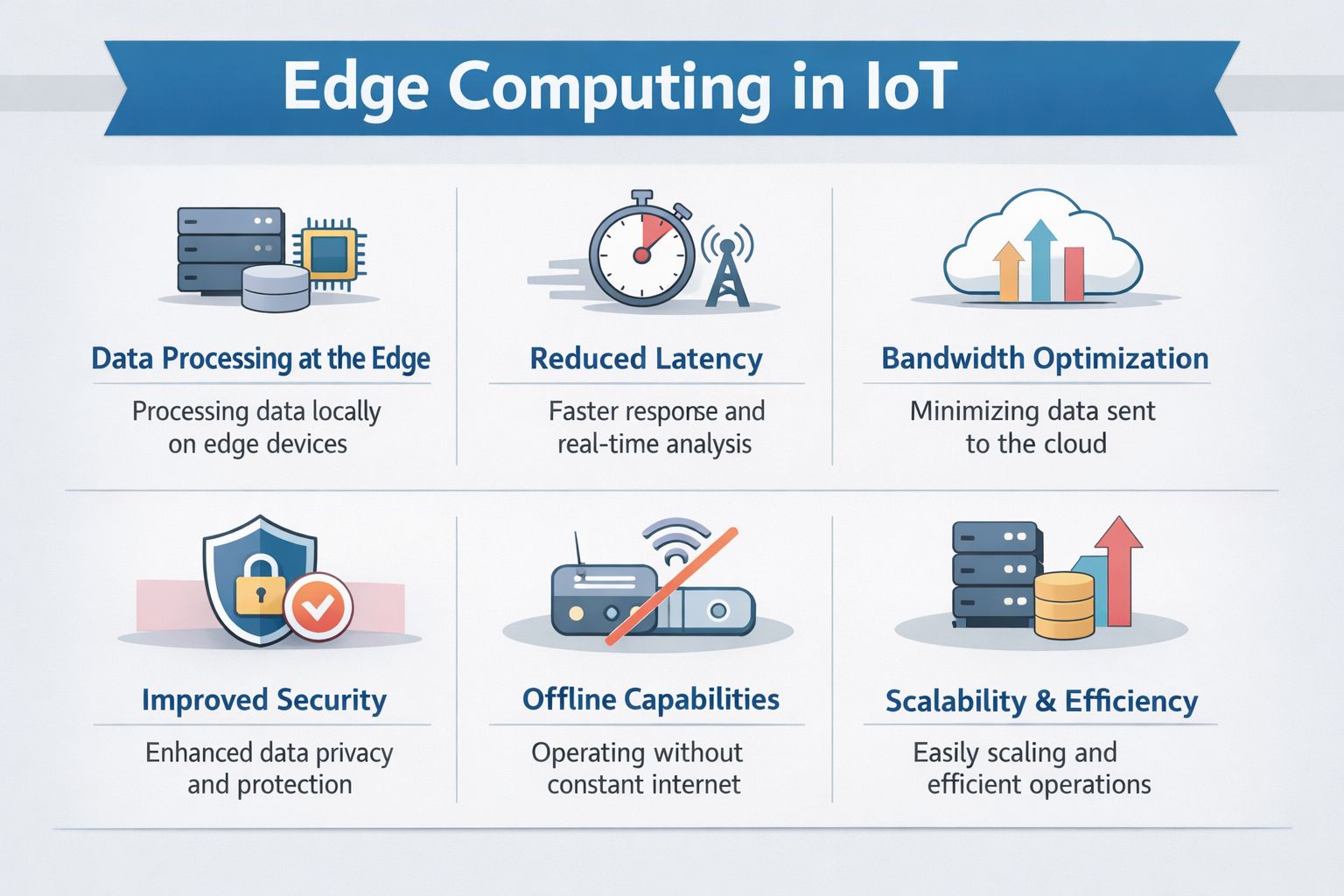
In the rapidly evolving landscape of the Internet of Things (IoT), the sheer volume, velocity, and variety of data generated by connected devices are pushing traditional centralized computing models to their limits. A profound shift is underway, moving the locus of intelligence from distant cloud servers to the very edge of the network, closer to where the data originates. This paradigm, known as Edge Computing, is not merely an optimization; it is a fundamental necessity for building the next generation of responsive, scalable, and truly intelligent IoT systems. This article delves into the intricacies of edge computing in IoT, exploring its core principles, multifaceted benefits, diverse applications, and the transformative impact it has on various industries.
The Genesis of Edge Computing in IoT
The explosion of IoT devices, from smart home sensors to industrial machinery, has created an unprecedented deluge of data. Historically, the prevailing architecture involved transmitting all this raw data to a centralized cloud for processing, analysis, and storage. While the cloud offers immense computational power and scalability, this model increasingly presents significant challenges in specific IoT use cases.
The inherent limitations of cloud-centric IoT, particularly concerning latency, bandwidth, and connectivity, spurred the development and adoption of edge computing. The idea is simple yet revolutionary: instead of relying solely on the cloud for processing, leverage the computational capabilities of devices and localized servers at the network’s edge. This distributed approach enables faster decision-making, greater autonomy, and more efficient resource utilization within IoT ecosystems.
Understanding the Core Concept
At its heart, edge computing involves processing data generated by IoT devices physically closer to the source of data generation. This “edge” can encompass a wide range of computational resources, from microcontrollers embedded within the IoT devices themselves to localized servers, gateways, or mini-data centers strategically placed at the periphery of the network. The goal is to minimize the distance data must travel, thereby reducing latency and improving responsiveness.
The Evolution from Cloud to Edge
The shift from solely cloud-based IoT architectures to hybrid cloud-edge models represents a significant evolution. While the cloud will continue to play a crucial role in long-term data storage, complex analytics, machine learning model training, and overarching system management, the edge takes on the responsibility for real-time, mission-critical processing. This division of labor creates a more resilient, efficient, and intelligent IoT infrastructure.
Data Generation at the Source: The IoT Imperative
The foundational driver behind edge computing is the continuous and prolific data generation by IoT devices. From environmental sensors monitoring temperature and humidity to industrial sensors tracking machine performance and consumer wearables collecting health metrics, an astounding volume of real-time data is constantly being produced.
The Data Deluge
Consider a smart factory floor equipped with hundreds, if not thousands, of sensors monitoring every aspect of the production process. Each sensor might generate data points multiple times per second. Aggregated over an entire factory, this amounts to petabytes of data daily. Similarly, autonomous vehicles generate terabytes of data per hour from their various cameras, LiDAR, and radar systems. Transmitting all this raw data to a remote cloud for processing is often impractical and economically unfeasible.
The Need for Immediate Action
Many IoT applications demand immediate insights and actions. A delay of even a few milliseconds can have significant consequences. For instance, in an industrial automation setting, detecting an anomaly in machine operation and taking corrective action almost instantaneously can prevent costly downtime or equipment damage. Similarly, in autonomous driving, real-time processing of sensor data is critical for obstacle avoidance and safe navigation. The sheer volume and time-critical nature of IoT data necessitate a processing paradigm that can deliver intelligence closer to the source.
Local Processing at Edge Nodes: Minimizing Latency and Maximizing Responsiveness
One of the most compelling advantages of edge computing is its ability to facilitate local processing of critical data. By bringing computational power closer to the data source, edge nodes empower faster decision-making and significantly improve system responsiveness.
The Latency Challenge
In traditional cloud-centric models, data travels from the IoT device, through various network hops, to a distant cloud data center, where it is processed, and then the results or commands are sent back to the device. This round-trip communication introduces latency, which is the delay between when data is sent and when it is received and processed. For many IoT applications, especially those requiring real-time interaction or control, even minimal latency can be detrimental.
The Edge Solution for Latency Reduction
Edge computing directly addresses the latency challenge by significantly shortening the data path. When data is processed at an edge node—which could be a local gateway, a specialized edge server, or even the device itself—the physical distance for data travel is drastically reduced. This localized processing translates into near-instantaneous response times, making it ideal for applications where every millisecond counts.
For example, in a smart city scenario, traffic light optimization based on real-time vehicle flow can be managed by edge devices at intersections, reacting to changing conditions almost instantly without waiting for a cloud server’s directive. This immediate feedback loop enhances efficiency and safety.
Bandwidth Optimization: Reducing Network Congestion and Costs
The incessant flow of vast amounts of raw data from IoT devices to the cloud can impose a heavy burden on network infrastructure, leading to bandwidth limitations, congestion, and increased operational costs. Edge computing offers a powerful solution by intelligently filtering and pre-processing data locally, thereby optimizing bandwidth utilization.
The Bandwidth Bottleneck
Imagine a fleet of delivery drones, each equipped with multiple high-resolution cameras, constantly streaming video footage. Sending all this raw video data to the cloud for analysis would consume enormous bandwidth, potentially leading to slow upload speeds, dropped frames, and substantial data transfer costs. Similar scenarios play out in industrial IoT, smart agriculture, and environmental monitoring, where numerous sensors generate a continuous stream of raw measurements.
Smart Data Filtering at the Edge
Edge nodes act as intelligent gatekeepers, performing initial data processing, aggregation, and filtering before any data is transmitted further up the network chain. Instead of sending every raw data point to the cloud, the edge node can:
- Filter irrelevant data: Discarding anomalous readings, noise, or redundant information that does not contribute to higher-level insights.
- Aggregate data: Combining multiple data points into meaningful summaries or averages, reducing the total volume.
- Compress data: Applying compression algorithms to reduce the file size of essential data before transmission.
- Extract metadata: Sending only critical metadata (e.g., “temperature exceeded threshold” instead of continuous temperature readings) to the cloud.
By sending only filtered, relevant, and actionable data to the cloud, edge computing dramatically reduces the bandwidth requirements. This not only alleviates network congestion but also translates into significant cost savings on data transmission and cloud storage.
Real-Time Analytics: Powering Time-Sensitive Applications
The ability to perform real-time analytics at the edge is a transformative capability for numerous time-sensitive IoT applications. From autonomous systems to industrial automation, instant insights are paramount for operational efficiency, safety, and competitive advantage.
The Demand for Instant Insights
Many modern IoT systems are designed not just to collect data, but to act upon it immediately. Consider:
- Autonomous vehicles: Require instantaneous processing of sensor data to navigate, detect obstacles, and make split-second decisions.
- Industrial control systems: Need real-time monitoring of machinery to detect anomalies, predict failures, and initiate preventative maintenance.
- Medical IoT devices: Must analyze patient data in real-time to alert healthcare providers of critical changes or administer immediate interventions.
- Customer experience in retail: Analyzing foot traffic patterns and inventory levels in real-time to optimize store layouts and product placement.
In these scenarios, even a small delay introduced by cloud-based processing can lead to missed opportunities, safety hazards, or significant operational disruptions.
Edge-Powered Real-Time Decision Making
Edge computing empowers devices and local systems to perform complex analytics, including machine learning inference, directly at the source. This means that data can be analyzed as it is generated, and insights can be derived and acted upon almost immediately.
For instance, an AI model trained in the cloud for predictive maintenance can be deployed to an edge device on a factory floor. This edge device can then continuously monitor machine vibrations, temperature, and current draw, performing real-time inference to detect early signs of equipment failure. Upon detecting an anomaly, it can trigger an alarm, shut down the machine, or schedule maintenance without any human intervention or round trip to the cloud. This level of autonomy and responsiveness fundamentally changes how industries operate.
Enhanced Security: Protecting Sensitive Data at the Periphery
Security is a paramount concern in any IoT deployment, and the distributed nature of edge computing offers unique advantages in safeguarding sensitive data. By processing data locally, the risk of exposure during transmission to the cloud is significantly reduced.
The Vulnerabilities of Centralized Data Transmission
In a purely cloud-centric model, all raw IoT data, regardless of its sensitivity, must travel across public and private networks to reach the cloud. Each point along this transmission path represents a potential vulnerability for data interception, tampering, or unauthorized access. While robust encryption and secure protocols mitigate these risks, the sheer volume of data in transit still presents an expansive attack surface.
Strengthening Security at the Edge
Edge computing enhances security in several key ways:
- Reduced data in transit: By processing and filtering data locally, only aggregated, anonymized, or non-sensitive information needs to be transmitted to the cloud. This drastically reduces the amount of sensitive data exposed during network traversal.
- Localized control: Security policies and access controls can be enforced at the edge, closer to the devices and data. This allows for more granular control over who can access what data and when.
- Data anonymization and encryption: Edge nodes can perform anonymization or encryption of sensitive data before it ever leaves the local network, further protecting privacy.
- Threat detection and mitigation: Edge devices can be equipped with capabilities for local threat detection, identifying and responding to security incidents (e.g., unauthorized access attempts, malware) in real-time, even if disconnected from the cloud.
- Isolation of incidents: If an edge node or device is compromised, the impact can be isolated to that specific segment of the network, preventing a widespread breach that could affect the entire system if all data were centralized.
By distributing processing and applying security measures at multiple layers, edge computing creates a more resilient and secure IoT ecosystem, especially critical for industries dealing with highly sensitive data like healthcare, finance, and critical infrastructure.
Offline Reliability: Sustaining Operations in Disconnected Environments
Many IoT deployments operate in environments with intermittent, unreliable, or completely absent internet connectivity. Edge computing provides a crucial advantage in these scenarios by enabling systems to continue operating autonomously, even without a constant connection to the cloud.
The Challenge of Intermittent Connectivity
Consider remote agricultural sensors monitoring soil conditions in fields with limited cellular coverage, or offshore oil rigs where satellite internet is expensive and prone to interruptions. In such environments, relying on continuous cloud connectivity for operational intelligence is simply not feasible. If a system requires constant communication with the cloud for every decision or data point, any network outage or disruption would bring operations to a standstill.
Edge Computing for Uninterrupted Operations
Edge devices, with their localized processing capabilities, can effectively store, process, and analyze data independently. This “offline reliability” ensures that critical operations can continue uninterrupted, even during periods of network unavailability.
- Local data storage: Edge nodes can buffer and store data locally until network connectivity is restored, at which point the buffered data can be synchronized with the cloud.
- Autonomous decision-making: Critical algorithms and decision-making logic can reside on the edge devices, allowing them to make real-time decisions and execute actions without external commands. For instance, a smart irrigation system in a remote farm can continue to monitor soil moisture and activate sprinklers based on pre-programmed rules, even if the internet connection is down.
- Critical functionality: For applications where even short periods of downtime are unacceptable (e.g., medical devices, industrial safety systems), edge computing ensures that core functionalities remain operational, safeguarding lives and preventing catastrophic failures.
This ability to operate autonomously and reliably underscores the importance of edge computing for IoT deployments in remote, harsh, or mission-critical environments.
Scalability: Seamless Expansion Across Devices and Locations
As IoT deployments grow in size and complexity, spanning numerous devices across diverse geographic locations, scalability becomes a critical concern. Edge computing’s distributed architecture offers inherent advantages in achieving seamless scalability without overwhelming centralized resources.
The Limitations of Centralized Scaling
In a purely cloud-centric model, scaling an IoT system primarily involves beefing up cloud resources—adding more servers, storage, and processing power. While the cloud is inherently scalable, continuously funneling an ever-increasing volume of raw data from a rapidly expanding number of devices can eventually strain network bandwidth and lead to escalating cloud infrastructure costs. The centralized nature can also create single points of failure and increase management complexity as the system grows.
Distributed, Modular Scalability with Edge Computing
Edge computing provides a more distributed and modular approach to scalability. Instead of centralizing all growth, processing capabilities can be extended by deploying more edge nodes as needed.
- Incremental expansion: As new devices or locations are added to an IoT ecosystem, new edge nodes can be deployed to manage the localized data processing and communication. This allows for incremental expansion without requiring a complete overhaul of the central cloud infrastructure.
- Load distribution: Edge nodes distribute the processing load across multiple localized computing resources, preventing any single point of congestion or failure. Each edge node can handle a specific cluster of devices, reducing the burden on the central cloud.
- Geographic distribution: For global IoT deployments, edge nodes can be strategically placed in different regions, bringing processing closer to users and devices, further reducing latency and improving performance across geographically dispersed operations.
- Reduced cloud burden: By offloading a significant portion of data processing and analysis to the edge, the cloud is freed to focus on higher-level tasks such as long-term data archival, global analytics, machine learning model training, and strategic decision-making. This optimized resource allocation enhances overall system scalability.
The distributed nature of edge computing allows for a more agile and efficient scaling strategy, making it well-suited for the dynamic and expansive growth of modern IoT ecosystems.
Energy Efficiency: Lower Power Consumption in IoT Networks
Energy consumption is a significant consideration for many IoT deployments, especially those involving battery-powered devices or operating in remote locations where power resources are limited. Edge computing plays a crucial role in enhancing energy efficiency by reducing the need for extensive data transmission.
The Demands of Data Transmission
Transmitting data wirelessly, particularly over long distances or at high bandwidths, consumes a substantial amount of energy. For battery-powered IoT devices, frequent and large data transmissions can quickly deplete battery life, necessitating more frequent recharging or battery replacements, which adds to operational costs and environmental impact. In large-scale IoT networks with thousands or millions of devices, the cumulative energy expenditure for data transmission can be enormous.
Edge Computing’s Contribution to Energy Savings
Edge computing contributes to energy efficiency in several ways:
- Reduced data transmission: As discussed, edge nodes filter, aggregate, and pre-process data locally. This means that only essential, condensed data is transmitted to the cloud, significantly reducing the volume of data that needs to travel across the network. Less data transmission directly translates to lower power consumption for communication modules on IoT devices and network infrastructure.
- Optimized communication protocols: Edge devices can utilize more energy-efficient local communication protocols (e.g., Bluetooth Low Energy, LoRaWAN) for interactions within their immediate vicinity, sending less power-intensive data over shorter distances.
- Longer device battery life: For battery-powered sensors and edge devices, reducing the frequency and volume of data sent to the cloud extends battery life, leading to lower maintenance costs and a reduced environmental footprint.
- Decentralized processing: By distributing computational tasks to resource-optimized edge nodes, the overall energy expenditure for processing can be more efficient than continuously relying on distant, energy-intensive cloud data centers for every small task.
In scenarios where power availability is a constraint, or where extending device battery life is a priority, edge computing offers a compelling solution for building more sustainable and energy-efficient IoT networks.
Interoperability: Integrating Diverse Devices and Communication Protocols
The IoT landscape is characterized by an astonishing diversity of devices, sensors, and communication protocols. Ensuring seamless interoperability among these disparate components is a persistent challenge. Edge computing platforms are increasingly designed to bridge these gaps, facilitating integration and creating more cohesive IoT ecosystems.
The Fragmented IoT Landscape
The sheer variety of IoT hardware (from tiny microcontrollers to powerful industrial gateways), operating systems, and communication standards (Wi-Fi, cellular, LoRaWAN, Zigbee, MQTT, CoAP, etc.) can lead to a fragmented environment. Getting different devices from various manufacturers to communicate and share data effectively often requires complex integration efforts, protocol translations, and custom development.
Edge as an Interoperability Layer
Edge computing platforms serve as a crucial layer for enhancing interoperability within IoT by:
- Protocol translation: Edge gateways and devices can include software that translates between different communication protocols, allowing devices that speak “different languages” to exchange data. For example, an edge gateway might receive data via Zigbee from wireless sensors and then convert it to MQTT for transmission to the cloud.
- Data normalization: Data from various sources often comes in different formats and structures. Edge nodes can normalize this data into a unified format, making it easier for backend systems and applications to consume and analyze.
- API management: Edge platforms can expose standardized APIs (Application Programming Interfaces) that allow developers to interact with diverse IoT devices and data streams in a consistent manner, abstracting away the underlying complexities of individual device communications.
- Software-defined connectivity: Advanced edge platforms can dynamically manage and optimize network connectivity and device communication settings, adapting to different protocols and network conditions to ensure robust interoperability.
- Containerization: Edge deployments often leverage containerization technologies (like Docker or Kubernetes) to package applications and services. This allows for applications to be developed once and deployed consistently across different edge hardware, promoting greater software interoperability and portability.
By acting as a mediator and standardization point, edge computing simplifies the integration of diverse IoT components, reducing development effort and accelerating the deployment of complex, multi-vendor IoT solutions.
The Transformative Impact of Edge Computing Across Industries
The versatile benefits of edge computing are driving its adoption across a wide spectrum of industries, fundamentally reshaping operational paradigms and unlocking new possibilities.
Smart Manufacturing and Industry 4.0
In smart factories, edge computing is a cornerstone of Industry 4.0 initiatives. It enables:
- Predictive Maintenance: Real-time analysis of machine sensor data at the edge predicts equipment failures, allowing for proactive maintenance and minimizing downtime.
- Quality Control: Edge-based vision systems can inspect product quality on the production line, identifying defects in real-time and triggering immediate corrective actions.
- Automated Guided Vehicles (AGVs): Edge devices power the autonomous navigation and coordination of AGVs, ensuring efficient material handling without human intervention.
- Worker Safety: Real-time monitoring of environmental conditions and worker biometrics at the edge can detect hazards and alert personnel, enhancing safety protocols.
Healthcare and Wearable Devices
Edge computing is revolutionizing healthcare by enabling:
- Remote Patient Monitoring: Wearable devices and in-home sensors leverage edge processing to monitor vital signs, detect anomalies, and send alerts in real-time without constantly streaming raw data to the cloud. This ensures immediate attention for critical situations.
- Smart Hospitals: Edge devices in hospitals can manage localized medical equipment, track patient movements, and assist with inventory management, improving operational efficiency and patient care.
- Augmented Reality (AR) Assisted Surgery: Edge devices can process real-time imaging data for AR overlays during surgery, providing surgeons with enhanced visual information with minimal latency.
Autonomous Vehicles and Transportation
The future of autonomous transportation is inextricably linked with edge computing:
- Real-time Decision Making: Autonomous vehicles process vast amounts of sensor data (cameras, LiDAR, radar) at the edge to detect obstacles, navigate, and make split-second decisions for safe operation.
- Vehicle-to-Everything (V2X) Communication: Edge nodes facilitate direct communication between vehicles, infrastructure, and pedestrians, enabling cooperative maneuvers and enhancing road safety.
- Traffic Management: Edge devices at intersections can analyze real-time traffic flow, optimize signal timing, and manage congestion more effectively than centralized cloud systems.
Smart Cities and Infrastructure
Edge computing underpins many smart city initiatives:
- Smart Lighting: Edge-enabled streetlights can adjust brightness based on real-time pedestrian and vehicle presence, saving energy and improving public safety.
- Waste Management: Sensors on waste bins use edge processing to detect fill levels and optimize collection routes, leading to more efficient waste collection.
- Environmental Monitoring: Edge devices deployed throughout a city can monitor air quality, noise levels, and water purity, providing real-time data for environmental management and public health.
- Public Safety and Surveillance: Edge analytics can process video feeds from smart cameras to detect suspicious activities or identify emergencies locally, speeding up response times.
Retail and Smart Stores
In the retail sector, edge computing is transforming the customer experience and operational efficiency:
- Inventory Management: Edge devices can monitor shelf stock levels in real-time, alert staff when replenishment is needed, and prevent out-of-stock situations.
- Personalized Experiences: Edge analytics can process customer foot traffic, dwell times, and product interactions to offer personalized promotions or recommendations directly in the store.
- Loss Prevention: Edge-powered video analytics can detect shoplifting attempts or unusual behavior, enhancing store security.
- Point of Sale (POS) Systems: Edge-enabled POS systems can operate reliably even during network outages, ensuring business continuity.
Agriculture and Smart Farming
Edge computing empowers precision agriculture:
- Precision Irrigation: Edge sensors monitor soil moisture, temperature, and nutrient levels, allowing automated irrigation systems to apply water precisely where and when needed, conserving water resources.
- Crop Health Monitoring: Edge-deployed drones or ground robots equipped with imaging sensors can analyze crop health, detect pests or diseases, and trigger targeted interventions.
- Livestock Monitoring: Wearable edge devices on livestock can track health, location, and behavior, alerting farmers to potential issues or preventing animal loss.
- Automated Farm Machinery: Edge computing enables the autonomous operation of tractors, harvesters, and other farm equipment, increasing efficiency and reducing labor costs.
Energy and Utilities
The energy sector benefits from edge computing through:
- Smart Grids: Edge devices monitor energy consumption, generation, and distribution in real-time, enabling more efficient grid management, demand response, and fault detection.
- Renewable Energy Management: Edge computing optimizes the performance of solar panels and wind turbines, adapting to changing environmental conditions to maximize energy output.
- Predictive Maintenance for Infrastructure: Sensors on power lines, transformers, and pipelines use edge analytics to predict potential failures, reducing outages and improving safety.
Challenges and Considerations in Edge Computing Deployment
While the benefits of edge computing are compelling, its implementation also presents certain challenges that organizations must address for successful deployment.
Complexity of Management
Managing a distributed network of edge devices, gateways, and localized servers can be significantly more complex than managing a centralized cloud infrastructure. This includes:
- Device provisioning and onboarding: Securely setting up and configuring a multitude of edge devices.
- Software updates and patching: Ensuring that all edge nodes are running the latest, most secure software versions.
- Monitoring and troubleshooting: Gaining visibility into the health and performance of geographically dispersed edge components.
- Orchestration: Coordinating and deploying applications and services across diverse edge environments.
Robust device management platforms and orchestration tools are crucial for overcoming this complexity.
Security at the Edge
While edge computing enhances security by reducing data in transit, it also introduces new security vulnerabilities at the periphery of the network. Each edge device or node becomes a potential target. Key security considerations include:
- Physical security: Protecting edge devices from tampering, theft, or physical damage, especially in remote or exposed locations.
- Endpoint security: Implementing strong authentication, authorization, and encryption on every edge device.
- Vulnerability management: Regularly scanning edge devices for security vulnerabilities and applying patches promptly.
- Network segmentation: Isolating edge networks from core enterprise networks to contain potential breaches.
- Data privacy and compliance: Ensuring that local data processing adheres to relevant data privacy regulations.
A comprehensive, multi-layered security strategy is essential for protecting edge deployments.
Data Synchronization and Consistency
Managing data across a hybrid cloud-edge architecture requires careful planning for data synchronization and consistency.
- Data freshness: Ensuring that both edge and cloud systems have access to the most up-to-date and consistent data.
- Conflict resolution: Developing strategies for resolving data conflicts when updates are made independently at the edge and in the cloud.
- Data integrity: Maintaining the accuracy and reliability of data as it moves between edge and cloud environments.
Effective data management strategies, including robust synchronization protocols and data pipeline architectures, are critical.
Hardware and Resource Constraints
Edge devices often operate with limited computational power, memory, and storage compared to cloud servers. This necessitates:
- Optimized applications: Developing applications that are lightweight and resource-efficient for deployment on constrained edge hardware.
- Efficient AI/ML models: Using compact machine learning models (e.g., TinyML) that can perform inference effectively on edge devices.
- Hardware selection: Choosing appropriate edge hardware that balances performance requirements with cost and power constraints.
Network Planning and Connectivity
While edge computing reduces reliance on constant cloud connectivity, robust local network infrastructure is still crucial for communication between edge devices and for intermittent synchronization with the cloud.
- Reliable local networks: Ensuring high-speed and reliable local area networks (LANs) or mesh networks for inter-device communication at the edge.
- Cellular and satellite connectivity: For remote edge deployments, planning for appropriate cellular (5G, LTE) or satellite connectivity for occasional cloud synchronization.
- Network redundancy: Implementing redundant network paths to ensure continuous operation in case of connectivity failures.
Future Trends and the Evolution of Edge Computing
Edge computing is a dynamic field, constantly evolving with advancements in hardware, software, and networking technologies. Several key trends are poised to shape its future.
AI at the Edge (Edge AI)
The convergence of Artificial Intelligence and edge computing, often referred to as Edge AI, is a pivotal trend. More powerful and efficient AI models are being optimized to run directly on edge devices, enabling sophisticated real-time inference without cloud dependency. This will drive advancements in autonomous systems, predictive analytics, and personalized experiences across industries.
5G and Edge Computing Synergy
The rollout of 5G networks provides a significant boost to edge computing. 5G’s high bandwidth, low latency, and massive connectivity capabilities are perfectly suited to connect a vast number of edge devices and facilitate rapid data transfer between the edge and the cloud. This synergy will unlock new possibilities for highly responsive, distributed IoT applications.
Serverless Edge Functions
The adoption of serverless computing paradigms at the edge allows developers to deploy and run code snippets (functions) on edge devices without managing the underlying infrastructure. This simplifies application development and deployment at the edge, making it more agile and cost-effective.
Greater Interoperability and Standardization
As edge computing matures, there will be an increased focus on developing industry standards and open frameworks for edge device management, data formats, and communication protocols. This will foster greater interoperability, reduce vendor lock-in, and accelerate innovation in the edge ecosystem.
Security Enhancements
Ongoing research and development in areas like homomorphic encryption, federated learning, and blockchain for edge security will further strengthen data privacy and integrity in distributed IoT environments. Hardware-level security features and trusted execution environments will also become more prevalent in edge devices.
Edge-to-Cloud Continuum
The future of computing will likely involve a seamless “edge-to-cloud continuum,” where workloads can dynamically shift between edge, fog, and cloud environments based on real-time requirements, resource availability, and cost considerations. This hybrid approach will offer ultimate flexibility and optimization.
Conclusion: The Indispensable Role of Edge Computing in Modern IoT
Edge computing is rapidly becoming an indispensable component of modern IoT ecosystems. The relentless growth in the volume and velocity of data generated by connected devices, coupled with the critical need for real-time responsiveness, robust security, and operational reliability, has cemented its position as a foundational technology. By bringing intelligence closer to the source, edge computing empowers organizations to transcend the limitations of traditional cloud-only approaches, unlocking unprecedented levels of efficiency, innovation, and strategic advantage.
From enhancing manufacturing processes and revolutionizing healthcare to powering autonomous vehicles and building smarter cities, the transformative potential of edge computing is vast and far-reaching. As the IoT landscape continues its exponential expansion, the distributed intelligence offered by edge computing will be the key differentiator for building truly intelligent, resilient, and future-proof connected systems.
To harness the full power of Edge Computing for your IoT initiatives and to navigate the complexities of this evolving landscape, expert guidance is invaluable. IoT Worlds possesses the deep industry knowledge and technical expertise to help you architect, implement, and optimize your edge-enabled IoT solutions. Whether you’re looking to enhance real-time analytics, improve security, optimize bandwidth, or ensure offline reliability, our team is ready to assist.
Reach out to us today to explore how Edge Computing can transform your operations and unlock new possibilities. Send an email to info@iotworlds.com and let’s start a conversation about intelligent IoT solutions for your business.
