

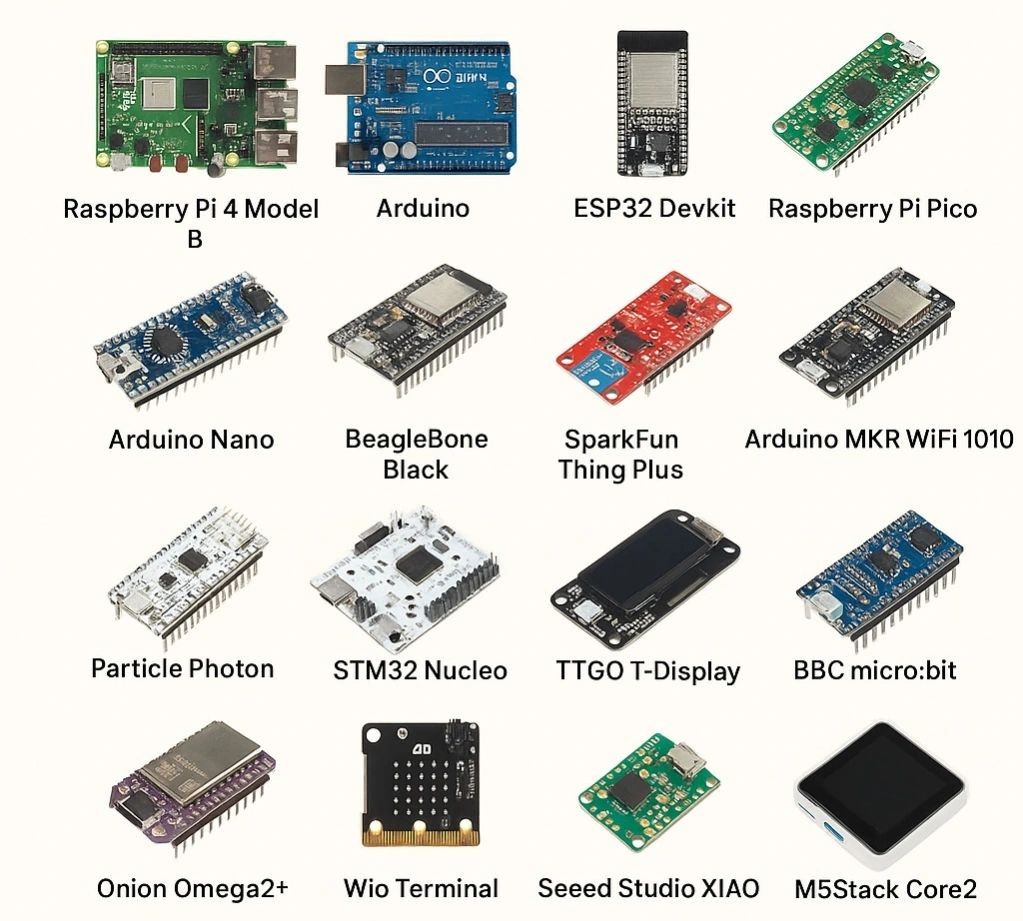
The Internet of Things (IoT) has rapidly transitioned from a futuristic concept to a ubiquitous reality, transforming industries, homes, and cities. At its core, every IoT solution relies on a physical device, often referred to as an “IoT development board.” These boards serve as the foundational hardware platforms upon which proof-of-concept (PoC) validations and minimum viable product (MVP) iterations are built. The initial decision of selecting the appropriate development board is paramount, directly influencing the project’s technical feasibility, scalability, cost-effectiveness, and overall success. A discerning choice early on can save countless hours, significant financial investment, and mitigate potential project roadblocks, while a hasty or ill-informed decision can lead to insurmountable challenges.
IoT development boards are not one-size-fits-all solutions. They are meticulously designed with varying capabilities, processing powers, connectivity options, and power consumption profiles to cater to a diverse array of applications. From basic sensor data acquisition and simple device control to complex edge computing and real-time industrial automation, the spectrum of IoT challenges demands a corresponding breadth of hardware solutions. Understanding the distinct characteristics and optimal use cases for different categories of boards is therefore a critical competency for anyone venturing into IoT development. This comprehensive guide delves into the nuances of selecting the ideal IoT development board, dissecting popular options, and outlining the key criteria that should inform your decision-making process for both PoCs and MVPs.
The Foundation of Choice: Understanding Your Project’s Needs
Before diving into the specifics of various development boards, the most crucial first step is a thorough and honest assessment of your IoT project’s requirements. This foundational analysis will act as a compass, guiding you towards the most suitable hardware solution. Without a clear understanding of your application’s demands, even the most powerful or feature-rich board can prove to be a poor fit.
Definining Proof-of-Concept (PoC) and Minimum Viable Product (MVP)
It’s essential to differentiate between a Proof-of-Concept (PoC) and a Minimum Viable Product (MVP), as each stage often dictates a different approach to hardware selection.
A Proof-of-Concept (PoC) is a small-scale, internal project designed to validate a specific idea or technical assumption. Its primary goal is to demonstrate that a particular concept or technology is feasible and can achieve its intended outcome. For a PoC, the focus is on quick iteration, low cost, and demonstrating core functionality. Over-engineering with an industrial-grade board for a PoC might be an unnecessary expense and delay.
A Minimum Viable Product (MVP), on the other hand, is the version of a new product with just enough features to satisfy early customers and provide feedback for future product development. An MVP is typically external-facing, needs to be more robust and reliable than a PoC, and often requires consideration for user experience, basic security, and potential scalability. While still focused on efficiency, an MVP might necessitate a more advanced board to support initial user interaction and data handling.
Key Criteria for Board Selection
The decision-making matrix for IoT development boards is multifaceted, encompassing technical specifications, development ecosystem, and project-specific constraints.
Processing Power
The computational demands of your IoT application are a primary determinant. Will your device simply read sensor data and transmit it, or will it perform complex data analysis, machine learning inference, or real-time control loops at the edge?
- Microcontrollers (MCUs): These are typically low-power, cost-effective devices designed for specific tasks. They excel at simple data collection, basic control, and managing peripherals. Examples include the chips found on Arduino and ESP boards.
- Single Board Computers (SBCs): These are essentially miniature computers capable of running a full-fledged operating system (like Linux). They offer significantly more processing power, memory, and connectivity options, making them suitable for complex data processing, local AI, and applications requiring a rich user interface. Raspberry Pi is a prime example.
Memory
Memory requirements extend beyond general processing power. Consider two main types:
- RAM (Random Access Memory): Essential for running programs and holding temporary data. Devices performing complex computations or managing multiple concurrent tasks will need more RAM.
- Flash Memory (Storage): Where your program code and any persistent data (like configuration files or cached sensor readings) are stored. The amount required depends on the complexity of your firmware and the volume of data you need to store locally.
Connectivity Options
How will your IoT device communicate with other devices or the cloud? This is a critical factor influencing both hardware choice and overall system architecture.
- Wi-Fi: Ubiquitous for home and office environments, offering high bandwidth for data transfer. Ideal for cloud-connected applications.
- Bluetooth/Bluetooth Low Energy (BLE): Excellent for short-range communication, especially suitable for personal area networks, wearable devices, and peer-to-peer connections. BLE is particularly power-efficient.
- Cellular (2G/3G/4G/5G/NB-IoT/LTE-M): For applications requiring long-range communication in locations without Wi-Fi or Ethernet. Cellular modules add cost and power consumption but provide unparalleled reach. NB-IoT and LTE-M are specifically designed for low-power, low-bandwidth IoT applications.
- Ethernet: Provides reliable, high-speed wired connectivity, often preferred for industrial settings or devices with fixed locations where security and stability are paramount.
- LoRaWAN: A low-power, wide-area network (LPWAN) protocol ideal for battery-powered devices requiring long-range communication of small data packets. Suited for smart agriculture, asset tracking, and smart city applications.
- Zigbee/Z-Wave: Mesh networking protocols primarily used in home automation for reliable, low-power communication between devices within a local network.
Power Consumption
Battery life is a major concern for many IoT deployments, particularly for remote sensors or portable devices.
- Battery-powered applications: Demand boards designed for ultra-low power consumption, often employing deep sleep modes and efficient power management. Microcontrollers generally excel here.
- Mains-powered applications: Have more flexibility regarding power consumption, allowing for more powerful processors and continuous operation.
Input/Output (I/O) Capabilities
The specific sensors, actuators, and peripherals your device will interact with dictate the necessary I/O pins and interfaces.
- GPIO (General Purpose Input/Output): Generic pins that can be configured as inputs or outputs, crucial for basic sensor reading and LED control.
- Analog-to-Digital Converters (ADCs): To read analog sensor data (e.g., temperature, humidity).
- Digital-to-Analog Converters (DACs): To generate analog output signals.
- PWM (Pulse Width Modulation): For controlling motor speeds, LED brightness, etc.
- Serial Communication Interfaces (UART, SPI, I2C): Standard protocols for communicating with a wide range of external devices and modules. USB is also a common interface.
Development Ecosystem and Community Support
The availability of documentation, libraries, programming tools, and an active community can significantly accelerate development and troubleshooting.
- Ease of Programming: Some boards offer simplified programming environments (e.g., Arduino IDE), while others require more advanced tools and knowledge (e.g., embedded Linux development).
- Available Libraries and Examples: A rich ecosystem of pre-written code and examples can drastically reduce development time for common tasks.
- Community Forums and Support: An active community provides a valuable resource for problem-solving, sharing knowledge, and finding inspiration.
Cost
Budget constraints are a perpetual reality in any project.
- Board Cost: The initial purchase price of the development board.
- Peripheral Costs: The cost of sensors, actuators, power supplies, enclosures, and other necessary components.
- Development Tool Costs: While many tools are open-source, some specialized debuggers or commercial IDEs might incur costs.
- Scaling Costs: Consider the cost per unit if your MVP scales to mass production. Boards designed for development might not be the most cost-effective for high-volume manufacturing.
Popular IoT Development Boards and Their Optimal Use Cases
With a firm grasp of your project requirements, let’s explore some of the most popular IoT development boards, categorizing them by their strengths and ideal applications.
Arduino Family (Uno / Nano / MKR WiFi 1010)
The Arduino platform is synonymous with simplicity and accessibility in the world of electronics prototyping. Its open-source hardware and software ecosystem have made it a favorite among beginners, educators, and makers.
Arduino Uno / Nano
- ⚙️ Simple, beginner-friendly: The Arduino IDE and a vast library of examples make programming straightforward, even for those new to embedded systems.
- 🔋 Low power consumption (relatively): While not the absolute lowest power, they are significantly more power-efficient than SBCs, making them suitable for some battery-powered applications where processing demands are minimal.
- 📌 Best for learning IoT basics & sensor control: Excellent for understanding fundamental electronics, sensor interfacing, and basic control logic. Think simple home automation, environmental monitoring (temperature, humidity), or small robotic projects.
- Core Characteristics:
- Microcontroller: Typically ATmega328P (Uno/Nano).
- Processing Power: Limited, suitable for sequential tasks and basic computation.
- Memory: Small RAM and Flash memory, sufficient for simple programs.
- Connectivity: Primarily reliant on external shields or modules for Wi-Fi, Bluetooth, or other wireless protocols. USB for serial communication with a computer.
- I/O: Ample GPIO pins, ADCs, and common serial interfaces (UART, SPI, I2C).
- PoC/MVP Suitability:
- PoC: Highly recommended for initial concept validation due to its ease of use, low cost, and rapid prototyping capabilities. Quickly demonstrate sensor readings, basic actuator control, or sequential logic.
- MVP: Less suitable for complex MVPs directly, especially those requiring integrated wireless connectivity or advanced processing. However, it can be part of an MVP that offloads complex tasks to other systems.
Arduino MKR WiFi 1010
- Evolution of Arduino: Represents a more modern take on Arduino boards, specifically designed with IoT in mind.
- Integrated Connectivity: Features built-in Wi-Fi and Bluetooth connectivity, addressing a common limitation of the Uno/Nano for IoT projects.
- Lower Power Consumption than SBCs: Still maintains a microcontroller architecture, offering better power efficiency than Raspberry Pi.
- Ideal for Connected Projects: Suitable for applications requiring direct cloud connectivity without needing external shields.
- Core Characteristics:
- Microcontroller: SAMD21 Cortex-M0+ 32-bit (more powerful than ATmega328P).
- Connectivity: Integrated Wi-Fi (U-blox NINA-W102 module) and Bluetooth.
- Security: Often includes features for secure element support, crucial for IoT security.
- Form Factor: Smaller than the Uno, making it suitable for more compact designs.
- PoC/MVP Suitability:
- PoC: Excellent for validating concepts that require direct wireless communication and cloud integration.
- MVP: A strong contender for MVPs that need robust wireless connectivity, moderate processing, and a smaller form factor, particularly if the application is still primarily microcontroller-based.
ESP8266 / ESP32
The ESP series by Espressif Systems revolutionized the low-cost, Wi-Fi-enabled microcontroller market. They offer an incredible balance of performance, features, and affordability.
ESP8266
- 📶 Built-in Wi-Fi: Its defining feature, providing a single-chip solution for Wi-Fi connectivity.
- 💰 Low cost, high performance (for a microcontroller): Extremely cost-effective, making it a favorite for hobbyists and commercial products alike.
- 📌 Ideal for smart & cloud-connected IoT projects: Perfect for applications like smart plugs, remote sensor monitoring, and basic web servers.
- Core Characteristics:
- Microcontroller: Tensilica L106 32-bit microprocessor.
- Processing Power: Decent for Wi-Fi communication and basic tasks.
- Memory: Limited RAM and Flash, but sufficient for many IoT applications.
- Connectivity: Integrated 802.11 b/g/n Wi-Fi.
- I/O: Fewer GPIOs compared to some other microcontrollers, but sufficient for many applications. Includes ADC and common serial interfaces.
- PoC/MVP Suitability:
- PoC: An excellent choice for quickly validating Wi-Fi connectivity and cloud integration at a minimal cost.
- MVP: Very strong candidate for cost-sensitive MVPs that primarily rely on Wi-Fi for communication and don’t require extensive processing or a large number of I/O pins.
ESP32
- 📡 Wi-Fi + Bluetooth (BLE & Classic): The successor to the ESP8266, adding Bluetooth connectivity and significant performance enhancements.
- 💰 Low cost, high performance (even more so): Despite increased capabilities, it maintains an aggressive price point.
- 📌 Ideal for smart & cloud-connected IoT projects (more advanced): Builds on the ESP8266’s strengths, enabling more complex applications that require both Wi-Fi and Bluetooth, or greater processing power.
- Core Characteristics:
- Microcontroller: Dual-core Tensilica Xtensa LX6 microprocessor.
- Processing Power: Significantly more powerful than ESP8266, capable of handling more demanding tasks, including some edge processing.
- Memory: More RAM and configurable Flash memory.
- Connectivity: Integrated 802.11 b/g/n Wi-Fi and Bluetooth Classic/BLE.
- I/O: More GPIOs, more ADCs, DACs, and capacitive touch sensors, offering greater flexibility.
- PoC/MVP Suitability:
- PoC: Highly versatile for validating concepts requiring both Wi-Fi and Bluetooth, or more intensive local data processing.
- MVP: One of the strongest contenders for a wide range of MVPs due to its powerful processor, dual wireless capabilities, and extensive I/O at an unbeatable price point. It can form the backbone of many commercial IoT products.
Raspberry Pi Family (Raspberry Pi 4 Model B / Raspberry Pi Pico)
The Raspberry Pi represents the spectrum from compact microcontrollers to powerful single-board computers, offering solutions for diverse IoT needs.
Raspberry Pi (e.g., Raspberry Pi 4 Model B)
- 🧠 Works like a mini computer: This is the key differentiator. It’s not just a microcontroller; it’s a fully-fledged computer capable of running a desktop operating system.
- 💻 Runs Linux OS: Enables development in various programming languages (Python, Node.js, C++), easy integration with cloud services, and access to a vast array of software libraries.
- 📷 Supports camera, display & USB: Offers extensive multimedia and peripheral support, making it suitable for applications requiring human interaction, vision, or multiple external devices.
- 📌 Suitable for advanced IoT & edge computing: Ideal for scenarios where local data analysis, machine learning on the device, complex decision-making, or rich user interfaces are required.
- Core Characteristics:
- Processor: ARM Cortex processor (e.g., Broadcom BCM2711 quad-core Cortex-A72 on Pi 4).
- Processing Power: Orders of magnitude more powerful than microcontrollers, capable of multi-threading and running demanding applications.
- Memory: Generous RAM (e.g., 2GB, 4GB, 8GB on Pi 4). Storage via microSD card.
- Connectivity: Built-in Wi-Fi, Bluetooth, Gigabit Ethernet.
- I/O: A 40-pin GPIO header, multiple USB ports, HDMI output, CSI camera port, DSI display port.
- PoC/MVP Suitability:
- PoC: Excellent for validating complex concepts involving computer vision, local analytics, web server hosting, or integration with existing Linux-based software.
- MVP: A very strong choice for MVPs that fall into the “edge computing” category, requiring substantial processing, storage, and flexibility. Its ability to run custom software makes it highly adaptable. However, consider its higher power consumption for battery-dependent applications.
Raspberry Pi Pico
- Microcontroller-based: A departure from the traditional SBCs, the Pico brings Raspberry Pi’s philosophy to the microcontroller space.
- Powerful RP2040 Chip: Features a custom-designed powerful, low-cost microcontroller chip.
- Low Cost, High Performance: A very economical option that offers significant processing power for a microcontroller.
- Excellent for Embedded Applications: Ideal for tasks that require precision timing, multiple I/O interactions, and robust performance within a microcontroller constraint.
- Core Characteristics:
- Microcontroller: RP2040 (Dual-core ARM Cortex-M0+).
- Processing Power: Very capable for a microcontroller, including support for floating-point operations.
- Memory: 264KB of SRAM and 2MB of Flash memory.
- Connectivity: No built-in Wi-Fi or Bluetooth (requires external modules). USB for programming and serial communication.
- I/O: Ample GPIO pins, ADCs, and an innovative “Programmable I/O (PIO)” subsystem for custom peripheral support.
- PoC/MVP Suitability:
- PoC: Superb for validating embedded control logic, sensor interfacing, and projects requiring precise timing. Its low cost and powerful chip make it great for quick validation.
- MVP: A strong contender for MVPs that are purely embedded systems, requiring high-performance microcontroller capabilities without the overhead of an operating system or integrated wireless connectivity. It can be paired with an external Wi-Fi module if needed.
BeagleBone Black / BeagleBone AI
The BeagleBone series offers robust, open-source single-board computers with a focus on industrial applications and real-time processing.
BeagleBone Black
- 🔌 Strong industrial I/O support: Known for its extensive and flexible I/O capabilities, making it a favorite for custom hardware interfaces.
- ⏱️ Real-time processing capability: Features PRUs (Programmable Real-time Units) which are dedicated 200MHz 32-bit microcontrollers, enabling deterministic, low-latency control.
- 🏭 Preferred for automation & industrial IoT: Its ruggedness, I/O flexibility, and real-time capabilities make it well-suited for factory automation, robotic control, and other industrial applications.
- Core Characteristics:
- Processor: Sitara AM335x ARM Cortex-A8 processor.
- Processing Power: Less powerful than a Raspberry Pi 4, but strong focus on real-time capabilities.
- Memory: 512MB DDR3 RAM. Storage via eMMC or microSD.
- Connectivity: Integrated Ethernet, USB, and typically requires external modules for Wi-Fi/Bluetooth.
- I/O: Highly flexible GPIO, ADCs, DACs, and importantly, the PRU for real-time control.
- PoC/MVP Suitability:
- PoC: Excellent for validating concepts where precise real-time control or complex hardware interfacing is crucial, especially in an industrial context.
- MVP: A very strong candidate for industrial IoT MVPs that demand ruggedness, extensive I/O, and deterministic real-time performance. Its open-source nature and robust design contribute to its long-term viability in such environments.
Other Notable Boards and Considerations
The IoT landscape is vast and constantly evolving, with many other excellent boards catering to niche requirements.
- Particle Photon/Boron: Optimized for cloud-connected products (Photon for Wi-Fi, Boron for cellular). They offer a seamless development experience with an integrated cloud platform and over-the-air (OTA) updates, simplifying deployment and management for connected devices. Ideal for rapid prototyping of truly connected products.
- STM32 Nucleo: Based on powerful ARM Cortex-M microcontrollers from STMicroelectronics. These boards offer a wide range of performance levels, rich peripheral sets, and excellent support for professional embedded development. They are often chosen for performance-critical or power-optimized embedded IoT applications where detailed hardware control is essential.
- Seeed Studio XIAO: Ultra-small form factor microcontrollers, often with various connectivity options (ESP32C3, RP2040, SAMD21). Excellent for highly compact projects where space is at a premium and moderate processing is needed.
- TTGO T-Display: Integrates an ESP32 microcontroller with a small display, perfect for IoT projects requiring a simple user interface or data visualization directly on the device.
- M5Stack Core2: A highly integrated, modular ESP32-based development kit with a screen, buttons, battery, and Grove connectors. It’s fantastic for rapid prototyping and educational purposes where an all-in-one solution is desired for an interactive IoT device.
- Onion Omega2+: A tiny, Linux-based SBC with Wi-Fi, offering a smaller footprint than a Raspberry Pi but with the power of embedded Linux. Great for compact IoT devices needing network capabilities and a Linux environment.
- Wio Terminal: Another integrated device from Seeed Studio, featuring an ARM Cortex-M4F microcontroller, display, Wi-Fi/Bluetooth, and rich peripherals. Excellent for quick development of IoT applications with a GUI.
- BBC micro:bit: Primarily an educational board designed to teach coding and electronics, featuring a small form factor, LEDs, buttons, and basic sensors. While not for professional IoT deployments, it’s a great starting point for understanding embedded concepts.
When to Consider Custom Hardware
While development boards offer incredible flexibility and speed for PoCs and MVPs, there comes a point for high-volume production when custom hardware might be more cost-effective and tailored to specific needs. This transition is typically considered after successful MVP validation, when scalability, BOM (Bill of Materials) cost optimization, specific form factor requirements, and advanced power management become paramount.
The Strategic Choice: PoC vs. MVP Hardware Decisions
The distinction between a PoC and an MVP is not merely semantic; it has concrete implications for hardware selection.
Hardware for Proof-of-Concept (PoC)
For a PoC, the guiding principles are speed, cost-effectiveness, and basic functionality validation.
- Priority: Demonstrate the core concept works. Is it technically feasible? Does the sensor read data accurately? Can the actuator respond? Can it connect to the network?
- Best Choices:
- Arduino Uno/Nano: For simple sensor interfacing, basic control, and learning the ropes.
- ESP8266/ESP32: For validating Wi-Fi/Bluetooth connectivity and cloud integration at a very low cost. They are often the go-to for rapidly checking network interactions.
- Raspberry Pi Pico: If the PoC involves precise timing or moderately complex embedded logic.
- Raspberry Pi (e.g., Pi 4): For PoCs involving computer vision, local AI, or complex software integration that benefits from a Linux environment.
- Considerations:
- Don’t over-engineer. The goal is not a polished product, but a working demonstration of a single, critical aspect.
- Utilize existing libraries and examples extensively to reduce development time.
- Focus on functional validation over robustness or long-term reliability.
Hardware for Minimum Viable Product (MVP)
For an MVP, the stakes are higher. It needs to be more reliable, user-friendly, and demonstrate a path towards scalability, even if rudimentary.
- Priority: Satisfy early adopters with a functional, stable product that addresses a core problem. Consider basic security, user experience, and robust connectivity.
- Best Choices:
- ESP32: A top contender for many MVPs due to its powerful dual-core processor, integrated Wi-Fi and Bluetooth, and extensive I/O. It offers a great balance of features, performance, and cost.
- Arduino MKR WiFi 1010/Particle Boards: For connected MVPs that benefit from a simpler development experience and integrated cloud services, especially if OTA updates and remote management are important.
- Raspberry Pi (e.g., Pi 4/CM4): For MVPs requiring significant edge intelligence, complex data processing, rich user interfaces, or robust network capabilities where a Linux environment is advantageous. Variants like the Compute Module (CM4) are often preferred for more integrated MVP designs.
- BeagleBone Black/AI: For industrial MVPs that demand high reliability, real-time control, and extensive, custom hardware interfacing.
- Considerations:
- Reliability: The hardware should be stable enough to run continuously without frequent crashes.
- Security: Implement basic security measures to protect data and the device itself.
- Power Management: If battery-powered, ensure robust power efficiency to deliver acceptable battery life.
- Enclosure: Start thinking about a suitable enclosure for user protection and aesthetic appeal.
- Scalability: While not full production, the MVP hardware should ideally offer a path to eventual mass production, even if it means migrating to custom PCBs later.
- Firmware Updates: Consider how your device will receive updates in the field. OTA (Over-the-Air) updates are often crucial for MVPs.
Future-Proofing Your IoT Board Choice
While a PoC and MVP focus on immediate goals, it’s wise to consider future scalability and longevity.
- Open-Source Hardware and Software: Opting for boards with open-source designs and software (like Arduino, Raspberry Pi, ESP, BeagleBone) offers flexibility, community support, and reduces vendor lock-in.
- Processor Architecture: Understanding the underlying processor (e.g., ARM Cortex-M, ARM Cortex-A) can provide insights into the long-term support and software ecosystem.
- Module-Based Design: For MVPs, sometimes using a System-on-Module (SoM) or a module-based approach (e.g., ESP32 module on a custom PCB) can simplify the transition to mass production.
- Regulatory Compliance: As you move past PoC, be mindful of certifications (FCC, CE, etc.) which can be a significant cost and time investment. Choosing modules that are often pre-certified can save a lot of effort.
- Ecosystem Maturity: Boards with mature ecosystems tend to have better long-term support, more resources, and a wider range of compatible peripherals.
Conclusion: The Art of Strategic Selection
Choosing the right IoT development board is a critical decision that underpins the success of any IoT project, from initial concept to market-ready product. There is no single “best” board; rather, there is the most appropriate board for a given set of requirements, constraints, and project stage. By meticulously evaluating the demands of your application in terms of processing power, memory, connectivity, power consumption, I/O capabilities, development ecosystem, and cost, you can make an informed decision that saves time, resources, and ultimately, leads to a more robust and successful IoT solution.
For a Proof-of-Concept, prioritize speed, low cost, and rapid validation of core functionality using accessible boards like Arduino, ESP8266, or Raspberry Pi Pico. As you transition to an MVP, the emphasis shifts to reliability, security, user experience, and a clear path to scalability, often leading to choices like the ESP32, Arduino MKR series, Raspberry Pi 4, or BeagleBone Black, depending on the application’s complexity.
The journey through IoT development is dynamic, and the hardware landscape is constantly evolving. Staying informed about new boards and technologies is crucial, but grounding your decisions in a thorough understanding of your project’s unique needs will always be the most effective strategy.
Ready to transform your innovative IoT ideas into tangible products?
At IoT Worlds, we specialize in guiding businesses through every stage of IoT development, from initial concept to successful deployment. Our expert team possesses deep knowledge across the entire IoT ecosystem – from hardware selection and firmware development to cloud integration, data analytics, and scalable solutions. Whether you’re grappling with complex sensor integrations, striving for optimal power efficiency, or navigating the intricacies of secure data transmission, we’re here to help.
Don’t let the technical complexities of IoT hold your vision back. Leverage our expertise to minimize risks, accelerate your development cycle, and build robust, market-leading IoT solutions.
Connect with us today to discuss your project and discover how IoT Worlds can empower your success.
Email us at info@iotworlds.com to schedule a consultation.
