

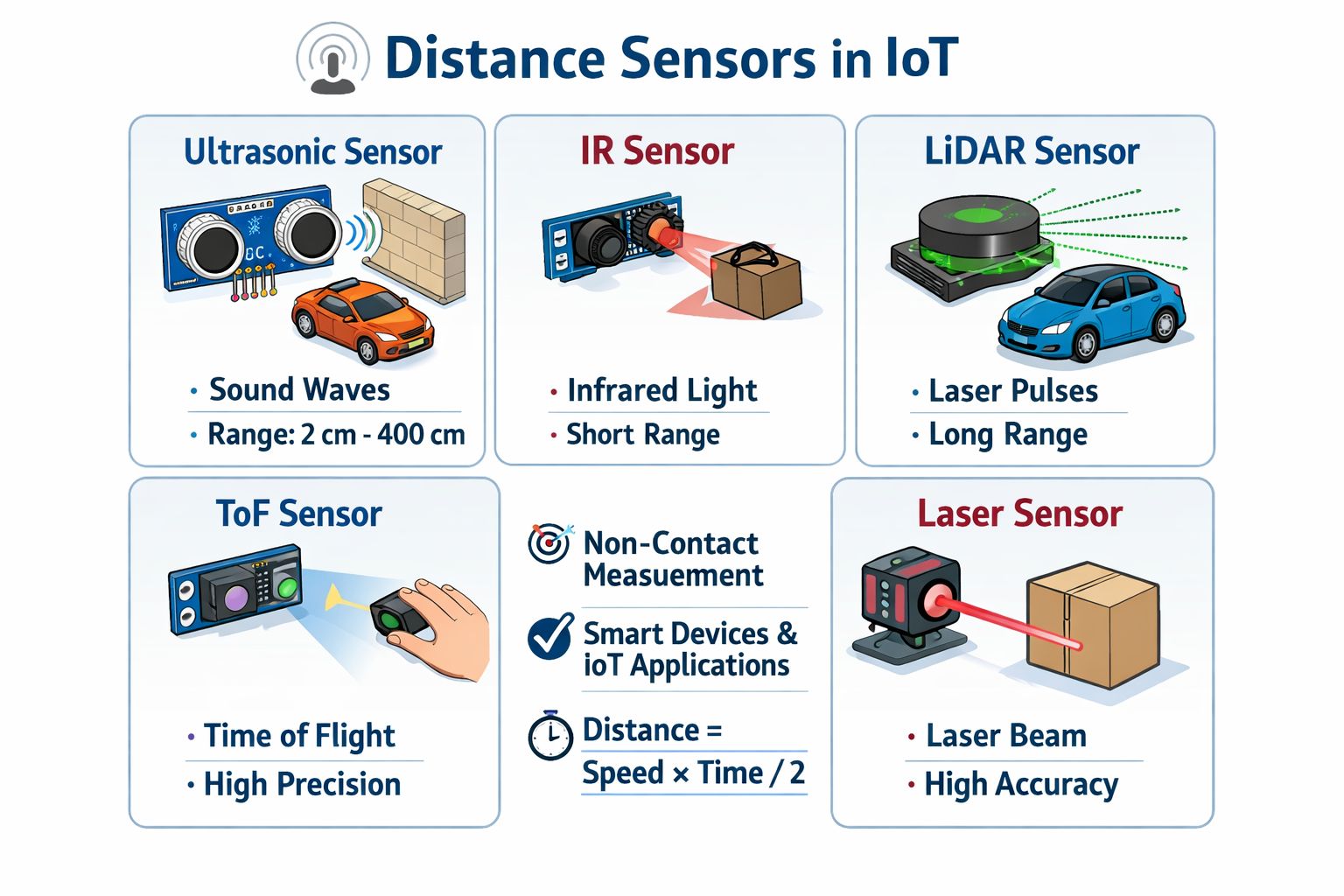
In the rapidly evolving landscape of the Internet of Things (IoT), devices are becoming increasingly intelligent, autonomous, and responsive to their surroundings. At the heart of this transformation lies a crucial component: the distance sensor. These seemingly simple devices are the “eyes” of IoT systems, enabling them to perceive the physical world and make informed decisions without direct human intervention. This comprehensive article will delve into the multifaceted world of distance sensors in IoT, exploring their fundamental principles, diverse types, key features, and myriad applications, ultimately revealing how they are not just facilitating, but actively revolutionizing the way we interact with technology and the environment around us.
The Foundation of Perception: Understanding Distance Sensors
At its core, a distance sensor is a non-contact device designed to measure the separation between itself and an object. Unlike traditional contact-based measurement tools that require physical interaction, distance sensors operate by emitting a signal (such as sound waves, light, or electromagnetic radiation) and then detecting its reflection. The time it takes for the signal to travel to the object and return, or the intensity of the reflected signal, is then used to calculate the distance. This non-invasive nature is paramount in many IoT applications, where physical contact could be impractical, damaging, or simply impossible.
The significance of distance sensors in IoT cannot be overstated. They empower devices with a critical sense of spatial awareness, transforming static objects into interactive entities. Imagine a smart home without the ability to detect occupants, an autonomous vehicle unable to perceive obstacles, or an industrial robot blind to its operational environment. Without distance sensors, these futuristic scenarios would remain firmly in the realm of science fiction. They are the enablers of contextual intelligence, allowing IoT devices to adapt their behavior based on proximity, presence, and movement, thereby fostering a truly smart and responsive ecosystem.
Principles of Non-Contact Measurement
The underlying principle behind most distance sensors revolves around the time-of-flight (ToF) measurement. This involves emitting a signal and measuring the elapsed time until its return. The distance can then be calculated using the simple formula:

The factor of two is included because the signal travels to the object and then back to the sensor. Different types of sensors utilize different forms of energy for their signals, each with its own advantages and disadvantages in terms of range, accuracy, environmental susceptibility, and cost. Understanding these principles is key to selecting the appropriate sensor for a given IoT application.
Another common principle, particularly for infrared sensors, involves the triangulation method or the intensity of reflected light. In triangulation, the angle of the reflected light is used to determine distance. For intensity-based sensors, the amount of reflected light can be correlated to distance, although this method is more susceptible to variations in object reflectivity and ambient light conditions.
The choice of measurement principle directly influences a sensor’s performance characteristics. For instance, sensors relying on the speed of light or sound offer generally higher precision over longer ranges, while those based on light intensity might be more suitable for short-range detection where cost and simplicity are primary concerns.
A Spectrum of Sensing: Diverse Types of Distance Sensors
The world of distance sensors is rich and varied, offering a wide array of technologies, each optimized for specific applications and environmental conditions. From sound waves to laser beams, a diverse range of physical phenomena are harnessed to achieve non-contact distance measurement. Understanding the characteristics of each type is crucial for effective IoT system design.
Ultrasonic Sensors
Ultrasonic sensors are among the most common and versatile distance sensing technologies, particularly in entry-level IoT projects and consumer electronics. They operate on a principle similar to sonar, emitting high-frequency sound waves (ultrasound) that are imperceptible to the human ear. These sound waves travel until they encounter an object, at which point they reflect back to the sensor. By measuring the time it takes for the sound wave to complete this round trip, the sensor accurately calculates the distance to the object.
A popular example is the HC-SR04, a low-cost and widely available module that provides reliable distance measurements for various applications.
How Ultrasonic Sensors Work
At the heart of an ultrasonic sensor are two main components: a transmitter (transducer) that generates ultrasonic pulses and a receiver that detects the reflected echoes. When the sensor is triggered, the transmitter emits a short burst of ultrasonic waves. These waves propagate through the air at the speed of sound. Upon encountering an obstacle, a portion of the sound energy is reflected back towards the sensor. The receiver then detects this echo. The internal circuitry of the sensor precisely measures the time difference between the transmission of the pulse and the reception of the echo. This time value, coupled with the known speed of sound in the medium (typically air), allows for the calculation of the distance to the object.
It’s important to note that the speed of sound can be affected by environmental factors such as temperature, humidity, and air pressure. For highly precise applications, compensation for these factors might be necessary.
Key Characteristics and Applications
Ultrasonic sensors typically offer a measurement range from a few centimeters up to several meters, for example, approximately 2 cm to 400 cm for common modules. Their accuracy is generally good for their specified range, although it can be affected by the surface characteristics of the object (e.g., sound-absorbing materials), the angle of incidence, and atmospheric conditions.
Advantages of ultrasonic sensors include their relatively low cost, ease of integration with microcontrollers like Arduino and ESP32, and their ability to work effectively in dark environments or where optical sensors might struggle due to transparency or reflective surfaces. However, they can be susceptible to interference from other ultrasonic sources, and their beam spread can sometimes lead to difficulty distinguishing between closely spaced objects.
Applications:
- Obstacle Detection: Used in robotics for navigation and collision avoidance, helping robots move autonomously and safely.
- Water Level Monitoring: Accurately measure fluid levels in tanks and reservoirs without direct contact with the liquid.
- Smart Parking Systems: Detect the presence or absence of vehicles in parking spots, providing real-time data for efficient parking management.
- Automated Doors: Sense approaching individuals, triggering the opening mechanism of doors in commercial buildings and public spaces.
- Security Systems: Act as motion detectors, identifying intruders within a defined area.
Infrared (IR) Sensors
Infrared (IR) sensors are another widely adopted technology for non-contact distance measurement, particularly suited for shorter-range applications. They operate by emitting infrared light and detecting the reflection of this light from an object. Unlike ultrasonic sensors that use sound waves, IR sensors leverage the electromagnetic spectrum, specifically the infrared portion, which is invisible to the human eye.
How Infrared Sensors Work
Most IR distance sensors utilize two main components: an IR LED (Light Emitting Diode) as the transmitter and an IR photodiode or phototransistor as the receiver. The IR LED emits a continuous or pulsed beam of infrared light. When this light strikes an object, it is reflected. The reflected light is then picked up by the IR photodiode. The intensity of the reflected light that reaches the receiver is inversely proportional to the distance to the object. That is, the closer the object, the more intense the reflected light.
Some IR sensors also employ triangulation. In this method, the IR LED emits a beam, and if an object is present, the reflected light is received by a position-sensitive detector (PSD). The angle at which the reflected light hits the PSD changes with the distance to the object, allowing for more precise distance determination than simple intensity-based methods.
Key Characteristics and Applications
IR sensors are typically characterized by their compact size, low power consumption, and relatively low cost. Their effective range generally spans from a few centimeters up to tens of centimeters, making them ideal for short-range detection tasks. They are commonly available as integrated modules that provide an analog voltage output directly proportional to the detected distance, simplifying their interface with microcontrollers.
However, IR sensors do have some limitations. Their performance can be significantly affected by ambient light conditions, especially direct sunlight, which can interfere with the sensor’s ability to detect its own emitted IR light. Furthermore, the reflectivity and color of the target object play a crucial role; dark or highly reflective surfaces can lead to inaccurate readings or even missed detections.
Applications:
- Object Detection: Simple and effective for presence detection in automated systems, such as in conveyor belts or assembly lines.
- Line-Following Robots: Used to detect lines on the ground, guiding robots along a predefined path.
- Automatic Doors: Similar to ultrasonic sensors, IR sensors can detect the proximity of individuals to trigger door opening.
- Hand Gesture Recognition: In consumer electronics, IR sensors can detect hand movements and gestures for touchless control.
- Proximity Sensors in Smartphones: Automatically turn off the screen during calls when the phone is held to the ear.
LiDAR Sensors
LiDAR, an acronym for Light Detection and Ranging, represents a significant leap forward in distance sensing technology, offering unparalleled accuracy and long-range capabilities. Unlike IR sensors that use simple light reflection, LiDAR systems employ laser pulses to create highly detailed 3D maps of their surroundings. This advanced technology has become indispensable in applications demanding precise spatial perception and environmental reconstruction.
How LiDAR Sensors Work
The fundamental principle of LiDAR is similar to radar, but instead of radio waves, it uses laser light. A LiDAR system emits a rapid succession of laser pulses in multiple directions. When a laser pulse strikes an object, a small portion of the light is reflected back to a sensor within the LiDAR unit. The system precisely measures the time it takes for each laser pulse to travel to the object and return. Since the speed of light is a known constant, the distance to the object can be calculated with extreme accuracy using the time-of-flight principle.
Modern LiDAR systems often incorporate spinning mirrors or other beam-steering mechanisms to scan the environment, sending out millions of laser pulses per second. This allows them to collect a vast amount of distance data points, creating a dense “point cloud” that represents the 3D geometry of the scene. Each point in the cloud has X, Y, and Z coordinates, along with potentially other information like intensity and color, providing a rich dataset for environmental understanding.
Key Characteristics and Applications
LiDAR sensors are characterized by their exceptional accuracy, typically in the centimeter to millimeter range, and their ability to measure distances over long ranges, often hundreds of meters. They can also operate effectively in various lighting conditions, including darkness, as they generate their own light source. Furthermore, LiDAR is less susceptible to interference from ambient light compared to passive optical sensors.
However, LiDAR systems are generally more complex and expensive than ultrasonic or IR sensors. Their data output can also be very large, requiring significant computational resources for processing and interpretation, especially in real-time applications.
Applications:
- Autonomous Vehicles: Crucial for enabling self-driving cars to perceive their surroundings, detect other vehicles, pedestrians, and obstacles, and navigate safely.
- Mapping and Surveying: Used to create highly accurate 3D maps of terrain, buildings, and infrastructure, revolutionizing fields like urban planning and construction.
- Drones and Robotics: Provide drones with precise altitude and obstacle avoidance capabilities, enhancing their autonomy and safety in various industrial inspections and deliveries.
- Environmental Monitoring: Used in forestry for canopy height measurement, glacier monitoring, and coastal erosion analysis.
- Industrial Automation: Robot guidance, quality inspection, and precise positioning in manufacturing environments.
Time of Flight (ToF) Sensors
Time of Flight (ToF) sensors represent a sophisticated class of distance measurement devices that leverage the constant speed of light to determine distances with high precision. While the general principle of ToF is shared with more complex LiDAR systems, dedicated ToF sensors are typically more compact and designed for shorter to medium-range applications, finding their niche in consumer electronics and robotics where space and efficiency are critical.
How ToF Sensors Work
ToF sensors operate by emitting a modulated light signal, usually in the infrared spectrum, and then measuring the phase shift or the absolute time it takes for the reflected light to return to the sensor. Instead of just measuring the on/off time like some simple IR sensors, ToF sensors typically emit a continuous wave of light or a series of pulses with a known modulation frequency. When this light reflects off an object and returns, its phase will have shifted relative to the emitted light. By comparing the phase of the emitted and received light, the sensor can calculate the time delay and thus the distance. This method is often referred to as “indirect ToF.”
“Direct ToF” sensors, similar to LiDAR, measure the actual travel time of discrete light pulses. However, they are generally optimized for shorter ranges and compact form factors, making them suitable for integration into smaller devices. The key advantage here is that the measurement is less dependent on the object’s reflectivity, color, or ambient light compared to traditional intensity-based IR sensors.
Key Characteristics and Applications
ToF sensors are highly regarded for their precision and accuracy, often offering centimeter-level resolution over ranges from a few centimeters up to several meters. They are also known for their fast response times, making them suitable for dynamic applications that require real-time distance updates. Their compact size and low power consumption further contribute to their widespread adoption in modern portable devices.
One of their significant strengths lies in their ability to provide depth information for an entire scene, akin to a low-resolution 3D camera. This makes them powerful tools for applications requiring spatial awareness beyond simple point-to-point distance measurements. However, similar to other optical sensors, extreme direct sunlight can sometimes impact their performance, and while less dependent on scene reflectivity than passive IR sensors, highly specular surfaces can still pose challenges.
Applications:
- Smartphones: Used for autofocus in camera systems, gesture recognition, and enhancing augmented reality (AR) experiences by providing accurate depth maps.
- Gesture Recognition: Enable touchless user interfaces for devices like smart TVs, gaming consoles, and industrial equipment.
- Robotics: Provide robots with improved obstacle avoidance, navigation, and object manipulation capabilities by offering detailed depth perception.
- Drones: Assist in precise landing, hovering, and collision avoidance, especially in close-quarter environments.
- Industrial Automation: Used for volume measurement, object profiling, and presence detection on production lines.
Laser Distance Sensors
Laser distance sensors, often referred to simply as laser sensors, are highly specialized devices that utilize a focused laser beam to achieve extremely precise and accurate distance measurements. While LiDAR also uses lasers, dedicated single-point laser distance sensors are typically employed for measuring the distance to a specific target point rather than generating an extensive 3D point cloud. They are the workhorses in applications demanding sub-millimeter accuracy and reliability.
How Laser Distance Sensors Work
The operation of laser distance sensors can be broadly categorized into two main principles: time-of-flight (ToF) and triangulation.
- Time-of-Flight (ToF) Laser Sensors: These sensors emit a very short, intense pulse of laser light towards a target. The time it takes for this pulse to travel to the target and reflect back to the sensor is precisely measured. Given the constant speed of light, the distance is then calculated. These sensors are excellent for longer ranges and high accuracy.
- Triangulation Laser Sensors: For shorter ranges and extremely high precision, triangulation-based laser sensors are often preferred. A laser diode emits a focused beam of light that creates a spot on the target object. The reflected light from this spot is then captured by a position-sensitive detector (PSD) or a CMOS receiver at a known angle relative to the emitted beam. As the distance to the object changes, the angle at which the reflected light hits the detector also changes. By precisely measuring the position of the reflected spot on the receiver, the distance can be calculated using trigonometric principles.
Key Characteristics and Applications
The defining characteristic of laser distance sensors is their exceptional precision and accuracy, often achieving resolutions in the micrometers for triangulation types and millimetres for ToF types, especially over short to medium ranges. The focused laser beam allows for measurements on very small targets or through small apertures. They are also highly reliable and less susceptible to ambient light interference compared to broad-beam optical sensors, although highly reflective or transparent surfaces can still pose challenges.
However, industrial-grade laser distance sensors can be more expensive than other types and may require careful alignment. The laser beam can also be harmful to human eyes if not properly managed, necessitating safety precautions in certain applications.
Applications:
- Industrial Automation: Crucial for precise positioning of robotic arms, quality control inspections, measuring the dimensions of components, and ensuring correct alignment in manufacturing processes.
- Construction Measurement: Used for surveying, determining distances on construction sites, and monitoring structural integrity with high accuracy.
- Level Control: Precisely measure the levels of materials in silos, hoppers, and tanks, even in harsh industrial environments.
- Medical Diagnostics: In some medical devices for precise positioning or measurement of biological samples.
- Metrology: High-precision industrial measurement and calibration processes.
- Roll Diameter Measurement: In industries like paper, plastic, and metal, for continuously monitoring roll diameters during production.
Unlocking Potential: Key Features of Distance Sensors in IoT
Beyond their distinct operating principles, distance sensors share several fundamental characteristics that make them particularly well-suited for integration into Internet of Things ecosystems. These features contribute to their versatility, ease of deployment, and overall value in enabling smart, connected applications.
Non-Contact Measurement
The most prominent feature, as discussed earlier, is their ability to measure distance without any physical contact with the object. This is not merely a convenience; it is a critical enabler for a vast range of IoT applications where traditional contact methods would be impractical, unsafe, or even impossible.
Advantages of Non-Contact Sensing
- Protection of Sensitive Objects: Prevents damage or contamination of delicate surfaces, liquids, or fragile materials. This is vital in manufacturing, food processing, and medical fields.
- Safety in Hazardous Environments: Allows for distance measurement in areas that are hot, corrosive, radioactive, or otherwise dangerous for human operators.
- Measurement of Moving Objects: Enables continuous tracking and measurement of objects in motion, such as on conveyor belts or in automated assembly lines, without interrupting their flow.
- Reduced Wear and Tear: Eliminates the mechanical wear associated with physical contact, leading to longer sensor lifespan and lower maintenance costs.
- Increased Speed and Efficiency: Facilitates rapid measurements, allowing for high-throughput processing and real-time decision-making in automated systems.
High Accuracy
The level of accuracy offered by distance sensors varies significantly between types, but the overall trend in modern sensor technology is towards ever-increasing precision. “High accuracy” in the context of IoT means providing measurements that are reliable and consistent enough for the intended application, whether it’s centimeter-level precision for parking systems or micrometer-level precision for industrial quality control.
Factors Influencing Accuracy
- Sensor Type: As seen, laser-based sensors generally offer the highest accuracy, followed by ToF and then ultrasonic/IR for general purposes.
- Resolution: The smallest change in distance that a sensor can detect, directly impacting its precision.
- Repeatability: The ability of a sensor to provide the same measurement under identical conditions.
- Environmental Conditions: Temperature, humidity, air pressure, and ambient light can all affect the accuracy of certain sensor types. Advanced sensors often include compensation mechanisms.
- Target Characteristics: The material, surface finish, color, and angle of the target object can influence how effectively a signal is reflected and detected.
Achieving high accuracy is paramount in critical IoT applications where even minor deviations can have significant consequences, such as in autonomous navigation or precision manufacturing.
Real-time Sensing
In the dynamic world of IoT, the ability to provide distance measurements in real-time is often a non-negotiable requirement. Real-time sensing means that the sensor provides output with minimal latency, allowing connected devices and systems to react instantaneously to changes in their environment.
Importance of Real-time Capabilities
- Dynamic Control: Enables closed-loop control systems where sensor data directly influences immediate actions, such as robot navigation or automatic braking systems.
- Event-Driven Automation: Triggers events or adjustments as soon as a condition changes—e.g., a door opening when a person is detected, or a machine stopping if an obstacle comes too close.
- Predictive Maintenance: By continuously monitoring distances in industrial machinery, anomalies can be detected early, predicting potential failures before they occur.
- Enhanced User Experience: In applications like gesture recognition or AR, real-time depth data creates a seamless and intuitive interaction for users.
The speed at which a sensor can acquire and transmit data (its sampling rate) is a key determinant of its real-time capabilities.
Easy Integration with IoT Devices
For distance sensors to truly empower the IoT, they must be easily integrable with the diverse range of microcontrollers, single-board computers, and network infrastructure that form the backbone of IoT systems. This ease of integration is a significant factor in the rapid proliferation of smart devices.
Facilitating Integration
- Standardized Interfaces: Many sensors communicate via common digital protocols like I2C, SPI, or UART, or provide analog voltage outputs, making them compatible with a wide array of development boards.
- Development Boards Support: Platforms like Arduino, ESP32, Raspberry Pi, and others have extensive libraries and example code specifically for popular distance sensors, drastically simplifying the development process.
- Compact Form Factors: Small, lightweight sensor modules can be easily embedded into various IoT devices, from compact wearables to sprawling industrial machinery.
- Low Power Consumption: Minimizes the power demands on battery-operated IoT devices, extending their operational life.
- Modular Design: Many sensors are available as complete modules with integrated signal processing, requiring minimal external components to function.
The combination of these features ensures that distance sensors are not just powerful standalone components but integral building blocks that can be seamlessly woven into complex and distributed IoT architectures, accelerating innovation and deployment of smart solutions across industries.
The World Transformed: IoT Applications of Distance Sensors
The integration of distance sensors into IoT ecosystems has unleashed a wave of innovation, transforming various sectors and enhancing daily life. From making our homes smarter to revolutionizing industrial processes and paving the way for autonomous systems, these sensors are at the forefront of the technological revolution.
Smart Parking Systems
One of the most immediate and impactful applications of distance sensors in urban environments is in the development of smart parking systems. These systems address the perennial challenge of finding available parking spaces, reducing congestion, fuel consumption, and driver frustration.
How Distance Sensors Empower Smart Parking
- Occupancy Detection: Distance sensors (often ultrasonic or magnetic) are installed in each parking spot. When a vehicle parks, the sensor detects its presence, and the distance reading changes significantly.
- Real-time Data: This occupancy data is wirelessly transmitted to a central server or cloud platform.
- Guidance Systems: Software then processes this data to provide real-time information to drivers via mobile apps, digital signs, or in-car navigation systems, guiding them to available spots.
- Dynamic Pricing: In some advanced systems, real-time occupancy data can inform dynamic pricing models, adjusting parking fees based on demand.
The result is a more efficient and user-friendly parking experience, contributing to smarter cities and a better quality of life for urban dwellers.
Smart Homes
Distance sensors play a pivotal role in creating truly intelligent and responsive smart home environments. They enable automated functionalities that enhance convenience, security, and energy efficiency, seamlessly integrating technology into the fabric of daily living.
Revolutionizing Home Automation
- Automatic Lighting: IR or ultrasonic sensors can detect the presence of occupants in a room, automatically turning lights on or off, saving energy.
- Automated Doors and Windows: Proximity sensors can trigger the opening or closing of garage doors, blinds, or even internal doors when a person or object approaches. For example, a ToF sensor could enable touchless garbage can lids.
- Security Systems: Distance sensors can be integrated into home security systems to detect unauthorized entry, triggering alarms or sending notifications to homeowners.
- Elderly Care: In assistive living, distance sensors can monitor movement within a home, detecting falls or prolonged periods of inactivity and alerting caregivers if an issue arises.
- Water Level Monitoring: Small ultrasonic sensors can monitor the level of water in a bathtub or washing machine, preventing overflows and conserving resources.
The possibilities for smart home applications are continually expanding as sensor technology becomes more sophisticated and affordable.
Industrial Automation
In the industrial sector, distance sensors are indispensable, forming the backbone of automated processes that drive efficiency, quality, and safety. They are critical components in Industry 4.0 initiatives, enabling smart factories and advanced manufacturing.
Enhancing Productivity and Safety
- Robotics & Material Handling: Laser distance sensors guide robotic arms for precise pick-and-place operations, assembly, and welding. They ensure robots maintain safe distances from other machinery and human workers.
- Object Detection and Counting: Sensors detect the presence of products on conveyor belts, count items, and verify their positioning, ensuring correct processing and packaging.
- Machine Alignment: High-precision laser sensors are used for critical alignment tasks, ensuring machinery components are perfectly positioned for optimal performance and minimal wear.
- Level Control: In manufacturing and processing plants, sensors continuously monitor the levels of raw materials in hoppers, liquids in tanks, or bulk goods in silos, optimizing inventory management and preventing production stoppages.
- Quality Control: Laser sensors can perform precise dimensional measurements of manufactured parts, identifying defects and ensuring products meet stringent quality standards.
- Safety Barriers: Infrared or laser light curtains act as safety barriers around dangerous machinery, immediately halting operation if a worker’s hand or body enters the protected zone.
The precision, reliability, and real-time capabilities of distance sensors are paramount in these demanding industrial environments.
Robotics & Obstacle Avoidance
For mobile robots, drones, and autonomous vehicles, distance sensors are the primary means of navigating complex environments and avoiding collisions. They are the sensory input that allows these intelligent machines to “see” and interact with the physical world.
Enabling Autonomous Navigation
- Obstacle Detection: Ultrasonic, IR, LiDAR, and ToF sensors are used to detect static and dynamic obstacles in the robot’s or vehicle’s path. This data is fed into navigation algorithms to calculate collision-free trajectories.
- Mapping and Localization: LiDAR sensors, in particular, are fundamental for simultaneous localization and mapping (SLAM) algorithms. They create detailed 3D maps of the environment while simultaneously determining the robot’s precise position within that map.
- Proximity Sensing: In close-quarter maneuvers, short-range sensors help robots avoid bumping into walls or other objects, enabling smoother and safer movements.
- Terrain Following: Drones and ground robots can use distance sensors to maintain a constant altitude above uneven terrain, which is crucial for inspection or mapping tasks.
- Docking and Charging: Sensors guide autonomous mobile robots (AMRs) to their charging stations or docking points with high accuracy, ensuring efficient operation.
Without robust distance sensing capabilities, the dream of truly autonomous robots would remain unrealized.
Water Level Monitoring
Accurate and continuous water level monitoring is critical across a multitude of applications, from flood prevention and irrigation management to industrial processes and environmental conservation. Distance sensors provide a non-contact solution for this crucial task.
Why Non-Contact is Key
- Corrosion Resistance: Unlike submerged sensors, non-contact distance sensors (typically ultrasonic or some laser types) are not exposed to the potentially corrosive or contaminated nature of the liquid, extending their lifespan and reducing maintenance.
- No Contamination: Prevents contamination of potable water or sensitive chemicals, as the sensor does not touch the liquid.
- Ease of Installation and Maintenance: Sensors can be mounted above the liquid surface, simplifying installation, calibration, and any necessary maintenance.
- Wide Range of Liquids: Effective for monitoring levels of various liquids, including water, chemicals, oils, and even granular materials, regardless of their electrical conductivity or viscosity.
Distance sensors for water level monitoring are often found in:
- Reservoirs and Dams: Monitoring water levels for hydropower generation, flood control, and resource management.
- Industrial Tanks: Ensuring correct fill levels in manufacturing processes, chemical storage, and wastewater treatment plants.
- Irrigation Systems: Optimizing water usage in agriculture by monitoring real-time water levels in canals and storage tanks.
- Household Applications: Preventing overflows in washing machines or detecting leaks in basements.
- Environmental Monitoring: Tracking water levels in rivers, lakes, and oceans for climate studies and disaster preparedness.
The versatility and reliability of distance sensors in critical applications like water level monitoring underscore their foundational role in building a more sustainable and intelligently managed world.
The Future Trajectory: Innovations and Emerging Trends
The field of distance sensing in IoT is not static; it is a dynamic arena of continuous innovation. As the demands of IoT applications grow in complexity and scope, sensor manufacturers and researchers are pushing the boundaries of what’s possible, leading to exciting new developments and emerging trends.
Miniaturization and Integration
One of the most significant trends is the relentless drive towards miniaturization. As IoT devices shrink, so too must their components. This means developing smaller, more power-efficient distance sensors that can be seamlessly integrated into an ever-wider array of form factors, from tiny wearables and smart patches to embedded systems in vehicles and infrastructure.
- System-on-Chip (SoC) Sensors: Integrating the entire sensor system, including the optical or acoustic elements, processing unit, and communication interfaces, onto a single chip. This reduces size, cost, and power consumption.
- Microelectromechanical Systems (MEMS): Leveraging MEMS technology to create tiny, high-performance sensors, particularly for LiDAR and ToF systems, allowing for smaller, lighter scanning mechanisms.
This trend enables the pervasive deployment of distance sensing capabilities, making almost any object potentially “smart.”
Enhanced Accuracy and Resolution
While current sensors offer impressive accuracy, the pursuit of even greater precision continues. This is crucial for applications like augmented reality (AR), virtual reality (VR), advanced robotics, and highly automated industrial processes where sub-millimeter or even micrometer accuracy can be critical.
- Advanced Signal Processing: Implementing more sophisticated algorithms to filter noise, compensate for environmental factors, and extract more precise distance information from raw sensor signals.
- Multi-Modal Sensing: Combining different sensor types (e.g., LiDAR with cameras, or ultrasonic with IR) to create a more robust and accurate perception system that leverages the strengths of each technology while mitigating their individual weaknesses.
- Higher Frequency and Faster Pulse Rates: For ToF and LiDAR, increasing the frequency of emitted pulses or using shorter, more intense pulses improves resolution and allows for faster updates.
AI and Machine Learning Integration
The raw data from distance sensors becomes even more powerful when combined with artificial intelligence (AI) and machine learning (ML) algorithms. This integration allows IoT systems to not just measure distance but to understand context, predict behavior, and make more intelligent decisions.
- Object Recognition and Classification: ML algorithms can analyze point cloud data from LiDAR or depth maps from ToF sensors to identify and classify objects (e.g., distinguishing between a pedestrian, a cyclist, and a car).
- Activity Recognition: By analyzing changes in distance over time, AI can recognize complex human activities or gestures, enabling more intuitive human-machine interaction and monitoring for security or health purposes.
- Predictive Analytics: ML models can use historical distance data to predict future states, for example, predicting potential collisions in autonomous systems or forecasting maintenance needs for industrial equipment.
- Sensor Fusion: AI can effectively combine data from multiple distance sensors and other sensor types (e.g., cameras, accelerometers) to create a more comprehensive and reliable understanding of the environment, overcoming the limitations of individual sensors.
Robustness and Environmental Adaptability
IoT devices often operate in challenging and unpredictable environments. Future distance sensors will continue to improve their robustness and adaptability to a wider range of environmental conditions.
- All-Weather Performance: Developing sensors that can reliably operate in adverse conditions such as fog, rain, snow, dust, and extreme temperatures, which is critical for outdoor autonomous vehicles and industrial applications.
- Interference Mitigation: Implementing advanced techniques to mitigate interference from other sensors, ambient noise, or electromagnetic signals.
- Self-Calibration and Self-Healing: Sensors that can autonomously detect and correct for drifts or errors in their measurements, maintaining accuracy over long periods without manual intervention.
Lower Cost and Accessibility
While advanced sensors like LiDAR are becoming more affordable, the continuous drive to reduce costs while maintaining high performance will make sophisticated distance sensing technology accessible to an even broader market. This will fuel the deployment of IoT in new and emerging applications, from smart toys to advanced agricultural monitoring.
The proliferation of low-cost, high-performance distance sensors will democratize access to spatial awareness, enabling a new generation of innovators to build smart solutions that impact every facet of our lives.
Architectural Considerations for Integrating Distance Sensors in IoT
Successfully deploying distance sensors within an IoT ecosystem involves more than just selecting the right sensor; it requires careful architectural planning. From data acquisition to cloud integration and edge computing, each layer of the IoT stack plays a crucial role in transforming raw sensor data into actionable insights.
Sensor Data Acquisition and Pre-processing
The initial step involves acquiring data from the distance sensor. This typically entails connecting the sensor to a microcontroller (e.g., Arduino, ESP32, STM32) or a single-board computer (e.g., Raspberry Pi).
- Interface Selection: Choosing the appropriate communication interface (e.g., I2C, SPI, UART, Analog) based on the sensor’s specifications and the microcontroller’s capabilities.
- Driver Development: Writing or utilizing existing software libraries (drivers) to initialize the sensor, read its registers, and interpret the raw data (e.g., converting time-of-flight values into distance in centimeters or meters).
- Data Filtering: Raw sensor data can often be noisy due to environmental factors or sensor limitations. Implementing filtering algorithms (e.g., moving average, Kalman filter) at the edge helps to smooth data and improve accuracy before further processing.
- Calibration: Periodically calibrating sensors to ensure long-term accuracy, especially in applications where precision is critical.
Pre-processing data at the edge reduces the amount of data transmitted to the cloud, saving bandwidth and processing power downstream.
Edge Computing and Local Intelligence
Edge computing plays a vital role in IoT systems incorporating distance sensors, particularly when real-time decisions or low-latency responses are required. Instead of sending all raw data to the cloud, processing is done closer to the data source.
- Real-time Decision Making: For applications like obstacle avoidance in robotics or immediate safety shutdowns in industrial automation, decisions must be made in milliseconds. Edge devices with embedded intelligence can process sensor data and react instantly.
- Reduced Latency: Minimizing the round-trip time to a cloud server is crucial for responsive systems.
- Bandwidth Optimization: Only aggregated, filtered, or event-driven data is sent to the cloud, reducing network traffic and associated costs.
- Security and Privacy: Sensitive distance data can be processed and anonymized locally before being sent over the network, enhancing data security and privacy.
- Offline Functionality: Edge devices can continue to operate and make decisions even during network outages, ensuring system resilience.
Sophisticated edge nodes can run machine learning models directly on sensor data, enabling local object recognition, anomaly detection, or gesture interpretation.
Communication Protocols and Connectivity
Connecting distance sensors to the broader IoT ecosystem requires robust and efficient communication protocols. The choice depends on factors like range, power consumption, data rate, and network topology.
- Short-Range Wireless:
- Bluetooth Low Energy (BLE): Ideal for low-power, short-range connections to wearables or nearby smart devices.
- Wi-Fi: Suitable for higher data rates and connecting to local networks, often used for smart home devices.
- Zigbee/Z-Wave: Mesh networking protocols common in smart homes for reliable, low-power communication between devices.
- Long-Range Wireless:
- LoRaWAN/Sigfox: Low-power, wide-area network (LPWAN) protocols for sending small packets of data over long distances, suitable for remote monitoring applications like smart farming or industrial asset tracking.
- Cellular (4G/5G/NB-IoT/LTE-M): Provides ubiquitous coverage for critical applications requiring high reliability or large data transfers, such as autonomous vehicles.
- Wired Connections: Ethernet for industrial applications requiring high bandwidth, reliability, and security.
Security protocols (e.g., TLS/SSL) are essential to ensure the integrity and confidentiality of sensor data as it travels across the network.
Cloud Integration and Data Analytics
The cloud acts as the central brain of many IoT systems, providing scalability, storage, and advanced analytical capabilities for the data collected from distance sensors.
- Data Storage: Storing vast amounts of historical distance data for long-term analysis, trend identification, and compliance.
- Big Data Analytics: Applying advanced analytics and machine learning algorithms (often more computationally intensive than what’s possible at the edge) to identify patterns, predict outcomes, and generate deeper insights from aggregated sensor data.
- Visualization and Dashboards: Presenting sensor data in intuitive dashboards, allowing users to monitor system status, track key performance indicators (KPIs), and identify anomalies.
- Remote Management and Control: Enabling remote configuration, firmware updates, and control of IoT devices and their integrated distance sensors.
- Integration with Enterprise Systems: Connecting sensor data with existing business intelligence (BI) systems, ERP, or CRM platforms to drive strategic decisions.
- Scalability: Cloud platforms offer unparalleled scalability, allowing IoT solutions to grow from a few sensors to thousands or even millions of devices without significant infrastructure overhauls.
The cloud is where the true value of aggregated sensor data is often unlocked, transforming raw measurements into strategic business intelligence.
Selecting the Right Distance Sensor for Your IoT Project
The success of any IoT application heavily relies on choosing the appropriate distance sensor. Given the diverse range of technologies available, a careful evaluation process is essential to match sensor capabilities with project requirements.
Key Criteria for Selection
- Application Requirements:
- What is being measured? (e.g., liquid level, object presence, precise dimension).
- What is the desired outcome? (e.g., obstacle avoidance, accurate positioning, volume estimation).
- Is it a static or dynamic measurement?
- Measurement Range:
- What is the minimum and maximum distance that needs to be measured? (e.g., a few centimeters for proximity detection, hundreds of meters for autonomous driving).
- This is often the primary filter, immediately ruling out certain sensor types (e.g., IR for long ranges, LiDAR for very short, simple proximity).
- Accuracy and Precision:
- What level of accuracy is required? (e.g., centimeter, millimeter, micrometer).
- Does the application demand high repeatability?
- Consider resolution, repeatability, and linearity.
- Environmental Conditions:
- Lighting: Will the sensor operate in bright sunlight, total darkness, or varying conditions? (e.g., IR struggles in direct sunlight).
- Temperature and Humidity: What are the operating environment’s temperature and humidity ranges? Are there corrosive elements?
- Dust/Dirt/Mist: Will the sensor be exposed to airborne particles or moisture that could interfere with optical or ultrasonic signals?
- Noise/Vibration: Are there other ultrasonic emitters or sources of vibration that could interfere with sound-based sensors?
- Target Object Characteristics:
- Material: Is the object reflective, absorbent, transparent, or opaque to the sensor’s signal? (e.g., ultrasonic struggles with soft, sound-absorbing materials; optical sensors struggle with highly reflective or transparent surfaces).
- Color: For optical sensors, the color of the object can affect reflectivity.
- Size and Shape: Does the sensor need to detect very small objects or profile complex shapes?
- Speed: Is the object stationary or moving, and at what speed?
- Cost:
- What is the budget for the sensor? This includes the unit cost of the sensor itself, as well as the cost of integration, power, and any necessary processing.
- For high-volume consumer products, even a small cost difference per unit can be significant.
- Power Consumption:
- Is the IoT device battery-powered or mains-powered?
- How critical is low power consumption for extended battery life? (e.g., LoRaWAN-enabled remote monitoring devices require very low power).
- Form Factor and Size:
- How much physical space is available for the sensor module?
- Does it need to be ultracompact for a wearable or embedded system?
- Integration Complexity:
- How easily can the sensor be integrated with the chosen microcontroller/platform?
- Are there readily available libraries, sample code, and development tools?
- What are the required electrical interfaces?
- Safety Considerations:
- If using laser-based sensors, what are the laser safety classifications? Are protective measures required for human interaction?
By systematically evaluating these criteria against the specific requirements of your IoT project, you can make an informed decision and select the distance sensor that provides the optimal balance of performance, cost, and reliability. Often, a combination of different sensor types in a “sensor fusion” approach can provide the most robust and comprehensive solution.
Conclusion: The Indispensable Role of Distance Sensors in a Smart World
Distance sensors are far more than mere components; they are the sensory organs of the Internet of Things, providing the crucial ability for electronic devices to perceive and interact with the physical world in a non-contact manner. From the simplicity of an ultrasonic ping to the sophisticated 3D mapping of a LiDAR system, these technologies are underpinning a revolution in automation, intelligence, and connectivity.
We’ve explored the fundamental principles that govern their operation, dissected the unique characteristics of various types—ultrasonic, infrared, LiDAR, Time of Flight, and laser sensors—and highlighted their key features such as high accuracy, real-time sensing, and ease of integration. Crucially, we’ve seen how these capabilities translate into tangible benefits across diverse IoT applications: streamlining urban parking, enchanting smart homes, propelling industrial automation, ensuring robust robotics and obstacle avoidance, and providing vital water level monitoring.
As technology continues its relentless march forward, we anticipate even greater miniaturization, enhanced precision, seamless integration with AI and machine learning, and increased resilience to environmental challenges. These advancements will further reduce costs and broaden accessibility, embedding distance sensing into an even wider array of everyday objects and systems.
In essence, distance sensors are not just facilitating the smart world; they are actively shaping it, enabling devices to gain contextual awareness, make autonomous decisions, and provide services that were once confined to the realm of science fiction. Their indispensable role will only grow as our vision for a truly connected and intelligent future continues to unfold.
Are you ready to transform your ideas into intelligent, connected realities?
At IoT Worlds, we specialize in expert guidance and cutting-edge solutions for your Internet of Things projects. Whether you’re navigating complex sensor integrations, designing robust communication architectures, or seeking to leverage advanced analytics for your distance sensor data, our team IoT experts is here to help you build the future.
Reach out to us today to discuss your next big idea and discover how we can help you achieve unparalleled success in the IoT landscape. Send an email to: info@iotworlds.com
